

Quick Summary
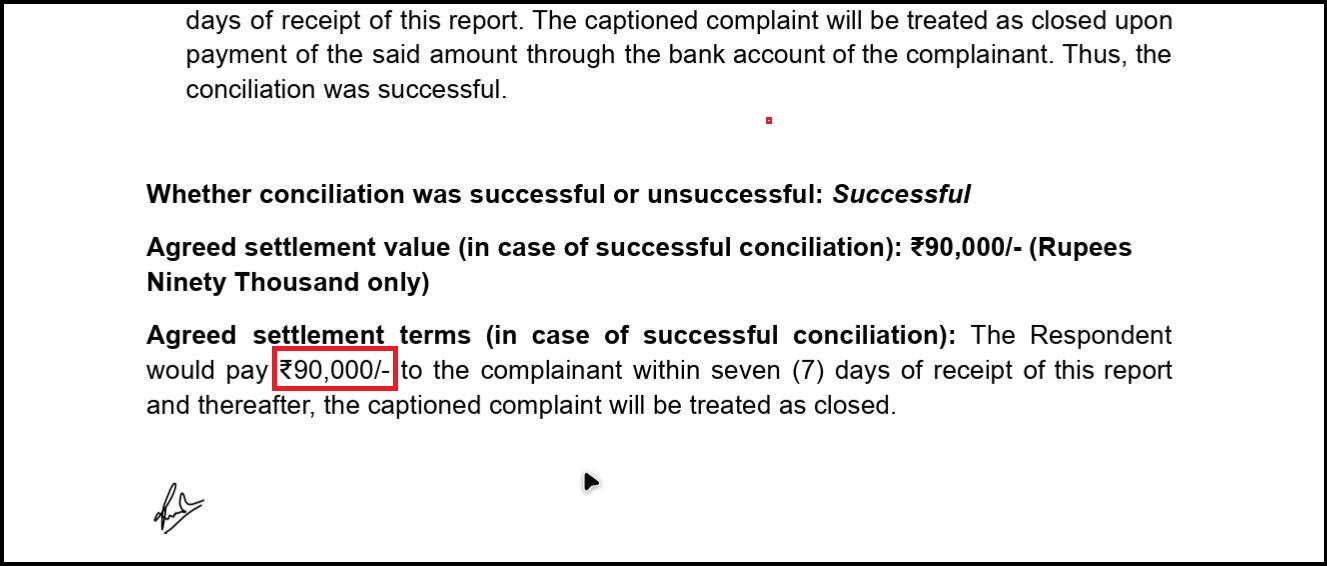
Neha Kulkarni (name changed) purchased a premium package that came with a written promise of a fixed monthly return. Her total claim reached 6,60,500. No SEBI registered entity may guarantee investment returns to a client. That single written promise anchored her file, and our team recovered 90,000, a 13.6 percent share.
How We Turned Neha’s Brochure Into Key Evidence?
We started with the one piece of evidence that was hardest to explain away: the original brochure promising a fixed monthly return.
Instead of making the case about whether Neha’s trades performed well or badly, we focused on the promise itself and what the rules say about it.
Step 1: Preserve the Guarantee
We pulled out the exact wording from the brochure that promised a fixed monthly return. That document became the starting point of the complaint because it showed precisely what had been presented to Neha.
Step 2: Show When the Promise Fell Apart
We compared the promised return with Neha’s actual account performance month by month. Once the losses began, the difference between what was promised and what happened became impossible to overlook.
Step 3: Connect the Promise to SEBI Rules
We then pointed to the SEBI provisions restricting registered entities from guaranteeing returns to clients. This kept the argument focused on the guarantee itself, rather than getting lost in a debate over market performance.
Step 4: Put the Brochure First in the SEBI SCORES Complaint
Our complaint through the SEBI SCORES portal opened with the written guarantee and supporting documents. The objective was simple: make the key issue immediately visible instead of burying it under pages of trading history.
The analyst later argued that the brochure was merely marketing material and not a formal commitment.
We countered that the concern was not whether the brochure created a contractual promise, but whether a registered entity could make such a return guarantee in the first place.
Step 5: Stand by the Evidence During Escalation
With the written guarantee clearly documented, we continued the matter through SCORES and responded to the analyst’s explanations.
By keeping the discussion centred on the regulatory issue rather than subjective trading results, we created a stronger basis for settlement discussions.
Case Result: ₹90,000 Successfully Recovered
The written guarantee proved to be a clear and undeniable breach once reviewed. Neha recovered ₹90,000 of her ₹6,60,500 claim, a 13.6 percent share.
The lower recovery reflects that most of her claim traced to market losses on invested funds rather than the fee itself. The case closed within fifteen weeks.
Were You Promised Guaranteed Returns by a SEBI Registered Entity?
Under SEBI regulations, no research analyst or advisor can legally promise fixed monthly returns.
If you have written proof or brochures promising fixed gains, FraudFree Team can build your case.
Register with us now.
Conclusion
Neha’s case shows why a guaranteed return should never be treated as a harmless sales promise. The early results made the guarantee look credible, but the written promise became crucial once the losses appeared.
For investors, brochures, messages, invoices, and other sales documents can become important evidence when a dispute arises.
Even if the promised returns were delivered for a few months, that does not make an improper guarantee acceptable.
If an advisor has promised you a fixed return, save the proof before you challenge the claim.
Report. Recover. Stay Fraud Free.
Frequently Asked Questions
No. Guaranteeing returns is prohibited for every SEBI registered research analyst and investment adviser, regardless of how the promise is phrased.
Most of her claim reflected trading losses on invested capital rather than fees paid, which typically results in a smaller recovery share.
A written guarantee, like a brochure or message, is stronger evidence, but a documented verbal promise through chat or recording can still support a complaint.
Treat it as a warning sign rather than a benefit. No legitimate registered entity can lawfully make that promise.





 Add us as a preferred source on Google »

