Digital brokerage platforms have made investing more accessible for millions of individuals across India.
Firms like HDFC Securities Limited provide a wide range of trading and investment services through modern digital platforms.
As participation in the stock market continues to grow, transparency in brokerage charges and trading practices has become increasingly important.
This article examines complaint data related to HDFC Securities and highlights what investors should know about excess charges and brokerage practices.
HDFC Securities Excess Charges Overview
HDFC Securities Ltd. is a well-known brokerage and investment services company that offers comprehensive trading solutions across equity, derivatives, currency, and commodities markets.
The platform allows investors to invest in mutual funds, bonds, IPOs, and other financial instruments.
With strong research support, investment advisory services, and digital trading tools, the firm aims to help investors build diversified portfolios and navigate financial markets with confidence.
Although HDFC Securities Limited is widely trusted in India, many users still report concerns and challenges while using the platform. Let’s examine these issues closely.
HDFC Securities Excess Charges Complaints
Brokerage churning is when a broker makes frequent trades in a client’s account, mainly to earn commissions rather than benefit the client.
Some signs of churning in Stock Market are unusually high trading activity, frequent buying and selling without a clear strategy, rising brokerage fees, and account turnover that seems unnecessary for the client’s investment goals.
Now that you know what it means, let us see what the chances of it impacting your trading practices are.
Exchange Complaint Data
Here’s the data present on the NSE platform:
|
Financial year |
Total clients | No. of complaints | % of complaints w.r.t. clients | Resolved complaints | % resolved w.r.t. Total complaints |
Arbitrations |
|
2022-23 |
1097747 | 182 | 0.01 | 167 | 91.75 | 4 |
| 2023-24 | 1097747 | 283 | 0.02 | 273 | 96.46 |
3 |
|
2024-25 |
1525058 | 814 | 0.05 | 813 | 99.87 | 0 |
| 2025-26 | 1429785 | 355 | 0.02 | 308 | 86.76 |
0 |
Complaints rose sharply from 182 in 2022–23 to 814 in 2024–25, even though the number of clients increased significantly in 2024–25.
Even if the percentage of complaints relative to clients seems small, the rising volume signals a potential underlying issue that management should not ignore.
|
Financial year |
No. of complaints | Excess Charges complaints |
% of excess charges complaints w.r.t. complaints |
|
2022-23 |
182 | Around 35 | 19.23% |
| 2023-24 | 283 | Around 166 |
58.65% |
|
2024-25 |
814 | Around 516 | 63.39% |
| 2025-26 | 355 | Around 209 |
58.87% |
This table focuses specifically on complaints related to excess charges.
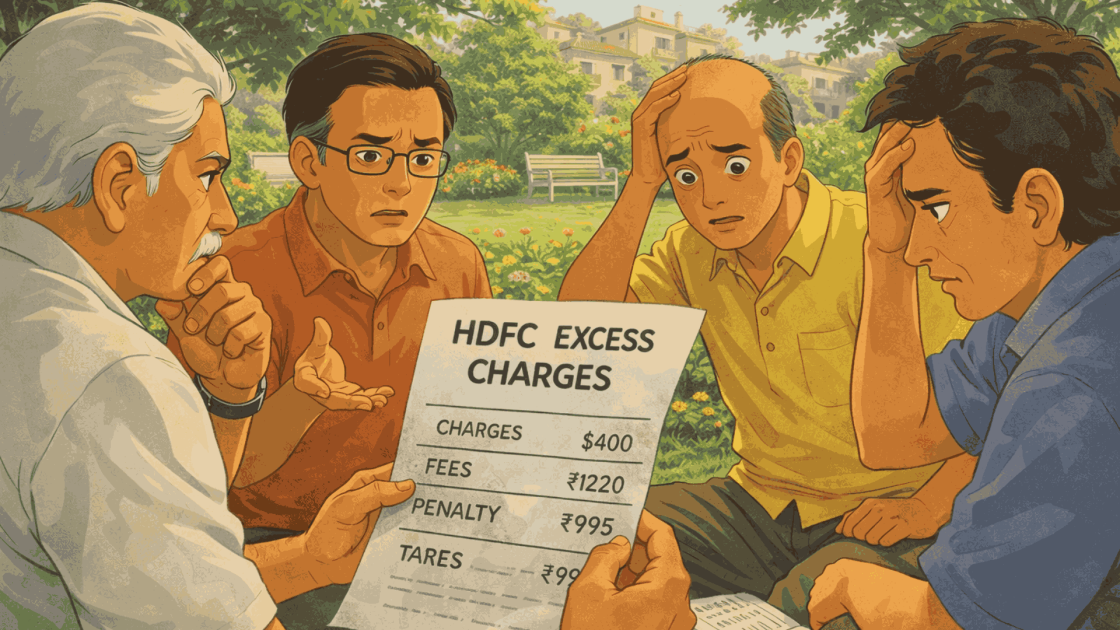
These complaints form a large share of all complaints, rising from about 19.23% in 2022–23 to more than 60% in 2024–25. This pattern suggests that fee-related problems are becoming a major source of frustration for clients.
Even though the total number of complaints changes each year, the proportion linked to excess charges stays very high after 2023–24.
That consistency raises concern because it may indicate a systemic problem in how charges are applied, explained, or communicated.
When to Take Action Against Brokers?
Being aware of warning signs on your trading platform can help you prevent financial losses.
Some red flags to watch out for include unauthorised transactions or an unusually high number of trades carried out without your approval, receiving calls or messages from unknown or unregistered numbers promising guaranteed profits.
Any activity that does not follow the rules and guidelines laid down by SEBI, including repeated pressure from the broker encouraging you to invest in specific trades, and the broker being unable to provide proper documentation or transaction records, should not be overlooked.
If you come across any of these issues while using your brokerage platform, it is important to report them immediately to avoid further complications.
How to File a Complaint Against HDFC Securities?
Brokerage churning and unauthorised trading can quietly drain your investments. It is important to take the right steps to protect yourself and hold the broker accountable.
1. Document Everything: Maintain a clear record of your account activity, including trades you approved, the amount invested, and the type of investments made. If you notice an unusual transaction or trade that you did not authorise, gather supporting evidence such as screenshots, messages, contract notes, emails, or call recordings.
2. Contact the Broker First: Reach out to the broker’s customer service team through phone or email. Clearly explain the issue and request clarification or a solution.
3. Register a Complaint in SCORES: If the broker does not provide a satisfactory response, lodge a formal complaint through the SCORES platform operated by SEBI. Submit all relevant evidence while filing the complaint.
4. File a Complaint in SMART ODR: If the issue remains unresolved after the SCORES process, escalate the matter through the ODR system. This will allow the dispute to be handled through arbitration, where an independent arbitrator reviews the case.
Need Help?
Being charged more than expected or experiencing suspicious trades can make investors feel frustrated and uncertain about future investments.
Your concerns are understandable, and you should not have to deal with such situations alone.
Our team can carefully review your trading records, account statements, and ledgers to determine where the issue began.
We assist in tracking the status of SEBI complaints online, collecting evidence, preparing complaints, and representing your case during arbitration proceedings.
If you believe something is wrong with your trading account, do not ignore it. Reach out to us today and let us help you resolve the issue.
Conclusion
While HDFC Securities offers a wide range of investment services and tools, the pattern of complaints highlights concerns that investors should not overlook.
Issues related to trade activity and communication can create confusion and reduce trust if not addressed properly.
Investors should stay alert, review their account activity regularly, and question anything that seems unclear.
Taking timely action, maintaining records, and reporting concerns through the proper channels can help protect investments and encourage greater accountability in brokerage services.