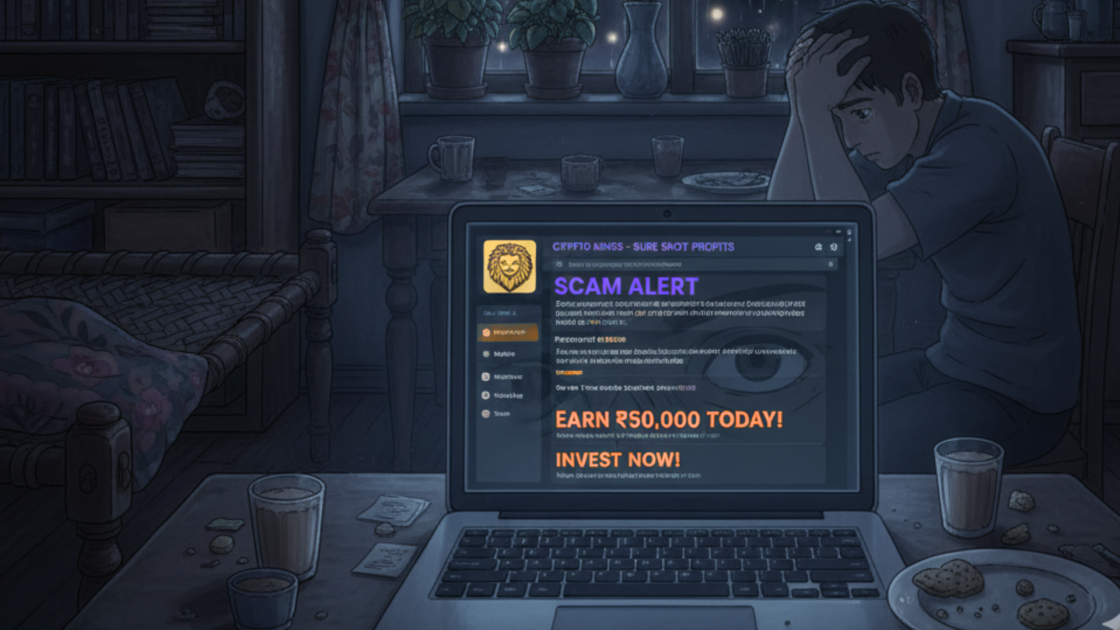
Why Telegram is Popular Among Scammers?
Telegram is often misused by scammers because of the privacy and flexibility it offers. While these features benefit genuine users, they also make fraudulent activity easier to carry out.
Anonymous accounts allow users to sign up with minimal identity verification, making it difficult to trace scammers once money is transferred.
Private channels and invite-only groups create a false sense of exclusivity, often presented as “VIP” or “premium” investment communities.
Easy username changes enable fraudsters to rebrand quickly if complaints arise. Fake screenshots and edited proofs are commonly shared to show fabricated profits or bank credits.
Additionally, the lack of strong KYC enforcement reduces accountability, allowing scammers to create new accounts repeatedly even after being reported.
Telegram Scams in India
Telegram scams come in many forms, but most follow the same pattern: they promise quick profits, low risk, and easy money. Recognizing these common formats can help you spot danger early and avoid financial loss.
1. Trading signal scams
Trading signal scams claim to offer highly accurate stock, forex, or crypto tips for a fee. Scammers use fake profit screenshots to gain trust, but once payment is made, the signals fail, or the admin disappears.
2. Crypto doubling scams
Crypto doubling scams promise to multiply your cryptocurrency within hours. Victims are asked to send crypto with assurances of double returns, but after the transfer, communication stops permanently.
3. Task-based earning scams
Task-based earning scams offer money for simple online activities. Small initial payouts may be made to build trust, but victims are later asked to deposit larger amounts that are never returned.
4. Investment pool scams
Investment pool scams collect funds from multiple people, promising fixed monthly returns. These often function like Ponzi schemes, where payouts depend on new deposits rather than genuine profits.
5. Loan app scams
Loan app scams provide instant loans, but misuse personal data later for harassment or extortion.
6. Romance and investment hybrid scams
Romance-investment hybrid scams build emotional trust first, then convince victims to invest in fake trading platforms controlled by the scammer.
How to Check Telegram Scammer in India?
Identifying a Telegram scammer requires careful observation of patterns, promises, and behavior.
To truly protect yourself, you need to understand how Telegram scams work in the current digital landscape.
Most fraudsters rely on the platform’s privacy features to create a “smoke and mirrors” environment where they can build trust quickly before disappearing.
They often follow predictable tactics designed to trigger urgency, greed, or fear, such as offering “guaranteed” crypto returns, exclusive telegram task job for upfront fees, or impersonating customer support to steal your login codes.
1. Unrealistic profit claims
Unrealistic profit claims are one of the clearest red flags. Any channel promising guaranteed returns, “100% accuracy” trading signals, or fixed monthly income without risk is misleading you.
Financial markets are volatile by nature, and no legitimate advisor can assure profits with certainty.
2. Urgency tactics
Urgency tactics are commonly used to prevent you from thinking rationally. Statements like “limited seats,” “offer closing in 10 minutes,” or repeated pressure to deposit immediately are designed to rush your decision. Genuine financial opportunities do not disappear within minutes.
3. Account handling offers
Account handling offers are extremely risky. If someone asks for your trading account login credentials or promises profit-sharing with zero risk, it is a serious warning sign.
Sharing account access can result in the complete loss of funds and misuse of personal data.
4. Lack of verifiable registration
Lack of verifiable registration is another major concern. For investment-related services in India, SEBI registration is mandatory.
Scammers often circulate fake certificates or edited documents to appear legitimate, but these can easily be fabricated.

5. Fake testimonials and screenshots
Fake testimonials and screenshots are widely used to create artificial trust. Cropped profit screenshots, repeated template messages, and stolen profile photos are common manipulation techniques. Always verify independently rather than trusting shared images.
6. Requests to download APK files
Requests to download APK files outside official app stores are highly dangerous. Such apps may contain malware designed to steal banking credentials, OTPs, or personal information.
Similarly, unknown payment links and referral or invite codes may redirect you to fraudulent platforms.
7. One-sided communication
One-sided communication is another indicator of fraud. If comments are disabled and only positive messages are visible, transparency is likely being avoided to hide complaints.
8. Requests for sensitive data
Requests for sensitive data such as OTPs, Aadhaar details, PAN numbers, or remote device access should never be entertained. Legitimate institutions do not collect confidential information through Telegram chats.
9. Impersonation
Impersonation is also common, where scammers create usernames that closely resemble official accounts by replacing letters with numbers or similar characters. Always verify official handles carefully.
How to Verify a Telegram Scammer?
Before trusting any Telegram channel or individual, it is important to conduct a few basic verification checks.
- Check SEBI Registration (If Investment Related): Visit the official SEBI website and independently search for the advisor or company name to confirm whether they are genuinely registered.
- Google the Name + “Scam” or “Review”: Search online to check for complaints, negative reviews, or discussions on forums and Reddit that may reveal past fraud reports.
- Verification Badge: A verification badge adds some credibility, but it should not be considered absolute proof of legitimacy.
- Username Discrepancies: Look closely for slight spelling changes or similar-looking usernames that may indicate impersonation.
- Verify Website Authenticity: Check the domain age and confirm proper contact details to ensure the website is not newly created or fake.
How to Stay Safe on Telegram?
Protect yourself by never sharing OTPs or account access.
Avoid joining unknown investment groups and don’t trust profit screenshots.
Always use two-factor authentication and keep all transactions within regulated platforms.
How to Report a Telegram Scammer?
If you realize you may have been scammed, act quickly to minimize further damage.
Understanding how to recover money from a telegram scam starts with swift, organized action, as immediate reporting improves the chances of limiting financial loss.
1. Preserve and Secure All Evidence
Collect and secure all transaction proofs, including payment receipts, chat screenshots, usernames, and account details. This evidence will be crucial when filing complaints.
2. Notify Your Bank or Payment Service Provider
Report the incident immediately to your bank or payment app to request a transaction freeze or initiate a dispute process.
3. File Complaints with Cyber Crime Authorities
In India, file a complaint through the National Cyber Crime Portal as soon as possible. For recent transactions, immediately call India’s Cyber Crime Helpline toll-free number.
4. File a SEBI Complaint against Telegram Channel
If the fraud involves investment advice or trading services, also report it to SEBI.
5. Report the Fraudulent Account to Telegram
Finally, inform Telegram support about the fraudulent account so it can be reviewed and potentially removed to protect other users.
Need Help?
If you are unsure whether a Telegram advisory is legitimate or if you have already faced losses, seeking guidance early is important. You can reach out to us.
We assist in reviewing documentation, identifying regulatory concerns, and guiding you through SEBI or cybercrime complaint procedures. We also aid you throughout the follow-up process.
Conclusion
Scammers on Telegram rely heavily on creating a sense of urgency and playing on emotions, making even experienced users vulnerable.
The most effective protection is thorough verification, checking credentials, regulatory registrations, reviews, and past user experiences before engaging.
Remember, if something sounds too good to be true, it likely is. Taking the time to research and confirm the legitimacy of any offer can save you from financial loss and ensure your investments remain secure.
Staying aware and informed is the best way to protect yourself from increasing telegram fraud cases in today’s digital environment.