
What if you could trade with big money without risking your own. Sounds ideal, right?
That promise is exactly why modern prop trading attracts so much attention, and why many traders step in without fully understanding the risks. Let’s learn more about it in this blog.
What is Prop Trading?
Proprietary trading, commonly called prop trading, is a setup where a firm trades using its own capital instead of client money.
Traditionally, this model existed inside large financial institutions and brokerage firms, where trained traders used the firm’s funds to generate profits.
Over the last few years, a new version of prop trading has become popular online. These are retail-facing prop trading firms that allow individuals to trade with “funded accounts” after clearing an evaluation or challenge.
The trader usually pays a fee, passes certain rules, and then gets access to a larger trading account with a profit-sharing arrangement.
This newer model is what most Indian traders are exposed to today, and it is also where most confusion and risk begin.
How Modern Prop Trading Works?
Most online Prop trading frauds follow a similar structure:
1. Evaluation or Challenge Phase
Traders pay a fee to participate in a simulated or restricted trading challenge. They must meet profit targets while respecting rules like maximum drawdown and daily loss limits.
2. Funded Account Promise
If the trader clears the challenge, the firm promises access to a “funded account,” often much larger than the initial capital.
3. Profit Sharing
Traders are told they can keep a percentage of profits (often 70–90%), while the firm keeps the rest.
4. Payout Conditions
Withdrawals are allowed only if all rules are followed. Violations can lead to account termination.
On paper, this looks attractive. In reality, the safety and legality depend heavily on who is running the firm, where it is registered, and how funds are handled.

Prop Trading Legal in India or Not?
The answer is not a simple yes or no.
Prop trading is legal in India when it is conducted by SEBI-registered brokers, exchange members and institutions trading their own capital under regulatory supervision.
In these cases, proprietary trading is part of regulated market activity. There are reporting requirements, audits, and clear accountability.
Where the Legal Grey Area Begins
Problems arise with retail prop trading firms that:
- Are not SEBI-registered
- Operate outside Indian exchanges
- Collect fees without clear contracts
- Promise-funded accounts without regulatory oversight
India does not have a specific law that clearly permits or bans retail prop trading firms. This creates a grey zone where many firms operate without direct supervision, leaving traders exposed if something goes wrong.
Prop Trading Scams and Real Cases
The prop trading model is easy to misuse because:
- Traders pay upfront fees
- Firms control payout rules
- Most activity happens online
- Many traders lack legal or regulatory awareness
This has led to several cases where prop trading was used as a front for collecting money without genuine trading activity or payouts.
The ₹150-Crore Prop Trading Scam
In one of the most widely reported cases, Indian authorities uncovered a large prop trading operation that collected money from traders across multiple states. The firm advertised funded accounts, high leverage, and easy profits.

What went wrong:
- Traders paid evaluation fees and deposits
- No proper KYC or regulatory registration existed
- Trading systems were either simulated or opaque
- Payouts were delayed or denied
- Operations shut down once complaints increased
Investigations revealed that the business model was not genuine prop trading but a money-collection scheme built around trading jargon.
This case showed that simply calling something “prop trading” does not make it legitimate. Without regulation, traders have little recourse once money is lost.
SEBI Actions Highlighting Risks Around Trading Misuse
SEBI has also passed enforcement orders in cases involving misuse of trading access, front-running, and improper handling of funds through proprietary accounts.
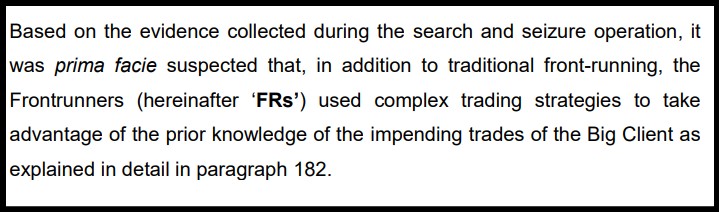
While these cases were not always retail prop firms, they show how seriously regulators treat unregulated trading activity and misuse of funds. If even registered entities face strict action for violations, unregistered prop trading schemes offer far less protection to traders.
What Indian Traders Are Saying About Prop Trading
Several Reddit discussions show how confused Indian traders are about prop trading legality.

Common themes across posts include:
- Uncertainty about whether funded accounts are legal in India
- Fear of scams after seeing friends lose money
- Warnings about unknown Indian prop firms
- Preference for foreign firms, even though payouts may be restricted
Many traders express a paralyzing fear of being defrauded, especially after seeing peers lose significant capital to “hidden” rules or sudden platform shutdowns.
Understanding how trading scams work is essential here; these schemes often lure victims with the promise of “massive leverage” or “guaranteed funding,” only to disappear once a high evaluation fee is paid or profit-sharing begins.
Key Risks Indian Traders Should Understand
If any method of trading becomes suspicious, it is important to learn about its possible risks.
1. Legal Risk
If a firm is not registered or operating under Indian regulations, disputes may not be enforceable.
2. Financial Risk
Fees paid for challenges are often non-refundable. Payout rules can be changed or enforced selectively.
3. Operational Risk
Accounts can be terminated without transparent explanations, leaving traders with no appeal mechanism.
4. Data & Payment Risk
Unregulated platforms may misuse personal data or payment information.
How to Report Trading Scams in India?
If money is stuck or payouts are denied, then learn how to file a complaint against prop trading:
- Stop Paying Further Fees Immediately
- Collect Evidence
Save emails, payment receipts, dashboards, and terms. - Contact Your Bank or Payment Provider
Report suspicious or disputed transactions. - File a Cyber Crime Complaint
Especially if the firm disappears or blocks communication. - Approach Consumer Forums
If services were misrepresented or not delivered.
Acting early improves the chances of recovery.
Need Help?
If you’ve lost money through a prop trading scheme or are stuck with an unresolved payout issue, structured guidance can help.
We assist affected traders by:
- Helping organise documentation
- Guiding complaint and escalation steps
- Ensuring actions follow applicable legal procedures
Register with us. Taking the right steps early can prevent further loss and confusion.
Conclusion
Prop trading is not illegal in India by default, but most retail-facing prop trading firms operate in a legal grey area.
While regulated proprietary trading exists within broker and institutional setups, many online prop firms offering funded accounts lack oversight, transparency, and accountability.
Real cases in India show that misuse of the prop trading model can lead to large financial losses for traders.
App-like interfaces, professional language, and social media marketing do not guarantee legitimacy.
For Indian traders, understanding how the firm is structured, where it is registered, and what legal protection exists is far more important than promised profit splits or account sizes.
In prop trading, caution is not optional; it is essential.