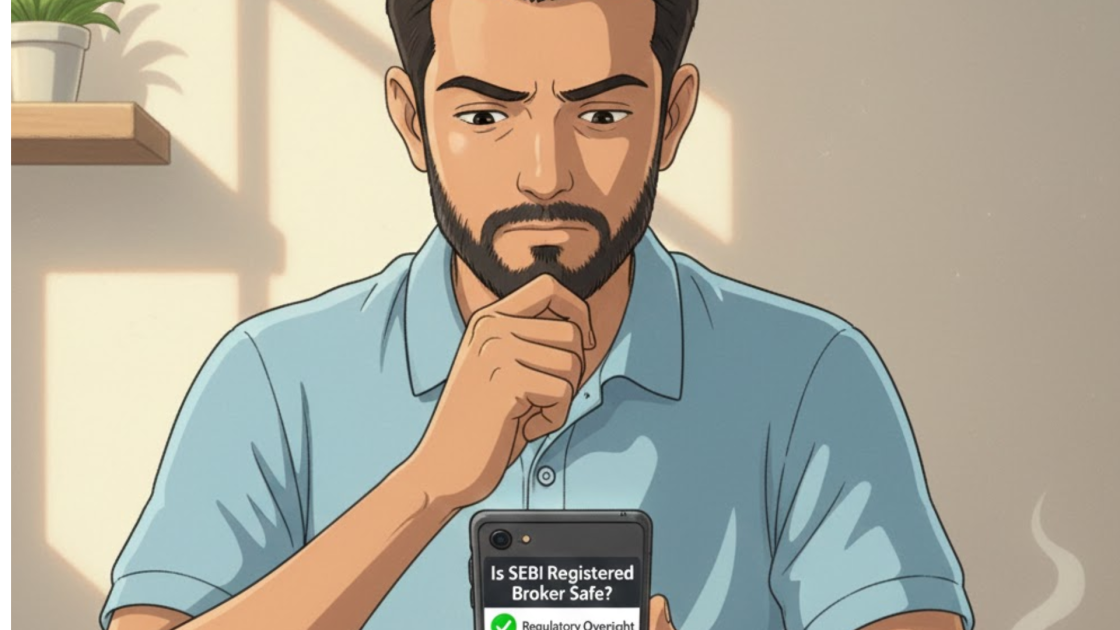
If you are fond of the stock market, you might be worrying about, “Is my broker safe?” You might have been researching online, and seen the term “SEBI registered broker” thrown around like it’s the golden ticket to security.
The keyword “Is SEBI registered broker safe?” has gained so much search volume because people are genuinely worried about where their money is going and who’s handling it.
But here’s the honest truth: SEBI registered brokers are significantly safer than unregistered ones. But registration alone doesn’t mean you can hand over your money
There’s a lot more you need to know about how SEBI registration works, what protections it actually gives you, and what red flags to watch out for.
This blog will walk you through everything about how to check if a broker is SEBI-registered, complete with real cases of fraud that happened despite SEBI registration, and exactly what you should do if something goes wrong.
SEBI Regulations for Stock Brokers
Think of SEBI (Securities and Exchange Board of India) registration as the basic license every legitimate stockbroker must have to operate in India.
It’s like getting a certification before you’re allowed to handle other people’s money. When a broker is SEBI registered, it means they’ve gone through an approval process and are monitored regularly by SEBI through inspections and complaint tracking.
Here’s what SEBI registration actually requires brokers to do.
- First, they must maintain something called “client fund segregation,” which is a fancy way of saying your money has to be kept in a separate bank account, completely away from the broker’s own money. This is crucial because if the broker faces financial trouble, your funds can’t be seized.
- Second, every SEBI-registered broker must follow strict capital adequacy norms. They need to have enough money in reserve to handle market volatility and client withdrawals.
- Third, brokers must comply with complex record-keeping and reporting requirements, including submitting weekly cash balance reports to exchanges.
Now, here’s the important part: SEBI doesn’t just hand out registration certificates and forget about it. They actively monitor brokers through surprise inspections, reviewing their records, and tracking investor complaints.
If a broker breaks the rules or engages in unethical practices, SEBI has the power to suspend or even cancel their license. Additionally, every stock exchange (NSE and BSE) maintains an Investor Protection Fund. If a broker defaults or is expelled, this fund can compensate clients for genuine and legitimate claims.
But this doesn’t mean brokers never commit fraud. The regulatory framework is designed to minimize harm and provide recovery mechanisms, but it can’t prevent every case of dishonesty. And that’s exactly what we need to talk about next.
Real Scams Done by SEBI Registered Brokers
This is where things get uncomfortable, but you need to hear this. Some of the biggest financial frauds in India have been committed by SEBI registered brokers.
The fact that they’re registered makes it even worse because people trust them more.
-
Karvy Stock Broking 2,700 Crore Securities Fraud
It is one of the most shocking examples that happened in 2019. Karvy, a large SEBI registered broker, illegally pledged the securities of nearly 95,000 clients to banks and raised about ₹2,300 crore in loans using those shares as collateral.
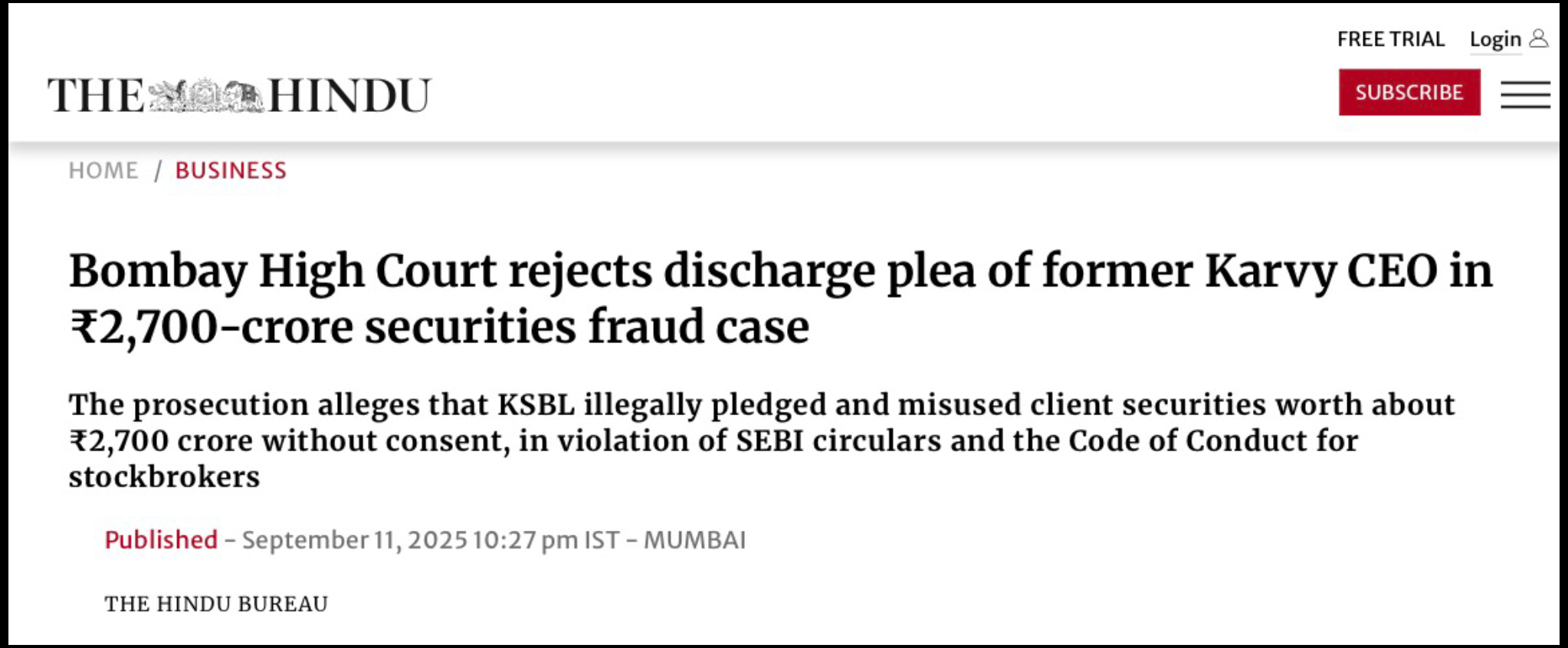
The clients didn’t know anything about it. When this was exposed, SEBI banned Karvy from the market for seven years and imposed a penalty of ₹21 crores.
The good news is that SEBI managed to recover ₹2,013 crores and return the money to about 83,000 affected investors. But thousands of people lost significant amounts, and the emotional and financial stress was immense.
-
Globe Capital Financial Fraud
The ₹35 crore Globe Capital scam is a chilling reminder that even SEBI-registered brokers can turn into fraud factories behind a polished facade.
In Mumbai, a 72‑year‑old investor, Bharat Shah, and his wife trusted Globe Capital Market with their inherited share portfolio, believing their money was in safe, professional hands.

For four years, they received glossy reports promising up to 18% returns but the profits were pure fiction. Behind the scenes, high-frequency traders misused their demat accounts, pledged the family’s shares to banks without consent, and even replied to NSE queries using forged emails in Bharat’s name.
The nightmare exploded in July 2024, when Globe’s Risk Management Department suddenly demanded ₹35 crore for a “negative balance,” exposing years of hidden malpractice.
When the truth surfaced, Mumbai Police’s Economic Offences Wing filed an FIR in November 2025, revealing Globe Capital as one of the most complained-against brokers in SEBI’s records.
-
Brokerage Churning by Motilal Oswal Sub-Broker
The Motilal Oswal Sub-Broker Case is more recent and very relatable. A 70-year-old senior citizen, with limited understanding of stock trading, was approached at her home by representatives of this well-known broker.
They promised to manage her investments for retirement. What actually happened was systematic fraud. Over just a few months, her account suffered losses of ₹4.5 lakh, while the broker made ₹2.5 lakh in brokerage commissions.
Essentially, the broker profited from her losses. The account manager was initiating trades without proper consent, and when she questioned the losses, she was fed stories about “positions running” and “recovery coming soon.”
When she finally complained and visited the branch, the manager had already resigned.
Motilal Oswal faced separate complaints as well, with ₹7 lakh in penalties for maintaining 334 pending complaints on SEBI’s SCORES grievance portal and providing incorrect cash balance reporting to regulators.
These aren’t isolated incidents. In December 2024 alone, SEBI handled over 5,600 fraud complaints. Throughout 2024-2025, SEBI initiated enforcement actions against more than 886 entities for fraudulent trading practices.
Where to File a Complaint Against Stock Broker?
If you’ve been defrauded by a SEBI registered broker, here’s exactly what to do.
First, don’t panic. The system actually works in your favor if you follow the right steps.
Step 1: Complaint to the broker directly
Write a formal complaint email or letter to the broker’s compliance officer. Send it via registered mail or email (with read receipt) so you have proof of sending it. Give them 30 days to respond. Most honest brokers will resolve issues at this stage.
Step 2: File a complaint on SEBI SCORES Portal
Visit SEBI scores portal and register using following details:
- your name
- PAN
- address
- mobile number
- email ID
This portal is SEBI’s official grievance redressal system. Click “Lodge Complaint,” select “Stockbroker” as the entity, describe your issue in detail and upload supporting documents like transaction statements, emails, contract notes, and screenshots.
Step 3: Submit and track
You’ll receive a unique complaint reference number. SEBI mandates that the broker must respond to your complaint within 30 days.
You can track the status of your complaint anytime by logging back into SCORES. SEBI typically resolves complaints within 21 days if the broker cooperates.
Step 4: Keep evidence ready
Have everything documented like:
- bank statements
- email exchanges
- call recordings
- screenshots of your account
- any written promises or advice given by the broker’s representatives
Important: The complaint must be filed within one year of the issue occurring. If the broker still doesn’t respond after the SCORES process, you can seek mediation or arbitration through SEBI’s Official Dispute Resolution (ODR) platform.
Need Help?
When you register with us, you don’t have to struggle with rules, formats, or portals on your own. You focus on getting your money and your peace of mind back, while we handle the technical and procedural heavy lifting.
Conclusion
So, is a SEBI registered broker safe?
The answer is more nuanced than a simple yes or no. SEBI registration is the bare minimum for legitimacy. It means the broker operates under regulatory oversight, must segregate your funds, and faces consequences if they break the law.
But registration alone doesn’t guarantee safety from all types of fraud.
Your real safety comes from doing your homework: verifying registration, understanding what you’re investing in, monitoring your account regularly, and knowing exactly how to report issues if something goes wrong.
The system has mechanisms to protect you, but those mechanisms only work if you use them actively. SEBI is constantly tightening regulations and taking enforcement action against bad actors, but ultimately, your vigilance is your best protection.
Stay informed, stay cautious, and invest wisely.