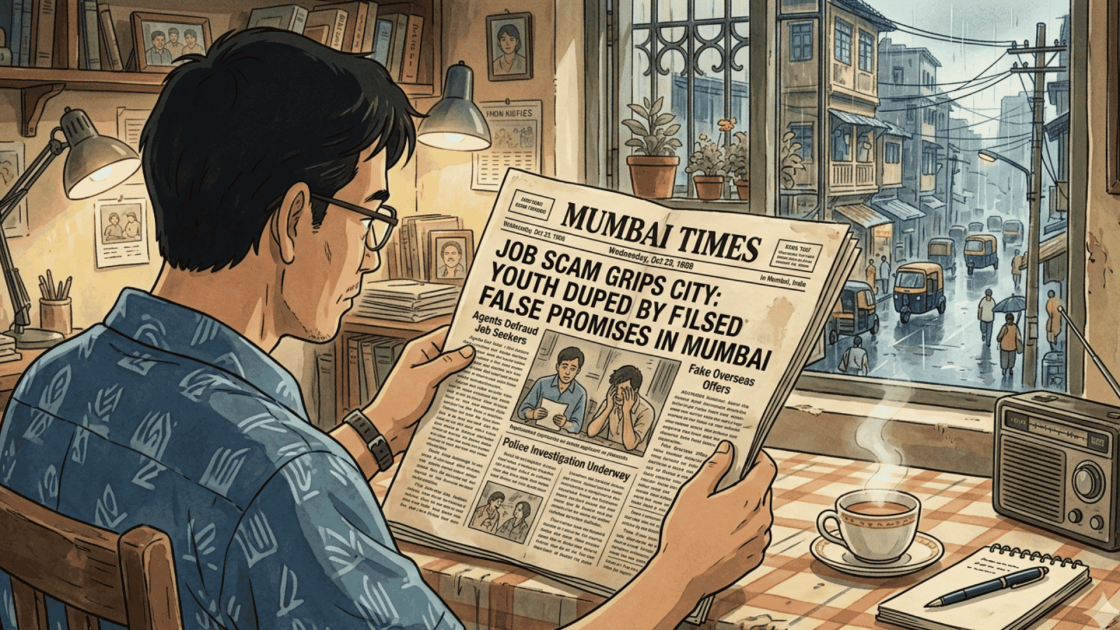
Mumbai runs on hope. People come here looking for better jobs, better pay, and a better life. And honestly, that hope is what keeps the city alive.
But it is also what scammers prey on.
Every week, someone in Mumbai gets a call or a WhatsApp message saying,
“Your profile has been shortlisted.” “Urgent hiring. Limited slots.”
It feels exciting. Finally, something is moving.
But for many people, that excitement ends with money gone and phones blocked.
If you have also received such messages and thought about responding to such texts, you need to be aware. Not all such messages are authentic.
Most of them are scams. So, let’s talk about how these job scams actually work.
What Job Scams in Mumbai Really Look Like?
Job scams are not always obvious. In fact, most of the time it looks very normal.
Someone claims they are hiring. They talk politely. Sometimes they even sound professional. But slowly, the conversation turns towards money or personal details.
That is where things go wrong.

Here are the most common patterns people in Mumbai fall into:
1. Fees to Get Hired
This is the most common trick.
In this type of scam, the scammers ask you to pay a registration fee, document verification fee, or training charges.
They promise it is refundable. Once you pay, they slow down their replies and then stop responding.
Remember, no real company charges money to hire you. Ever.
2. Work From Home Jobs
Messages that promise you can earn thousands per day with simple online work are everywhere now. Most of them come through WhatsApp or Telegram.
They ask you to pay first or complete tasks that never actually pay. Many people realise it is a scam only after they send money.
3. Fake Foreign Job Offers
Scammers plan these scams very carefully. They promise jobs abroad.
They show offer letters, visa copies, and even flight details, and everything looks real. In Mumbai, many people lost money this way, and some even handed over their passports.
Once you make the payments, the “agent” disappears.
4. Telegram Job Scam
In recent times, these types of scams have become increasingly prevalent, drawing attention due to their widespread impact on unsuspecting users.
These scams typically target individuals with the promise of quick and easy online income, often by offering simple tasks such as downloading apps, completing surveys, or sharing links.
5. Government and Big-Company Job Promises
Some scammers use this trick: they use names like BMC, Railways, or large companies to build instant trust.
Scammers know this works.
There have been many real cases in Mumbai where people paid lakhs for fake government jobs, complete with fake letters and medical tests.
6. Fake Recruitment Offices
Some scammers go a step further and rent office spaces. They conduct interviews, dress well, and speak confidently.
Then they ask for payment, and once you pay, they ghost you.
These are the major types of job scams that are currently happening in Mumbai.
How to Tell If a Job Offer Is Fake?
Since these scams are so hard to recognise, you may wonder how you can spot them.
For that, you don’t need a special kind of knowledge or skills. There are certain clues.
So, when you receive such texts or calls, just slow down and look for these signs:
- Are they asking for any kind of payment before you even join?
- Did they “select” you without a proper interview or screening process?
- Are they only communicating through WhatsApp, Telegram, or a personal email ID instead of an official company address?
- Can you find a real website, LinkedIn page, or employee profiles for the company?
- Are they pushing you to accept immediately, saying the opportunity will disappear if you don’t act fast?
That pressure to hurry is usually the biggest red flag. Real recruiters give you time to think. Scammers don’t.
Real Job Scam Cases in Mumbai
The following cases highlight how job scams in Mumbai have affected real people across different professions and age groups.
They serve as cautionary examples of how quickly a promising opportunity can turn into financial loss when basic verification is ignored.
1. Fake Luxembourg Job Scam: ₹20 Lakh Taken Through Forged Documents
A young chef from Mumbai and her two friends thought they had finally found a chance to work abroad.
They came across an Instagram ad from an immigration consultancy that promised jobs in Luxembourg.

At first, everything sounded normal; they were asked to pay a small amount as a “processing fee.”
Then the real problem started. Every few weeks, there was a new demand for money, tax charges, visa paperwork, government forms, you name it.
To keep them convinced, the agents even showed fake job offer letters and documents from big hotel brands.
Months went by. Then, almost a year. No job, no visa, just excuses.
When the answers stopped making sense, the victims finally went to the police; by then, they had lost more than ₹20 lakh.
It is a harsh reminder that if a job offer keeps asking for money and keeps delaying results, it is probably not a normal delay; it is a scam.
2. Mumbai Police Bust Fake Overseas Job Racket
In another case, Mumbai police recently cracked down on a fake overseas job racket that was targeting job seekers with promises of work abroad.
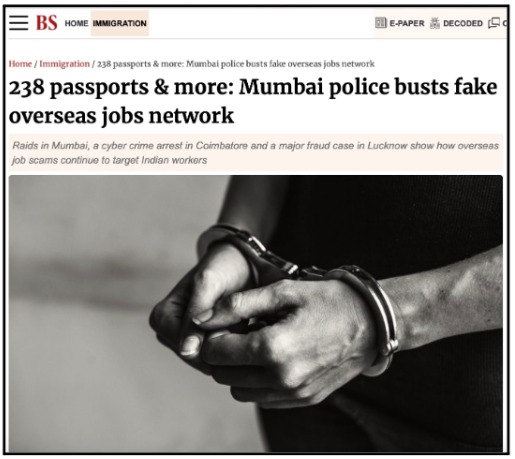
During raids in the Nagpada area, officers found 238 passports, along with fake appointment letters and documents used to make the offers look real.
These agents were illegally sending people overseas and holding their passports to keep control. Cases have now been filed against the firms involved, and investigations are ongoing.
It’s a clear warning: if someone asks for your passport early and guarantees a foreign job, pause and verify before moving ahead.
3. Part-Time Job Scam: ₹61 Lakh Loss
In a shocking case from Mumbai, a Marathi comedian was tricked into a so-called “part-time job” that started with simple online tasks and small payouts.
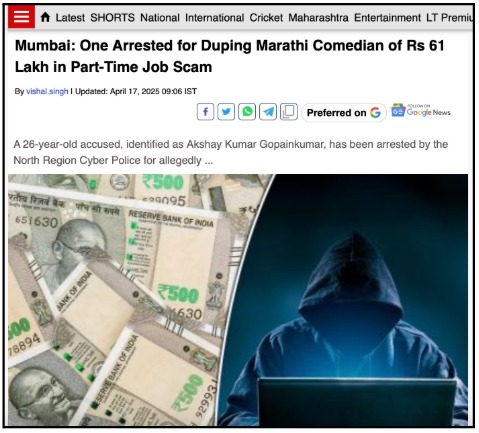
Once trust was built, the scammers pushed him to invest larger amounts and promised high commissions and showed fake profits on a dashboard.
Every time he tried to withdraw the money, new excuses came up – taxes, account upgrades, or more tasks. By the time he realised it was a trap, he had lost over ₹61 lakh.
How to Stay Safe While Job Hunting?
A few simple habits can save you a lot of trouble:
- No Upfront Fees: Any job that asks for registration charges, security deposits, or training fees before you join is a warning sign. Genuine employers cover hiring costs themselves.
- Verify Company: Always Google the company name along with words like “scam” or “review.” Check if they have a real office address, landline number, and consistent online presence.
- Check LinkedIn: A legitimate company will have real employees, recruiters, and regular activity on LinkedIn. Fake profiles or empty pages often point to scams.
- Identify Fake Job Offer Letter: Look for poor grammar, unofficial email domains instead of a company domain, or requests for money.
- Social Media Caution: Jobs promoted only through WhatsApp, Telegram, or Instagram reels should be treated carefully, especially if they promise quick money or instant hiring.
- Protect Documents: Do not share Aadhaar, PAN, bank details, or OTPs during early conversations. Real employers ask for documents only after formal offer letters and verification steps.
What to do if You Get Scammed Online in India?
If you have ever received a job message that sounded too good to be true or have been misled by scammers, do not panic. And do not feel embarrassed.
These scams are designed to fool people.
Here is what you can do to report such a job scammer:
- Save Proofs: Take screenshots of chats, emails, call records, payment receipts, and any links or documents shared. Even small details matter later.
- Report a Cyber Crime complaint online: File a complaint on cyber crime website or call the helpline number as soon as possible. Early reporting can sometimes help stop or trace the money.
- Inform Your Bank: Inform your bank or UPI app immediately and report the transaction as fraud. Ask if they can freeze or flag the recipient account.
- File a Police Complaint: Visit your nearest police station or cyber cell and file an FIR with all the evidence you have collected.
- Warn Others: Share your experience with friends, family, or online communities so others do not fall into the same trap.
Need Help?
If you have already lost money or you are confused about whether an offer is genuine, talk to someone.
Many people stay silent because they feel ashamed. That only helps scammers. If you have been scammed and are unsure about next steps, reach out to us now.
We help you by understanding your case clearly. We also help in organising evidence and guiding you through complaints.
With a thorough understanding, our team suggests what to do next.