
Quick Summary
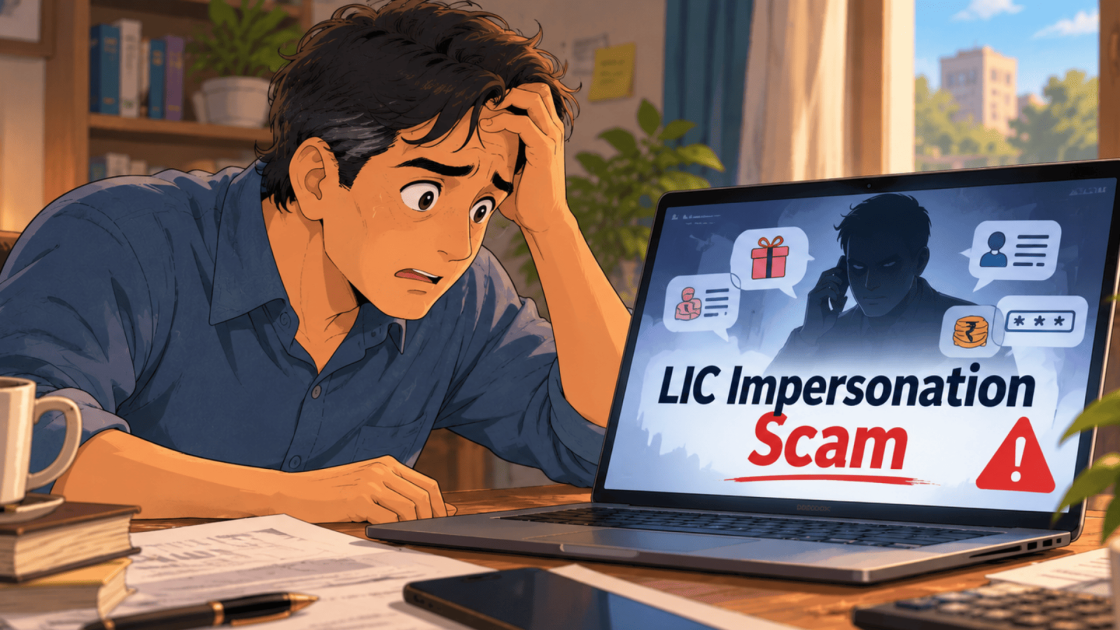
The LIC impersonation scam works because fraudsters sound like real LIC staff. They call about a bonus, a lapsed policy, or KYC, then ask for a small fee or an OTP. In one Delhi Police case, such callers took about ₹2.5 crore from policyholders. LIC says it never asks for KYC on calls, SMS, WhatsApp or email. This guide covers real cases, fake groups and apps, how to check an agent, and where to report. Read it before you answer.
Picture this. Your phone rings, and a polite voice says it is calling from LIC head office.
A bonus is waiting on your policy, the caller says, and it only needs a quick step from you.
Most people feel happy first and careful later. That gap is exactly what the LIC impersonation scam feeds on.
The caller sometimes knows your name and even your policy details, so the call feels real.
Let us walk through how the fraud works, what real victims faced, and how you can stay safe.
What is LIC Impersonation Scam?
An LIC impersonation scam happens when a stranger pretends to be from LIC or from IRDAI, the insurance regulator.
They may call as an LIC officer, an agent, a head office executive, or someone from an insurance verification team.
Their goal is simple. They want your money, your OTP, or your documents.
The call often starts with good news, like a bonus or a better policy. It ends with a payment or a request for details.
LIC has warned policyholders about fake calls, fake claims, and phishing for years.
It asks people not to share policy or bank details with unknown callers.
So treat a surprise call about your policy as a risk first and an offer later.
Fraudsters borrow other big names too.
Read how fake call scams works when the caller poses as a CBI officer, and you will see the same fear and hurry.
Fake LIC Call Scripts That Fraudsters Use Again and Again
Fraudsters rarely invent new stories. They reuse a few that already worked.
Read the list below and check if any line sounds like the call you got.
- A surprise bonus is waiting on your policy, and you only need to pay a small fee to get it.
- Your policy is about to lapse or be cancelled, and the money will go to your agent.
- A better policy is on offer, so you should stop paying premiums on the old one or surrender it.
- Your KYC update is pending, and you will face a penalty.
- The caller says they are from IRDAI and need your policy details to verify something.
- You must send PAN, Aadhaar, and a cheque to raise an objection or release the money.
Look closely, and a pattern appears. Every story has a hurry, a reward, or a fear.
And every story ends with you paying or sharing something.
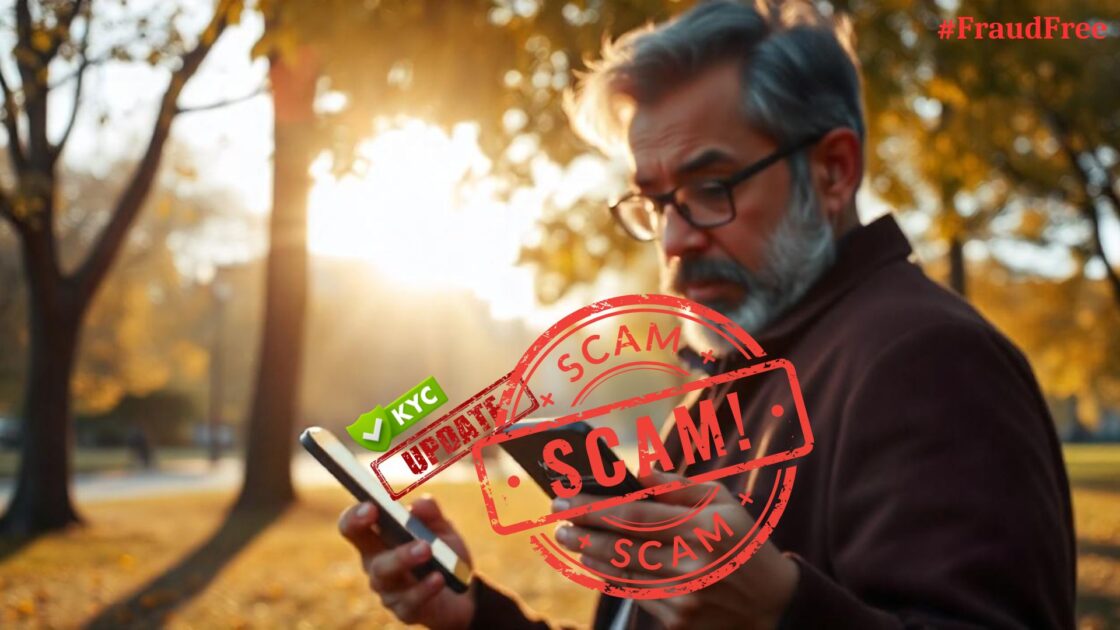
KYC deserves a special mention. LIC says it never uses calls, SMS, WhatsApp, or email to verify KYC, and banks say the same about their own KYC.
Still, the same pressure line shows up in every KYC update scam, only the logo changes.
Red Flags That Show the Caller Is Not From LIC
Even a smooth caller slips up somewhere.
Keep these signs in mind during the call, and hang up the moment you spot two of them.
- The caller rings from a personal mobile number, or calls back from a second number.
- You get a same-day deadline, or the money will go to the government.
- They ask for a fee, cheque, or transfer before they release a bonus.
- They want your OTP, PAN, Aadhaar, or voter ID.
- They discourage you from checking with your own agent or LIC branch.
Hung up on a doubtful caller and want the number reported?
The steps on how to register complaint against fake calls include the TRAI SMS route and the cyber fraud helpline.
LIC Frauds Complaints and Real Cases of Fake LIC Callers
Many people write to us after the money is gone. They ask if this has happened to others and whether police acted.
The cases below come from public news reports, and each one shows a different side of the same fraud.
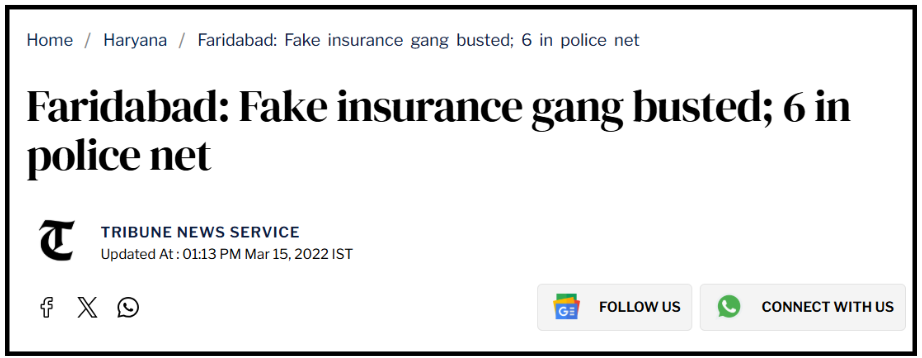
1. Delhi Police Arrest Man in LIC Bonus Racket Worth About ₹2.5 Crore
This case began in 2015, when LIC’s Executive Director in New Delhi complained to the police.
Some people were posing as LIC staff and calling policyholders.
They offered freebies like a free credit card and mediclaim cover, plus bonuses on LIC policies.
Policyholders paid. The callers then stopped answering and changed their mobile numbers.
Police said the group used SIM cards bought with fake IDs, and took payment by cheques issued in the name of their firm.
Later, police arrested a 37-year-old man in Pune.
They said he had lived there under a false identity for about six years, and seven others were already held.
Police put the total amount cheated at about ₹2.5 crore.
The lesson is simple. A cheque in a firm’s name is never a payment to LIC.
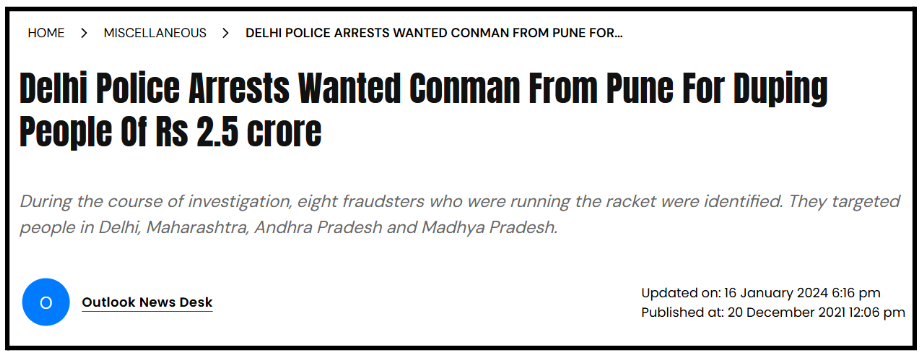
2. Faridabad Police Bust Gang Linked to 242 Cheating Incidents
Police in Faridabad arrested six people for cheating customers in the name of life insurance policies.
Police said the gang was linked to 242 cheating incidents across India, eight of them in Haryana.
The callers posed as LIC officials. They talked about the good and bad points of policies the customer already held.
Once the customer agreed, they got money paid into their accounts by online transfer, and then went silent.
One local complained that he lost ₹8.5 lakh while trying to get a new life insurance policy.
Police recovered a mobile phone, a SIM card, a walkie-talkie, and ₹1 lakh in cash.
They were still searching for two more members.
The lesson here is that the pitch is not always a bonus. Run down your old policy and sell a new one is a script too.
3. Rajouri Garden Case Where a ₹2.4 Lakh Bonus Needed a ₹30,000 Fee
A Delhi resident kept getting calls from a man who said he was from LIC’s head office in Mumbai.
The caller said the policyholder had won a bonus of ₹2.4 lakh.
To release it, the victim had to send a voter ID card, two photos, and a processing fee of ₹30,000 by cheque.
The caller promised to refund the fee along with the bonus.
The victim refused to courier the cheque and asked them to send someone. A man arrived and took the cheque.
The same day, he called LIC and learned he had been cheated.
Police traced the courier company and arrested three men.
They said the gang also targeted MTNL customers
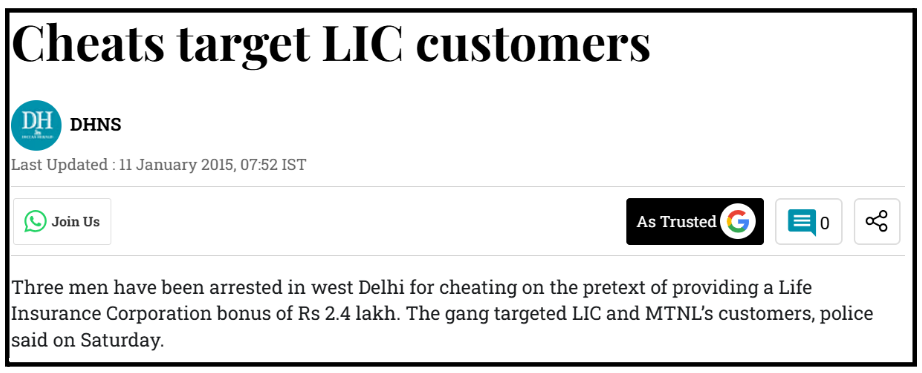
and named a former insurance company employee as the mastermind.
The lesson is that a refundable fee for a bonus is the oldest trick in the book. One call to LIC exposed it.
4. Bengaluru Policyholder Told to Claim ₹1.45 Lakh on the Same Day
A policyholder in Bengaluru got a call from an unknown number.
The caller said he should claim ₹1,45,580 from LIC that very day, or the money would move to a government account.
He said he would ask a relative who worked in LIC. The caller replied that policy file details were a secret, and the call dropped.
A few minutes later, the same woman rang from another number and passed the phone to a man who claimed to be the LIC officer handling the policy.
This man asked for documents and a crossed cheque of ₹14,999 in favour of a private firm.
He said LIC had to invest part of the amount there.
The woman had read out his and his father’s names correctly, but she got the PIN code wrong. That small slip gave her away.
According to the report, the police station he approached declined to take his complaint.
The lesson is that two numbers, a secret file and a same-day deadline, are a script, not a coincidence.
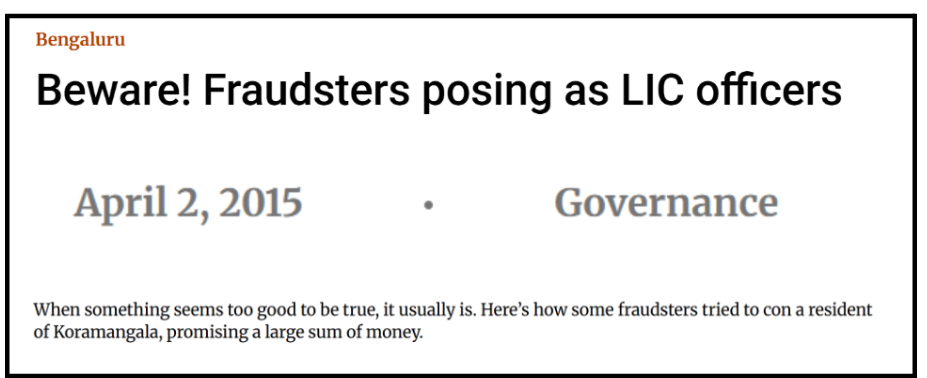
The cities and details differ, but the script is the same. A surprise reward, a hurry, and a payment to someone who is not LIC.
LIC Fake WhatsApp Group and How to Handle It?
Some people get added to a group that carries LIC’s name or logo, though they never asked to join.
If that has happened to you, this part explains the risk and the safe way out.
LIC has warned that numbers using its logo or other signs may not be real.
It asks customers to use only its official WhatsApp number, which LIC lists in its public notice.
Check that number on LIC’s own website before you save it.
Scammers like big brand names because they build trust fast. An LIC-themed group can run the same way as any other fake group.
Such a group can work in three ways.
- It posts links to fake pages or forms that ask for your login, OTP, or policy details.
- It pushes new policy or bonus offers and asks for a fee to book them.
- It shows screenshots of payouts and thank you notes to build false trust.
If you find yourself in one, do these things in order.
- Do not click any link or open any file inside the group.
- Check the admin. If the number is not LIC’s official number, treat the group as fake.
- Leave the group, report it to WhatsApp, and block the admin.
- Change your WhatsApp privacy settings so strangers cannot add you to groups.
- If you clicked or paid, call your bank and report it on the cyber portal.
Fake groups also use blank profiles and made-up payout screenshots.
Our short read on how to identify a scammer on WhatsApp helps you spot them quickly.
Is My LIC App Genuine or Fake?
A new app on your phone feels like a safe shortcut to pay premiums or check your policy.
But fake apps copy the look of real ones to steal logins and OTPs.
This part shows how to check before you install, and what to do if you already did.
LIC asks customers to register on its official portal and to download the LIC Digital App from the Google Play Store or the iOS App Store. That is the safe route.
Any app that reaches you as a file or link on WhatsApp, SMS, or email is a red flag.
Check these five things before you install.
- Use only the official app stores.
- Publisher name. The store page should show LIC as the publisher, not a person or an unknown company.
- Name and logo. Look for spelling errors, odd spacing, or a logo that looks slightly off.
- Reviews and downloads. A real app from a big company shows many downloads and reviews.
- A policy app that asks for SMS, contacts, accessibility, or device admin access is a warning sign.
Wondering can scammers hack my phone through one bad install? They can, and that page lists the signs to watch for.
If you already installed a doubtful app, uninstall it at once and call your bank.
Then change your passwords and report the fraud.
Search results can also lead you to look-alike websites. LIC has said its official website ends with .in, not .com or .org.
How to Verify an LIC Agent Before You Pay?
You may meet a new LIC agent at your door, on a call, or in a message.
Before you hand over a cheque or a document, a short check can settle your doubt. Use the steps below in this order.
- Ask for the name, licence number, and ID card. A real agent will not mind.
- Match the licence number on IRDAI’s agent check, where you can search by name, licence number, or agent ID.
- Call LIC’s helpline, or visit your branch or your regular agent, to confirm the person.
- Pay only through LIC’s official channels, never to a personal account or a private firm.
- Check your policy record after paying, and confirm the premium shows there.
Step four matters even for people who once were agents. Police in Chennai arrested a former LIC agent who allegedly asked a customer to send premiums to his personal account and then forged receipts.
Got the agent’s number from a message or a stranger?
Two minutes on how to check if a phone number is scam can save you a risky callback.
Where To Complain If a Fake LIC Caller Got Your Money?
If you already paid or shared an OTP, speed matters more than anything else.
Do these steps in order and do not feel ashamed, because careful people fall for this too.
For the very first hour, the steps on what to do if online fraud happens are laid out in order, so nothing is missed.
- Call your bank and ask them to block cards, UPI, and net banking.
- Call the cyber fraud helpline and file a complaint on the National Cyber Crime Reporting Portal. Note the acknowledgement number.
- Tell LIC about the call on its helpline. LIC also asks people to report spurious calls and messages to its own mailbox, which is listed on its website.
- Report the number on the Chakshu facility of the government’s Sanchar Saathi portal.
- Visit your local police station with a written complaint, call logs, screenshots and your bank statement.
Not sure which office or portal fits your case? This page on where to report cyber crime lists every online and offline option.
One note on LIC’s own complaint form. Its vigilance portal accepts complaints only against LIC offices, employees, agents, and medical examiners.
A stranger posing as LIC falls outside that, so police and the cyber portal are the right doors.
Did a caller who sounded like LIC already take your money, your OTP, or your documents?
Register with us and our team will guide you through documenting the fraud and reporting it to the right authorities.
Simple Habits to Stay Safe From LIC Impersonation Scam
You do not need special skills to stay safe.
A few small habits, repeated every time, stop most of these calls.
- Hang up and call back on LIC’s helpline, never on the number that called you.
- Keep your policy number private until you have confirmed who is asking.
- Give yourself a day before acting on any bonus or claim. A real claim will still be there tomorrow.
- Install apps only from the official stores.
- Talk to your parents and elders, because older policyholders are often the target.
Conclusion
The LIC impersonation scam survives because it sounds helpful.
A bonus, a better policy, or a quick KYC fix feels like good news, so people stop asking questions.
The cases above show the same pattern each time. A polite caller, a deadline, and a payment to someone who is not LIC.
You can break that pattern without any special skill. Hang up, check through LIC’s own helpline, and pay only through official channels.
If something slips through, act within hours and report it on the cyber portal.
Report. Recover. Stay Fraud Free.
Frequently Asked Questions
Hang up and call LIC's helpline, (022) 6827 6827, yourself. A real caller will not mind the wait.
Note the number, take screenshots and tell LIC on its helpline. Then report it on the National Cyber Crime Reporting Portal, or call the helpline if money was lost.
Call your bank at once to block cards and UPI, then call the cyber fraud helpline. Change your passwords and file a complaint with every screenshot.
No. LIC asks customers to download its app only from the Play Store or App Store. An app file sent in chat can read your OTPs.
LIC says it does not offer exaggerated bonuses through third parties. A request for a fee, a cheque or a personal account to release money is a red flag.


 Add us as a preferred source on Google »