

If you have lost money or feel misled by the arrangement linked to Platinum Portfolio, you are not alone.
It is painful to realize that your trust was broken by someone who seemed professional.
We are writing this blog to help victims like you understand what happened, why these situations occur, and the practical steps you can take to protect your rights and recover from this difficult experience.
Platinum Portfolio Review
If you’ve come across the name “Platinum Portfolio” in search of investment guidance, it’s understandable to feel confused. This setup was marketed as a professional service offering portfolio management and high-return trading strategies.
But for one investor, what started as a promise of wealth became a nightmare when she discovered her life savings were gone. This wasn’t a professional financial institution; it was an unregistered advisory firm that exploited her trust.
It is vital to clear up a common confusion here. Just because a name sounds professional doesn’t mean it’s the legitimate business you might find in official records.
There is a registered company called ‘Platinum Portfolio’ (CIN – U65993WB1991PTC052898), which is associated with Ram K Baheti.
That entity is entirely separate from the unregistered operation run by Kshitij Dinesh Joshi involved in this complaint. Scammers often use similar-sounding names to gain an air of legitimacy, which is why it is so easy to fall into the trap.
That is why investors should always independently verify:
- Whether the entity is SEBI-registered
- Who exactly is operating it?
- Under what regulatory category are they functioning?
Many retail investors skip this step because the arrangement initially appears trustworthy, but in the world of investments, trust is not a substitute for due diligence.
Is Platinum Portfolio SEBI Registered?
Based on the information currently available to us, we could not identify any SEBI registration linked to the alleged Platinum Portfolio arrangement discussed in the complaint.
We also came across references suggesting that Kshitij Dinesh Joshi allegedly held a NISM provisional certification related to PMS distribution.
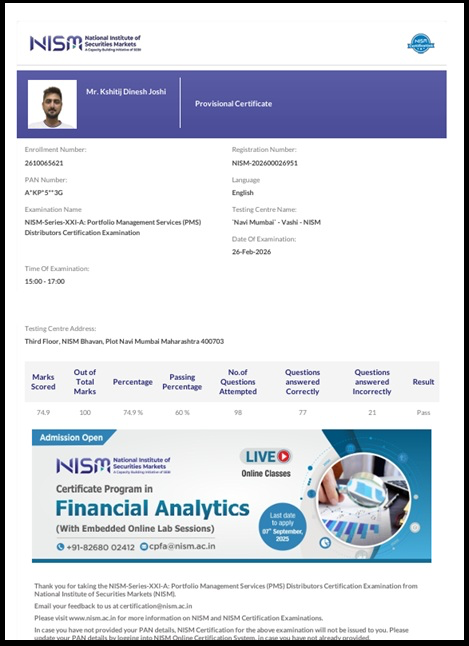
However, investors need to understand an important distinction here.
A NISM provisional certificate is not the same as SEBI registration.
It does not authorise someone to:
- Manage client funds
- Run discretionary portfolios,
- Operate portfolio management services independently,
- Take trading decisions on behalf of investors.
A provisional NISM certificate is simply a temporary examination-related document issued while the final verification and certificate process is completed.
Unfortunately, many retail investors misunderstand these certifications and assume they automatically mean the person is authorised to manage investments.
Also Read: GM Trade, an AI chatbot that couldn’t confirm its own registration.
Platinum Portfolios Fraud
The complaint we received was not just about trading losses.
According to the investor who approached us, around ₹2.02 crore was allegedly transferred over time into an arrangement linked to Platinum Portfolio.
What started as a promising investment opportunity eventually turned into a financial and emotional nightmare for Reena (name changed).
Back in September 2024, Kshitij introduced her to an investment setup called “Platinum Portfolios.”
He appeared trustworthy, responsible, and someone she already knew through personal connections. Naturally, she felt comfortable placing her trust in him.
The Illusion of Initial Profits
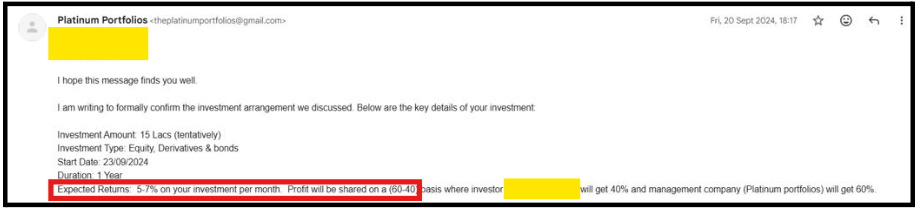
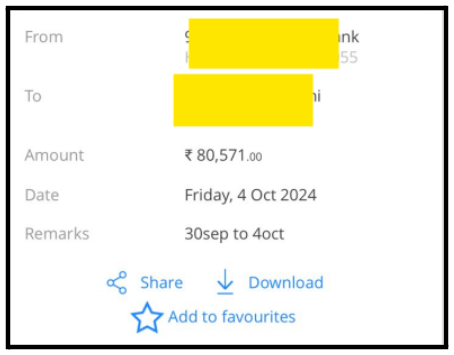
She began with an investment of ₹80,571. Almost immediately, the results seemed incredible.
Within the first week, she received a statement showing profits of ₹2.07 lakh, and the reported portfolio value had jumped to ₹17.99 lakh.
Seeing such impressive returns, Reena felt confident and decided to invest more.
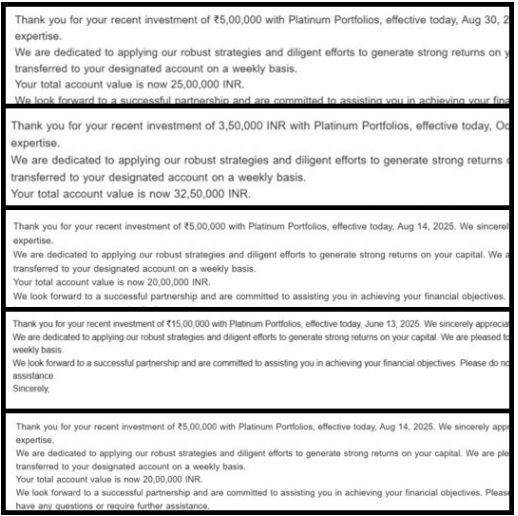
Over the next few months, the numbers kept getting bigger. Weekly statements showed profits of ₹3.76 lakh, then ₹7.58 lakh, and later ₹10.96 lakh.
At one point, the reported portfolio value crossed ₹1.7 crore.
Kshitij allegedly celebrated these milestones with her and even spoke about achieving ₹1 crore in profits by his birthday in March.
Encouraged by the apparent success, Reena continued investing and eventually transferred approximately ₹2.02 crore (₹1.7 crore plus ₹32.5 lakh), including her personal savings and family funds.
Emerging Warning Signs and Margin Shortfalls
Then, in early 2025, things started changing.
The profit updates became less frequent, and Kshitij began attributing poor performance to external events.
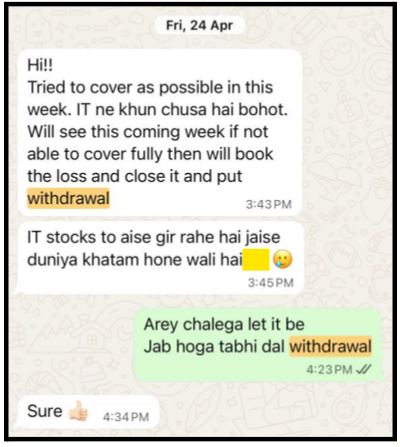
Soon, the statements started showing losses instead of profits. He also requested additional funds from Reena on multiple occasions, saying they were needed to cover margin shortfalls.
Because she trusted him and believed the losses were temporary, she continued sending money.
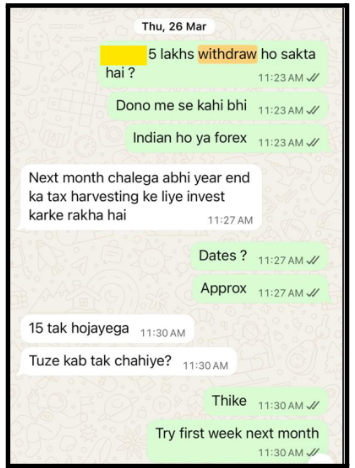
The real warning signs appeared when Reena needed ₹5 lakh for personal use and asked to withdraw part of her investment. Instead of processing the withdrawal, Kshitij allegedly kept delaying it.
One time, he said the funds were locked in open positions. Another time, he mentioned tax harvesting. Every request was met with a new explanation, but the money never arrived.
The Devastating Discovery and Final Admission
The truth finally came out on 14 May 2026.
For the first time in months, Reena logged into her Zerodha account herself. What she found was devastating. The account balance showed just ₹5,000.
There were no open positions and virtually nothing left of the money she had invested.
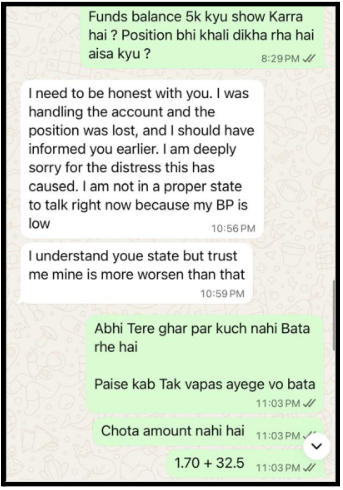
When she confronted Kshitij, he admitted that the positions had been lost. He apologised and said he was not in the right state of mind to discuss the matter further.
Subsequent reviews of the records painted an alarming picture.
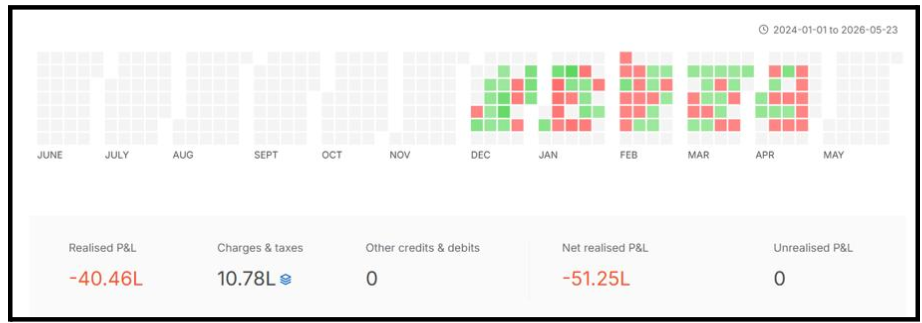
Trading records showed losses exceeding ₹51 lakh, while F&O records from August 2024 to May 2026 reflected cumulative losses of more than ₹40 lakh.
Bank records confirmed that Reena had transferred approximately ₹2.02 crore to Kshitij during the entire period.
In May 2026, Kshitij acknowledged his failure in writing. He stated that he was “standing below zero, not just financial loss but emotional as well as relationship loss.”
Like many unregistered stock advisors promising loss recovery and guaranteed returns, the reality of the trading strategy could not match the verbal assurances.
He promised that he would repay the money.
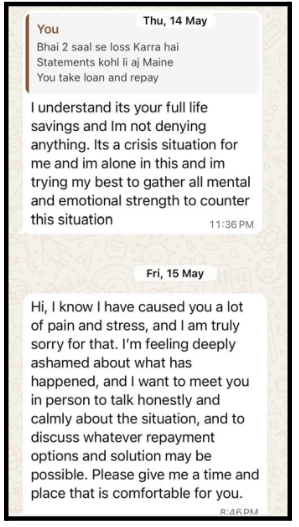
However, when Reena approached us, no repayment had been made and no repayment plan had been put in place.
For Reena, this wasn’t just about losing money. It was about seeing years of trust disappear, along with approximately ₹2.02 crore that had been built from personal savings and family funds.
What began with promises of extraordinary returns ended with an account balance of just ₹5,000 and no clear path to recovery.
Also Read: Universe Investments, F&O, IPOs, and commodities, all under one unregistered brand.
What Should Investors Verify Before Investing?
Before investing money into any portfolio management arrangement, investors should always take a few verification steps themselves instead of depending only on trust or verbal assurances.
A little verification at the beginning can help avoid major financial stress later.
1. Check Whether the Entity Is SEBI Registered
The first thing investors should verify is whether the person or entity is actually registered with SEBI.
Many people use professional-sounding titles, certifications, or company names, but that does not automatically mean they are authorised to manage investor funds.
Always ask for:
- SEBI registration details,
- registration category,
- and official registration numbers.
Then, verify those details independently through SEBI records.
2. Understand What Certifications Actually Mean
Many retail investors misunderstand financial certifications.
For example, a NISM examination certificate or provisional certification does not automatically authorise someone to run portfolio management services or take discretionary trading decisions on behalf of clients.
Investors should clearly understand the difference between a distributor, a research analyst, an investment adviser, and a SEBI-registered portfolio manager.
All of them operate under different regulatory permissions.
3. Never Depend Only on Profit Screenshots
Fake trading profit screenshots and weekly P&L updates can look convincing, especially when returns appear consistently strong.
But investors should never rely only on screenshots or informal reports shared through chats.
Always cross-check performance directly through your broker account, official statements, and independent account access.
4. Avoid Sharing Complete Account Control
No matter how trusted someone appears, investors should be extremely cautious before sharing:
- Login credentials,
- Passwords,
- OTPs,
- Full operational control of trading accounts.
Once account control shifts completely to another person, the investor may lose visibility over what is actually happening inside the account on a daily basis.
Lost Money with Platinum Portfolio? Here’s How to File Your Complaint
If you believe you may have faced a similar issue, it is important to act quickly and keep everything properly documented.
Many investors panic after losses and start making calls or verbal accusations immediately, but the better approach is to proceed step by step with proper records.
- Gather Your Proof: Collect bank transfers, chat logs, emails, and account statements, arranging them chronologically to show a clear timeline.
- Draft a Fact-Based Statement: Write down what happened, including exact dates, total money transferred, promised returns, and actual losses incurred.
- Send a Formal Notice to the Entity: Email the operator or firm directly to request an account reconciliation and written explanation officially.
- Escalate to SEBI: Report the unregistered operator to SEBI via email with all attached proofs to create an official regulatory record.
- Consult a Legal Expert: Seek advice from a qualified securities lawyer for large financial losses, avoiding fee-charging “recovery agents.”
If you want to know the full process of how to file a complaint, check our detailed guide: How to file complaint against unregistered portfolio managers.
Need Help?
Dealing with unauthorised portfolio management setup is frustrating. Plus, what to do next is the major confusion for most of the victims. That’s where professional help comes in.
If you need help regarding the complaint process, our team can help with:
- Organising evidence
- Preparing structured complaints
- Drafting formal emails
- Understanding the grievance process step by step
Many investors feel overwhelmed after facing financial losses because they do not know where to begin. Proper documentation and timely action can make a major difference.
You can register with us now and we will guide you on every step.
Conclusion
If you have lost money due to an unauthorized arrangement, focus on actionable recovery steps rather than panic.
First, secure all records, bank statements, chat transcripts, and trading logs, as these are essential for your complaint.
Second, formally report the issue to the relevant exchange investor grievance cell and regulatory authorities.
You can also seek professional guidance to structure your case properly.
Taking these systematic steps is the most effective way to protect your remaining interests and pursue a resolution.
Frequently Asked Questions
1. How do I start the recovery process for losses in Platinum Portfolio?
Start by immediately gathering all your evidence, including bank statements showing transfers to Kshitij Dinesh Joshi, chat logs, and trading statements.
These records form the backbone of your complaint and are essential for any official regulatory or legal action.
2. Is filing a formal complaint against Platinum Portfolio necessary?
Yes, official documentation is critical because verbal promises of repayment or explanations often lead to endless delays.
Filing a written, structured complaint creates a necessary paper trail that exchange grievance cells and legal authorities can formally review.
3. What should I include in my complaint to make it effective?
Keep your complaint factual by clearly outlining the timeline of your investments, total funds transferred, and the specific unauthorized trading actions.
Backing up these points with clear bank transfer proofs and account screenshots makes your case significantly stronger for the authorities.
4. Can I get my money back from Platinum Portfolio by following up on my own?
While you should maintain direct follow-ups, recovering funds from an unauthorized, unregistered arrangement can be highly complex.
Getting professional guidance ensures your case is structured correctly, which significantly improves your chances of a successful resolution through regulatory bodies.
5. What if Kshitij claims the Platinum Portfolio losses are due to “market conditions”?
Market risk is standard, but completely unauthorized account handling and hiding multi-crore losses under fake profit updates is a serious violation.
Focus your complaint on the lack of proper SEBI registration and unauthorized fund management rather than simple market fluctuations.





 Add us as a preferred source on Google »

