

Quick Summary
A technical malfunction on a stock broker’s trading platform caused a client a loss of ₹39,242, and the broker did not initially make it good. The claim was modest by the standards of most disputes, and many investors would have written it off. Instead, the evidence was documented from the broker’s own records, the loss was tied to the malfunction, and a complaint was filed on SEBI SCORES after informal replies stalled. The broker refunded ₹38,927, roughly 99 percent of the claim.
A broker’s platform fails at the wrong moment, and you are left with a ₹39,242 loss that most people would simply write off.
Faizan Ansari (name changed), from Lucknow, Uttar Pradesh, refused to do that.
Here is how we took his claim to SEBI SCORES and got ₹38,927 back.
Broker Platform Technical Glitch That Caused a ₹39,242 Trading Loss
Faizan traded through a large broker’s mobile platform. On one trading day, the platform malfunctioned, and a loss followed.
The loss came to ₹39,242.
Add detail: the date of the glitch and what the app showed or refused to do.
Technical failures of this kind are not a trader’s fault. SEBI treats a malfunction in a broker’s electronic systems as the broker’s responsibility, with duties to inform clients and exchanges and to report the cause.
Where that failure causes a client’s loss, the client can claim it back.
Anyone who suffered a similar loss can start a broker complaint, whatever the size of the amount involved.
Why Investors Abandon Small Broker Glitch Compensation Claims?
A loss of ₹39,242 sits in an awkward place. It is large enough to hurt, yet small enough that many investors assume recovery is not worth the effort.
Brokers know this.
A first reply that offers nothing, or only a fraction of the loss, often ends the matter when the client gives up.
Faizan did not give up.
What You Must Prove to Claim Compensation for a Broker Glitch Loss?
A claim like this rests on three points:
- The platform malfunctioned.
- The malfunction affected the client’s orders or positions.
- The loss followed directly from that effect.
Each point is proven through the broker’s own screens, order records, contract notes, and written replies.
The client’s task is to preserve them before they fade from memory.
How We Handled a Small Broker Glitch Claim Through SEBI SCORES
Our approach treated a ₹39,242 claim with the same discipline as a claim ten times larger.
Step One: We Documented the Loss and the Failure Together
We collected the order history, contract notes, screenshots, and any messages from the day.
The loss was tied to the malfunction rather than left as a general complaint about trading outcomes.
Step Two: We Calculated the Claim From the Broker’s Own Records
The figure of ₹39,242 came from the broker’s own documents.
A claim built on the broker’s numbers leaves little room for argument about the amount.
Step Three: We Grounded the Complaint in SEBI’s Glitch Framework
A broker must treat a platform malfunction as an incident to be reported and explained.
We framed the complaint around that duty and asked for the broker’s records of the incident.
Step Four: We Filed a Complaint on SEBI SCORES
When the broker did not settle on its own, we filed a complaint on SEBI SCORES with the evidence attached.
The broker then had to answer in a formal, time-bound process.
Step Five: We Followed the Reply Through to Payment
A reply is not a refund.
We tracked the broker’s response until the refund was actually paid.
How Much Did the Broker Refund Through the SEBI SCORES Complaint?
Faizan’s claim stood at ₹39,242.
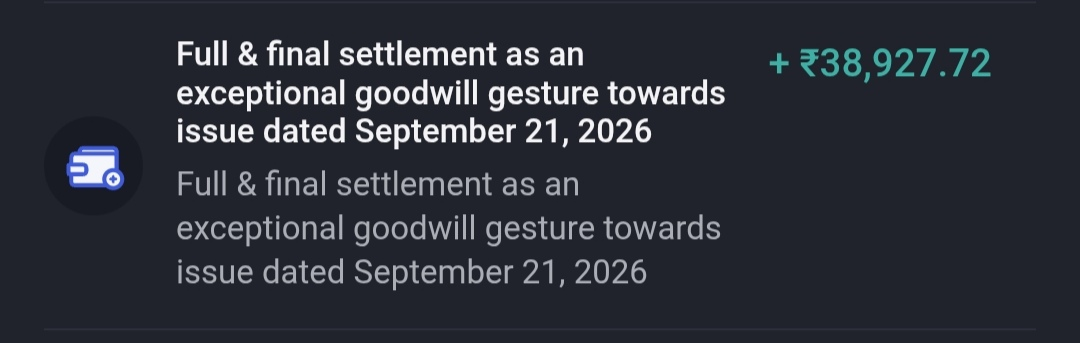
Through the SCORES process, the broker refunded ₹38,927, about 99 percent of the claim.
Lost Money to a Broker Glitch and Wondering If It Is Worth Pursuing? Our Team Can Help
Faizan’s refund came on a claim many people would abandon. Save your screenshots, contract notes, and the broker’s reply today, then check the total against the loss.
Register with us and we will take it from there.
Conclusion
The size of a claim does not decide whether it deserves pursuit. Faizan’s loss was modest, and the refund recovered nearly all of it.
That outcome came from treating the evidence seriously, using the broker’s own records, and carrying the complaint into a formal forum when informal replies stalled.
Investors who lose money to a platform failure should preserve their screens and statements first, then compare the total loss against the broker’s response before accepting any offer.
If a SCORES complaint does not resolve a similar dispute, the SMART ODR portal offers a further route.
Report. Recover. Stay Fraud Free.
A malfunction in a broker's systems is the broker's responsibility. Whether it must compensate depends on the proof linking the failure to your loss. Yes. This case recovered about 99 percent of a ₹39,242 claim. Smaller claims are often settled once a formal complaint is on record. Keep screenshots, order history, contract notes, and any message from the broker. Note the date and exact times of the problem. It places your complaint before SEBI in a formal process, so the broker must respond within a set period. Compare it against your documented loss. A first offer is often a starting position rather than a full answer.Frequently Asked Questions





 Add us as a preferred source on Google »

