

Quick Summary
Initial Claim: ₹23,000 Core Violation: A broker never disclosed a flat brokerage rate of ₹50 per lot at onboarding, and that charge alone drained almost an entire trading account despite an actual trading loss of just ₹1,506. Forum Used: Direct negotiation with the broker, after an inadequate initial settlement offer was rejected. Recovery Secured: ₹23,000, the full claim amount. Yusuf Sheikh (name changed) is from Nashik, Maharashtra. His actual trading barely lost him anything. It was the brokerage bill nobody had told him about that took almost everything else.
Yusuf was persistently contacted by a broker’s representative and encouraged to open a trading account, with assurances of guidance and algorithmic trading support built into the pitch.
Nowhere in that onboarding conversation was he told about the flat brokerage rate that would apply to every single lot he traded, a fixed charge of fifty rupees regardless of trade size or outcome.
₹1,506 Trading Loss vs. Total Account Wipeout: Exposing the Real Drain
Once Yusuf began trading under the team’s guidance, deductions from his account grew rapidly. His actual realised trading loss across the period came to just ₹1,506, a genuinely small figure for the activity involved.
Despite that, his capital was almost entirely wiped out.
The gap between a fifteen hundred rupee trading loss and a near total account drain pointed to one clear cause, brokerage charges accumulating on a scale disconnected from the trading itself.
The Legal Difference Between Disclosed Rates and Buried Fees
When Yusuf raised the issue, he was told the brokerage rate was mentioned somewhere on the platform.
It had never been presented to him clearly at onboarding, never shown as a formal fee structure, and never confirmed through any consent form specific to that charge.
A rate technically present in fine print somewhere on a platform is not the same as a disclosed fee. SEBI’s own rules require brokers to make charges transparent before account activation, not buried and discoverable only after the damage is done.
Why We Rejected the Broker’s Initial ₹3,600 Settlement Offer?
Once challenged, the broker offered a refund of ₹3,600. Given that the undisclosed brokerage had consumed nearly the client’s entire capital, this offer covered only a small fraction of what had actually been taken.
Anyone offered a settlement this disconnected from the actual damage can file a stock broker complaint rather than accept the first number put in front of them, since an inadequate offer is often a starting position, not a final one.
How Our Strategy Turned a Lowball Offer Into a ₹23,000 Restitution?
The gap between a ₹1,506 trading loss and a near total account wipeout became the single clearest number in this entire case.
Step One: We Isolated The Actual Trading Loss From The Total Drain
Yusuf’s realised trading loss was pulled directly from his account statement and placed next to the total capital reduction, making the brokerage component impossible to ignore.
Step Two: We Requested The Broker’s Own Disclosure Record
We formally asked the broker to produce proof that the ₹50 per lot rate had been disclosed to Yusuf before account activation, a document that was never provided in response.
Step Three: We Rejected The ₹3,600 Offer In Writing
Our response detailed exactly why the initial offer fell far short of the actual harm caused, using the trading loss versus brokerage comparison as the central argument.
Step Four: We Cited The Specific Disclosure Clause Breached
The relevant SEBI Master Circular provision requiring transparent disclosure of all charges before account activation was cited directly, tying the case to a specific, current regulatory requirement.
Step Five: We Sent A Legal Notice Demanding Full Restitution
Our notice moved past the earlier informal exchange, formally demanding the full undisclosed brokerage amount rather than continuing to negotiate around the inadequate initial offer.
Step Six: We Pushed Through Direct Negotiation To A Full Settlement
With the disclosure gap and the disproportionate charges both clearly documented, our team secured a complete resolution rather than settling for an improved but still partial offer.
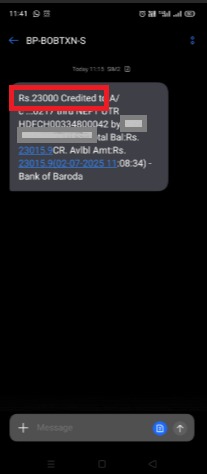
Through direct negotiation, the matter was resolved with a full recovery of ₹23,000.
Was Your Brokerage Rate Never Actually Shown To You? Our Team Can Help
Yusuf’s case turned on one comparison, his real trading loss against his real account drain. Pull your own account statement today and run that same comparison before accepting any settlement offer.
Register with us and we will take it from there.
Conclusion
A brokerage rate that only surfaces after a client questions their losses was never properly disclosed in the first place, regardless of where it may technically appear on a platform.
Yusuf’s case shows why the size of the trading loss matters less than the size of the gap between that loss and the total capital taken.
A small trading loss next to a large account drain is not a coincidence, and escalating through a SEBI SCORES complaint ensures a lowball settlement offer is not accepted as the broker’s final position.
Treating that first offer as a starting point rather than an answer is often what separates a partial recovery from a full one.
Report. Recover. Stay Fraud Free.
Frequently Asked Questions
No. SEBI rules require charges to be disclosed transparently before account activation, not merely present somewhere a client has to discover on their own.
Compare your realised trading profit or loss from your account statement against your total capital reduction. A large gap between the two usually points to brokerage or churning.
Not automatically. A first offer is often a starting position. Comparing it against your actual documented loss will show whether it genuinely covers the harm caused.
The absence of a formal fee structure shown at onboarding, a missing consent form for that specific charge, and account statements showing the undisclosed rate applied are all relevant evidence.
Yes. Any brokerage structure, flat or percentage based, must be disclosed clearly before a client begins trading, since either structure can result in significant, non obvious charges.





 Add us as a preferred source on Google »