

Quick Summary
Initial Claim: ₹80,000, covering the profit share payments made and the trading loss that followed Core Violation: A firm registered as a Research Analyst charged the client a percentage of his trading profits on every winning trade, a fee structure SEBI explicitly prohibits for research analysts. Forum Used: Direct negotiation with the firm’s compliance team, following a formal legal notice. Recovery Secured: ₹70,000. Prathamesh Naik (name changed) is from Panvel, Maharashtra. He was offered a deal that sounded fair on the surface. No fee if he lost, a share of the winnings if he won. That structure itself is exactly what SEBI bans.
Prathamesh began exploring futures and options trading in mid 2025. A representative of a firm registered with SEBI as a Research Analyst reached out to him over WhatsApp, offering trade signals on index options.
The arrangement was framed simply. He would pay forty percent of profits on regular trades, and fifty percent on trades closed on expiry day. If a trade lost money, he was told, no fee would apply at all.
This structure sounds like it protects the client. It does the opposite. A Research Analyst charging a share of profits creates a direct financial incentive to push riskier, higher frequency trades, regardless of what actually suits the client.
Anyone offered a similar profit sharing structure can file a SEBI complaint against a research analyst to report this arrangement, since profit sharing is banned outright, not just poorly disclosed.
Fee on Gains, Loss on Trades: How Profit Sharing Drained the Account?
Across the engagement, Prathamesh paid a total of ₹36,700 in profit share on winning trades. No written agreement, invoice, or fee schedule accompanied any of these payments.
Then, on a single call option trade, he was directed into a position that produced a loss of ₹51,700.
The promised protection, that losses would carry no fee, did not extend to actually preventing the loss itself.
Double Down to Recover: How the Analyst Pushed for More Capital?
Rather than pausing after the loss, Prathamesh was pushed to deposit additional funds, framed as necessary to recover what had gone wrong. This is the same recovery language used to keep a client trading well past the point of caution.
No risk profiling or suitability assessment had been conducted before he was ever advised on complex options positions in the first place.
How Fraud Free Built the Case Against Prohibited Profit Sharing?
The profit sharing structure itself was the clearest violation in this case, since SEBI’s prohibition on it leaves very little room for interpretation.
Step One: We Documented The Fee Structure As Stated By The Firm
Every message describing the forty and fifty percent profit share terms was compiled as direct evidence of an arrangement SEBI bans outright, regardless of how it was framed to the client.
Step Two: We Separated The Profit Share Payments From The Trading Loss
The ₹36,700 paid in profit share and the ₹51,700 lost on the single directed trade were documented as two distinct heads of claim, each resting on its own regulatory basis.
Step Three: We Flagged The Missing Risk Profiling
The absence of any suitability assessment before advising on options trading was built into the complaint as an independent violation, separate from the fee structure itself.
Step Four: We Documented The Loss Recovery Pressure
Messages pushing Prathamesh to deposit more funds after the loss, framed as a path to recovery, were preserved as evidence of continued inducement rather than genuine advisory conduct.
Step Five: We Sent A Legal Notice With A Firm Deadline
Our notice set out each violation with the exact SEBI circular and regulation it breached, giving the firm seven business days to respond before further escalation.
Step Six: We Pushed Through Direct Negotiation With Compliance
With the profit sharing terms documented directly from the firm’s own messages, our team engaged its compliance function to move the matter toward resolution.
Paying A Percentage Of Your Trading Profits To An Advisor? Our Team Can Help
We will document the fee structure exactly as it was offered to you, flag the specific regulation it breaks, and push it through a formal notice until it is resolved.
Final Outcome: How We Secured a ₹70,000 Settlement From the Research Analyst?
Prathamesh’s claim stood at ₹80,000, covering the profit share payments made across the engagement and the loss incurred on the directed options trade.
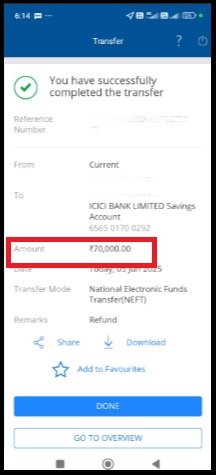
Through direct negotiation with the firm’s compliance team, the matter resolved with a recovery of ₹70,000.
Conclusion
If you paid an advisor a percentage of winning trades rather than a fixed, disclosed fee, that setup alone gives you strong ground to act.
Profit sharing by a research analyst violates SEBI rules, and documenting these payments creates a solid base to file a SEBI SCORES complaint to recover your money.
Report. Recover. Stay Fraud Free.
Frequently Asked Questions
Yes. SEBI regulations explicitly prohibit research analysts from entering into any profit sharing arrangement with clients, regardless of how the terms are framed.
No. It shifts the advisor's incentive toward riskier, higher frequency trading rather than protecting your capital, since their earnings depend entirely on generating wins.
Agreement to a structure SEBI prohibits does not make it lawful. The regulation exists to prevent exactly this kind of arrangement from being offered at all.
Yes. Payment records and message threads describing the fee terms can establish the claim even without formal invoices, which were often never issued in cases like this.
Treat it as a warning sign. Save the messages and pause any further payments before raising the issue formally.





 Add us as a preferred source on Google »

