

Quick Summary
Initial Claim: ₹8,00,000 Core Violation: A firm registered as a Research Analyst marketed a standard tips service, then operated it as an undisclosed profit share arrangement with guaranteed return promises and no stop loss protection. Forum Used: SEBI conciliation. Recovery Secured: ₹3,50,000. Samarth Oke (name changed) is from Kolhapur, Maharashtra. He signed up for what was pitched to him as a simple tips subscription. What he actually received was billed like a cut of his own winnings.
Samarth received an unsolicited call from a firm registered with SEBI as a Research Analyst. Representatives showed him profit statements from other clients and ran a live demo before he committed to anything.
The service was described to him as a straightforward tips subscription, trade recommendations for a fixed fee. Once he was engaged, the billing looked nothing like that description.
A Demo Built To Close The Deal
The demo trade shown to Samarth before he paid was designed for one purpose: to make the eventual sale feel like a formality rather than a decision.
It worked exactly as intended.
Nothing about that demo carried any of the risk his own capital would later face. It existed purely to build confidence ahead of the pitch that followed it.
When The Bill Read Like A Share Of His Winnings?
Despite the tips service framing, fees were structured and collected in a manner tied to profitability rather than a disclosed fixed rate.
This was never clearly explained before he engaged, and it added cost with no corresponding improvement in service.
Anyone billed this way despite signing up for a standard tips service can file a complaint against research analyst practices like this, since the mismatch between the pitch and the bill is itself strong evidence.
Capitalizing on Losses: Fee Escalation Under the Guise of Recovery
When early trades produced losses, the response was not caution.
Samarth was upsold further, told that additional fees would secure assured profitability going forward. Instead, the losses escalated alongside the payments.
In total, he paid approximately ₹1,80,000 across various charges, most of it collected under this pressure to fix what had already gone wrong.
Systemic Negligence: Unmanaged Exposure and Missing Risk Controls
Across the engagement, Samarth’s positions were repeatedly left without any stop loss in place.
This is one of the most basic safeguards available to a retail trader, and its absence here was not an oversight on a single trade but a pattern across many.
The resulting losses reached approximately ₹8,00,000, a scale that proper risk controls could have meaningfully limited even within a volatile market.
Evasion of Accountability: Communication Restricted to Unofficial Channels
Every interaction ran through personal mobile numbers with no connection to any formal customer service desk.
No written terms accompanied the escalating fee demands. Accountability was difficult to locate at every stage of the relationship.
Establishing Misrepresentation: How We Converted Discrepancies into Evidence
The gap between how the service was marketed and how it was actually billed became the anchor for this entire case.
Step One: We Recorded The Original Service Description
The initial pitch, positioning the service as a fixed fee tips subscription, was documented directly from the earliest communications, before any billing pattern had emerged.
Step Two: We Reconstructed The Actual Fee Pattern
Every payment Samarth made was reviewed against the trades and outcomes around it, revealing a structure tied to profitability rather than the flat fee originally described.
Step Three: We Isolated Every Instance Of Missing Stop Loss Protection
Trade by trade, we identified where stop loss levels were absent entirely, building a clear pattern rather than relying on a single example.
Step Four: We Documented The Guaranteed Return Language
Specific assurances of guaranteed profitability, made both at the outset and again after losses appeared, were preserved as direct evidence of a promise SEBI regulations do not allow.
Step Five: We Filed A Formal Notice Ahead Of Conciliation
Our notice detailed every violation with the exact regulation each one breached, positioning the case for a formal conciliation process rather than informal back and forth.
Step Six: We Represented Samarth Through SEBI Conciliation
With the fee mismatch and the missing risk controls laid out clearly, our team carried the case through SEBI’s conciliation process to reach a structured resolution.
Dispute Outcome: Financial Recovery Secured Through SEBI Conciliation
Samarth’s claim stood at ₹8,00,000, covering the fees paid under the mislabeled profit share structure and the trading losses that followed the absence of any stop loss protection.
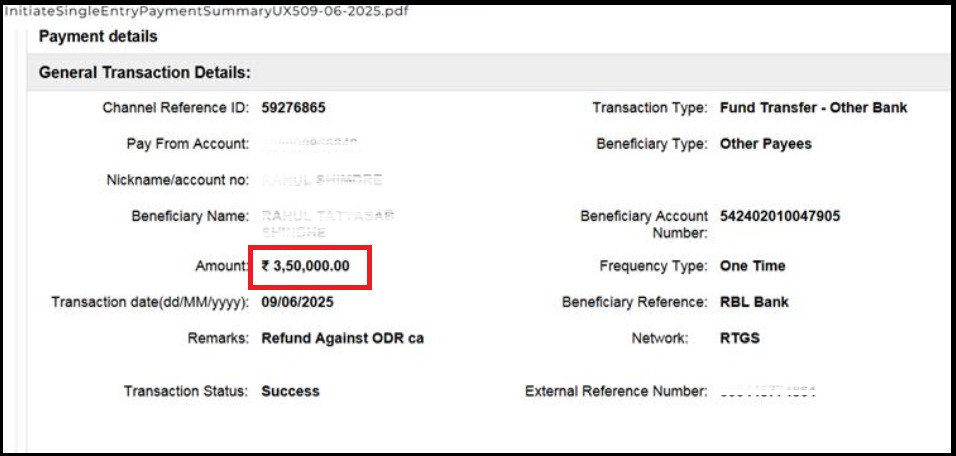
Through SEBI conciliation, the matter was resolved with a recovery of ₹3,50,000.
One Bill That Didn’t Match One Promise
Samarth’s case turned on a simple gap, a tips service on paper and a profit share in practice. If your bill doesn’t match what you signed up for, start by saving every message that shows the original offer.
Register with us and we will take it from there.
Conclusion
When a service is marketed as a fixed-fee advisory but billed as an undisclosed profit-sharing scheme, that discrepancy forms the foundation of a legal dispute.
Regulatory bodies like SEBI mandate strict transparency regarding fee structures and risk disclosures. Documenting the original offer alongside actual payment records exposes severe regulatory non-compliance.
Paired with evidence of omitted stop-loss protections, this paper trail proves deliberate negligence, transforming a standard trading loss into a compelling case for formal conciliation and financial recovery.
Report. Recover. Stay Fraud Free.
Frequently Asked Questions
Yes. A mismatch between the described service and the actual fee structure points to a lack of transparency that SEBI regulations require advisers to avoid.
Stop loss protection is a basic risk control. Its repeated absence across multiple trades shows a pattern of negligence rather than an unavoidable market outcome.
Conciliation is a structured process where a neutral party helps both sides reach a resolution. It can follow a SCORES complaint or run as part of the broader dispute resolution framework.
Yes. Saved messages and call records from personal numbers remain valid evidence, even without a formal customer service channel involved.
Treat it as a warning sign rather than a solution. Pause further payments, save the messages, and raise the pattern formally.





 Add us as a preferred source on Google »

