
Quick Summary
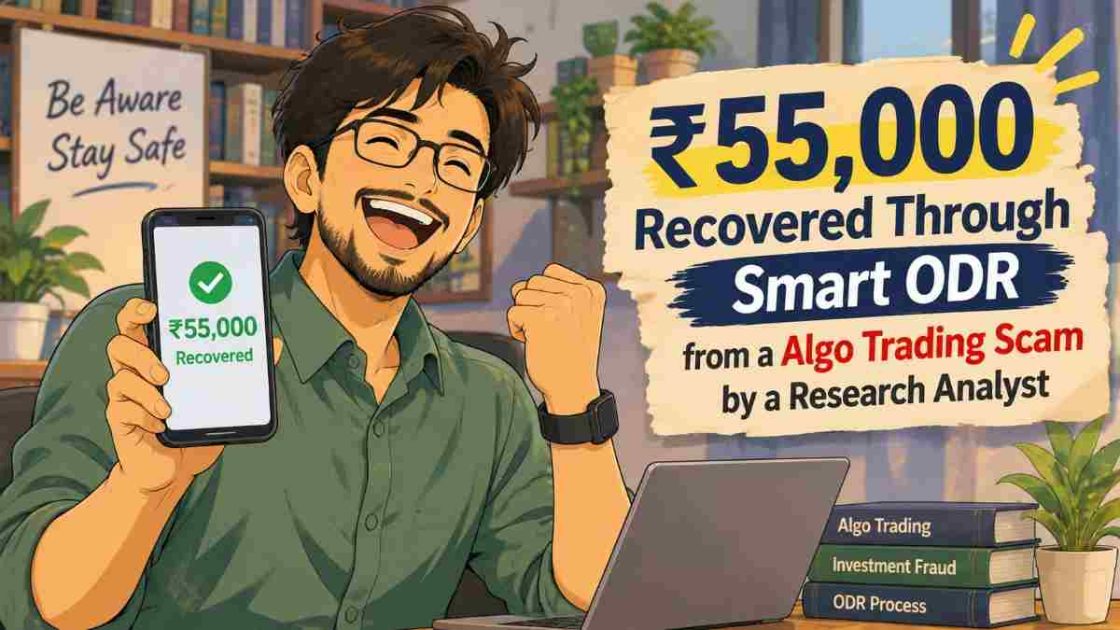
Rohit Naik from Hubballi lost ₹38,426.69 and paid ₹20,700 in fees after a firm registered as a Research Analyst sold him an algo software. The firm sent unverified profit screenshots, promised about 10 percent returns, and linked to his account using an OTP. After a formal legal notice and a Smart ODR filing, the claim of ₹59,126.69 settled at ₹55,000 in three installments, with ₹20,000 received so far and the rest still being tracked by our team until it closes.
Got a WhatsApp pitch for an “algo software” that promises 10 percent returns and asks for your OTP?
Rohit Naik (name changed) is from Hubballi, Karnataka.
The first message of this story reached him before he had asked for anything, and it cost him nearly ₹59,000.
Here is how we helped him recover money from an algo trading service sold by a research analyst, and what you can do if the same happened to you.
How Unverified WhatsApp Profit Screenshots Lured the Investor?
On 22 May, a representative of a research analyst firm messaged Rohit on WhatsApp.
He introduced an algo trading service built around software that trades automatically.
He opened with a profit screenshot showing a 92 percent return.
A video followed, claiming his software turned a small fund into a larger profit.
Daily Profit Screenshots And The Upgrade Fee Pressure
The same day, a second screenshot arrived with a 75 percent return.
Through June, similar “today’s profit” images kept coming under the software’s brand name.
He pushed Rohit to raise his fund as the profits came in. On 14 July, a screenshot showing a total profit appeared.
That evening, ₹12,700 was collected as an upgrade fee.
Why Unverified Past Performance Screenshots Break SEBI Rules?
SEBI’s advertisement code covers messaging platforms like WhatsApp.
It bars any reference to past performance unless an approved verification agency has checked it.
None of these figures was verified. They did the work of a sales pitch, and Rohit paid because of them.
Anyone shown profit screenshots like these can start a SEBI registered research analyst complaint with the screenshots as evidence.
The 10% Assured Return Promise That Triggered the Dispute
When Rohit hesitated, the representative gave him numbers.
First he said Rohit would benefit in 45 days, then spoke of a profit of four to five thousand rupees.
Then he fixed it.
He said the profit would be about 10 percent, and repeated “overall 10 percent return” the next day.
What The Firm’s Own Terms Say About Assured Returns?
The firm’s own terms and conditions state that assured or fixed return schemes are prohibited by law.
No such scheme shall be offered to a client.
Its representative did the opposite in writing.
A promised 10 percent on an options algo is a promise no honest provider can make.
How Sharing an OTP for API Access Exposed the Demat Account?
The case turned on one morning in June.
The representative asked for Rohit’s demat account number, then for a six digit OTP.
He called it a one time process for the API.
Minutes later, he wrote that the API connection was successful.
He then asked Rohit to add funds, and said the trades would go automatically.
API Connection Made Before Any Payment Or Signed Agreement
All of this happened before Rohit had paid the firm anything or signed anything.
The connection to his account came first and the paperwork never did.
A research analyst may publish research.
It may not trade, or link a system to trade, on a client’s account.
Unauthorized Trades Placed Under the Label of Automation
When Rohit asked about the trades, the answer was that he had neither bought nor sold.
It was done by the software, he was told, and all was working.
That reply is the whole case.
Orders reached his account that he never placed, and the firm called it automation.
Account Losses After The Firm Took Over The API Connection
In July, the representative took over the API connection himself.
The trades continued, and by the end of the month Rohit’s account had lost ₹38,426.69.
He had also paid ₹20,700 in fees.
How We Built The Recovery Claim From WhatsApp Chats, Payments And OTP Records?
The case rested on a WhatsApp thread, a payment record, and one OTP. We built it in six steps.
Step 1: Dating Every Profit Screenshot
Each profit image was listed with the date it arrived and the claimed return.
We set them beside the payment dates to show what each one led to.
Step 2: Separating The Assured Return Promise
The messages fixing a 10 percent profit were quoted in full.
We tied them to the firm’s own written rule against assured returns.
Step 3: Documenting The OTP Request
The account number request, the OTP demand, and the message announcing a successful API connection were set in one sequence, with timestamps.
Step 4: Proving Orders Were Placed Without His Instruction
His trading statement was compared with the messages.
We used the firm’s own reply, that it was done by software, to show he had not placed the orders.
Step 5: Sending A Formal Legal Notice
Our notice cited each violation and demanded a refund of fees and loss.
It also asked for records of every recommendation behind the trades.
Step 6: Escalating To Smart ODR
When the notice did not settle the matter, we filed on Smart ODR with the chat thread, the payment record, and the trading statement.
₹55,000 Algo Trading Settlement Through Smart ODR
Rohit’s claim stood at ₹59,126.69.
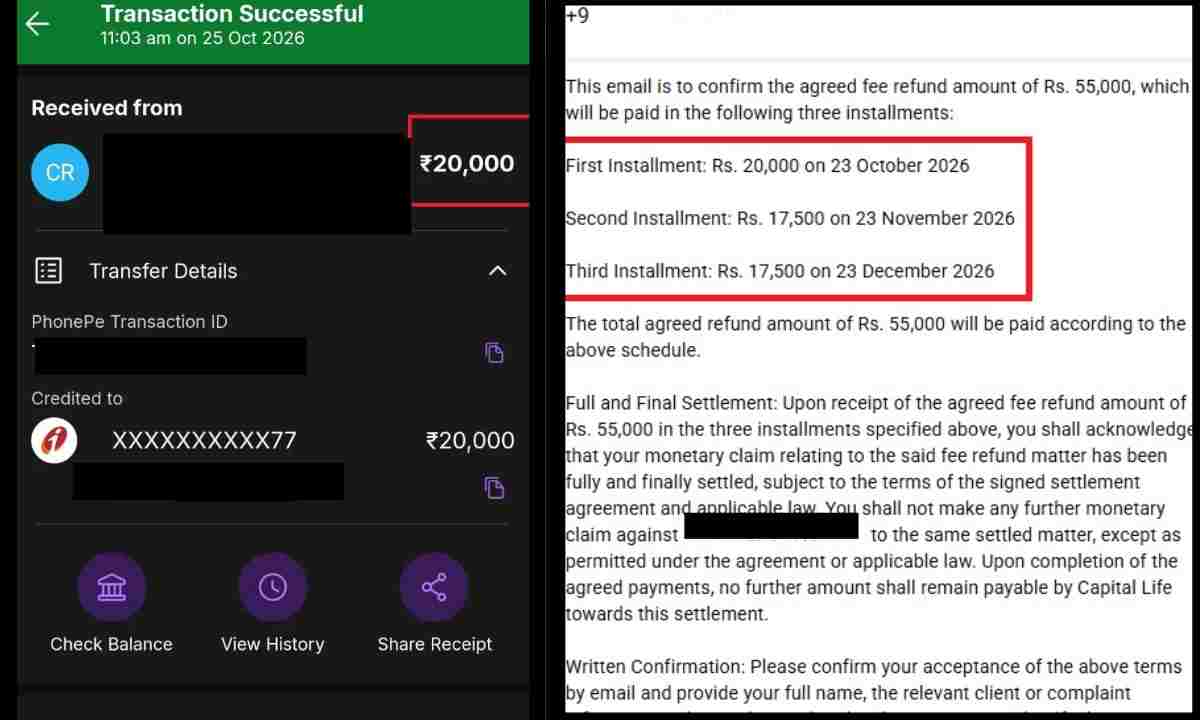
Through the Smart ODR process, the matter settled at ₹55,000, about 93 percent of the claim, payable in three installments.
₹20,000 has reached him so far.
The remaining ₹35,000 is due in the installments agreed, and our team is tracking it.
Did An Algo Service Use Your OTP To Trade?
Save the chats, the screenshots, and the time you shared the OTP.
If a firm traded your account through software, Register with us and we will build the case from those records.
Conclusion
The word software did a lot of work in this case.
It made an account takeover sound like a technical feature, and it let the firm say the client never bought or sold anything.
SEBI’s rules do not recognise that line.
A research analyst cannot trade for a client, and it cannot ask for an OTP that connects a system to the client’s account.
The profit screenshots and the fixed 10 percent promise showed how the sale was made.
This settlement is not fully paid yet, and we say so plainly.
Installment settlements need follow up, and we keep tracking each one until it closes.
If a notice to your firm stalls, the Smart ODR complaint portal takes the same documents into a structured forum.
Report. Recover. Stay Fraud Free.
No. A research analyst may publish research. It may not execute trades for you or connect a system to trade on your account. No. An OTP authenticates your own consent. Sharing it with a firm that then trades your account hands your control to someone else. Not freely. References to past performance need verification by an approved agency, and unverified screenshots on WhatsApp break the advertisement code. It is an assured return, which is prohibited. The promise itself is a violation, however the trades later perform. Keep a record of each installment received. If one is missed, the firm can be followed up through the same forum.Frequently Asked Questions





 Add us as a preferred source on Google »