

Quick Summary
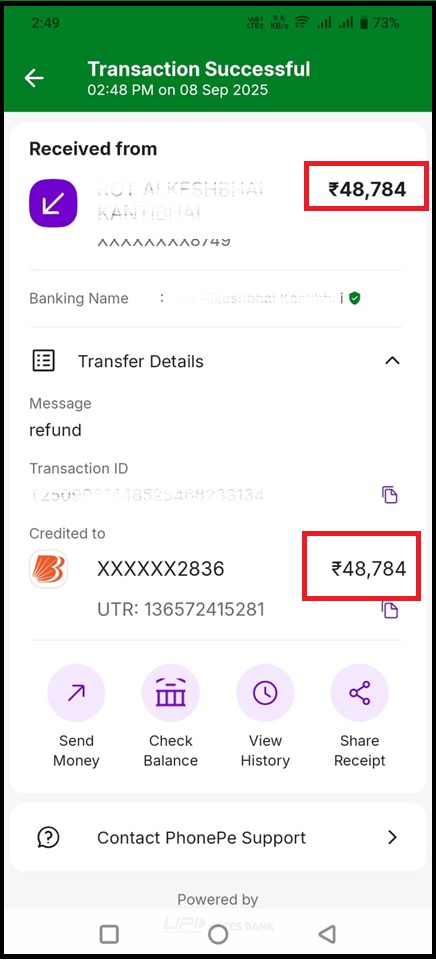
Initial Claim: ₹48,784 (₹11,455 in trading losses plus ₹37,329 in brokerage) Core Violation: Unregistered individuals contacting the client over WhatsApp opened a demat account in his name despite his refusal, placed trades without authorization, and generated brokerage more than three times larger than the actual trading loss. Forum Used: SEBI SCORES, following a formal complaint to the broker. Recovery Secured: ₹48,784, a full refund. Yogesh Karnik (name changed) is from Nashik, Maharashtra. He said no to opening an account. The account got opened anyway. What happened to it afterward barely resembled trading at all.
Yogesh was contacted over WhatsApp by an individual promising profitable stock market advice, who pushed him toward opening a demat account with a major broker.
Despite his initial hesitation and refusal, the individual and an associate went ahead and opened the account in his name regardless.
An account opened over the objection of the person it belongs to is not a minor procedural shortcut. It is the starting point of a relationship built on ignoring consent from the very first step.
Unauthorized Trades and Zero SEBI Credentials: How Unregistered Agents Operated
Once the account existed, trades began without proper authorization. The first of these produced a loss of roughly ₹9,000. When Yogesh raised concerns, he was handed off to someone presenting himself as a senior advisor, who promised recovery through further trading.
None of the individuals involved held any SEBI registration.
No formal agreement, no risk disclosure, and no documented consent for any specific trade existed anywhere in the relationship.
When Brokerage Fees Total ₹37,329 on an Actual Loss of Just ₹11,455
When Yogesh eventually reviewed the full financial picture, the numbers told a striking story. His realised trading loss came to ₹11,455.
The brokerage charged across the same period came to ₹37,329, more than three times the trading loss itself.
An account generating brokerage this disproportionate to its actual trading outcome is a hallmark of activity driven by transaction volume rather than any genuine attempt to grow the client’s capital.
Anyone seeing a similar gap between their brokerage and their actual trading loss can file complaint against stock broker, since that specific comparison is often the clearest evidence of unauthorized, high frequency activity on an account.
Urgency and High Volume: How Expiry Day Was Used to Force Further Deposits?
On the expiry day of a major index, Yogesh was contacted again and pressured to add further funds and buy in large quantities, with promises of substantial profit. Despite voicing clear concern about the risk involved, high volume trades were carried out anyway, adding to his losses.
In total, Yogesh had deposited ₹1,00,000 into the account, out of which ₹48,784 was lost between the trading losses and the brokerage charges combined.
How Unauthorized Agents Leveraged a Reputable Broker’s Credibility?
Throughout this entire relationship, the individuals involved claimed an association with the broker where the account was held, while operating entirely outside any of the broker’s own official channels for receiving trade instructions.
How We Used Unconsented Opening to Guarantee 100% Capital Recovery?
With no registered individual and no documented consent anywhere in the relationship, this case rested on showing exactly how far outside proper process the account’s entire history had run.
Step One: We Established The Account Opening Was Never Consented To
Yogesh’s original refusal, followed by the account being opened regardless, was documented as the starting point of the complaint, establishing that nothing which followed had ever been properly authorised.
Step Two: We Calculated the Brokerage-to-Loss Ratio Precisely
The ₹11,455 trading loss and the ₹37,329 in brokerage were placed side by side, making the disproportionate scale of the brokerage charges immediately clear as independent evidence of unauthorized activity.
Step Three: We Confirmed None Of The Individuals Held Any Registration
We checked for any SEBI registration connected to the individuals who had contacted Yogesh and confirmed none existed, establishing the advice itself as unlawful from the outset.
Step Four: We Documented The Expiry Day Pressure Separately
The specific push for additional funds and high-volume trades on expiry day, made despite Yogesh’s stated concerns, was recorded as its own distinct instance of unsuitable, pressured trading.
Step Five: We Filed A Formal Complaint With The Broker
Our complaint to the broker set out the account opening without consent, the unauthorized trades, and the disproportionate brokerage, demanding full reversal and compensation.
Step Six: We Escalated Through SEBI SCORES To Full Resolution
When the broker’s initial response did not fully resolve the matter, we escalated formally through SEBI SCORES, using the documented brokerage ratio and the absence of any registered adviser as the core of the case.
Through this process, the matter was resolved with a full recovery of ₹48,784.
Was Your Account Opened Or Traded By Someone With No SEBI Registration? Our Team Can Help
Yogesh’s case turned on one clear number, brokerage three times larger than his actual trading loss. Pull your own account statement today and check that same ratio before you decide what to do next.
Register with us and we will take it from there.
Conclusion
A gap this wide between brokerage charged and actual trading loss rarely happens by accident, and it deserves to be treated as independent evidence rather than an unfortunate side effect of bad advice.
Yogesh’s case shows why an account opened over a client’s stated refusal should be flagged from the very first line of a complaint, since everything that follows from an unconsented account opening carries the same taint.
Checking your own brokerage against your actual trading result is a simple comparison that can reveal exactly this kind of pattern before it grows any larger.
Report. Recover. Stay Fraud Free.
Frequently Asked Questions
No. Account opening requires your own authorization, and an account opened over your stated refusal has no valid basis from the start.
A large gap between the two points toward activity driven by transaction volume for its own sake rather than genuine trading intended to benefit the client.
Yes. Only registered advisers, analysts, or brokers are permitted to provide investment advice or place trades, and unregistered individuals operating this way are acting outside the law entirely.
Treat urgency tied to a specific market event as a warning sign, and document the exact pressure applied, including any concerns you raised at the time.
A broker holds responsibility for the integrity of its own account opening and trade authorization processes, and a complaint can be directed at those specific failures.





 Add us as a preferred source on Google »

