
Quick Summary
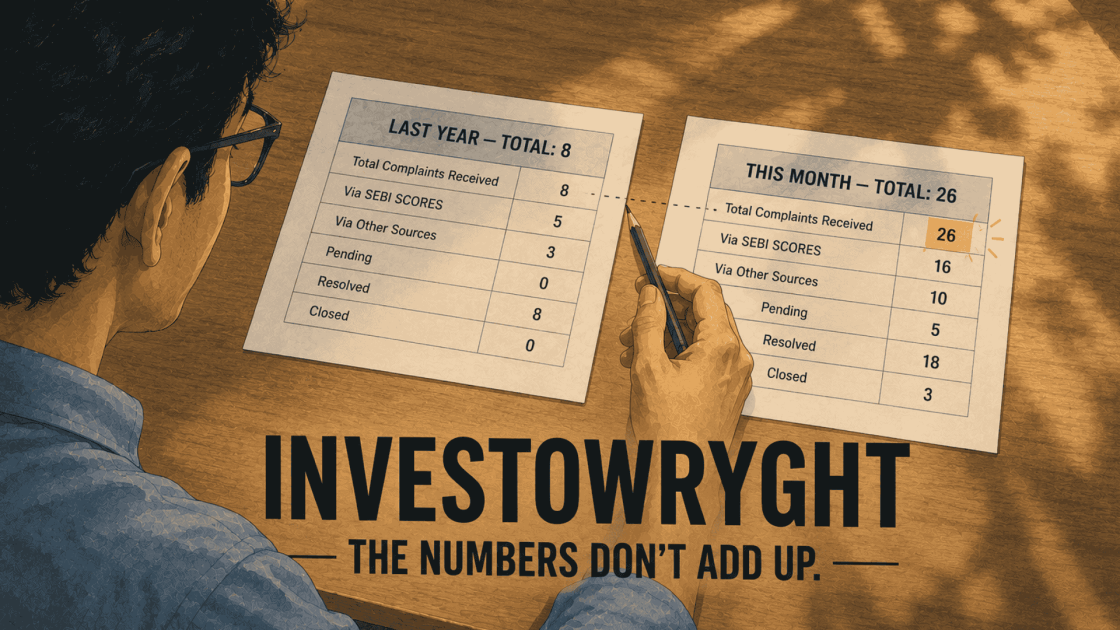
Investowryght Research Analytics Private Limited holds SEBI research analyst registration INH000012157. On 11 September 2026, SEBI’s adjudicating officer imposed a ₹10 lakh penalty after finding return assurances over WhatsApp and four compliance lapses. Five of six plans cross the ₹1,51,000 fee cap when annualised, and the complaint tables do not add up. Firms can appeal, and this review reads the order as published. Check the firm’s current status before you pay.
You see a message that promises easy profits from a research analyst, and the page says SEBI registered. That tick feels like safety.
This Investowryght review is for that moment.
A registration number tells you a firm may publish research. It does not tell you how the firm behaves.
We have updated this blog after SEBI’s order of 11 September 2026.
We read the order, the exchange notices, the pricing and the complaint tables, and we turn every gap into a question you can ask.
Is Investowryght SEBI Registered?
Yes, the research shows the firm listed with SEBI as a research analyst. That is the first box to tick, and the order itself confirms the number.
Here is what the listing and the order show. Check each point yourself before you rely on this page.
- Registration number is INH000012157. The INH prefix marks a research analyst, unlike INA for an investment adviser or INP for a portfolio manager.
- Registered name is Investowryght Research Analytics Private Limited. The registration is valid from 29 March 2023 and is listed as perpetual.

You can check this in a few minutes.
A SEBI registered site detector lets you enter INH000012157 and compare the name, category and validity.
A SEBI registration check online on the regulator’s own pages does the same job. Save a dated screenshot before you pay.
Registration is not the same as a clean record. As you will see below, a registered firm can still face an order.
Investowryght Research Analytics Private Limited: Corporate Structure
Let us look at who is behind the name. Knowing the company, its address and its contact person helps you match payment details later.
The company was incorporated on 12 December 2022 and carries the CIN U73100MH2022PTC395131.
The contact person on the SEBI listing is Prashant Chhaparwal, the registered principal.
Our earlier check found the company records matching the SEBI listed address.
Please recheck this on the MCA website, since addresses can change.
The website shows a principal place of business at 206 and 207, Shagun Arcade, Vijay Nagar, Indore 452010.
It lists a head office at Flat A304, Shree Ram Arcade CHS Ltd, Plot 18A, Sector 7, Kamothe, Navi Mumbai 410206.
A company in Indore with a head office in Navi Mumbai is not unusual.
Just make sure your agreement and receipt name the registered company.
What Does The Investowryght Website Actually Show?
Now to the website itself. We looked at what it says, what it promises and what it leaves out.
The firm sends research and trading recommendations by SMS.
It lists Stock Cash, Option Infinity, Stock Futures, Index Options, BTST and STBT, and Commodity.
It says its team is experienced and that recommendations support day trading and short term trading.
Additionally, it also claims over 500 satisfied clients, with no evidence shown.
The site calls itself “India’s Best Research Analyst”. It promotes “Increased ROI” and growing portfolios consistently, again without proof.
For some options services it advertises “high returns with low investment”.
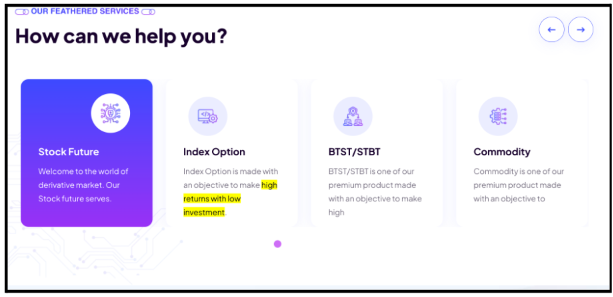
That wording can mislead people about the risk in derivatives.
SEBI does not allow research analysts to guarantee returns or accuracy. So marketing like this deserves a hard look.
We also noted several smaller points on the website.
- The Disclosure page carries privacy policy text, and no conflict of interest disclosure.
- The Payment page shows no bank or UPI details, though a notice tells clients to verify details there.
- Product names differ across pages, such as Option Infinity and Stock Option.
- The Contact Us page shows two slightly different Indore addresses and leftover placeholder text.
- The Refund Policy says refunds are mutually discussed, with no stated criteria.
None of these is a violation by itself. Together they suggest a website that has not been checked with care.
Also Read: Stock Option Research Review, another research analyst whose pricing we measured against the same fee cap.
What Did SEBI’s Order Against Investowryght Find?
This is the biggest update to this blog. SEBI has passed an adjudication order against the firm, and you deserve a plain explanation of it.
Here is what the order records, as shown in the order excerpts and our research summary.
The firm may respond or appeal, so we describe findings and do not pass judgment.
The order is numbered Order/JS/YK/2026-27/32722 and is dated 11 September 2026.
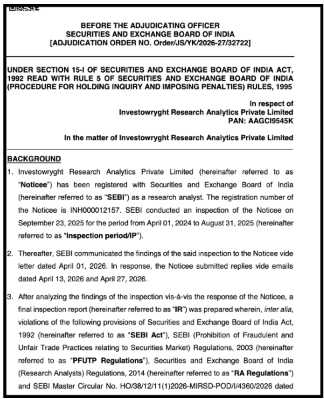
The NSE notified it on 15 September 2026, and the BSE circulated it to research analysts.
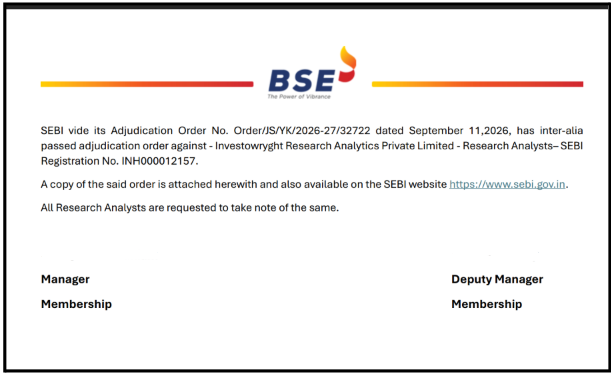
The exchange notices only confirm that an order exists. The findings below come from the order itself.
How The Case Began
SEBI inspected the firm on 23 September 2025. The inspection covered 1 April 2024 to 31 August 2025.
On 1 April 2026, SEBI sent its findings to the firm. The firm replied by email on 13 April and 27 April 2026.
SEBI then prepared a final inspection report.
It listed violations of the SEBI Act, the rules against unfair trade practices, the Research Analyst Regulations and a SEBI master circular of 2026.
A show cause notice followed. According to our research summary, the firm did not respond to the hearings that were scheduled after that.
What The Chats Showed
The case rests heavily on WhatsApp chats.
They came from complaints made by clients through SCORES, and the order reproduces some of them.
In those screenshots, the messages urge clients to buy more lots, arrange more funds and keep holding positions that were losing.
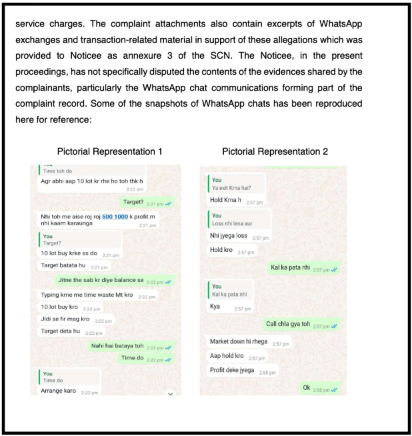
They also promise that a loss would be recovered.
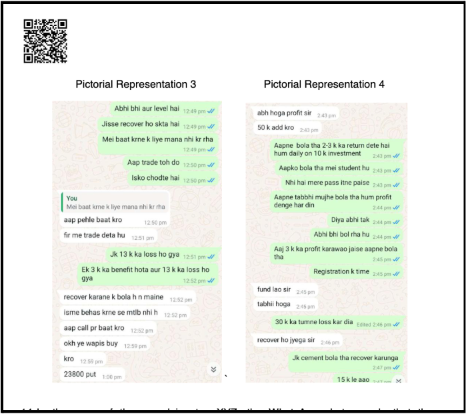
The order records that the firm did not specifically dispute the contents of these chats. That weighed against the firm.
The Main Finding
SEBI found that the firm’s representatives assured returns and induced clients to trade.
Our research summary adds that the evidence pointed to profit sharing arrangements as well.
Why does this matter? A research analyst may share research.
It cannot promise profits, take over trading decisions or push clients to put in more money.
The Four Other Lapses
SEBI also recorded four compliance lapses. Each one is explained below in plain words.
- KYC records. The firm kept only basic details such as name, PAN and mobile number. SEBI’s circular expects fuller records for each client.
- Fees above the cap. Fees collected from clients exceeded the permitted limit of ₹1,51,000 per client family per year.
- Complaint disclosures. The firm’s public complaint data was not kept up to date, which is the same issue you see in the tables later in this blog.
- Reports to the supervisory body. The firm defaulted on required filings to the research analyst supervisory body.
Each of these is a paperwork or discipline matter.
Together they show a firm that was not keeping up with its own obligations during the inspection period.
The Penalty
SEBI imposed a total penalty of ₹10 lakh, in two parts.
|
Provision |
Penalty | What it covers |
| Section 15HA of the SEBI Act | ₹5 lakh |
Unfair trade practices, linked to the assured returns and trade inducement |
|
Section 15EB of the SEBI Act |
₹5 lakh |
Default as a registered research analyst, linked to KYC, fees and reporting |
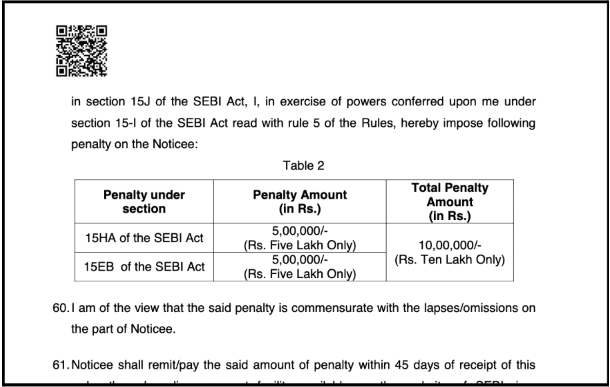
The adjudicating officer wrote that the penalty is commensurate with the lapses. The firm has 45 days from receiving the order to pay.
If it does not pay, SEBI can start recovery proceedings under Section 28A.
That can lead to steps such as attaching bank accounts.
Is This The Final Word?
Not necessarily. An adjudication order can be challenged before the Securities Appellate Tribunal, and we have no information on whether the firm has done so.
So the order tells you what SEBI found on 11 September 2026. It does not tell you what happens next.
It is also a civil penalty and not a criminal conviction.
The registration was not cancelled by this order, as far as the excerpts show.
What To Do If You Are An Investowryght Client?
If you paid the firm, start with your own papers. Keep payment proof, SMS recommendations and every chat.
Check how much you paid in a year and compare it with the ₹1,51,000 cap.
Look for any message that promised returns, asked for more funds or told you to hold a losing position.
We have not reproduced the complainants’ chats, because they belong to them. If you have a similar chat, keep it safe.
Told to add more money to recover a loss, or promised returns on a chat?
Our team reads your chats and payment proof, drafts a written grievance to the research analyst, and takes it to the right SEBI channel if the reply falls short. Register with us for a free consultation.
Does Investowryght’s Pricing Exceed The SEBI Fee Cap?
Money is where most people get hurt, so this section deserves a slow read. The website lists six services at three billing periods.
SEBI caps research analyst fees at ₹1,51,000 per client family per year for individuals and HUFs, with limited exceptions.
The cap covers all research services given to a family.
|
Service |
Monthly | Quarterly | Half yearly |
| Stock Cash | ₹19,999 | ₹55,000 |
₹1,00,000 |
|
Stock Option |
₹24,999 | ₹70,000 | ₹1,25,000 |
| Stock Futures | ₹24,999 | ₹70,000 |
₹1,25,000 |
|
Index Option |
₹29,999 | ₹70,000 | ₹1,25,000 |
| BTST | ₹19,999 | ₹55,000 |
₹1,00,000 |
|
Commodity |
₹9,999 | ₹25,000 |
₹45,000 |
Now we did the sums for a full year. We multiplied monthly by 12, quarterly by 4 and half yearly by 2.
|
Service |
Monthly x 12 | Quarterly x 4 | Half yearly x 2 |
| Stock Cash | ₹2,39,988 | ₹2,20,000 |
₹2,00,000 |
|
Stock Option |
₹2,99,988 | ₹2,80,000 | ₹2,50,000 |
| Stock Futures | ₹2,99,988 | ₹2,80,000 |
₹2,50,000 |
|
Index Option |
₹3,59,988 | ₹2,80,000 | ₹2,50,000 |
| BTST | ₹2,39,988 | ₹2,20,000 |
₹2,00,000 |
|
Commodity |
₹1,19,988 | ₹1,00,000 |
₹90,000 |
Five of six plans cross ₹1,51,000 in every billing mode when annualised. Only Commodity stays within the cap.
Even if you add 18 percent GST to the cap, you get ₹1,78,180. The five plans still sit above it.
There is a fair point in the firm’s favour. A single payment of ₹1,25,000 for six months does not breach the cap by itself.
The concern is the lack of a recurring option that stays within the cap for a full year.
A client who renews twice would pay ₹2,50,000 across twelve months.
The cap also depends on the client category and what other services the family buys.
The website does not say which category its prices apply to.
SEBI’s order separately records fees collected above the cap.
That is a finding about what clients were charged, and it is separate from the price list on the website.
Ask the firm in writing how it keeps a family within the cap across a year. Keep the reply.
Investowryght Complaint Data: Numbers That Don’t Reconcile
Complaint tables show how a firm behaves when something goes wrong.
Here the figures raise questions that the firm should answer.
We read the tables and added the totals ourselves. The latest summary is dated April 2026.
|
Received from |
Pending from previous month | Received | Resolved | Pending at month end |
| Directly from investors | 2 | 8 | 10 |
0 |
|
SEBI SCORES |
3 | 16 | 16 | 3 |
| Other sources | 0 | 2 | 2 |
0 |
|
Total |
5 | 26 | 28 |
3 |
This table works. Pending from the previous month plus received, less resolved, gives the pending figure in every row.
The size is what stands out. 26 complaints in a single month, 16 of them through SCORES.
Average resolution time, as reported earlier, is about 3 days for direct complaints and 15 days for SCORES complaints.
That is roughly five times longer for the regulator’s channel.
The Annual Table
Now the annual figures, with our own check.
|
Financial year |
Carried forward | Received | Resolved | Pending shown | Pending by our sum |
| 2023-24 | 0 | 0 | 0 | 0 |
0 |
|
2024-25 |
2 | 8 | 6 | 2 |
4 |
Two things do not work here. For FY 2024-25, 2 carried forward plus 8 received, less 6 resolved, gives 4 pending, and the table shows 2.
Also, FY 2023-24 ends with 0 pending, yet FY 2024-25 starts with 2 carried forward. Both rows cannot be right.
The Months And Years That Are Missing
The monthly disposal table runs only to March 2025. The annual table stops at FY 2024-25.
So the period from April 2025 to March 2026 is not accounted for in either table.
The April 2026 summary of 26 complaints then appears with no trail leading up to it.
Compare it with the annual figure. 8 complaints in all of FY 2024-25, against 26 in one month a year later, is a very large jump.
SEBI’s order also records that the firm’s public complaint data was not kept up to date. That fits what the tables show.
We are not saying the numbers are wrong. We are saying they do not reconcile, and only the firm can explain why.
Ask the firm for monthly figures from April 2025 to date, and for the reason for the difference in the annual table.
SEBI expects this data to be updated by the 7th of each month.
Also Read: Affinity Wealth Management, an honest disclaimer, sitting beside marketing that isn’t.
No Social Media Presence And No Independent Reviews
Here is a gap that tells its own story. We went looking for what real clients say, and found very little.
The website has “Follow Us” links, but they do not lead to working social media profiles. We also found no mobile app.
We found no independent first person reviews from clients either. That does not mean none exist.
It does mean you cannot hear another client before you pay. That is why the written questions below matter more than usual.
A firm that claims over 500 satisfied clients can usually show a few.
Ask for two references, and ask for permission to speak to them.
What Should You Verify Before Paying Investowryght?
You now have a long list of points. Let us turn them into a short checklist you can send by email.
Send these in writing and wait for answers. A good firm will not mind.
1. The SEBI Order
Ask whether the firm has appealed or paid the penalty, and what it has changed in its KYC, fees and reporting since.
2. The Full Yearly Cost
Ask how much a family would pay across twelve months, with GST on a separate line. Ask how it fits the ₹1,51,000 cap.
3. The Client Category
Ask which client category the prices apply to, and how any exceptions are treated.
4. The Complaint Figures
Ask for monthly complaint data from April 2025 to date, and for an explanation of the annual table.
5. Payment Details
Ask for the official bank or UPI details in writing, since the Payment page shows none. Match the account name to the registered company.
6. Conflicts Of Interest
The Disclosure page carries privacy policy text. Ask for the actual conflict of interest disclosure.
7. Refund Terms
Ask for written refund criteria. “Mutually discussed” does not tell you what you will get.
8. How Recommendations Are Shared
Ask whether recommendations are sent only by SMS, and whether anyone calls or chats with clients about trades. Keep every message.
How To Report A Concern Against Investowryght?
Nobody signs up expecting a dispute. But if you were promised returns, pushed to add funds, or refused a refund, you need to know where to go.
The order of steps matters. Start close to the firm, then move up only if the reply falls short.
If you ever need to raise a case, the guide on a SEBI complaint against research analyst shows how such cases usually run.
Read it before you start.
Here are the steps in short. Each builds on the one before.
- Collect your papers. Keep payment proof, the SMS recommendations, chats, emails and any agreement in one folder.
- Write to the firm first. Email your name, payment reference, the issue and what you want. A dated email beats a phone call.
- Move to SEBI’s online system if the reply falls short. The page on the SCORES SEBI complaint route covers what to attach and how a case moves after you file.
- Keep every reply. Save each message from the firm and from the regulator’s system.
- Try the dispute resolution portal for a payment dispute. The SMART ODR portal brings in a neutral conciliator to go through your papers with you.
- Read the dispute clause in your agreement. Check whether it points to arbitration, and take legal advice before you rely on it.
- Know the arbitration route. If the matter stays open, reading about arbitration in share market cases shows how that route usually works.
A loss alone is not a complaint. A complaint is about what the firm promised and what it actually did.
Disclaimer
This blog is based on the firm’s published website pages, the exchange notices of 15 September 2026, SEBI’s adjudication order dated 11 September 2026 and our earlier checks, as of 3 November 2026. It reports what those documents record, and the firm is welcome to share its side. We could not independently confirm the full text of the order, whether it has been appealed or paid, how the firm calculates fees against the cap, the reason for the complaint table differences, the current status of the website. The order excerpts we had were partial in places, so details beyond them rest on our research summary.
Conclusion
Investowryght is a registered research analyst, and that part is real. But SEBI’s order of 11 September 2026, the pricing and the complaint tables all call for a slow read.
Do not pay on the strength of a registration number alone.
Ask about the order, put the questions above to the firm, and keep every answer in writing.
If a firm cannot explain its pricing, its tables and its past, that is useful information too.
If it answers openly, you have a better basis to decide.
Keep receipts, messages and screenshots in one folder. They matter most if something goes wrong later.
Report. Recover. Stay Fraud Free.
Frequently Asked Questions
Investowryght Research Analytics Private Limited is listed as a research analyst under INH000012157, valid from 29 March 2023 as perpetual. Confirm the details on SEBI's website before you pay.
Yes. SEBI's order of 11 September 2026 imposed a ₹10 lakh penalty for assuring returns, inducing trades, weak KYC, excess fees and reporting lapses. The firm may still appeal, so ask about the current position.
Five of six plans exceed ₹1,51,000 when annualised from monthly, quarterly or half yearly rates. Only Commodity stays within it. Ask the firm how it keeps a family within the cap.
The April 2026 summary adds up, with 26 received and 28 resolved. The annual table does not, since FY 2024-25 should show 4 pending and shows 2. Months in between are missing.
Write to the firm first and keep the reply. If it falls short, a complaint can go through SEBI's online system or the dispute resolution portal, and our guides cover those routes.





 Add us as a preferred source on Google »