

Quick Summary
Initial Claim: ₹2,50,000 Core Violation: A firm registered as a SEBI Investment Adviser sold a lifetime advisory plan with no written agreement, then encouraged the client to open a second trading profile under a friend’s identity, pushing high risk trades across both accounts. Forum Used: Direct negotiation with the firm, recovery currently in progress. Recovery So Far: ₹2,29,000 in total settlement agreed, with the first installment already received. Gouranga Behera (name changed) is from Rourkela, Odisha. He was not just sold a bad advisory plan. He was talked into borrowing a friend’s identity to open a second one, on the promise that two accounts would somehow double his returns.
Gouranga was contacted by a representative of a firm registered with SEBI as an Investment Adviser, who described the company as an established, SEBI-approved player in financial advisory.
A demo trade showing a small profit followed shortly after.
He paid ₹3,000 as an initial registration fee.
No disclosure document, no signed agreement, no risk profiling form, and no fee breakdown accompanied that payment, despite repeated verbal assurances that everything was in order.
A Lifetime Plan Priced Against A Profit Target
After the demo, Gouranga was offered what was described as a lifetime advisory plan, one that would continue until he had made ₹5,00,000 in profit.
He paid ₹1,47,000 toward this plan in parts, again without any written documentation to define what he was actually purchasing.
Pricing an advisory relationship against a future profit target rather than a defined service period blurs the line between advice and an informal profit sharing arrangement, something SEBI regulations do not permit.
Advised to Open a Second Trading Profile? Recognizing Advisory Misconduct
At a later stage, the representative suggested Gouranga open a second trading profile under the identity of a close friend, presenting this as a way to effectively double his profit potential.
He paid a further ₹1,00,000 for this second plan and began receiving advisory calls on both accounts simultaneously.
Encouraging a client to trade under a borrowed identity creates an obvious conflict of interest and puts a third party’s name into a relationship they were never meant to be part of.
Anyone advised to open accounts this way can raise a research analyst complaint or the equivalent adviser grievance, since the arrangement itself is a documented violation regardless of how it performs.
Initial Profits Followed by Account Collapse: Steps for Financial Recovery
An early profit of ₹25,000 gave the arrangement early credibility.
Within days, losses of roughly ₹4,50,000 followed, and over time the combined losses across both profiles climbed to nearly ₹10,00,000.
High-quantity trades were pushed across both accounts, often without clear consent or full explanation of the risk involved.
When losses mounted, the response was the same familiar pattern: assurances of recovery paired with pressure to keep trading rather than stop.
Across the full engagement, Gouranga paid a total of ₹2,79,000 in advisory fees across multiple installments. Not a single formal invoice or receipt was ever issued for any of it.
How We Separate Complex Frauds into Distinct Violations?
With a lifetime plan, a second borrowed identity, and PMS style execution all layered into one relationship, this case needed each piece treated as its own violation.
Step One: We Documented The Missing Onboarding Disclosures
The absence of a disclosure document, risk profiling form, and signed agreement from the very first payment was recorded as a standalone violation of mandatory onboarding requirements.
Step Two: We Flagged The Profit Target Pricing Model
The lifetime plan priced against a five lakh rupee profit target, rather than a defined service period, was documented as a structure that blurs advisory fees with prohibited profit sharing.
Step Three: We Built The Conflict Of Interest Claim Around The Second Profile
The second trading profile opened under a friend’s identity was treated as its own distinct breach, separate from the trading losses themselves, since the conflict exists regardless of how those trades performed.
Step Four: We Documented The Execution Level Instructions
Specific quantity and trade level instructions given across both accounts were compiled as evidence of conduct closer to portfolio management than licensed advisory, a service this firm was not registered to provide.
Step Five: We Sent A Legal Notice Covering Every Violation Together
Our notice laid out the onboarding failures, the pricing structure, the conflict of interest, and the execution level instructions side by side, each tied to its specific regulation.
Step Six: We Secured A Settlement Now Being Paid In Installments
Direct negotiation produced an agreed settlement of ₹2,29,000.
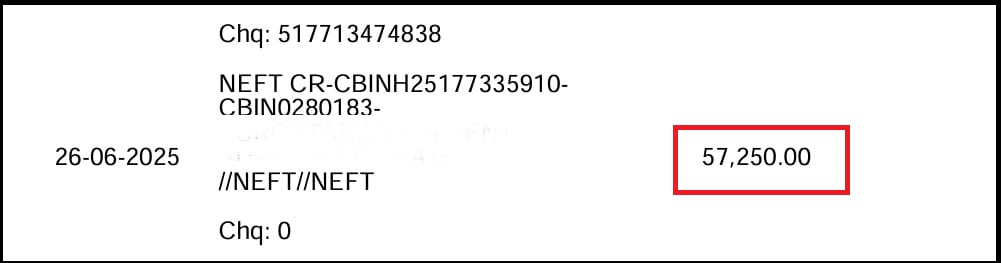
The first installment has already been received, and our team continues to track the remaining payments through to completion.
Talked Into Opening A Second Account Under Someone Else’s Name? Our Team Can Help
Gouranga’s case turned on documenting the second profile as its own violation, separate from the losses. If your adviser has suggested something similar, write down exactly what was proposed and when, today.
Register with us and we will take it from there.
Conclusion
A second account opened under someone else’s identity is never a shortcut to better returns.
It is a conflict of interest built into the relationship from the start, and it puts a person who never agreed to any of it directly into the middle of your dispute.
Cases like Gouranga’s show why separating each violation, the missing paperwork, the pricing structure, the borrowed identity, and the execution style instructions, matters more than treating the whole episode as a single trading loss.
Each piece stands on its own when filing a SEBI SCORES complaint, and together they build a case that is difficult for a firm to explain away.
Report. Recover. Stay Fraud Free.
Frequently Asked Questions
Yes. This creates a direct conflict of interest and involves a third party in a relationship they never agreed to be part of, regardless of the stated intention.
It blurs a standard advisory fee with a profit sharing structure, which is not a permitted model for a licensed adviser to offer.
When instructions move beyond general advice into specific execution details like exact quantities and trade timing, the conduct resembles portfolio management, which requires separate registration.
Yes. Payment records and message threads describing the fee terms remain valid evidence, even where the firm never issued formal invoices.
Yes, once formally agreed. Structured settlements paid over time are common, and tracking each installment against the agreed schedule ensures the case reaches genuine closure.





 Add us as a preferred source on Google »

