
Quick Summary
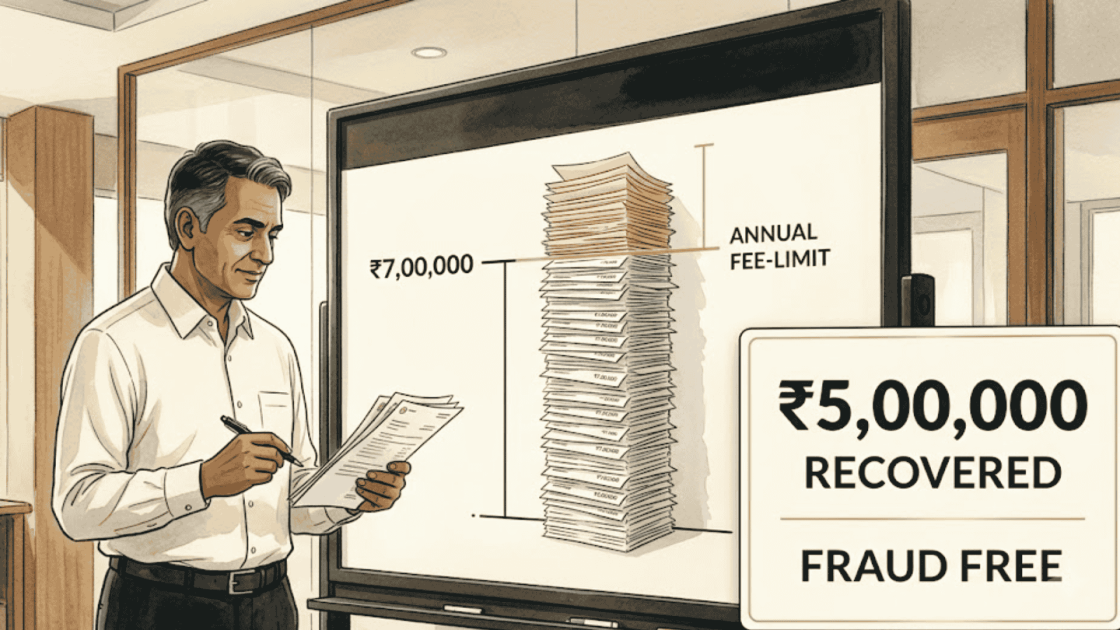
Anil Mehta (name changed) paid a research analyst fees that crossed SEBI’s published annual cap by a wide margin. His total claim reached 7,00,000. The cap violation gave the file a clean, checkable breach that did not depend on interpreting any advice given. Our team recovered 5,00,000, a 71.4 percent share.
Anil (name changed) was approached by a SEBI-registered research analyst offering a premium annual package. The sales pitch focused heavily on personalised calls and daily targets rather than the fee amount itself.
He paid ₹1,80,000 for the first year, then renewed twice at higher rates as the relationship continued. His combined payments across the period reached ₹7,00,000.
SEBI has published a maximum fee that a research analyst can charge an individual client in a year. Anil’s payments, once added up, sat well beyond that published limit for the period in question.
This kind of breach does not require proving that any specific advice was wrong. The fee amount itself, measured against the public cap, is enough to establish the violation on its own.
Anil had not tracked the cap figure himself and only realised the mismatch when our team compared his total payments against the published limit during the initial file review.
Many clients assume a higher fee simply means a better service tier. The cap exists precisely to stop that assumption from being used against retail investors who rarely check the published limit before paying.
Anil also kept every renewal email, which turned out to be useful later. Each one repeated the amount due without ever referencing the SEBI cap or explaining why the fee had grown between renewals.
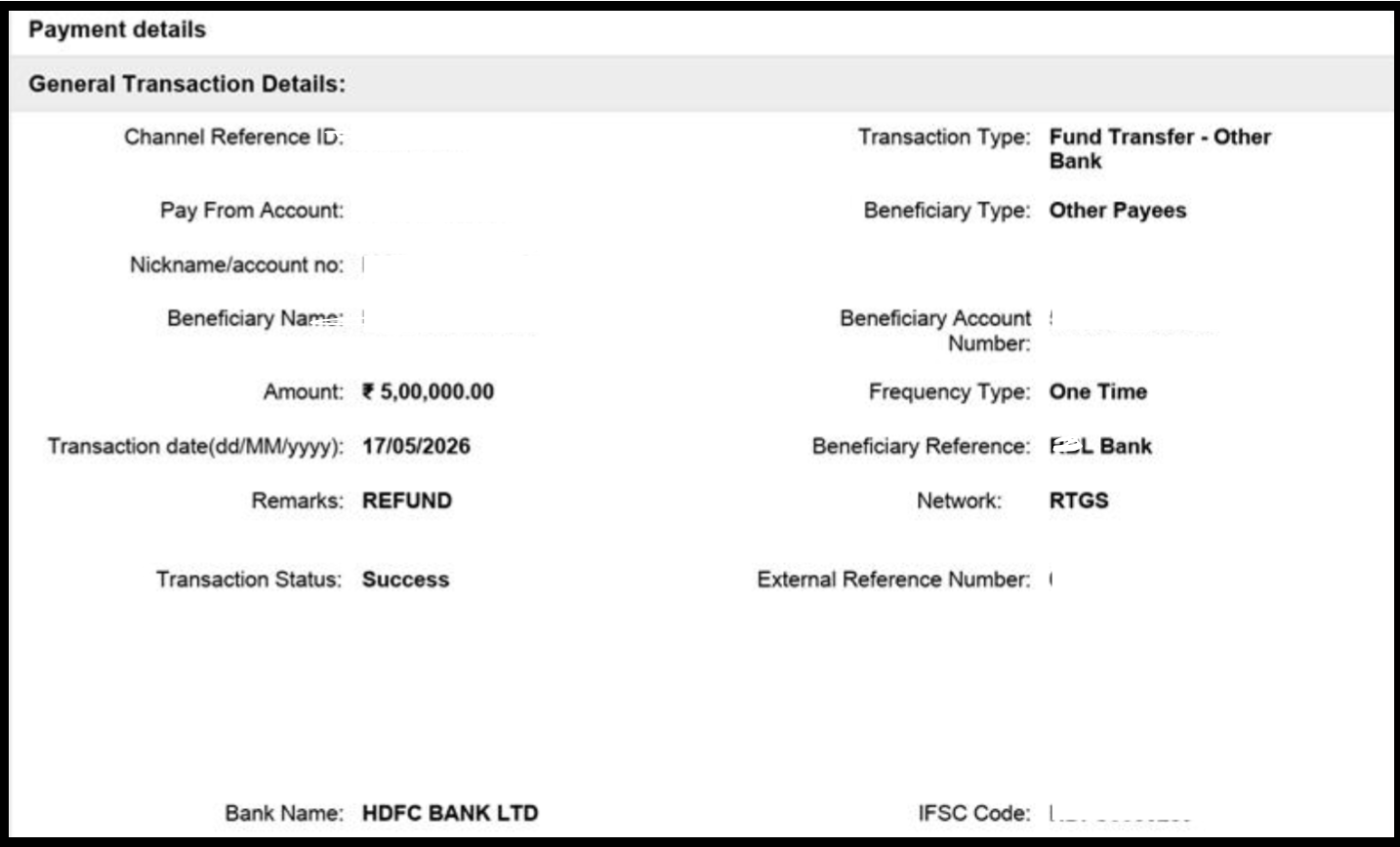
Later, when he approached us, we understood his case, documented proof, and, with proper drafting of the complaint, helped in getting a refund of ₹5,00,000.
The Legal Approach: Turning an Overcharge Into a Clear Regulatory Breach
We did not make Anil’s complaint complicated. We focused on one question: how much was he charged, and how much was he legally allowed to be charged?
Step 1: Organise every payment
We collected Anil’s payment receipts and separated them across the three renewal cycles. This mattered because the applicable fee limit had to be assessed year by year.
Step 2: Put the SEBI limit next to the actual fee
We then matched each year’s payment against the applicable SEBI fee cap. This immediately showed where Anil had been charged more than the permitted amount.
Step 3: Make the excess impossible to miss
Instead of relying on a lengthy explanation, we prepared a simple calculation showing the permitted fee, actual payment, and excess charged for each year.
Step 4: Lead the complaint with the numbers
Our SEBI SCORES complaint focused on that calculation. There was no need to get dragged into an argument about whether the research or calls were valuable.
The analyst later argued that the additional fee covered extra advisory calls.
Our response was straightforward: if a regulatory fee cap applies, adding more calls or services does not automatically allow the analyst to charge beyond that limit.
The Result: A ₹5 Lakh Recovery on a ₹7 Lakh Claim
This was a major recovery for Anil. Out of the ₹7,00,000 he claimed, the analyst ultimately agreed to return ₹5,00,000, giving him back 71.4% of the amount claimed.
The recovery was driven by a clear year-by-year calculation showing how much had been charged above the applicable fee cap. Once the excess was properly documented, the analyst agreed to a partial settlement rather than continue contesting the complaint.
The matter was resolved within 14 weeks, despite the substantial claim and two years of payment records. Recovering ₹5 lakh was a significant result, especially in a dispute involving regulatory fee limits.
Think you may have been charged more than SEBI allows? Let’s check your case.
Register with us if your annual advisory fees may have crossed SEBI’s published limit.
We will help you drafting & escalation of complaint in the right format.
Conclusion
A cap violation does not depend on how the advice performed. It depends only on the numbers, which makes it one of the cleanest complaints to build.
Add up every payment you have made to a single research analyst across the last financial year. If the total looks unusually high, it is worth a quick check against the published limit.
Not every case fits neatly under one registration category. Our team also handles general complaints against SEBI intermediaries when the entity type is unclear.
Report. Recover. Stay Fraud Free.
Frequently Asked Questions
The cap is published through SEBI circulars and updated periodically. Our team checks the applicable figure for your payment period as part of the review.
It applies on an annual basis across all services from a single research analyst, not per individual package purchased within that year.
Each year is checked against the cap separately, and any year where your total crossed the limit strengthens the file for that period.
Yes. A cap violation stands on its own regardless of whether the advice performed well or poorly during the period.





 Add us as a preferred source on Google »

