
Quick Summary
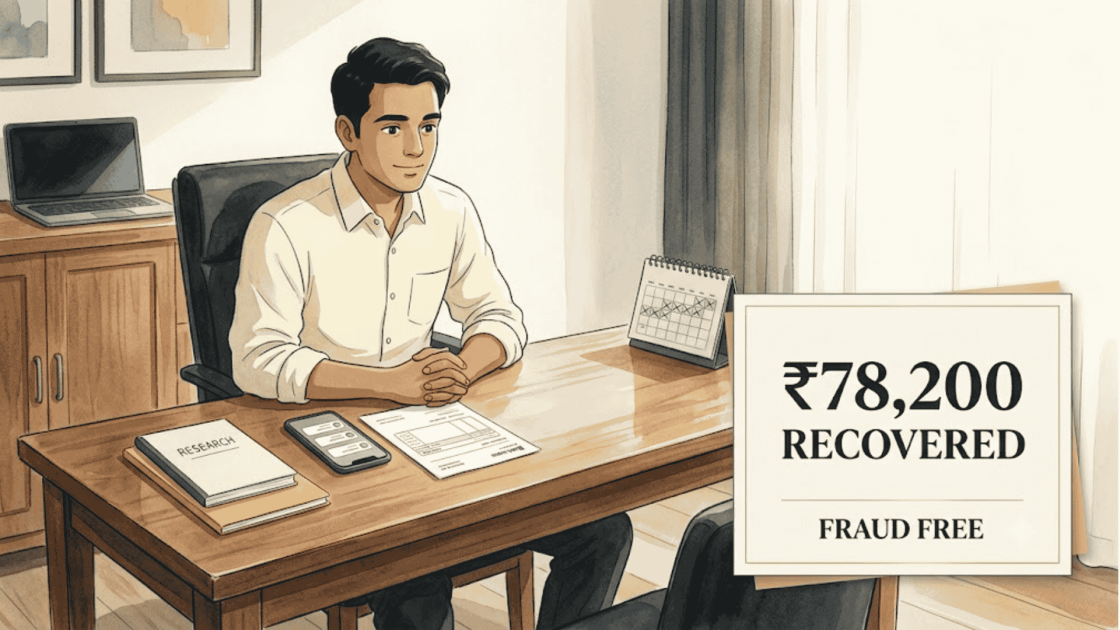
Arvind Kapoor (name changed) paid 88,500 for a premium research package and received no reports, no calls, and no updates of any kind. His claim reached 1,10,000. He did not need to argue the advice was bad, since there was no advice to argue about. Our team recovered 78,200, a 71.1 percent share.
Imagine paying ₹88,500 upfront for a premium research service, only to receive absolutely nothing.
That is what happened to Arvind (name changed). After a sales call in early 2025, he signed up expecting daily market analysis, weekly reports, and direct calls whenever he needed them. He paid the entire amount upfront and waited for the service to begin.
But days turned into weeks. No reports. No market updates. Not even a single call.
Arvind kept messaging the relationship manager, asking when the promised research would start. Initially, he got replies. Then the responses became shorter, less frequent, and eventually stopped altogether.
And that became the heart of his complaint.
Arvind did not have to prove that the research was bad. He did not have to show that he lost money following it. He had paid for a service that was never delivered.
When a SEBI-registered research analyst collects payment for a defined service, simply taking the money is not enough. The promised service has to be provided.
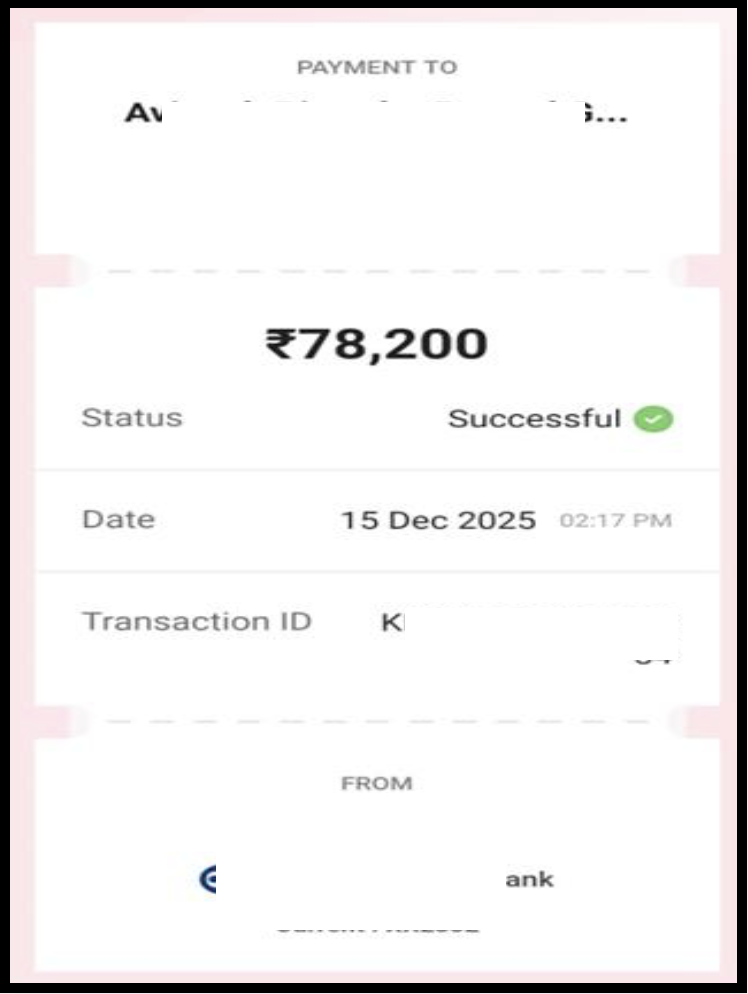
In Arvind’s case, the issue was simple: ₹88,500 was collected, but the promised research never arrived.
How Our Team Developed the Winning Fighting Strategy?
We kept Arvind’s complaint simple: show what was promised, show what was paid, and show what was never delivered.
Step 1: Prove what was promised
We went back to the original sales pitch and package details. They clearly mentioned daily analysis, weekly reports, and direct calls. None of these ever reached Arvind.
Step 2: Show the pattern of non-delivery
Next, we put together his message history. Arvind had repeatedly asked when the service would begin. The replies became slower and shorter before eventually stopping altogether.
Step 3: Keep quality out of the argument
This was not a case about whether the research was good or bad. There was no research to judge in the first place. Arvind had paid the full fee, but received nothing measurable in return.
Step 4: Put the strongest evidence first
The SEBI SCORES complaint led with the ₹88,500 payment record and Arvind’s messages. Together, they told a straightforward story: money was collected, but the promised service was missing.
The firm later claimed that research had been shared through another channel. We simply asked them to show it.
- Which channel?
- What was sent?
- When was it sent?
No evidence was produced.
That left the central fact unchanged: Arvind paid for a service, and the firm could not show that it had actually delivered it.
How We Secured ₹78,200 Back
Once the firm could not produce evidence that the promised research had actually been delivered, the dispute became difficult to defend. Rather than continue contesting the claim, the firm agreed to settle.
Arvind had claimed ₹1,10,000 and recovered ₹78,200, or 71.1% of the amount claimed.
That is what made this case different. We were not arguing over whether the advice was good or bad. We were dealing with a much simpler question: where was the service Arvind had already paid for?
Facing Non-Delivery of Advisory Services?
Don’t let quiet service providers hold your money.
Register with us we will help you map payment dates against missing service delivery to build a strong recovery claim.
Conclusion
Sometimes the strongest complaint is not that the advice was wrong. It is that no advice arrived at all.
If you paid for a service and received nothing close to what was promised, your payment record and your unanswered messages already hold most of what a complaint needs.
Where a firm stops responding entirely, our team escalates through the SMART ODR portal to keep the case moving without the firm’s cooperation.
Report. Recover. Stay Fraud Free.
Frequently Asked Questions
A bad advice complaint requires arguing the recommendation was unsuitable. A non delivery complaint only requires showing you paid and received nothing, which is a much narrower fact to prove.
Ask them to produce it. If no evidence of delivery exists anywhere, that absence supports your claim rather than weakening it.
No. Even a handful of unanswered requests for the paid service, with clear dates, is usually enough to establish the pattern.
The failure is documented and simple, which leaves the firm with little room to argue, unlike disputes over whether specific advice was appropriate.





 Add us as a preferred source on Google »

