
Quick Summary
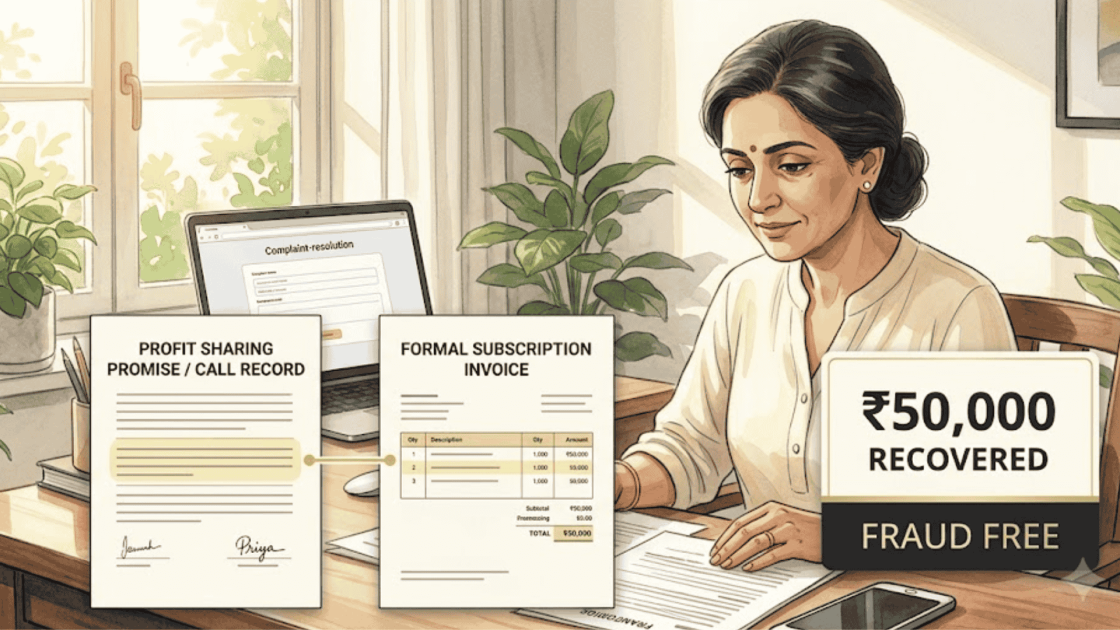
Priya Verma (name changed) paid a research analyst who described the arrangement as a profit share on calls, while every invoice read subscription fee. Her claim stood at 65,000. That contradiction between spoken terms and written invoices became the strongest piece of evidence in her file. Our team recovered 50,000, a 76.9 percent share, through SEBI SCORES.
Priya (name changed) was introduced to the analyst by a colleague in mid 2025. On the first call, the representative explained that Priya would pay a small joining amount and then share a fixed percentage of any profit generated.
She paid ₹15,000 as the joining amount. The invoice she received described this as a quarterly subscription fee, with no mention of any profit sharing arrangement at all.
Over the following months, three more payments followed the same pattern. Each call described a profit share tied to trade outcomes, while each invoice used subscription language with no percentage terms.
The real issue was not just what Priya paid, but how the fee was presented to her. A SEBI registered research analyst cannot structure research fees as a percentage of a client’s trading profits.
Yet, Priya was verbally promised a profit-linked arrangement while her invoices described the payments as ordinary subscription fees.
That mismatch raised a serious question: what was Priya actually being charged for?
We got into the detail of this case and helped Priya in getting refund of ₹50,000
Our Step-by-Step Fighting Strategy
Priya had saved call recordings for three of the four conversations, along with all four invoices in PDF form.
Step 1: Transcribe the profit share language
We transcribed the exact phrases used on each call, timestamped against the invoice dates issued for the same payment.
Step 2: Compare invoice terms line by line
We placed each invoice next to its matching call transcript to show the contradiction in a single document.
Step 3: Frame the regulatory breach
We argued that a research analyst operating under undisclosed profit-sharing terms falls outside the permitted fee model under SEBI regulations, regardless of what the invoice states.
Step 4: Submit through SCORES with annexures
We filed through the SEBI SCORES portal with the transcripts, invoices, and a short comparison table so the reviewing officer could see the mismatch at a glance.
The analyst’s team initially argued the calls used casual language and did not reflect the actual billing structure. We pointed out that four separate calls used the same profit sharing framing, which rules out a single miscommunication.
The Final Settlement: Recovering ₹50,000 for Priya
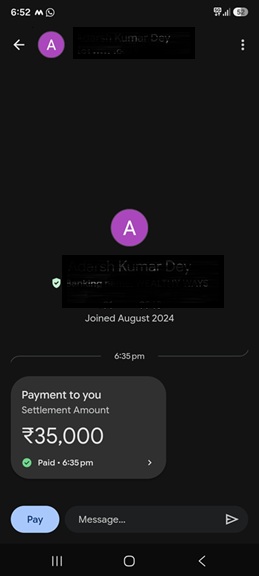
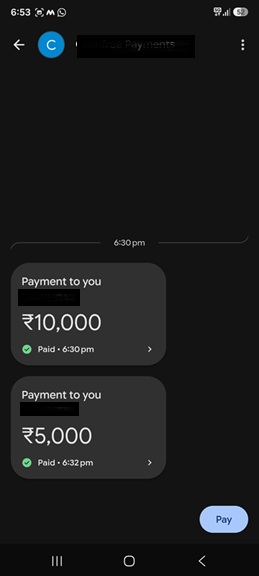
The analyst agreed to a settlement after the SCORES review flagged the invoice inconsistency directly. Priya recovered ₹50,000 of her₹65,000 claim, a 76.9 percent share.
The settlement was processed within nine weeks of filing. Priya received the recovered amount through a direct bank transfer.
Conclusion
Spoken promises and written invoices should match. When they do not, the gap itself often becomes the strongest evidence in a fee dispute.
Save your call recordings and your invoices together, not separately. A mismatch is far easier to prove when both pieces sit side by side in one place.
A stalled complaint does not have to stay stalled. Our team moves unresolved cases to SMART ODR portal for faster resolution.
Report. Recover. Stay Fraud Free.
Frequently Asked Questions
Partial recordings still work well if they clearly show the mismatch between what was said and what was billed. Consistency across even two or three calls is persuasive.
No. Research analysts must charge disclosed, fixed or slab based fees. A profit sharing arrangement sits outside their permitted business model entirely.
An invoice alone rarely proves the case. The recording is what shows the gap between the written terms and what the client was actually told.
Recovery share reflects how much of the claim was fee against how much was market linked loss, which is assessed separately from the violation itself.





 Add us as a preferred source on Google »

