There is a specific kind of dopamine hit that comes with finding a too-good-to-be-true travel deal. We have all been there.
We scroll through flights and suddenly see luxury stays and attractive itineraries bundled into one affordable package.
To be honest, it feels like a win. But lately, that exact excitement has become the primary hunting ground for digital fraudsters.
Travel package scams are not the obvious emails they used to be. Now, they are polished, high-end operations that look, talk, and act exactly like a legitimate five-star agency.
These scammers are masters of the first impression. They use targeted social media ads and sleek websites.
If you want to ensure your next holiday does not end in a financial disaster, you have to look past the pretty pictures and understand how these scams happen.
What Are Travel Package Scams?
In short, these are predatory schemes where fake agencies sell holiday packages that are either total fabrications or dangerously misrepresented.
They do not stick to one script; they evolve. Some fraudsters set up entire ghost companies.
These companies have fake GST numbers and professional customer service lines.
Some scammers take a shortcut by impersonating known names in the travel industry. They try to misuse the decades of built-up consumer trust.
Usually, their hook is a high-value experience, like international luxury tours, religious pilgrimages, or honeymoon packages.
These packages are offered at a steep discount. But the hospitality is a lie.
The only goal is to secure a massive advance payment. Once they have your deposit, they disappear instantly.
In some cases, they keep squeezing you for unforeseen fees until you finally realize you have been scammed.
How Travel Package Scams Work?
Scammers generally follow a psychological roadmap. Once you see the patterns, the magic of the offer starts to fade, and the red flags become obvious.
-
The Unbelievable Offer
It almost always begins with a hook, like a Europe trip at 40% off or a limited time luxury resort deal.
These ads are run across Instagram and Facebook to find people who are already in a vacation mindset.
-
The Professional Trap
The moment you message them, they switch to professional mode.
They send high-resolution PDFs and mention specific hotel names.
They even provide fake registration certificates. The communication is so fast and polite that it feels like premium service.
-
The Advance Payment Tactic
This is the danger zone. You will be told that to lock in the special rate, you need to send an advance booking amount.
Often, they will push you to use a personal UPI ID or a private bank account rather than a corporate payment gateway.
-
The Hidden Cost Trap
After you pay the first installment, the hidden fees appear.
Suddenly, there are new taxes, visa processing fees, or mandatory travel insurance costs.
Since you have already paid the deposit, you feel pressured to keep paying to save your booking.
-
The Forged Paperwork
To keep the peace, they will send you vouchers with airline logos and barcodes.
They look authentic on a smartphone screen, but they are not actually registered in any airline or hotel computer system.
-
The Final Ghosting
As the trip gets closer, the agent becomes harder to reach. Eventually, they claim a technical error canceled the trip.
Mostly, they simply block your number. By then, the funds are usually long gone.
Travel Package Scam Real Cases
With the rise of travel package scams, there is a massive increase in scam complaints.
There are several real stories of holiday scams, that will help you understand how the scam actually works.
1. The Noida International Ad Scam
In a high-profile 2026 incident, a scammer operated a very convincing digital campaign.
He ran exclusive social media ads for Singapore and European holiday packages.
He didn’t just stop at pretty pictures and provided victims with incredibly detailed PDF itineraries that included specific hotel names and daily travel schedules to mimic a real agency.
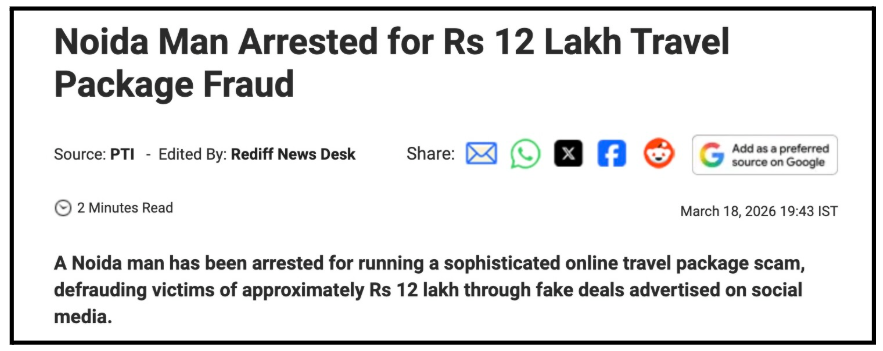
To seal the deal, he issued forged flight confirmations. These confirmations featured authentic-looking airline branding and barcodes.
Many travelers, feeling their trip was fully secured, transferred large advance deposits without a second thought.
Once the payments were processed, the scammer spent weeks giving visa backlog excuses. Then he vanished entirely.
This case is a perfect example of how professional-grade documentation is being used to mask a total lack of actual services.
2. The Gurgaon Europe Trip Fraud
One couple’s dream of a European vacation turned into a ₹12 lakh nightmare after they engaged with a fake travel agent.
The agent maintained absolute professionalism and promised that every luxury hotel and flight was being handled with VIP care.
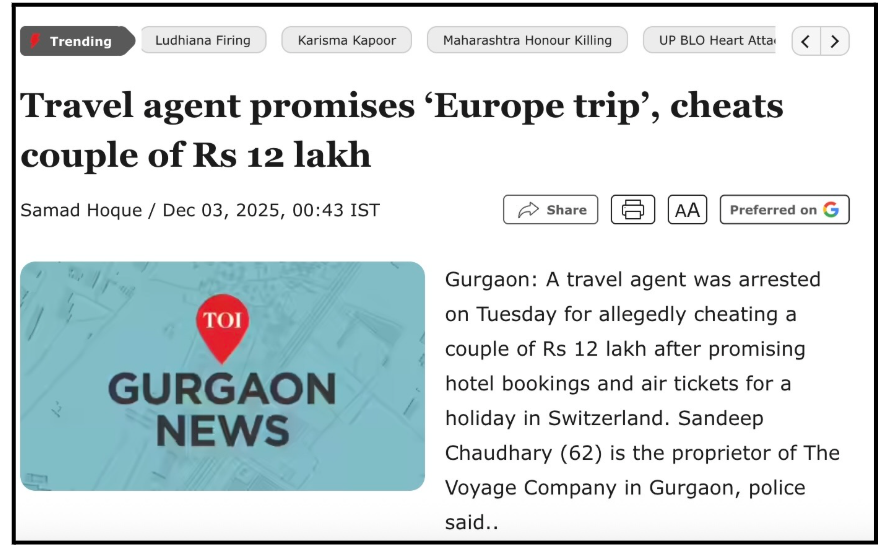
The couple trusted the face-to-face nature of the interaction. They even paid the full amount for their flights and accommodation in Switzerland.
However, when they reached Switzerland, they found neither the rooms nor the return tickets were booked.
This tragedy proves that even known or local agents should not be trusted blindly. You must verify all your bookings yourself.
3. The Hyderabad Char Dham Helicopter Scam
Targeting religious pilgrims is a particularly cold tactic, as seen in this Hyderabad case.
During the peak pilgrimage season, a victim fell for an Instagram ad that offered guaranteed helicopter slots for the Char Dham Yatra.
This is a service that is actually difficult to book.
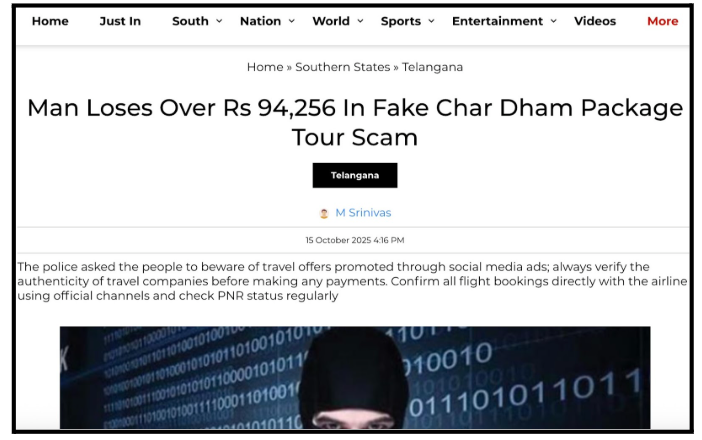
The scammer used professional-sounding WhatsApp conversations to reassure the victim that their seats were reserved.
The victim believed that their journey was a sure thing. He transferred over ₹94,000 as a booking fee.
When he tried to check the flight schedule with the actual helicopter operator, he realized the agency was a scam.
Plus, the seats never existed.
This case highlights how scammers weaponise high-demand seasons and religious devotion to bypass a victim’s common sense.
How to Avoid Travel Package Scams?
Protecting yourself is about having a verification checklist that you never skip, no matter how good the deal looks.
If you are unsure about how to avoid holiday scams, you can follow these steps-
-
Research About the Company
A slick Instagram page is not a business license. Check if they have a physical office that actually exists on Google Maps.
You can also check the Street View option in Google Maps.
Look up their GST number on the official government portal.
If the name on the GST registration does not match the name of the agency, walk away.
Do not rely on their website’s testimonials; look for independent feedback on TripAdvisor, Reddit, or Trustpilot.
-
The Price Reality Check
Compare the offer. If a flight+hotel combo usually costs ₹1.5 lakh and this agent is offering it for ₹70,000, ask yourself: how?
Scammers use insane discounts to create a sense of urgency.
If the math does not add up, the trip does not exist.
-
Strict Payment Boundaries
Never, under any circumstances, send money to a personal UPI ID or a private savings account.
Legitimate travel companies use corporate current accounts or integrated payment gateways.
If you see an individual’s name instead of the company name on the payment screen, it is a scam.
-
The Trust But Verify Rule
Do not consider a PDF voucher as a confirmation. Take the PNR number for your flight and the confirmation code for your hotel and verify them yourself.
Go to the airline’s official website or call the hotel directly using the number listed on their verified Google profile.
If they do not have your name in the system, you have found your answer.
-
Digital Awareness
Be cautious of links sent via WhatsApp that ask you to download an exclusive travel app to track your booking.
These are often malware (APKs).
These APK files can read your messages and intercept bank OTPs.
If they are not using a standard web portal, it is a major red flag.
How To Report A Travel Package Scam?
If you realize you have been scammed, you need to act immediately.
The first couple of hours are your only real chance of seeing that money again.
1. Save All Evidence
Do not delete the chat in anger. You need every word of it. Take screenshots of:
- Original ad
- WhatsApp messages (with the phone number visible)
- Bank transfer receipts
- Fake vouchers
Call your bank’s fraud helpline immediately to see if the transaction is still pending and if they can put a temporary hold on the outgoing funds.
2. Contact the Cybercrime Helpline
This is the most critical step. Call on the national cybercrime helpline immediately. Give them the scammer’s bank details and your transaction ID.
The police and the bank can work together to stop the money from being moved to a ‘mule’ account.
3. File Cybercrime Complaint
Go to the official cybercrime portal and file a formal Financial Fraud complaint. Be as detailed as possible. Explain the ad and the fake voucher details.
Also, provide the scammer’s UPI ID and phone number. This report generates a tracking number that you will need for any further legal action.
4. Visit Your Bank
Go to your bank branch and provide a written statement about the fraud. Ask them to officially notify the Beneficiary Bank where your money went.
Banks are required to investigate these reports, and a formal notification can also help permanently shut down the scammer’s account.
5. File an FIR
Take your online cybercrime report and head to your local police station to file a physical First Information Report (FIR).
This is a legal necessity if you plan to pursue any insurance claims or if the case eventually reaches a consumer court.
It makes the investigation official and binding.
6. Platform Reporting
Report the scammer’s profile on Instagram, Facebook, or Google.
This doesn’t just get them banned; it helps the platform’s algorithm learn their patterns.
This can potentially save the next person from falling into the same trap.
Need Help?
If you’re feeling uncertain or overwhelmed, you don’t have to figure everything out on your own.
Take the next step with confidence by checking the complaint process in our online fraud response plan.
It’s designed to help you turn confusing information into a clear, organized record that banks and law enforcement can use effectively.
The plan also walks you through each stage of reporting, so you don’t miss any important steps or deadlines.
You’re not alone in this, we’re here to support you in protecting yourself and reporting the fraud to the right authorities.
Conclusion
Travel package scams thrive on people’s desire for a dream vacation.
They look convincing because they are designed to bypass your logic and appeal to your emotions.
But knowledge is a form of armor. By slowing down, verifying every PNR, and refusing to pay via personal UPI IDs, you can keep your finances safe.
Before you book that next unbeatable deal, remember the golden rule – if you can not verify it with the airline or the hotel, do not pay for it.