You wake up and go through the same routine you’ve been doing for months, maybe even years. You brush your teeth, get dressed, and sit at the breakfast table with your phone in hand.
By habit, you open your trading app not to make any trades, just to check.
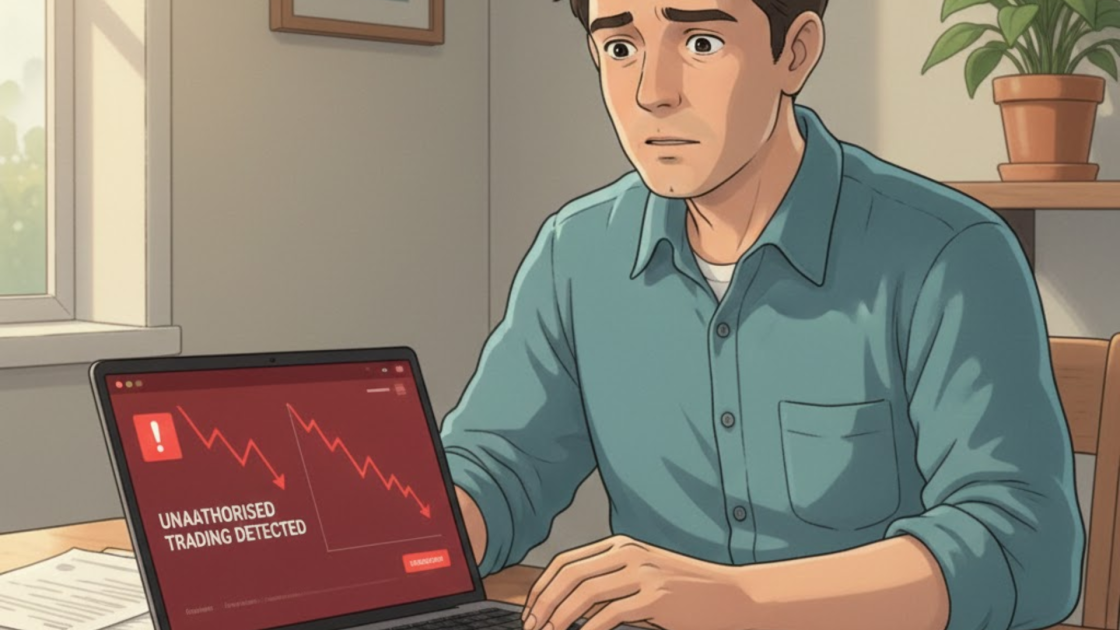
That’s when you notice something is wrong. The numbers don’t match what you remember. There are trades open that you were never permitted to. Losses show up without any explanation.
For a few seconds, you think it’s a technical error.
Then comes panic, and with it, a deeper, more unsettling fear: your stockbroker has done a few unauthorised transactions in your account.
The shock hits hard because it’s not just about losing money; it’s about losing trust, questioning your choices, and realizing that giving up control didn’t make things easier.
Unauthorised Trading
Unauthorised trading is not just a small mistake; it’s a serious act that breaks trust.
Basically, unauthorized trading happens when trades are made in an investor’s account without their clear and specific approval.
This can mean buying or selling stocks or other investments without the investor’s say so, making trades that go beyond what was agreed on, or acting without the investor even knowing.
Even in accounts where the broker has some limited approval rights, trading can still be unauthorized if the broker goes beyond agreed limits, takes too much risk, or trades mainly to get commissions.
This behaviour breaks the broker’s duty to act in the client’s best interest and is often seen as a form of securities misconduct because it can cause financial loss, emotional stress, and a loss of trust for the investor.
What makes unauthorizsed trading even more dangerous now is that it doesn’t only happen through traditional brokers.
Many cases today involve unregistered entities that operate outside of regulation.
These include unregistered brokers, social media financial influencers, people who manage trades via apps like Telegram or WhatsApp, signal providers, portfolio managers, and individuals who pretend to be market experts or relationship managers.
Because these entities aren’t registered or regulated, there’s no formal responsibility, no compliance rules, and very few options for getting money back if losses happen.
Regulators try to stop this by requiring trade confirmations, sending SMS or email alerts, and keeping strict records, but these protections only work if investors stay informed and don’t give control to people who aren’t legally allowed to.
Unauthorised Trading Risks in India
Unauthorised trading is dangerous not only because it involves financial loss, but because it often occurs outside the regulatory safeguards designed to protect investors.
When trades are executed without proper authorisation or through unapproved platforms, the checks and controls that ensure transparency, fairness, and accountability are missing.
As a result, investors may be exposed to financial harm, fraud, and legal complications, with limited or no avenues for redress.
What makes unauthorized trading particularly damaging is that its consequences are often discovered only after the damage has already been done, when funds are depleted, accounts have been misused, or recovery becomes uncertain.
Key Risks Include:
- Total Loss of Funds: Money routed through unauthorised or illegal channels may be irretrievable, especially when dealing with unregistered entities.
- No Investor Protection Mechanisms: Investors may not be able to access SEBI’s SCORES system, exchange grievance mechanisms, or compensation frameworks when trades occur outside the regulated ecosystem.
- Fraud and Disappearance Risk: Unregulated individuals or platforms may manipulate prices, misappropriate funds, or disappear entirely, leaving investors with no recourse.
- Legal Consequences for Investors: Participation in illegal or off-exchange trading can expose investors to penalties under laws such as FEMA and other financial regulations, even if they were unaware of the violations.
- Broker Misconduct and Churning: In some cases, brokers may execute trades without client consent to generate higher brokerage through excessive trading (churning), prioritising commissions over the investor’s best interests.
- Misuse by Research Analysts (RAs) and Investment Advisers (IAs): RAs and IAs are permitted to provide advice, not to execute trades or control client accounts.
When they place trades, influence execution without consent, or encourage frequent trading for indirect gains, it constitutes unauthorised activity and a breach of regulatory boundaries.
- Excessive and Unnecessary Trading: Frequent trades may be executed to recover earlier losses or generate fees, steadily eroding the investor’s capital.
- High-Risk Positions Beyond Investor Capacity: Investors may be exposed to leveraged or speculative positions without proper risk assessment or disclosure, amplifying potential losses.
- Margin and Leverage Misuse: Use of margin without a clear explanation or consent can cause losses to escalate rapidly in adverse market conditions.
- Delayed or Suppressed Disclosure of Losses: Losses may not be communicated promptly, preventing investors from taking timely corrective action.
- Account Takeover or Credential Misuse: Sharing or theft of login credentials can allow third parties to operate accounts without permission, leading to unauthorized trades.
- Difficulty in Recovery and Resolution: Even where regulatory mechanisms are available, recovering losses from unauthorized trading can be time-consuming, complex, and uncertain.
Types of Unauthorised Trading
Unauthorised trading does not always look the same.
It can range from subtle misuse of client access to completely illegal parallel trading setups operating outside the exchange framework.
Understanding these different forms helps investors recognise early warning signs, reduce unauthorised trading risk, and respond before financial damage escalates.
-
Unregistered Trading or Investment Platforms
Some websites or apps offer services like online bond trading, virtual trading games, or simulated stock trading, but they aren’t approved by authorities.
These platforms may look professional, but aren’t under regulatory control.
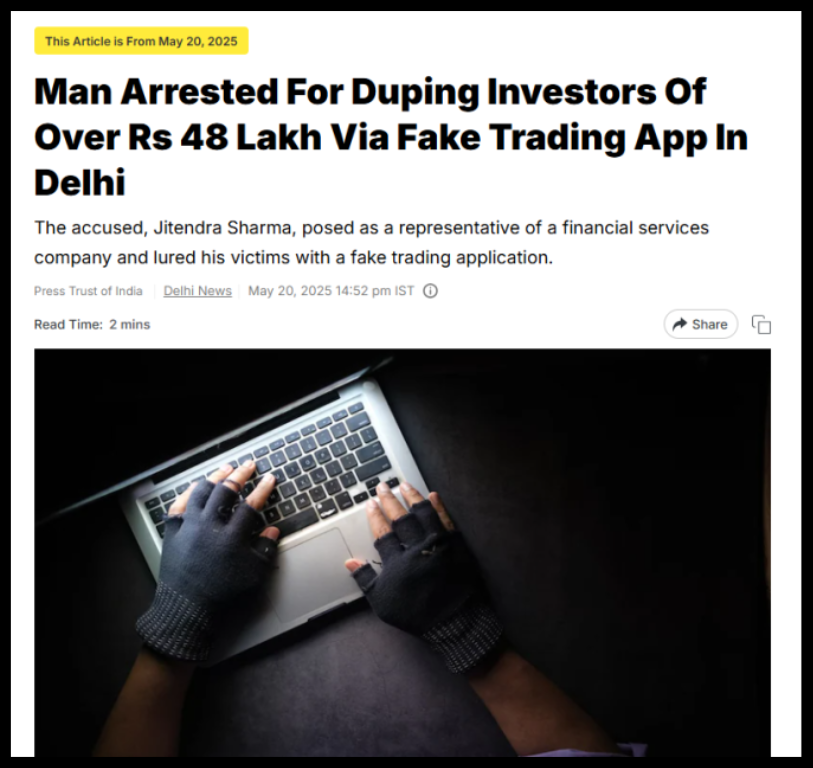
Example: Jitendra Sharma was arrested after defrauding investors of over ₹48 lakh using a counterfeit trading app that looked real but wasn’t connected to any regulated broker.
-
Handling Client Accounts (Sharing Login Details)
This is a very common and dangerous way of doing unauthorized trading. Investors are asked to share their login details, like usernames, passwords, or one-time codes, so someone else can trade on their account.
This is against the rules, even if it’s done with trust.
Example – SEBI stopped this Kolkata broker from onboarding new clients for one month after inspections found multiple regulatory violations related to client accounts and compliance.

Dabba trading refers to buying and selling securities outside recognised stock exchanges such as NSE or BSE.
Although prices may mirror market rates, these trades are not recorded on official exchanges.
Transactions are maintained in private records or software, and settlements often occur through cash or informal transfers.
Such trading bypasses audits, taxation, and investor protection mechanisms, making it illegal and highly risky.
Unauthorised Trading Complaint
When investors first discover unauthorised trades, the immediate reaction is confusion, anger, and panic.
But once emotions settle, the real question begins to surface: What to do if your broker trades without permission?
Do you complain? Do you gather evidence first? Do you go straight to SEBI?
An unauthorised trading complaint is not just about reporting a mistake. It’s about proving that trades were executed without your clear consent and showing that the broker failed in their duty of care.
Regulators treat these matters seriously, and depending on the facts, brokers can face strict unauthorised trading penalties, including fines, restrictions, suspension, or regulatory action.
However, the outcome often depends on documentation and evidence.
Let’s look at two real-world cases that show how complex these cases can become:
1. Sharekhan Unauthorised Trading
Ravi and Neha (names changed) were experienced market participants who had been trading with Sharekhan for quite some time.
They were comfortable with market volatility and regularly reviewed their accounts.
One routine check, however, left them unsettled.
They spotted several Futures & Options positions they had no memory of authorising.
The trades were sizeable, and losses had already accumulated. Confused and alarmed, they immediately contacted the brokerage and formally disputed the transactions.
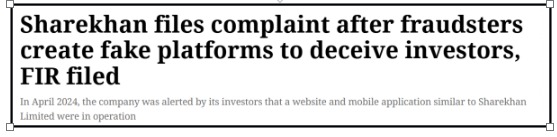
The issue moved to arbitration, where the initial ruling supported them. It recognised that the trades appeared unapproved and awarded compensation.
But the relief was short-lived.
When the matter reached the Bombay High Court, the earlier decision was reversed. The Court clarified that procedural gaps alone cannot establish unauthorised trading without strong, concrete evidence.
For Ravi and Neha, what began as a straightforward complaint turned into a prolonged legal battle that ultimately did not restore their losses.
2. Kotak Securities Unauthorised Trading
In 2018, Aman (name changed) decided to reorganise his trading structure with Kotak Securities.
He was assured of professional support, better margin management, and disciplined risk handling. Trusting these assurances, he invested ₹7–9 lakh and shifted most of his holdings into a demat account operated through the brokerage.
He believed that no trade would occur without his knowledge.
Gradually, though, he began noticing unfamiliar activity.
Positions were being taken that he hadn’t explicitly approved, some of them carrying risks beyond his comfort level. Losses escalated sharply, eventually reaching nearly ₹1.45 crore.
The situation worsened when liens were marked on his securities, and access restrictions followed. Certain holdings and bonds were reportedly withheld even after legal directions were issued.
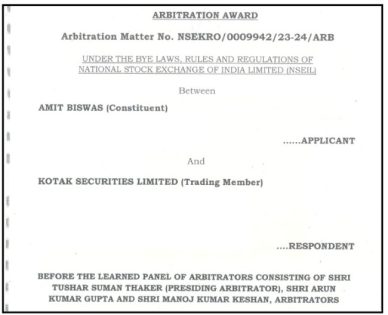
During arbitration, questions arose about trades placed without documented consent, the manner in which the Power of Attorney was used, and advisory interactions that influenced decisions without proper records.
Yet, despite these concerns, the proceedings ended without financial recovery.
3. Unauthorised Trading By Angel One
A notable arbitration case involving Angel One Limited highlighted regulatory violations related to unauthorised trading. The investor claimed that unauthorised dealer-entered trades caused a loss of nearly ₹10 lakh.
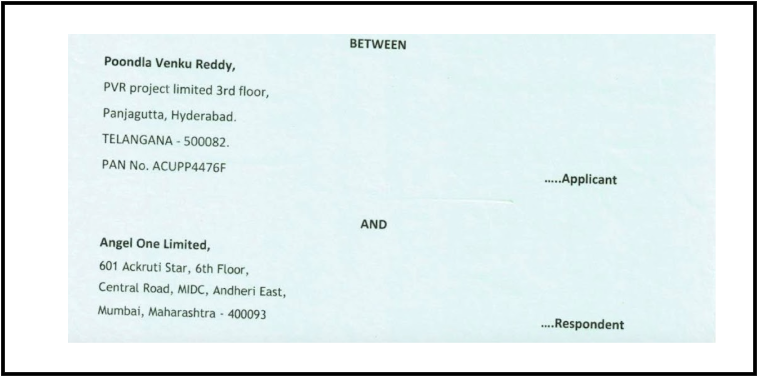
The tribunal concluded that certain transactions were executed offline without obtaining mandatory pre-order approval from the client.
Since the broker could not provide evidence of prior consent, the tribunal awarded compensation of ₹8,96,208 and warned that post-trade alerts do not replace proper authorisation.
How to Protect Yourself from Unauthorised Trading?
Although markets have risks, losses from unauthorised actions often feel unfair because they weren’t something you chose.
The good news is that many of these problems can be avoided if the right steps are taken early.
Here are a few steps to keep yourself alert
- Understand recovery limits clearly – Losses from SEBI-registered entities might be recovered through official channels, but money lost through unauthorised trading, especially with unregistered entities, is often hard to get back or impossible to recover.
- Deal only with SEBI-registered entities – Always check if a broker, adviser, or research analyst is registered with SEBI before working with them. Never share your trading credentials. Your user ID, password, and OTP are your personal details.
- Avoid unregistered platforms and tip groups – Stay away from Telegram channels, WhatsApp groups, social media influencers, or apps that promise guaranteed returns.
- Monitor alerts and contract notes – Read SMS, email alerts, and daily contract notes carefully. These are often the first signs of unauthorised activity.
- Document everything – Save messages, emails, call recordings, and transaction details. They can be important if you need to make a complaint.
- Act immediately if something feels wrong – Tell your broker in writing and report the issue right away if you notice unauthorized activity.
How to Report a Complaint Against Unauthorised Trading?
When unauthorised trading is discovered, people often feel scared or confused.
That’s normal. What’s most important is to act fast and in the right way, because reporting quickly makes it easier for investigators to look into the matter and find a solution.
You can follow these steps to report:
- Inform the Broker or Platform Immediately – Contact your broker or platform right away through email or their official support channel. Clearly explain the unauthorised trades, including the dates and amounts involved, and request a written explanation. This is important because SEBI requires investors to first bring the issue to the attention of the relevant company.
- Collect and Organise Evidence – Gather all the relevant proof, like contract notes, trade confirmations, bank statements, screenshots, emails, chat messages, and call recordings. Having a well-organised complaint makes it easier to show that the trades were done without your permission.
- Lodge a complaint with SCORES– If the broker or company doesn’t resolve the issue in a reasonable time, report the problem through SEBI’s SCORES platform. We will guide you in filing the complaint.
- Approach the Exchange or Depository – If the issue involves a stock exchange or a demat account, you can also file a complaint with the relevant exchange or depository.
- Seek Legal or Professional Assistance – If the situation is complicated, it’s wise to get advice from a lawyer or a professional. This is especially important when dealing with unregistered entities, where getting your money back may be hard and official action might be needed.
Need Help?
If you’ve been a victim of unauthorised trading, you don’t have to go through this alone.
Register with us. We know how tough it can be when trust is broken, and money is involved, and we’re here to support you every step of the way.
Our team has helped many people in similar situations by guiding them carefully, starting with understanding what happened and gathering the right evidence, then helping with complaints and following up until things are clear.
Even if you’re not sure where to start, just reach out.
We’ll help you take the next step with calm, clear advice and support, so you don’t have to face this on your own.
Here’s how we help you from the beginning to the end:
- Understanding Your Case: We listen carefully to what happened, look at the timeline, and find out where the unauthorised activity took place.
- Documentation Support: We help you gather, organise, and check all the necessary documents like contract notes, bank statements, emails, chat logs, screenshots, and call records.
- Drafting the Complaint: We help you write a clear and factual complaint that explains the problem properly without any confusion or emotional language.
- Filing & Escalation: We guide you through filing the complaint with the broker, SEBI, or the right authorities and help move things forward if there’s no response.
- Follow-up & Guidance: We stay with you throughout the process, helping with follow-ups, responses, and next steps until the issue is clear and resolved.
We help you explore further options, including:
- Arbitration in Stock Market: If your service agreement includes an arbitration clause, we can connect you with legal experts specialising in securities arbitration.
- Legal Action: We can refer you to lawyers experienced in securities law and investor protection cases.
Conclusion
Unauthorised trading risk isn’t just about money; it’s about losing control, which can make an investor feel unsure and unsafe.
While some risk is part of investing, when trades happen without permission, it’s a problem that shouldn’t be ignored or accepted.
The best way to stay safe is to be aware. Know who is allowed to make decisions, understand how your account works, and spot early signs of something wrong.
Concern is not a weakness here; it is a signal to pause, verify, and protect yourself.
Being careful doesn’t mean missing out on chances; it means staying in control, informed, and ready to act. When investors stay alert and make smart choices, unauthorised trades can’t hurt them.