
If you’re about to open a trading account, what’s the first thing you check?
Most people say, “Is the broker SEBI registered?”
And once they see “Yes”, they stop digging.
But here’s a better question:
Has SEBI ever taken action against that broker?
Because registration tells you who is allowed to operate.
Regulatory history tells you how they’ve operated.
Today, we’re looking closely at Wallfort Financial Services Ltd. Not just what services it offers. Not just whether it’s registered.
But something more important, whether SEBI has ever passed any orders against it, and what those orders actually say.
Wallfort Financial Services Ltd Review
So what exactly is Wallfort Financial Services Ltd?
At its core, it operates as a stock broking firm in India. That means it acts as an intermediary between investors and the stock exchanges. If a client wants to buy or sell shares, futures, or other market instruments, the broker executes those trades on their behalf.
Apart from broking, the company is also registered as a Depository Participant (DP).
This allows clients to hold their securities in Demat form, meaning the company can maintain their electronic shareholding records.
In practical terms, if you open an account with Wallfort:
- You can place buy and sell orders in the market.
- You can hold shares in Demat form.
- You can transfer funds for trading.
- You can track your portfolio.
And like most modern brokers, Wallfort also offers a mobile trading platform for retail investors.
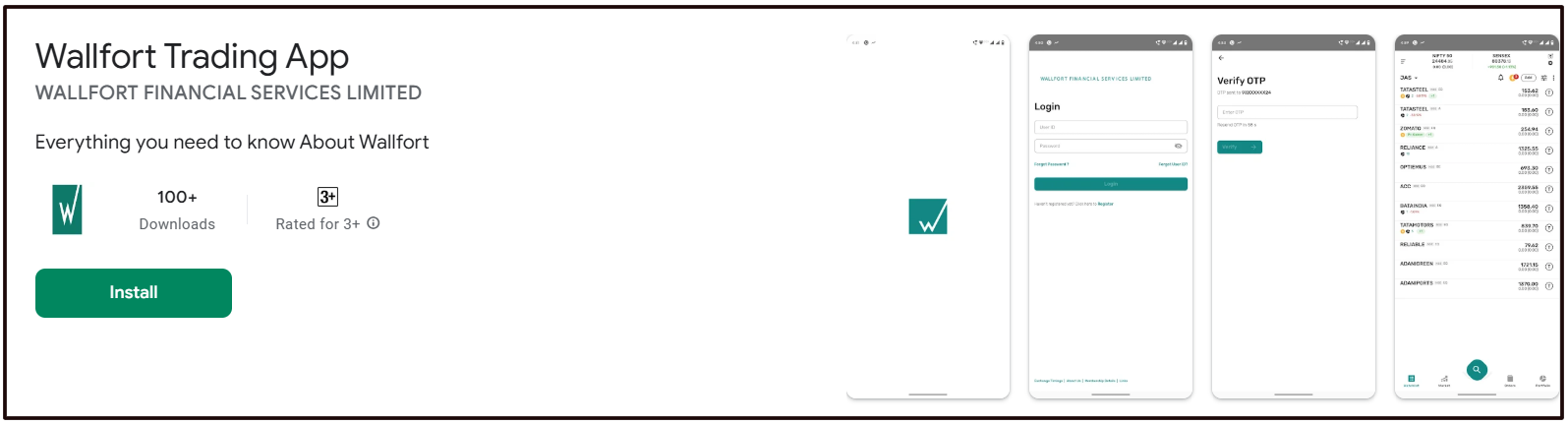
The app listing shows that the company provides an Android-based trading application where clients can execute trades and manage their accounts digitally.
This tells us one important thing: Wallfort is not just a backend brokerage firm. It is actively servicing retail investors through a live trading platform.
SEBI Orders Against Wallfort Financial Services Ltd
Yes. SEBI has passed two orders against Wallfort Financial Services Ltd.
Let’s go through what SEBI actually said, using the official documents.
1. SEBI Order (2006): Ranbaxy Trading Matter
This case relates to trading activity in 1999 in the shares of Ranbaxy Laboratories Ltd.
SEBI investigated unusual trading patterns and examined whether certain brokers had created artificial trading volumes.
According to the order, SEBI observed that Wallfort executed synchronised trades, meaning buy and sell orders were placed in a coordinated manner that matched with counter-parties, resulting in artificial volumes in the market.
In simple terms, even if the price may not have been manipulated, the volume created could give the market a false impression of genuine demand and supply.
SEBI considered this a violation of the SEBI (Prohibition of Fraudulent and Unfair Trade Practices) Regulations and the broker Code of Conduct.
After establishing the violation, SEBI then moved to the penalty section.
SEBI imposed a censure on Wallfort Financial Services Ltd.
A censure is a formal written warning issued by the regulator. It does not involve a monetary fine, suspension, or cancellation of the license. However, it becomes part of the company’s regulatory record.
The company was allowed to continue its operations.
So the result of the 2006 order: Regulatory warning issued. No trading ban.
2. SEBI Adjudication Order (2018): Compliance Lapse
The second order was passed in 2018 after SEBI conducted an inspection of the company’s books and records.
This matter was not about market manipulation. It was about internal compliance procedures and handling of client-related matters.
SEBI identified certain lapses during inspection.
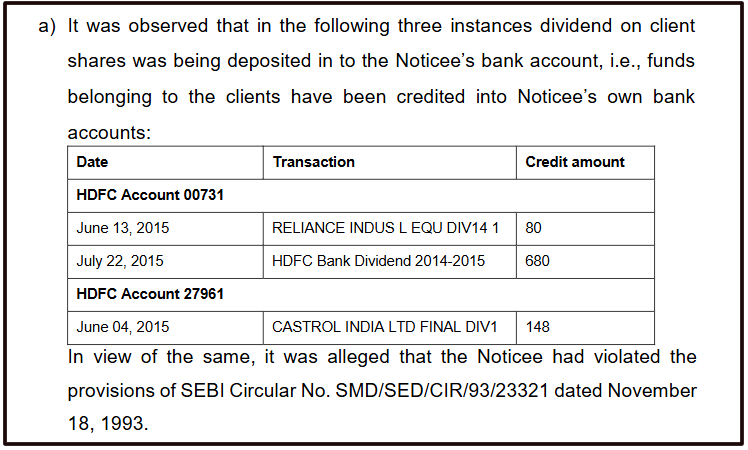
In this section, SEBI observed that dividend amounts belonging to clients were credited into the broker’s bank account instead of being directly credited to client accounts.
Why is this important?
Because brokers act as custodians of client funds and securities. Even procedural lapses in handling client money are treated seriously under regulatory law.
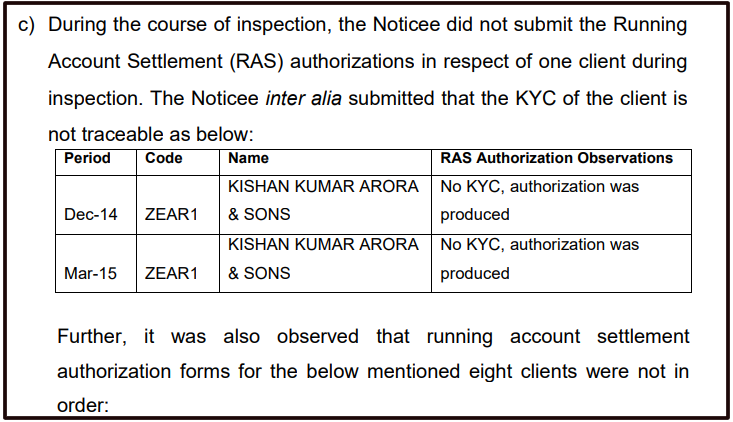
Here, SEBI pointed out that certain client accounts that were eligible for settlement were not properly settled within the prescribed time.
Running account settlement rules are designed to ensure that brokers periodically return unused funds or securities to clients. Non-compliance indicates failure to follow regulatory procedures.
In this section, SEBI links the observed lapses to the Stock Broker Code of Conduct.
The order mentions failure to exercise due care, skill, and diligence, which is a basic obligation for any SEBI-registered intermediary.
This shows that the violations were not just procedural, but considered regulatory non-compliance.
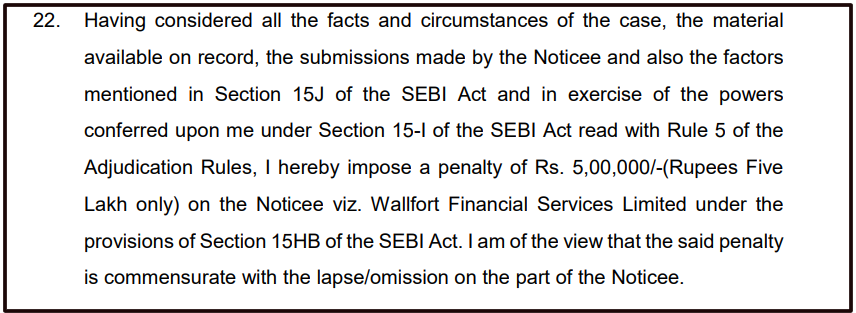
SEBI imposed a monetary penalty of ₹5 lakh on Wallfort Financial Services Ltd.
There was no suspension of registration and no trading ban. The company continued operations after the penalty.
Overall Regulatory Outcome
Based on SEBI’s official orders:
• 2006 – Censure (formal warning)
• 2018 – ₹5,00,000 monetary penalty
• No cancellation of registration
• No suspension of trading license
These orders form part of the company’s regulatory history.
For investors, this does not automatically mean the broker is unsafe. But it does mean that regulatory lapses were officially recorded, and that is information every investor should be aware of before making a decision.
What Do These SEBI Orders Mean for Investors?
Now comes the real question.
When you read words like “artificial volume,” “code of conduct violation,” or “penalty imposed,” it can sound alarming.
But what does this actually mean for someone thinking of opening an account?
First, let’s separate emotion from facts.
In both cases:
- SEBI did not cancel the company’s registration.
- SEBI did not suspend its trading license.
- SEBI did not ban it from operating in the market.
That tells us something important, the regulator treated these as violations, but not at a level requiring shutdown or long-term prohibition.
However, that doesn’t mean the orders are irrelevant.
A censure (2006) means SEBI officially recorded misconduct related to synchronised trades. Even though it was treated as a warning, it remains part of the company’s compliance history.
The ₹5 lakh penalty (2018) means SEBI found lapses serious enough to impose a monetary punishment.
When it comes to handling client funds and settlements, compliance standards are strict for a reason, brokers deal with investor money.
So the balanced view is this:
The company continued to operate.
Its registration was not cancelled.
But regulatory violations were officially documented.
For an investor, this information should not trigger panic; it should trigger awareness.
Before choosing any broker, ask:
- How transparent are they?
- How strong are their compliance systems today?
- Has there been improvement since past orders?
Regulatory history does not automatically define the present.
But ignoring regulatory history is never wise either.
Now that we’ve looked at the past orders, let’s understand something equally important: when should you report a stockbroker if you face issues?
When Should You Report a Stock Broker?
Not every trading loss is a violation. Markets go up and down, that’s normal.
But certain actions are not market risk. They are regulatory breaches.
You should consider raising a complaint if you experience things like:
- Unauthorised trading – Trades executed in your account without your permission.
- Misuse or delay of funds – Difficulty withdrawing your own money without a valid reason.
- Non-settlement of balances – Your unused funds or securities are not returned as per settlement rules.
- False promises or guaranteed returns – SEBI-registered brokers are not allowed to promise assured profits.
- Refusal to provide contract notes or proper statements – Every trade must be backed by proper documentation.
If something feels unclear, unexplained, or repeatedly delayed, it deserves attention.
Remember, SEBI registration comes with responsibility. Brokers are required to follow strict compliance standards, especially when handling client funds and securities.
If you believe those standards are not being met, you have the right to take action.
So how exactly do you report a SEBI-registered broker?
How To File SEBI Complaint Against a Broker?
If you ever face an issue with a broker, the process to raise a complaint is structured. You don’t need to panic — but you do need to act systematically.
Here’s how it works.
Step 1: Raise the Complaint with the Broker First
Start by emailing or writing directly to the broker’s compliance or grievance officer.
SEBI requires every registered intermediary to have a designated grievance redressal mechanism. In many cases, issues get resolved at this stage.
Keep everything in writing.
Save emails, trade statements, contract notes, and bank proof.
Documentation is power.
Step 2: File a Complaint on SEBI’s SCORES Portal
If the broker does not respond or the reply is unsatisfactory, you can escalate the matter to SEBI through the SCORES (SEBI Complaints Redress System) portal.
On SCORES, you can:
- Select the intermediary type (Stock Broker)
- Enter the registration details
- Upload supporting documents
- Track complaint status
Once filed, the complaint is forwarded to the broker through SEBI’s system, and they are required to respond within a prescribed timeline.
Step 3: Report to the Stock Exchange
If the issue still remains unresolved, you can file a complaint with the stock exchange NSE or BSE, where the broker is a member.
Exchanges have grievance redressal and arbitration mechanisms.
This is particularly useful in cases involving:
- Fund disputes
- Unauthorized trades
- Settlement disputes
Step 4: Arbitration in the Stock Market
If resolution fails at earlier stages, you may proceed to arbitration under the exchange framework.
Arbitration is a formal dispute resolution mechanism where both parties present their case before an independent panel.
It’s more structured, but sometimes necessary in serious disputes.
The key thing to remember:
You are not helpless if something goes wrong.
SEBI has built a complaint and escalation framework for investor protection.
And most importantly, act early. Delays make disputes harder to resolve.
If you’re unsure how to structure your complaint or what documents to attach, getting proper guidance can make a big difference.
Need Help?
Dealing with a broker issue can feel overwhelming. Most investors don’t know where to complain against stock broker, what documents to collect, or how to structure their complaint properly. And when money is involved, confusion only adds to the stress.
If you’re facing a problem with a stockbroker, the first step is clarity.
Register with us, and we will help you organise your evidence, contract notes, ledger statements, bank entries, emails, and turn scattered information into a clear, structured complaint.
A well-drafted complaint makes a real difference.
From filing on SCORES to approaching the exchange grievance mechanism, we guide you through each stage.
If something doesn’t feel right, don’t ignore it. Act early, stay informed, and take the right steps. We’re here to support you through the process.
Conclusion
Wallfort Financial Services Ltd is a SEBI-registered stockbroker. It is authorised to operate, offers trading and Demat services, and continues to function in the market.
At the same time, SEBI has passed two orders against the company in the past, one censure in 2006 related to synchronised trades, and a ₹5 lakh monetary penalty in 2018 for compliance lapses.
There was no cancellation of registration. No trading ban. But regulatory violations were officially recorded.
What does that mean for you?
It means you should make decisions with awareness, not assumptions.
Every broker has a regulatory history.
The smart investor doesn’t panic, but also doesn’t ignore documented facts.
Before opening or continuing an account, review disclosures, understand the compliance track record, and stay alert to how your funds and securities are handled.
In the market, trust is important. But informed trust is better.