
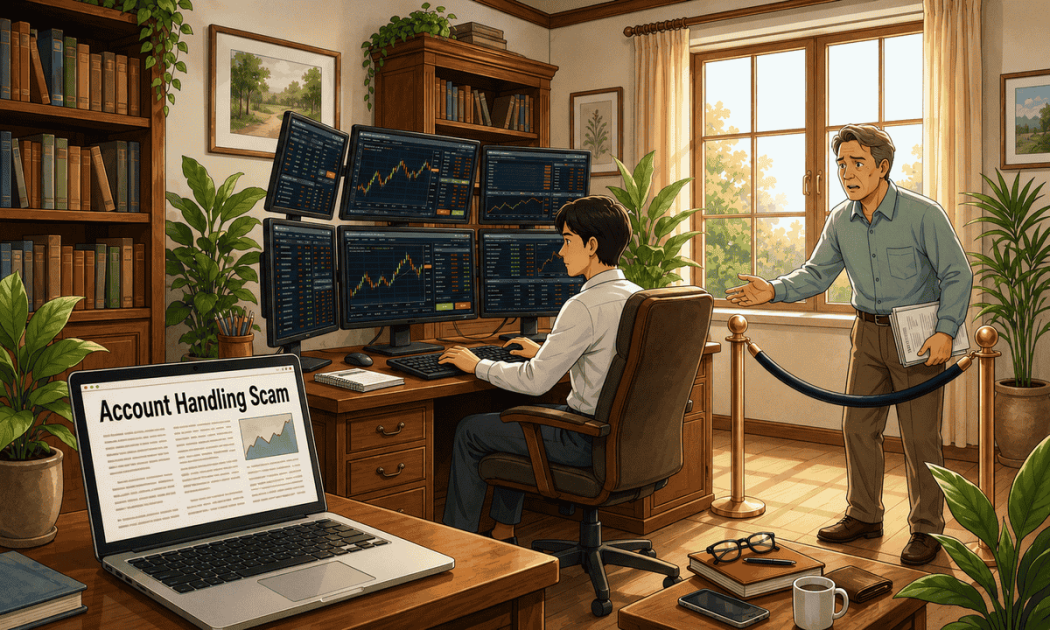
Quick Summary
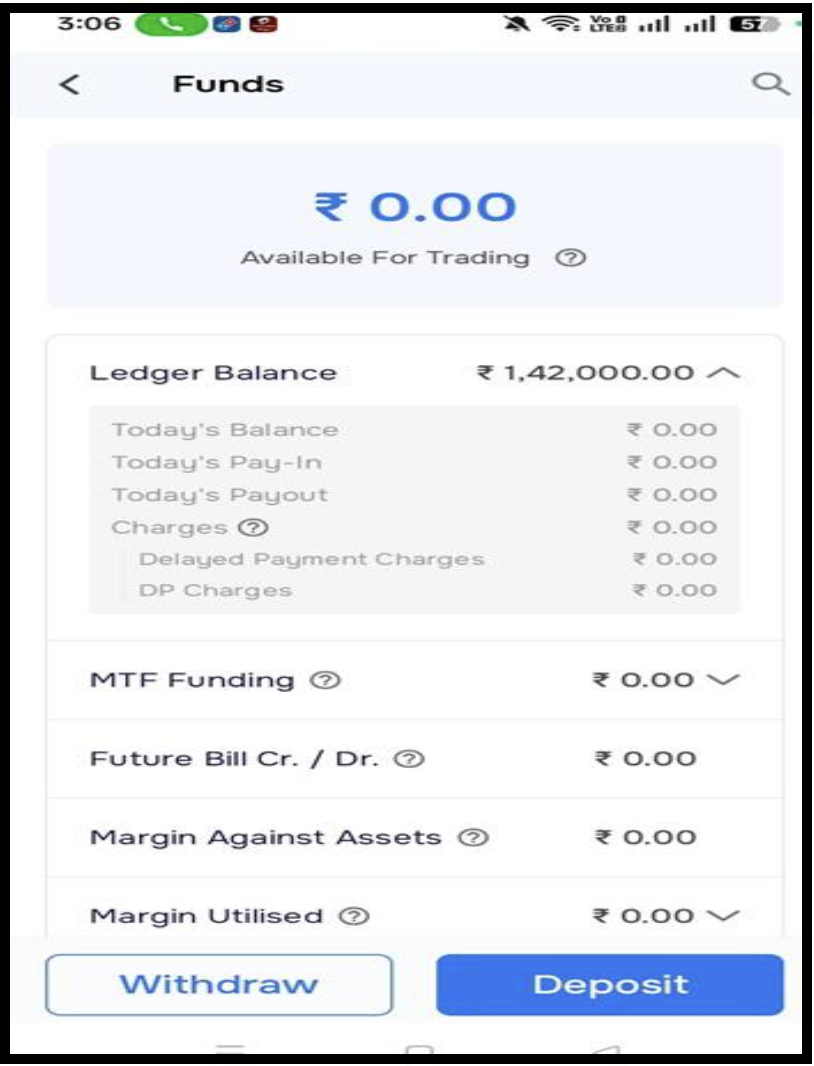
An account handling scam works by taking the decisions out of your hands. You are told not to trade yourself, that experts will manage everything, and that all you need to do is add funds. In one settled case a client was told to say only YES on recorded calls and nothing else. He was instructed never to trade on his own judgement. His account was run entirely by the firm, wiped out, and withdrawals were blocked. He recovered 1,42,000. In another, a broker’s representative collected the client’s one time passwords directly to open and operate the account. That client recovered 36,000. When someone else holds the controls, the trades are theirs, not yours. That is the case.
There is a version of the advisory trap that does not bother with tips at all. It takes your account.
You are told the experts will handle everything so you don’t have to trade on your own. You are sometimes told to stay silent on calls and just say yes.
Your job is reduced to one thing: adding funds.
In one settled file, the instruction was explicit. The client was told to say only YES on recorded calls and to speak nothing else. Someone wanted a recording of his consent without a recording of his questions.
That is account handling, and it is a different mechanism from the demo trade script. Here is how it works and what these cases recovered.
Account Handling Scam: How Control Is Taken
The ordinary advisory trap sends you tips and lets you place the trades. Account handling removes even that step.
The pitch is comfort. You do not have the time or the skill, so let the experts run it. In these files, the phrasing was consistent. All trades would be managed by them. The client should not trade using his own judgement. The account would be fully handled.
Once that is agreed, the client is no longer a participant. He is a funding source for an account someone else controls.
The tells appear early. In one case, the firm promised the client full account management, daily profits of ₹5,000 to ₹10,000 from a small capital, losses capped at one percent, and accuracy above 85 percent.
Numbers that specific are not forecasts. They are bait.
In another case, the firm described the trades as “internal advisory” and “secret trades” to make the client feel part of something exclusive rather than someone handing over control.
The consent recording is the darkest part. A firm that tells you to say only yes on a recorded line is building a record of your agreement while avoiding a record of your doubts. That instruction, if it is in your chat history, is itself worth documenting.
Account Handling Without Permission: The OTP Version
The sharpest form of account handling is when the firm takes the account access directly.
In one file, a broker’s representative collected the client’s one-time passwords from him to complete the account registration herself. A one-time password is the single control that proves it is you. Handing it over, or being asked for it, means someone else can operate the account as if they were you.
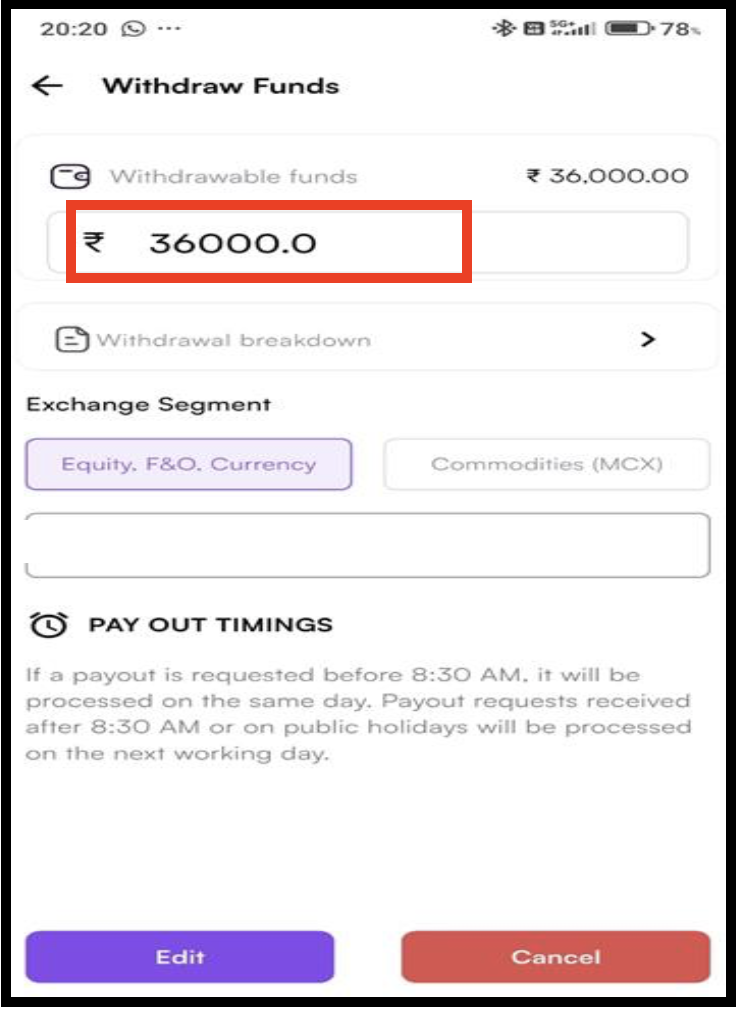
That client was also given trading calls on index derivatives with no assessment of his risk profile or financial background. He recovered 36,000 against a claimed 50,000.
No legitimate firm needs your OTP. A representative who asks for it is asking to operate your account without you. If that happened to you, the account opening record and your messages will show it, and it is a serious point in the complaint.
Was your account run by someone else while you just added funds?
We establish who actually placed the trades, document the loss of control, and build the complaint around the fact that the decisions were never yours.
Register with us for a free consultation.
Account Handling Scam Recovery: What Three Cases Returned
The account handling files recovered across a range, shaped as always by how much of the claim was fees or charges rather than pure trading loss.
| What happened | Claimed | Recovered | Share |
|---|---|---|---|
| Full account handling, brokerage driven | 4,45,000 | 3,40,000 | 76.4% |
| Managed account, withdrawals blocked | 2,00,000 | 1,42,000 | 71.0% |
| OTP handling, unsuitable derivatives | 50,000 | 36,000 | 72.0% |
Three cases do not make a rule. But all three recovered a substantial share, and the reason connects to the mechanism.
When someone else runs your account, the trades were not your decisions. That shifts responsibility for the losses in a way that a self-placed trade does not, because you did not choose them.
Combined with blocked withdrawals, undisclosed charges, or a demand for your OTP, the account handling case tends to be built on conduct rather than on market misfortune.
The first case in the table was also a brokerage churning case, where the loss came almost entirely from charges rather than the market. That overlap is common, and the excessive brokerage charges refund breakdown covers what to do when the brokerage itself is the real loss.
The Signs Your Account Was Handled, Not Advised
There is a line between being advised and being handled, and it decides the shape of your complaint.
- You were told not to trade on your own: Advice leaves the decision with you. Handling takes it away. If they told you to place only their trades and nothing else, they handled your account.
- Someone asked for your OTP or login: No advisory relationship requires this. Anyone who asks for it wants the ability to operate your account directly.
- Someone told you to say only yes on calls: They controlled the recording of your consent while preventing the recording of your questions. That creates a one-sided record.
- Someone blocked or cancelled your withdrawals: Your funds are yours. Every unexplained cancellation leaves a record on the platform.
- Trades appeared that you did not place: If your account shows trades you do not remember authorising, someone else likely took control of your account.
Any one of these moves your case from a dispute about advice to a dispute about control, and control is easier to evidence because it shows up in records rather than in recollections.
What to Gather for an Account Handling Claim
Evidence is the most important part that plays a major role in your recovery process. You must gather proof like:
- The account opening record: It shows whether someone collected your OTP or asked you to use a referral link.
- Your chat history: It captures instructions not to trade on your own, directions to say only “yes,” and promises of managed profits. In these cases, the firms communicated through WhatsApp.
- Withdrawal requests and responses: They show whether the firm cancelled or ignored your withdrawal request. The platform keeps those records.
- Contract notes and statements: They show what the firm traded and when, allowing you to compare those trades with what you actually authorised.
- Payment records: They show every deposit the firm pressured you to make, especially those it requested by promising to recover your losses.
Once the picture is clear, a SEBI SCORES complaint opens the registered route where the firm is registered, and SMART ODR follows where a grievance does not resolve.
Whether your case runs against a broker or an advisory changes the evidence you lead with, and the broker traded without my permission refund breakdown covers that split.
Conclusion
Account handling is not bad advice. It is the removal of your decisions.
You let them make the trading decisions, and they told you to stay silent and say only “yes.”
Someone else ran your account while earning from your activity, not your outcome. When someone else chose the trades, their conduct caused the losses, not your market judgement.
The three cases here recovered 76.4%, 71%, and 72%. In each one, the recovery rested on clear evidence of control and conduct: blocked withdrawals, a collected OTP, and a coached consent recording.
Those things live in records, which is why they recover.
If someone else was running your account while you added the funds, the trades were theirs. Gather the record that shows it.
Report. Recover. Stay Fraud Free.
Frequently Asked Questions
Running your account and placing trades for you is the function of specific registrations with strict conditions. A firm doing it informally, without agreements or the right registration, is operating outside those conditions, which is the heart of an account handling complaint.
Yes, a serious one. A one time password is the control that proves an action is yours. No legitimate firm needs it. A representative collecting your OTP can operate your account as if they were you, and the account record shows it happened.
It means the firm was building a record of your consent while avoiding a record of your questions or objections. That instruction, if it appears in your messages, is evidence of a one sided consent process rather than genuine agreement.
Blocked or repeatedly cancelled withdrawals are a documented issue and were central to one of these cases. Your funds are yours, and the platform keeps a record of each request and its cancellation.
It changes it significantly. Losses on trades you did not choose are a question of who controlled the account, not whether your judgement was wrong. That distinction tends to strengthen the claim, provided the records show the account was handled.





 Add us as a preferred source on Google »

