

Quick Summary
A research analyst can informally mention a broker. What they cannot do is force you to open an account through their referral code, map your existing account to their referral ID, or earn brokerage commission from the same client they are advising. The reason is simple: once an analyst profits every time you trade, their “research” is no longer neutral. SEBI’s Regulation 26C now requires research and referral activities to be kept separate for exactly this reason. This page explains where a broker referral crosses from harmless to a conflict of interest, shows a real case where it did, and what you can do if it happened to you.
You joined a SEBI registered analyst’s Telegram or WhatsApp group, and alongside the trading calls came broker referral links, Demat account promotions, and nudges to trade through one particular platform.
It left you wondering: is that normal, or is the analyst quietly earning off every trade you place?
It is a fair question, and the answer is not a simple yes or no.
A passing mention of a broker is one thing. An analyst who profits from your trades while advising you is another, and that line matters more than most traders realise.
Can a Research Analyst Refer a Broker Platform to You?
The honest answer is: it depends entirely on how the referral is done.
SEBI does not ban an analyst from mentioning or even informally referring to a broker. That alone is not a violation.
The line gets crossed the moment an analyst starts forcing clients to open accounts through their referral code, mapping existing Demat accounts to their referral ID, or earning brokerage commissions while advising the very same client.
Here is why that specific combination is the problem.
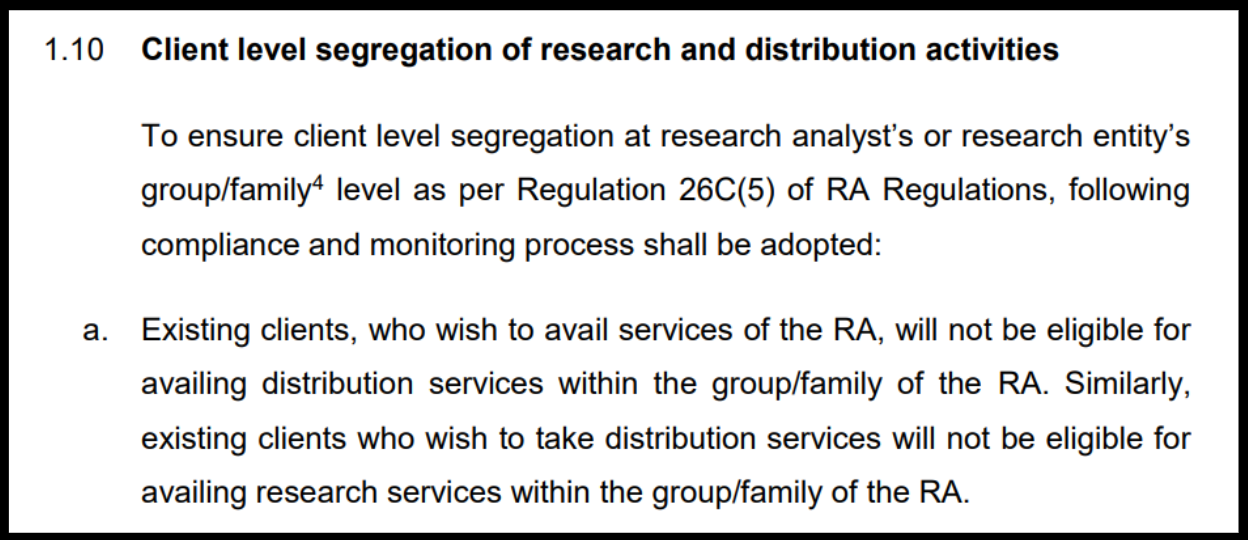
SEBI’s Regulation 26C, added through the Third Amendment in December 2024, requires strict client-level segregation of research services and distribution activities.
The intent is straightforward. When an analyst also profits from the broker relationship, their research can no longer be treated as fully independent. Think it through.
If an analyst earns a commission every time you trade through a particular broker, do they have a quiet incentive to send you more trade calls than the market actually justifies?
SEBI decided that risk was real enough to regulate.
The subscription you pay should buy neutral research, not calls designed to churn your account for someone else’s commission.
Key Red Flags That a Broker Referral Has Crossed the Line
Knowing the rule is half of it.
The other half is recognising a violation when it is happening to you.
These four patterns are the ones to watch, because each turns a harmless referral into a conflict of interest.
If any describe your situation, they are worth documenting.
- You are forced to open an account through their broker: If staying in the group or getting the tips depends on opening a Demat account with the analyst’s referral code, that is a conflict.
Your choice of broker has nothing to do with the quality of their research. - Your existing account is “mapped” to their referral ID: Some analysts ask clients who already have Demat accounts to map them to the analyst’s referral code, so the analyst earns brokerage from your trades on top of the subscription fee you already pay.
- You are pushed toward a banned or unregulated platform: SEBI and RBI control which platforms can legally operate in India. An analyst steering you to a foreign forex platform banned here, or promoting crypto platforms with no regulatory mention, has gone well past a simple referral.
- Research and brokerage income flow from the same client: When one client relationship generates both subscription revenue and brokerage commissions, the independence of the research is fundamentally compromised.
This is the conflict Regulation 26C exists to stop.
A Real Case: When Broker Referrals Became a Conflict?
Regulation 26C is not abstract. A documented arbitration case shows exactly how these referral arrangements play out, and why a valid registration is no guarantee of clean conduct.
Love Sharma, a SEBI registered research analyst (registration number INH000011893) operating through Amaradarsh Research and Analytics, ran the “TWL (Trader With Love)” community, an app, Telegram channels, WhatsApp groups, and live trading sessions focused on instruments like Nifty and Gold.
On the surface, it looked organised and professional, backed by a valid registration and a large following.

But arbitration records raised several concerns about broker referrals, commissions, and platform promotions tied to the service.
Read together, they are a checklist of how referral conflicts surface:
- An undisclosed broker referral: Love Sharma was allegedly associated with the broker Dhan as an authorised person, while also directing subscribers to open accounts with that same broker, raising concerns about commission-based earnings that were not properly disclosed.
- A conflict of interest: The same clients generated both subscription revenue and brokerage-linked commissions, the exact dual-benefit arrangement that can pull an analyst’s incentives away from the client’s interest.
- Promotion of an offshore platform: The records referred to the promotion of Exness, an offshore forex platform the RBI has cautioned Indian residents against, raising clear regulatory concerns.
- Assured-return and marketing concerns: Further allegations included past-performance claims, assured-return style messaging, and engagement promoted through “TWL Coins,” which raised broader compliance questions.
The outcome: the matter was resolved through conciliation. Love Sharma accepted fault and committed to correcting his practices in line with SEBI regulations.
The lesson for you is the one that runs through this whole page. A valid SEBI registration is a baseline, not a guarantee.
Undisclosed broker incentives and platform promotions can sit inside a service that looks entirely professional and properly registered on the surface.
Was a broker referral pushed on you alongside the trading calls?
We will review the referral arrangement, check what was and was not disclosed, and map it against SEBI’s conflict-of-interest rules to build your complaint.
What to Check Before You Follow a Broker Referral?
Before you sign up with a broker recommended by a Research Analyst, take a quick step back.
Spending a minute to check the details upfront can save you from conflicts of interest and potential losses later.
4 simple things to check first:
- Clear Disclosures: Is the analyst being completely open about their relationship with the broker, or are they slipping links in without explaining why?
- Hidden Commissions: Is there a hidden referral scheme or commission structure that pays the analyst whenever you trade?
- Unregulated Platforms: Are they pushing you toward offshore forex, unregistered crypto, or illegal platforms?
- Overpromising: Is the referral paired with bold claims of guaranteed returns or unrealistic profits?
If a referral fails any of these simple checks, the recommendation is likely designed to boost the analyst’s income, not your financial well-being.
What to Do If a Referral Cost You?
If an analyst forced you toward a specific broker, mapped your account for commissions, or failed to disclose a referral benefit, that is a conduct breach you can act on, and the first step is preserving what happened.
Save the referral links, the account-opening links, the WhatsApp and Telegram messages promoting the broker, your subscription invoices, and any communication that pushed frequent trading through a particular platform.
That record is what shows the referral existed and was undisclosed.
Since a registered analyst falls under SEBI’s oversight, a formal complaint is open to you once you have raised it with the firm.
If that does not resolve things, you can file complaint in SEBI SCORES, and from there the matter can move to SMART ODR dispute resolution and on to arbitration if it stays unresolved.
If you want to understand the full process end to end, our guide on how to lodge complaint against research analyst sets out what each stage can realistically recover.
Conclusion
Not everything a SEBI registered analyst does is automatically blessed by their licence. That licence is for research, and research alone.
The moment an analyst steers you toward a broker for their own gain, pushes an unregulated platform, or blends brokerage earnings with the subscription income from the same clients, they have stepped outside what their registration allows.
Most registered analysts do their job with integrity. But you owe it to yourself to know where the line falls, so you can spot the moment someone crosses it.
Your money deserves better than a conflict of interest wearing a registration number.
Frequently Asked Questions
An analyst can informally mention a broker. It becomes a violation when they force you to use a referral code, map your account for commissions, or earn brokerage from the same client they advise, which compromises their independence.
Introduced in the December 2024 Third Amendment, Regulation 26C requires client-level segregation of research and distribution activities. It exists so an analyst cannot profit from your trades while claiming to give you neutral research.
Yes, if it is undisclosed and flows from the same relationship where they advise you. That dual benefit is the conflict of interest SEBI's rules target, because it can push an analyst to recommend more trading than the market warrants.
No. Platforms like offshore forex services the RBI cautions against are not legal for Indian residents. An analyst promoting a banned or unregulated platform has gone well beyond a permitted referral into a serious concern.
Save the referral and account-opening links, the chats promoting the broker, your subscription invoices, and any messages encouraging heavy trading through a specific platform. That evidence shows the referral existed and whether it was disclosed.





 Add us as a preferred source on Google »

