
Quick Summary
Love Sharma holds a genuine SEBI Research Analyst registration through his firm, Amaradarsh Research and Analytics, operating publicly as “Trade With Love” or TWL. A formal arbitration was conducted under Case No. MSE-RA-2024-12-494386, resulting in a settlement where Love Sharma acknowledged multiple compliance concerns, guaranteed-return language, an undisclosed 30% commission from a broker referral, an incorrect registration number displayed on the TWL app, and promotion of an RBI-flagged forex platform, among others. This page examines every finding, including what his social media, his app, and his own settlement documents actually show, so you can weigh the complete picture yourself.
A missed call turns into a WhatsApp group. The WhatsApp group turns into a Telegram channel promising you’ll finally get it right.
Somewhere in that chain, you start typing the same question everyone before you already asked: can you trust Love Sharma trading advice?
Here’s the honest answer, built from something more solid than a Telegram screenshot or a confident voice note.
A real, documented case, a formal arbitration settlement, and evidence that either holds up or doesn’t, laid out plainly so you can weigh it yourself.
Can You Trust Love Sharma Trading Advisor?
Here’s the honest, balanced answer, based on real documented evidence rather than assumptions in either direction.
His RA registration through Amaradarsh Research and Analytics is genuine, and that much checks out independently.
What deserves closer attention is what happened once real subscribers actually engaged with the service.
Three things make up that closer look: a documented client case, our own team’s direct enrollment, and a formal arbitration settlement.
Each is examined in full below, starting with how this platform actually operates.
What Is Love Sharma’s Trading Advisory Setup?
Before getting into the specific findings, it helps to know the basic shape of the business itself.
Love Sharma operates under the brand Trade With Love, or TWL, as the proprietor of Amaradarsh Research and Analytics.
The platform offers live trading sessions covering Nifty and Gold, structured subscription batches, and a dedicated mobile app through which subscribers receive trade calls and market updates.
Delivery happens across several channels at once: Telegram groups for daily calls, WhatsApp communities for updates, an Instagram presence for broader reach, and the TWL app itself as the paid subscription hub.
Subscribers typically join specific batches, live sessions tied to set time slots, rather than a single ongoing service.
The company profile, its full range of services, exact pricing, and background, is covered separately and in complete detail on our page: Love Sharma Trader.
Love Sharma SEBI Complaint: The Arbitration Case
Here’s something worth knowing upfront. A formal arbitration case was actually filed against Love Sharma and his firm, Amaradarsh Research and Analytics, not a rumor, not a social media complaint, an actual dispute resolution proceeding with a real settlement on record.
So how did it get to that point?
Two things happened first, before the arbitration itself, a client who’d already lost money using the service, and our own team, who separately signed up to see how the platform actually worked. Both of those became the basis for the case.
How It Started: A Client’s Experience
One client came to us after losing money trading on Love Sharma’s advice. Here’s what he told us happened.
He got a call from someone named Sahil, who said he was connected to a SEBI-registered Research Analyst firm. During that call, Sahil kept repeating that everything was above board, fully regulated, fully authorised.
To back that up, he showed the client screenshots of other people’s supposed profits, presented as proof that this actually works.
The client believed him. He paid ₹51,498 for the advisory service. He never got a proper invoice. He never got full registration paperwork either, just the verbal assurance and the screenshots.
Once he started following the trades he was given, they were delivered with total confidence, like the outcome was already decided. That confidence didn’t hold up.
Over time, he lost roughly ₹3,10,000.
Once the losses piled up, things changed fast. Replies got slower. He asked for a refund and got nowhere. Nobody offered him a real way to fix it. That silence is what pushed him to actually file a complaint.
What We Found When We Checked Ourselves?
We didn’t want to rely only on one person’s story, so our own team signed up for the service directly, as regular paying subscribers, to see what actually happens once someone’s money is in.
On August 29, 2024, we paid ₹7,200, GST included, and joined TWL the same way any other subscriber would. We weren’t trying to see if the trades made money.
We were there purely to watch, take notes, save screenshots, and record what the experience actually looked like from the inside.
We made one rule for ourselves from the start, we never placed a single trade with our own money. The goal was to document honestly, not to gamble while we did it.
Together, the client’s account and our own findings gave us enough to move forward with a formal arbitration case, which is covered in full detail next.
Love Sharma SEBI Violations: What the Settlement Actually Found?
Once you know a real arbitration case existed, the next real question is what it actually found.
Here’s each finding from the settlement documents, checked plainly against the specific SEBI rule it touches.
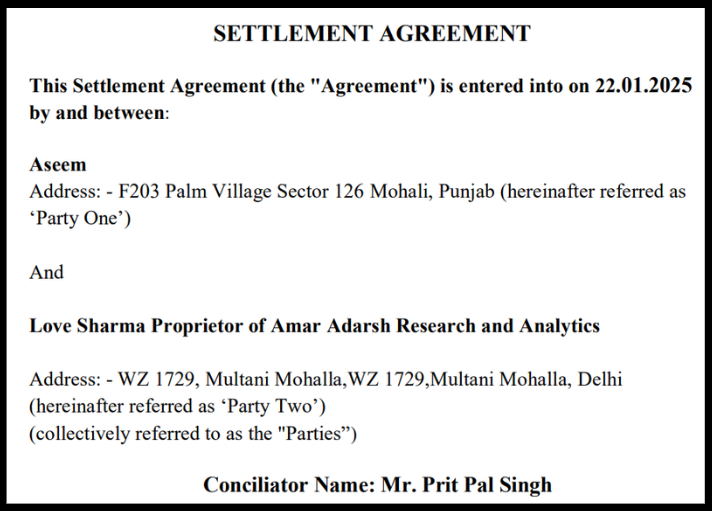
Both the client’s account and our own documentation contributed to this case, Case No. MSE-RA-2024-12-494386, conducted with Mr. Prit Pal Singh as Conciliator.
A Settlement Agreement was executed on January 22, 2025.
1. Guaranteeing Returns
SEBI Regulation 24(1) is explicit: no Research Analyst can promise, imply, or assure returns from market-linked trades.
A message circulated on Love Sharma’s Telegram channel stated “900 mein 9000 kamao with 2 lots,” a direct claim that a fixed amount would generate a specific, guaranteed return using a specific number of lots.
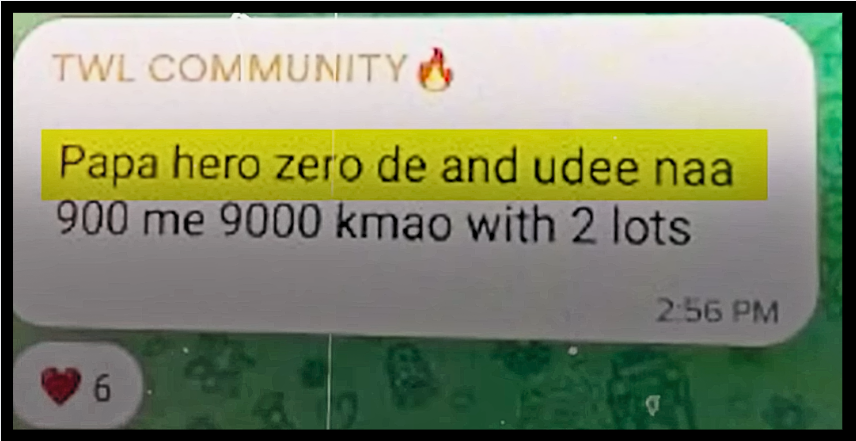
This raises two separate concerns.
First, it implies a guaranteed outcome from a market trade. Second, specifying an exact lot quantity crosses into personalised investment advice, which requires a separate SEBI Investment Adviser registration that Love Sharma does not hold.
2. The “Locked Trades” Feature
Beyond individual messages, TWL offered a specific paid feature called “Locked Trades.”
Instead of general research, subscribers could pay extra for one specific trade setup, already decided for them: exact entry price, exact lot size, exact exit point.
One source document also referred to this as a “Pay Later” trade option.

This is the same underlying issue as the lot-quantity message above, just packaged as a formal product.
Publishing research and telling someone exactly what to do with their money are two different regulatory activities, and only the first is covered by a Research Analyst registration.
The settlement documents specifically noted that this “Pay Later” structure raised the same concern.
3. Undisclosed Commission From a Broker Referral
Love Sharma consistently recommended Dhan (Moneylicious Securities) as the preferred demat platform for subscribers.
What wasn’t disclosed upfront, he is an authorised person with Dhan and earns a 30% commission on every client referral.
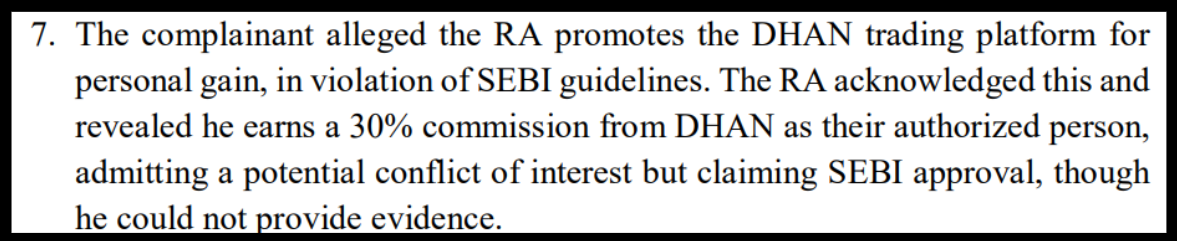
During arbitration, this was directly addressed.
The settlement records state that the commission arrangement was acknowledged, with a potential conflict of interest admitted, though no evidence of specific SEBI approval for the arrangement was presented.
SEBI regulations require full, transparent disclosure of any financial interest when an analyst recommends a broker to subscribers.
4. An Incorrect Registration Number on the TWL App
The TWL Community app reportedly displayed an incorrect SEBI registration number. During arbitration, this was acknowledged and described as a one-digit typing error.
The settlement documents record: “The RA admitted this was a one-digit error, not intentional.”

Whatever the cause, a registration number is the most basic piece of regulatory identification a subscriber relies on to verify who they’re actually paying.
5. Selling Subscriptions Through the TWL App
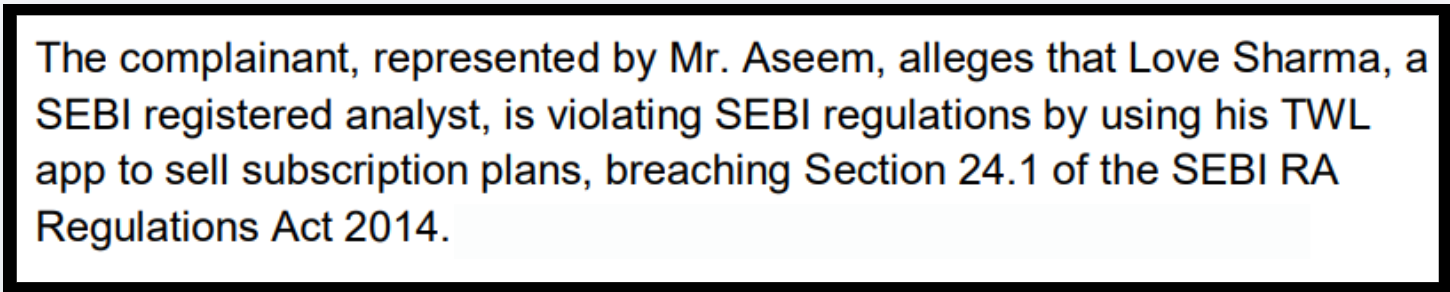
The settlement documents note that using the app to sell subscription plans allegedly breached Section 24.1 of the SEBI RA Regulations, 2014, which governs how Research Analysts are permitted to distribute services and collect fees.
Beyond the compliance question, the app itself is worth understanding on its own terms.
TWL is listed on the Google Play Store under the name “Tradewithlove,” developed by DIY17 Media, in the Education category with a 3+ content rating.
It’s built on Classplus infrastructure, a widely used edtech platform for coaching providers in India.
The app’s data safety disclosures indicate it collects personal information, messages, and location data, and shares some of this with third parties.
This is worth reviewing directly before subscribing, since data-sharing practices aren’t always obvious from the app’s promotional description alone.
6. TWL Coins: A Virtual Currency Inside the App
The platform introduced an internal virtual credit system, TWL Coins, that subscribers could earn and use within the ecosystem.
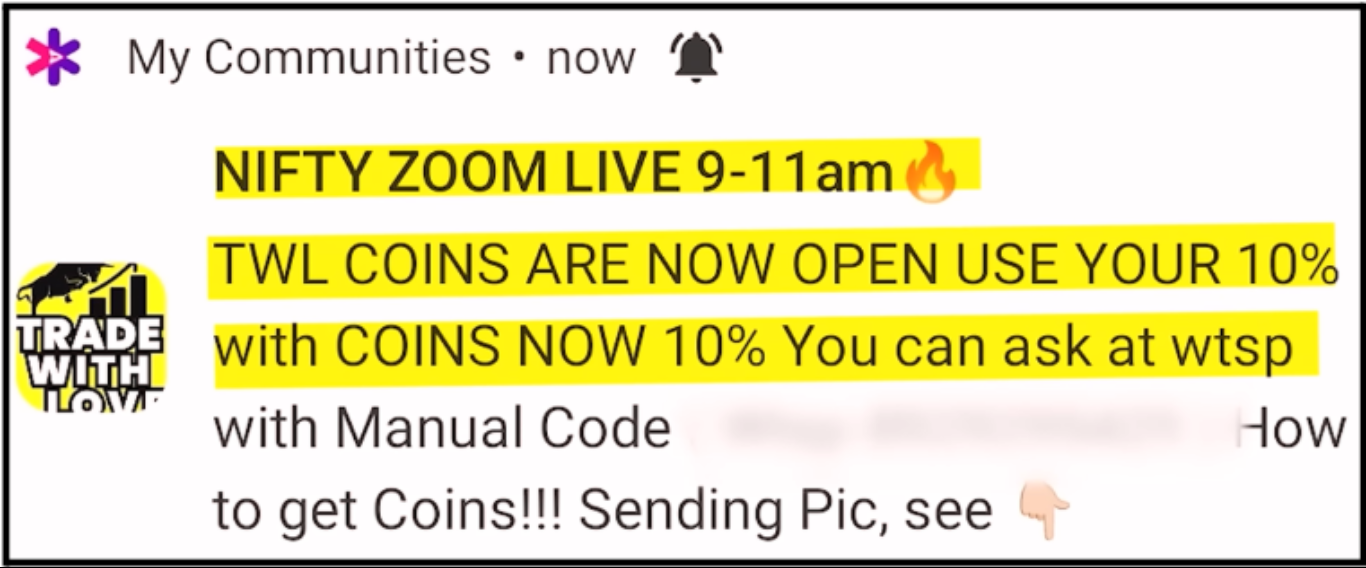
SEBI requires fee structures to be transparent and straightforward.
A proprietary virtual currency creates pricing opacity, identified in the settlement documents as a concern under Regulation 15A (Fees) and Regulation 24(6).
7. Selective Profit Screenshots
The TWL app and its Instagram presence regularly showcased profit screenshots from students and subscribers. Only winning outcomes were displayed, with no corresponding data on losses or overall performance accuracy.
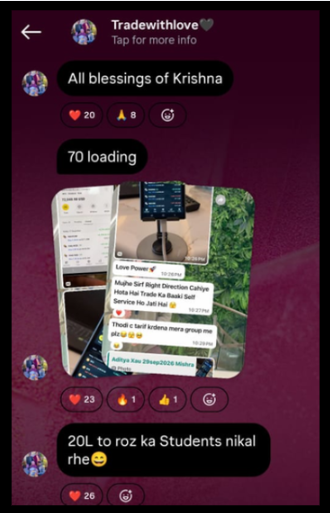
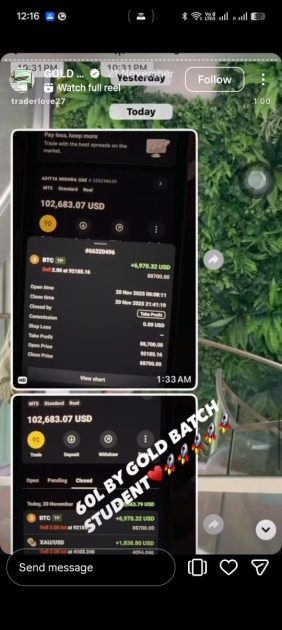
SEBI’s Regulation 20(4) requires recommendations to be backed by proper, balanced data, not selectively curated wins.
8. Promoting an RBI-Flagged Forex Platform
Love Sharma actively promoted Exness, an offshore forex trading platform the Reserve Bank of India has not authorised for Indian retail traders.
Evidence shared during arbitration showed referral links, copy-trading instructions, and onboarding guidance distributed across Telegram and WhatsApp.
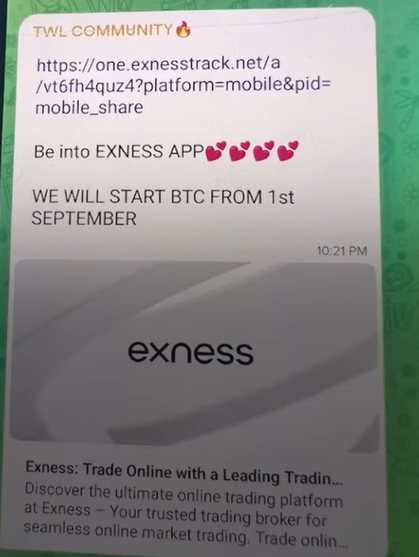
Promoting a platform flagged by Indian regulators, particularly to retail traders, raises compliance concerns under SEBI Regulation 15 and Regulation 24(1).
He also reportedly recommended “Vantage,” another international broker operating without RBI approval in India.
9. Missing Standard Risk Disclaimers
Multiple promotional materials associated with TWL were found missing the standard market risk disclaimer required in all advertisements from registered Research Analysts.
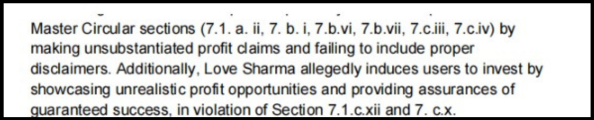
Its absence is a direct departure from SEBI’s advertising norms.
What Happened After the Settlement?
The matter was resolved through conciliation.
Love Sharma agreed to provide an undertaking to comply with SEBI Master Circular SEBI/HO/MIRSD-PoD-2/P/CIR/2023/90 and upload that undertaking to the ODR portal.
However, subsequent documentation suggests similar practices continued through Instagram groups and new Telegram channels after the settlement was recorded.
Whether that ongoing conduct reflects the commitments made in the settlement remains an open question worth watching independently.
Love Sharma Trader Instagram: What His Social Media Bios Claim?
A lot of what draws people to Love Sharma happens before they ever pay for anything, right there on Instagram.
He runs the account under the handle @traderlove27, with over 17,000 followers, and it’s the platform where most of the bold profit claims in this section actually live, sitting right in his bio, the very first thing anyone sees before they follow him, message him, or consider joining a batch.
His Instagram bio has stated “Turned 3L to 6Cr,” and his Twitter/X bio has carried the claim “Made 3L to 7Cr in a Month.”
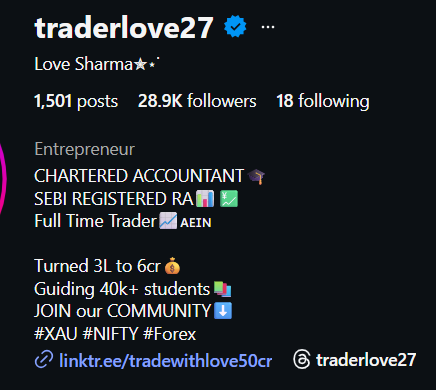
Other posts have referenced “₹47 Lakhs in One Morning” and “5 crore in One Month,” with more recent posts referencing figures like “Started with 3L Now at 9.8cr” over two months.
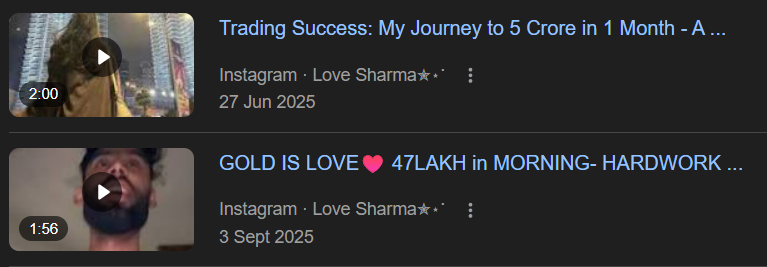
These are promotional claims placed exactly where a potential subscriber sees them first, not accompanied by audited performance data or balanced risk disclosure.
SEBI’s Master Circular requires performance claims to be backed by verifiable, dated records, a standard that isolated profit screenshots don’t meet on their own.
What Pattern Do These Claims Actually Follow?
Looking at these claims together, rather than one at a time, a repeating structure shows up.
- Exaggerated capital growth narratives: Statements like turning a small amount into crores suggest extraordinary, repeatable consistency.
For a SEBI-registered Research Analyst, implying predictable exponential growth runs against the balanced, risk-aware communication the rules actually expect. - High one-day or one-month profit highlights: Showcasing a single large day or a short-term profit figure, without the full trade history, the capital actually at risk, or any losses along the way, creates a skewed picture of what really happened.
A screenshot isn’t the same thing as an audited record. - Selective display of winning trades only: SEBI expects fair, balanced representation.
Showing only the wins, with no mention of the losses that come with any trading activity, distorts what a new subscriber should realistically expect. - Promotion of forex trading in the bio itself: A Research Analyst registration only covers permitted securities markets. Directing followers toward offshore forex platforms through bio links or promotional posts sits outside what this specific registration allows, the same underlying issue already covered in the Exness finding earlier in this piece.
- None of these points alone proves wrongdoing: But together, and read alongside the arbitration findings above, they form a consistent pattern worth weighing honestly before trusting any of the numbers shown.
Recognise any of this from your own experience with TWL or Love Sharma?
Tell us what happened, and we’ll help you understand whether your situation matches a documented pattern worth formally raising.
What Should You Do With This Information?
None of these findings individually proves ongoing misconduct on their own.
Together, backed by a formal settlement record rather than unverified allegations, they’re worth weighing seriously before subscribing to anything under this brand.
If you’re still confirming the basic registration details before deciding anything, our page on Love Sharma SEBI registered covers the full verification steps.
If your own experience already matches any of what’s documented here, the first formal step is a written complaint to the firm directly, followed by a SEBI SCORES complaint if that doesn’t resolve things.
For disputes involving a specific financial amount, the SMART ODR login page walks through a faster, structured mediation route than a full hearing.
If neither of those resolves the matter, share market arbitration is the final stage, the same route this documented case itself went through before settling.
The complete filing route, every stage explained in order, is covered in full in our guide on how to complain against Love Sharma.
Conclusion
Love Sharma’s TWL ecosystem presents a genuinely mixed picture.
The SEBI registration is real, and a formal arbitration settlement exists on record, not a rumor or an unverified claim.
The documented findings cover a lot of ground. Guaranteed-return language. The Locked Trades feature. An undisclosed commission. An incorrect registration number. A virtual currency system.
Selective performance claims across Instagram and the app. Promotion of RBI-flagged platforms. Messaging discouraging stable employment.
Each of these was either acknowledged directly during the settlement, or independently documented alongside it.
Whether current practices have genuinely changed since then is something every prospective subscriber should verify for themselves before paying anything.
Report. Recover. Stay Fraud Free.
Yes, Case No. MSE-RA-2024-12-494386, conducted with Mr. Prit Pal Singh as Conciliator, resulting in a Settlement Agreement executed on January 22, 2025. The settlement documents record several acknowledgments, including an admitted one-digit error in the displayed registration number and an acknowledged conflict of interest regarding a broker commission. An internal virtual credit system introduced within the TWL app, identified in the settlement documents as a concern under SEBI's fee transparency regulations. A paid feature offering subscribers a pre-decided trade setup, including exact entry, lot size, and exit points, which raises the same regulatory concern as directed lot-quantity advice. No, Exness is an offshore forex platform not authorised by the Reserve Bank of India for Indian retail traders. Subsequent documentation suggests similar practices have continued through new channels, though this hasn't been independently confirmed as ongoing at the time of this review.Frequently Asked Questions





 Add us as a preferred source on Google »

