
Quick Summary
If your SEBI registered Research Analyst promised guaranteed returns, sent trade calls with no research report behind them, or is stalling on a refund, you have real grounds for a complaint. Start by writing to the analyst’s grievance officer, then file on SEBI SCORES (scores.sebi.gov.in) under the Research Analyst category. The entity gets 21 days to respond, and if that doesn’t resolve it, SMART ODR conciliation and binding arbitration are next. Both stages have recovered real money, including a ₹28 lakh award against Motilal Oswal and a ₹10.8 lakh refund order against Angel One.
1000+ Complaints Registered Against
RA in 2026
The right procedure increases the chance of recovery of losses.
Have You Been Scammed Too?
Get assistance in filing a Complaint Now!
Let’s help you report this!
How to File a Complaint Against a SEBI Registered Research Analyst (RA)

You paid a Research Analyst for calls that were supposed to make you money. Instead you got silence, a refund that never came, or trade tips with no research behind them at all. The question now is simple: how do you file a complaint against this Research Analyst, and can you actually get your money back?
You can. SEBI has a defined process for this, and thousands of investors use it every year. This guide walks through the entire route, from writing to the analyst directly to SEBI’s SCORES portal, SMART ODR, and arbitration, including the timelines that apply at each stage and what has actually worked in real cases.
Quick answer
If you’re short on time, here’s the process in order:
- Write to the Research Analyst’s compliance or grievance officer first. SEBI requires this step before it will act.
- If there’s no resolution, file a complaint on SEBI SCORES (scores.sebi.gov.in) under the Research Analyst category, using the analyst’s INH registration number.
- The entity has 21 calendar days to respond with an Action Taken Report. If you’re not satisfied, you get a first-level review, then a second-level review by SEBI.
- If SCORES doesn’t resolve it, the case moves to SMART ODR for conciliation, and if that fails, to arbitration, which produces a binding order.
- All of this is free through conciliation. Arbitration is free for claims under ₹10 lakh.
The rest of this guide covers each stage in detail, along with what actually counts as a valid complaint and what derails one.
What counts as a valid complaint against a Research Analyst
Not every loss is a SEBI violation. Markets fall, and a research call can be wrong without breaking any rule. A complaint against a Research Analyst holds up when the analyst’s conduct, not the market, is the problem. These are the situations that give you real grounds:
Guaranteed returns. Under SEBI’s Research Analyst Regulations, no RA can promise a fixed or assured return. If you were told you’d “definitely” make a set amount, that’s a violation on its own, independent of what happened to your money afterward.
Trade calls with no research report behind them. A Research Analyst is required to base every recommendation on documented research. Buy and sell calls fired over WhatsApp or a phone call, with nothing written to support them, don’t meet that bar.
Hidden or unauthorized charges. Fees collected into a personal account instead of the firm’s registered business account, or charges that push past SEBI’s cap of ₹1,51,000 per family across all your RA subscriptions in a year, are both grounds for a complaint.
A refund complaint that goes nowhere. If a refund was promised and then denied, or the analyst tried to enforce a profit-sharing or loss-sharing arrangement, you have a case. SEBI bans profit and loss sharing between an RA and a client outright.
Unauthorized trading. A Research Analyst can publish and recommend. It cannot place trades in your account or hold your funds. If someone did either of these under the label of “research services,” that’s serious.
Inadequate disclosures or a conflict of interest. SEBI requires an RA to disclose any financial interest in the securities they recommend. If an analyst pushed a stock they had a stake in, without telling you, that’s a disclosure violation you can raise.
Misleading claims about past performance. SEBI restricts what a Research Analyst can publicly claim about win rates or past profits. Screenshots of other clients’ “profits” used to sell you a plan, without any verified basis, fall into this category, and it’s a pattern that shows up in almost every service complaint we see get resolved.
If your experience matches one or more of these, you have grounds to lodge a complaint, and the process below is how you register it.
Check Before You Pay: Is Your SEBI Research Analyst (RA) Registered?
Before you file anything, confirm the person or firm is who they say they are. This step gets skipped more often than it should, and it changes which route you take.
Every genuine Research Analyst carries a SEBI registration number that starts with INH, followed by nine digits (for example, INH000006086). You can check this number on SEBI’s own intermediary search at sebi.gov.in, under “Registered Intermediaries.” Search by name or registration number and confirm the status shows as active.
There’s a second layer worth knowing about. SEBI has handed day-to-day supervision of Research Analysts to the Research Analyst Administration and Supervisory Body (RAASB), which operates under BSE Limited. RAASB monitors RA compliance, handles the accreditation process alongside NISM, and is the body that first reviews grievances routed through SCORES against a Research Analyst before SEBI itself steps in for escalations. If an RA’s disclosures mention RAASB oversight, that’s a genuine sign of registration, not a red flag.
If the INH number doesn’t exist, or the firm can’t produce one when you ask, you’re not dealing with a SEBI complaint situation at all. You’re dealing with an unregistered entity, and the route is different: report it to SEBI through the Sachet Portal, file at cybercrime.gov.in or call 1930 if money moved through UPI or a bank transfer, and act inside the first 24 hours if possible. That window matters far more for unregistered fraud than it does for a registered entity, since a registered RA can’t simply disappear the way an unregistered operator can.
The complaint ladder
How to file a complaint against a Research Analyst, step by step
Four stages, in order. Each one has to be completed before the next opens up.
Write to the analyst
Email the compliance/grievance officer with what was promised, what happened, and the resolution you want.
15–30 days to respondFile on scores.sebi.gov.in
Select “Research Analyst,” enter the INH number, attach evidence. The entity must file an Action Taken Report.
21 days for ATREscalate to SMART ODR
An independent conciliator works toward a settlement online. Your SCORES reference carries over.
Free, online-onlyArbitration
An arbitrator issues an award enforceable like a civil court decree. Free for claims up to ₹10 lakh.
Panel above ₹25LPick the right category
Research Analyst vs Investment Adviser vs Stock Broker
Filing under the wrong SEBI category is the most common reason a valid complaint stalls.
| Intermediary | What they’re registered to do | SEBI prefix | Common complaint triggers |
|---|---|---|---|
| Research Analyst RA | Publish research, issue buy/sell recommendations | INH | Guaranteed returns, calls with no report, fee overcharge, unauthorized trading |
| Investment Adviser | Holistic financial & portfolio advice | INA | Unsuitable advice, undisclosed conflicts, fee disputes |
| Stock Broker | Execute trades on your behalf | INZ | Unauthorized trades, delayed payouts, account mishandling |
Research Analyst or Investment Adviser? Pick the right category
A large share of investor complaints against Research Analysts get delayed for one avoidable reason: they’re filed under the wrong SEBI category. Research Analyst and Investment Adviser sound similar and SEBI treats them as entirely separate registrations, each routed to a different desk internally.
A Research Analyst is registered to publish research and issue recommendations on securities. That’s the full scope. An RA cannot build you a portfolio, assess your overall financial goals, or manage your investments.
An Investment Adviser (IA) is registered to give holistic advice, covering your goals, risk profile, and asset allocation, and often charges based on assets advised upon rather than a flat subscription.
If you paid for stock tips, a trading course with buy/sell calls, or a subscription promising specific research-backed recommendations, you were dealing with a Research Analyst, and your SCORES complaint should say so under the Research Analyst intermediary category. Selecting Investment Adviser or Stock Broker by mistake is one of the most common reasons a valid complaint stalls before anyone reviews it.
| Intermediary | What they’re registered to do | SEBI registration prefix | Common complaint triggers |
|---|---|---|---|
| Research Analyst (RA) | Publish research, issue buy/sell recommendations | INH | Guaranteed returns, calls with no report, fee overcharge, unauthorized trading |
| Investment Adviser (IA) | Holistic financial and portfolio advice | INA | Unsuitable advice, undisclosed conflicts, fee disputes |
| Stock Broker | Execute trades on your behalf | INZ | Unauthorized trades, delayed payouts, account mishandling |
Match your complaint to the row that fits what you actually paid for, since this is what SCORES uses to route your case internally.
Where to file a complaint against a Research Analyst
There’s one official starting point for lodging a complaint against a Research Analyst, and it isn’t an email address. It’s the SCORES portal, at scores.sebi.gov.in, followed by SMART ODR and arbitration if SCORES doesn’t resolve things.
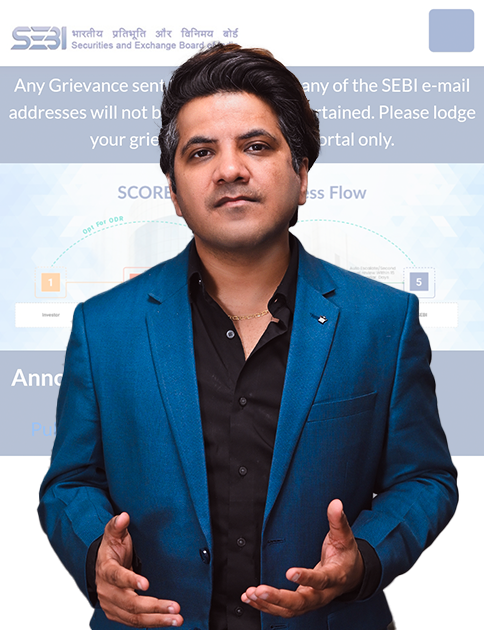
This is worth spelling out because a lot of investors search specifically for a SEBI complaint email for Research Analysts, and there isn’t one. SEBI says directly, on the SCORES portal itself, that grievances emailed to its addresses will not be entertained. The only email in the entire process is the one you send to the analyst’s own grievance contact at Step 1, and that email exists purely to prove you approached the firm before escalating, which SCORES requires as a precondition.
Before SCORES: you write to the analyst’s grievance channel. After SCORES: everything runs through SEBI’s own portals, never through a private inbox, a phone call, or a WhatsApp number someone gives you as a “shortcut.”
How to file a complaint against a Research Analyst: step by step
SEBI built this as a ladder. Each step has to be completed properly before the next one opens up, and skipping a step is the fastest way to have a complaint bounced back.
Step 1: Raise it with the Research Analyst first
SEBI requires you to give the firm a chance to resolve the issue before SCORES will accept your complaint. Write a formal grievance to the analyst’s compliance officer or grievance contact, the one listed on their regulatory disclosures page, not a sales representative who called you.
State exactly what was promised, what happened instead, and the specific resolution you want: a refund, a correction, or a written explanation. Ask for a reply in writing, and give the firm a reasonable window, usually 15 to 30 days.
While you wait, gather every document. Keep the subscription agreement, payment receipts, research reports you did or didn’t receive, and full screenshots of every WhatsApp, SMS, and email exchange, with dates visible. Screenshot entire conversation threads, not single messages pulled out of context. This paper trail carries your case through every stage that follows.
Here’s a bare-bones structure you can adapt for that first email:
Subject: Formal grievance — [your name], client ID [xxx]
To the Compliance/Grievance Officer,
I subscribed to [service/plan name] on [date] and paid ₹[amount] via [payment mode], receipt attached. [State the specific issue: e.g., “I was promised guaranteed returns of X% by [representative name] on [date],” or “I received the following trade calls with no accompanying research report: [list dates].”]
I’m requesting [specific resolution: full refund / partial refund of ₹X / written explanation] within 15 days of this email. Please confirm receipt and respond in writing. If this isn’t resolved, I intend to escalate the matter to SEBI’s SCORES portal.
Attachments: payment receipt, subscription agreement, conversation screenshots.
Keep it factual and dated. This isn’t a venting email, it’s the first document in your case file, and SCORES will expect to see that you sent it before you filed with SEBI.
Step 2: File a complaint on SEBI SCORES
If the firm doesn’t respond, or the response doesn’t fix the issue, your next stop is SCORES, SEBI’s official online grievance platform at scores.sebi.gov.in. This is where the formal SEBI complaint against a Research Analyst actually begins.
Register using your PAN, mobile number, and email, and verify the OTPs sent to each. Once you’re in, a few choices in the complaint form decide whether it reaches the right desk:
-
- Select Research Analyst as the intermediary category. Not Investment Adviser, not Stock Broker.
-
- Enter the analyst’s INH registration number, confirmed against sebi.gov.in beforehand.
-
- Lay out the facts in order: date of each payment, amount, what was promised, what happened, and the outcome you want. Reference each attached document by name.
-
- Attach evidence as separate, clearly labeled PDF or image files rather than one long screenshot dump.
File within one year of the issue arising. SCORES can reject complaints filed later than that as time-barred, so don’t sit on evidence hoping the situation resolves itself.
What happens after you file: the 21-day SCORES timeline
SEBI rebuilt SCORES in 2023 and rolled out the current version, SCORES 2.0, from April 1, 2024. The change that matters most to you: the Research Analyst now has 21 calendar days, down from the earlier 30, to submit an Action Taken Report (ATR) once your complaint is auto-routed to them.
If you’re not satisfied with the ATR, you can request a first-level review within 15 days, handled by the Designated Body for that category (RAASB, for Research Analysts). If you’re still not satisfied after that, a second-level review by SEBI itself follows, on the same 15-day clock.
This system is moving faster than the older one. SEBI’s own SCORES data for December 2024 showed 5,636 complaints resolved that month across all registered intermediaries, with the average time entities took to file an ATR down to 8 days, and first-level reviews averaging 5 days. That’s the direction the process has moved: shorter waits, automatic escalation if an entity misses its window, and less room for a firm to simply stay quiet.
Once you submit on SCORES, you get a unique complaint registration number. Save it. That number, not the analyst’s registration number, is what you use to track your complaint’s status going forward.
Step 3: Escalate to SMART ODR
If SCORES closes without a resolution you’re willing to accept, the case moves to SMART ODR, SEBI’s online dispute resolution platform, at smartodr.in. Your SCORES reference carries over, so you’re not restating the case from zero.
An independent conciliator, someone outside SEBI, works toward a settlement between you and the analyst. The entire process runs online with no physical hearing, and conciliation itself is free. This is the stage where money most often actually moves, particularly once the analyst’s liability is already documented through your SCORES filing.
Step 4: Arbitration, the final and binding step
If conciliation doesn’t settle it, arbitration is the last stop. An independent arbitrator reviews the evidence from both sides and issues an award the analyst is legally required to honor, enforceable the same way a civil court decree is.
Fees scale with the claim. For claims up to ₹10 lakh, the investor pays nothing; the exchange absorbs the cost. Above that, fees apply in slabs that rise with the claim size, and a single arbitrator hears matters up to ₹25 lakh, while claims above ₹25 lakh go before a three-member panel. The ₹28 lakh Motilal Oswal case below, for instance, would have been heard by a panel rather than a sole arbitrator, given the claim size.
The same documentation that carried your case through the earlier stages is what the arbitrator weighs here, which is why organizing it properly at Step 1 pays off by the time you reach Step 4.
Real cases: what a resolved complaint actually looks like
The process above isn’t theoretical. Here’s what it has produced in practice.
Motilal Oswal, ₹28,00,000 recovered. An arbitration filed on behalf of an investor against Motilal Oswal was decided on May 14, 2026, with the full claim amount of ₹28 lakh awarded and recovered. This is one of the larger individual arbitration recoveries handled through this route in the current cycle.
Angel One, ₹10,80,000 ordered as refund. A separate arbitration against Angel One, filed on May 11, 2026, resulted in an order to refund ₹10.8 lakh against a total claim of ₹18 lakh, showing that even when the full claim isn’t awarded, arbitration can still produce a substantial recovery.
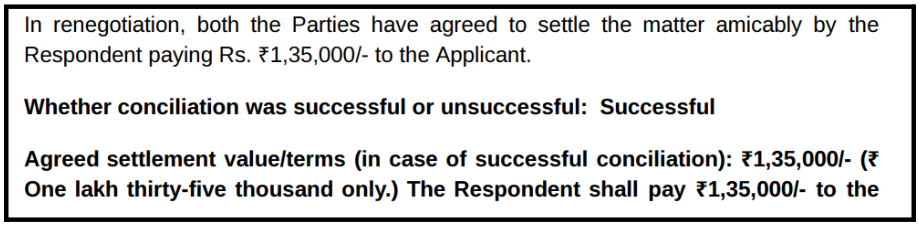
DG Share Market Research, ₹1,35,000 recovered. An investor paid roughly ₹3,35,000 to DG Share Market Research after being shown profit screenshots from other clients and promised strong returns. Representatives kept calling for further payments toward higher plans or “recovery trades.” Some payments went to personal accounts rather than the firm’s official one, and the team issued live buy and sell calls directly, which a Research Analyst isn’t permitted to do. Once the evidence was organized and filed through the official SEBI process, the firm agreed to pay back ₹1,35,000, the portion of the total that was clearly and provably tied to the firm itself.
The pattern across all three: the amount recovered tracks the amount that could be documented. Payments made through traceable banking channels, with receipts and dated screenshots attached, are what an arbitrator or conciliator can actually act on.
Mistakes that get a Research Analyst complaint rejected
A handful of avoidable errors account for most complaints that stall or bounce back:
Filing under the wrong category. As covered above, Research Analyst and Investment Adviser route to different desks. Get this wrong and your complaint sits with the wrong reviewing officer.
Skipping the analyst grievance step. SCORES expects proof that you approached the firm first. Filing directly on SCORES without that first email usually means it gets returned to you to complete the earlier step.
Filing on market losses, not conduct. A bad call, honestly made, isn’t a violation. If the analyst followed the rules and the trade simply didn’t work out, SEBI won’t treat that as grounds, and neither will an arbitrator.
Filing outside the one-year window. Evidence doesn’t help if the complaint itself is time-barred. File as soon as you’ve completed Step 1, not months after you’ve decided to act.
Weak or missing documentation. A complaint with a clear date-and-amount timeline, attached receipts, and full conversation screenshots moves faster than one built on memory and a general sense that something went wrong.
Frequently Asked Questions
Write to the analyst first, then lodge on SEBI SCORES under the Research Analyst category using their INH registration number. If SCORES does not resolve it, escalate to SMART ODR and then arbitration.
No. SEBI does not act on emailed grievances and says so on its portal. The complaint goes through SCORES. The only email you send is to the analyst's own grievance address at the first stage.
On SCORES, SEBI's official complaint portal, for the first formal filing. SMART ODR follows if SCORES does not resolve it, and arbitration is the final, binding stage.
Guaranteed return promises, trade calls with no research behind them, handling your account or funds, fees into a personal account or above the ₹1,51,000 cap, undisclosed conflicts, or a refund denied on terms you were never shown.
Fees are recoverable where a violation is documented, as the ₹1,35,000 SMART ODR case shows. Market losses from bad calls generally are not, since those are treated as market risk.
Within one year of the cause of action. SCORES may reject complaints filed after that, so preserve your evidence and file promptly.
Claims up to ₹10 lakh carry no fee for the investor. Above that, fees rise in slabs, and claims over ₹25 lakh go before a three-member arbitrator panel instead of a sole arbitrator.
Yes. They're separate SEBI registrations with separate review desks. A Research Analyst gives research-based recommendations only; an Investment Adviser gives broader financial advice. File under whichever category actually matches the service you paid for.

