
The SEBI order against Arun N brought major attention to how some Telegram trading channels use profit screenshots, high-accuracy claims, and promotional content to attract retail traders.
After repeatedly seeing traders post profits and praise analysts online, many beginners slowly start believing that consistent market success is easy and guaranteed.
But it does raise an important question: are you learning trading, or becoming dependent on someone else’s promises?
In this blog, let’s understand what SEBI found in the Arun N case, why penalties were imposed, and the important lessons retail traders should learn from it.
Is Arun N Research Analyst SEBI Registered?
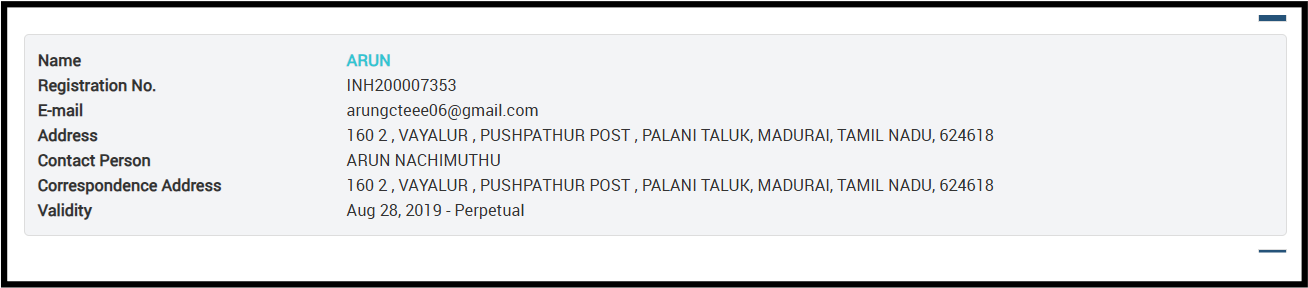
Yes, Arun N is a SEBI-registered Research Analyst. His SEBI registration number is: INH200007353.
Many beginners think that if someone is SEBI registered, then everything they do must automatically be safe and trustworthy.
But that is not how it works.
SEBI registration means the person operates under a regulated framework and is expected to follow strict compliance rules regarding:
- Investor protection
- Risk disclosures
- Client onboarding
- Marketing communication
- Record maintenance
And if those rules are violated, it triggers a strict SEBI action against the research analyst to protect retail investors.
That is exactly what happened in this case.
Arun N SEBI Order
SEBI passed an adjudication order against Arun N on October 24, 2024.
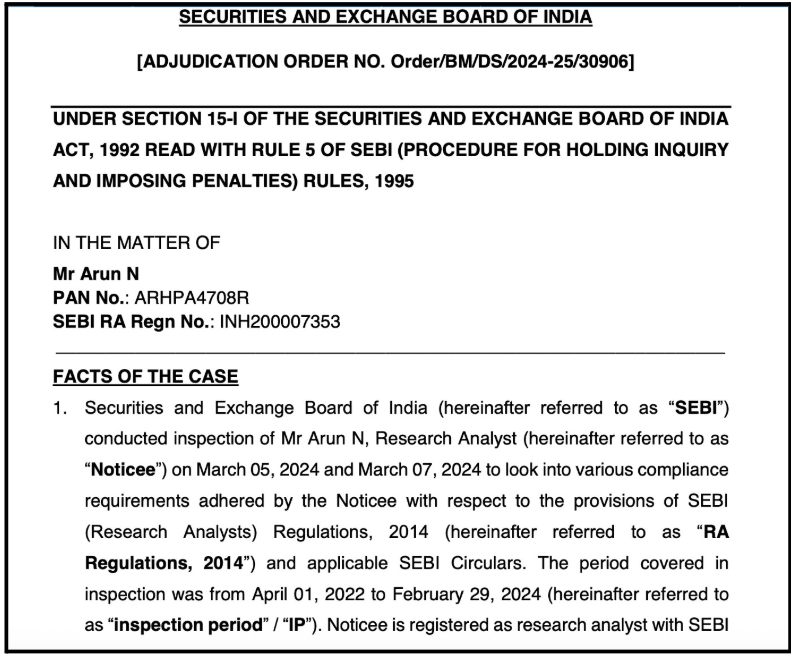
The order mainly focused on two major areas:
- Problems in client onboarding and KYC compliance.
- Misleading marketing and promotional practices.
The inspection covered the period between April 1, 2022, and February 29, 2024.
SEBI also conducted on-site inspections in March 2024 to examine records and business operations.
Now, let’s understand the findings in this order.
1. KYC and Client Verification Problems
One of the biggest issues SEBI identified was related to KYC compliance. Many retail traders may not understand why KYC matters so much.
But in the financial industry, KYC is a very important process. It ensures that proper client verification, documentation, and onboarding checks are completed before offering services.
According to SEBI’s findings, Arun N had around 390 clients onboarded through a third-party platform called Gap-up.
But here’s where the problem started.
Out of all 390 clients, proper KYC records were reportedly available for only 38 clients. That means most client verification responsibilities were not being handled directly.
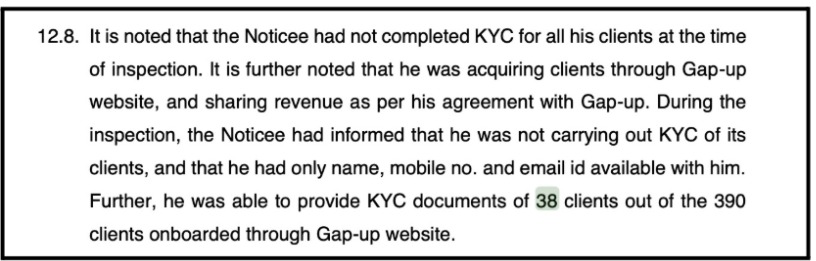
SEBI observed that the onboarding process was heavily dependent on the Gap-up platform and Telegram-based systems.
According to the order, Arun N mainly had access to basic details like names, mobile numbers, and email IDs instead of maintaining proper verified records himself.
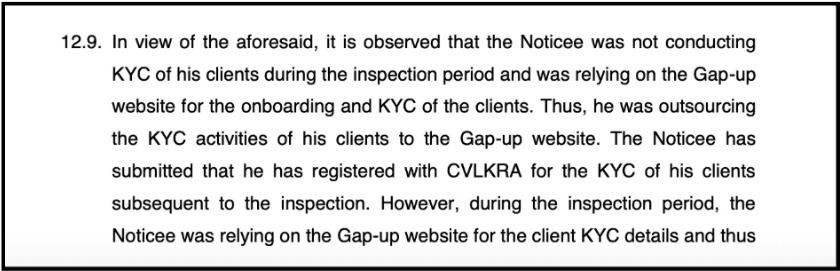
If a registered analyst isn’t handling basic compliance, the investor protection framework that registration is supposed to provide simply isn’t functioning.
That gap is exactly what SEBI penalised.
2. Revenue Sharing With Third-Party Platform
Another point mentioned in the order was the revenue-sharing structure with the Gap-up platform.
According to SEBI’s observations, the platform reportedly received a large percentage of the subscription revenue, sometimes between 50% to 80% for initial purchases.
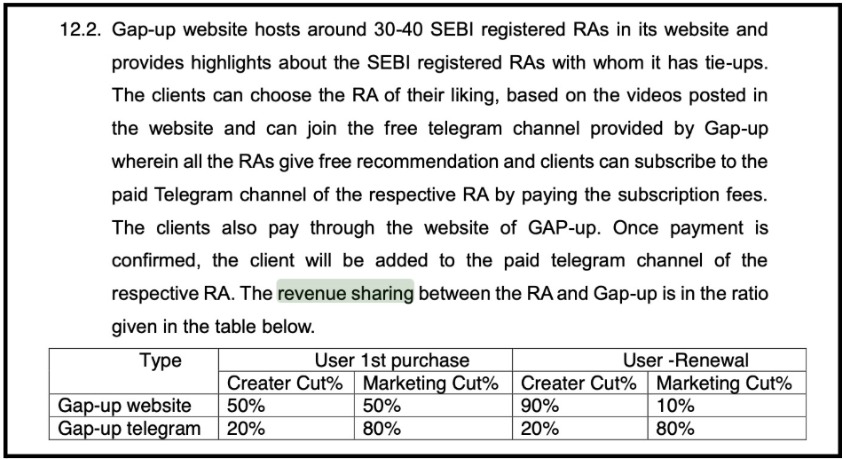
This raised further concerns about how the entire onboarding and subscription ecosystem was being operated.
Compliance responsibilities cannot be outsourced while the analyst continues collecting subscription fees under their SEBI registration. The registration and the responsibility go together
3. Misleading 75% Accuracy Claims
This was probably one of the biggest concerning parts of the SEBI order.
According to the findings, Arun N’s subscription page prominently displayed claims such as:
- 75% accuracy
- Free Money For All
- Power of Breakfast
- Power of WALL AND PI Strategy
These aren’t just catchy names.
Framing trading strategies as foolproof systems with branded names is a deliberate tactic to make speculative activity sound like a reliable product.

Now think about how a beginner trader sees this.
When prominent figures advertise Arun N guaranteed returns or bulletproof strategies, many people start believing that making money in options trading is simple and risk-free.
That becomes dangerous. Because the reality is completely different. Options trading is highly risky, and no analyst can consistently guarantee profits.
SEBI observed that such promotional communication could create unrealistic expectations among retail investors.
4. Showing Only Profitable Trades
Another issue highlighted by SEBI was selective performance showcasing.
According to the order, social media posts highlighted massive returns, such as:
- 344% Return
- 5x Return
But SEBI noted that only profitable trades were being highlighted publicly while losses were not being shown.
Now this is something retail traders should think about very carefully. If you only see winning trades every day, your brain naturally starts believing:
Everyone is making money except me. That emotional influence is exactly what creates dependency and FOMO in trading communities.
SEBI viewed selective profit showcasing as a misleading practice because it creates a one-sided image of trading performance.
Final Penalty on Arun N
After reviewing the matter, SEBI imposed a total penalty of ₹7 lakh on Arun N.
The penalty was divided into two parts:
| KYC and operational compliance failures | ₹2 lakh |
| Misleading advertisements and promotional practices | ₹5 lakh |
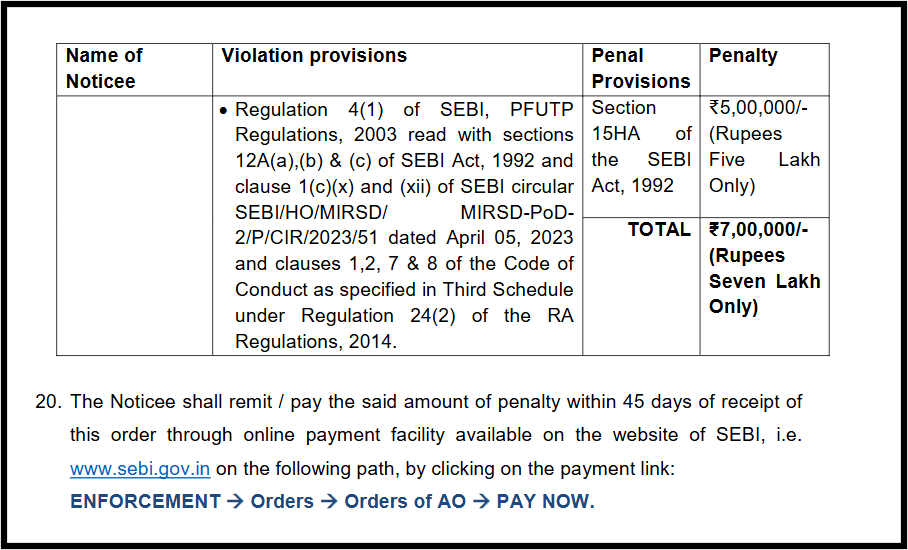
SEBI also directed that the penalty must be paid within 45 days of receiving the order.
The regulator further stated that failure to pay could lead to recovery proceedings, including attachment of properties.
Why This SEBI Order Matters for Retail Traders?
The SEBI order against Arun N highlights a growing problem in India’s trading industry: Telegram trading ecosystems built around profit screenshots, high accuracy claims, and emotionally-driven marketing.
Many beginners join these groups hoping to make quick profits. But slowly, instead of learning the market independently, they become dependent on trading calls for every decision.
Another major issue is selective profit showcasing. Traders mostly see green P&L screenshots, winning trades, and success stories, while losses are rarely discussed openly.
This creates unrealistic expectations and emotional pressure, which is exactly why SEBI takes such promotional practices seriously.
What Investors Should Keep In Mind?
If you are a beginner trader, you must be following finfluencers on social media.
The point to note here is that not every finfluencer is genuine.
That is why traders should always stay alert to red flags and verify claims carefully before trusting any trading influencer blindly.
1. Did Your Research Analyst Claim Easy Money?
If someone constantly says: sure-shot calls, high accuracy, or recover your fees in one trade, then you should immediately become cautious.
Because no one can guarantee profits consistently in the stock market.
2. Did Your Research Analyst Do Risk Profiling?
A genuine educator talks about:
- losses
- risk management
- market uncertainty
Not just profits and winning trades. If the entire focus is only on returns, that is a warning sign.
3. Did Your Research Analyst Show Past Performance?
Anyone can post selective winning trades online.
Always ask:
- Are losing trades also shown?
- Is the full performance being shared honestly?
Because selective screenshots can create a misleading image.
4. Did You Get Into FOMO?
Large Telegram followers, social media fame, or even a SEBI registration number create Fear of Missing Out but do not automatically guarantee credibility.
Always verify claims independently before trusting any trading service or finfluencer.
How to Complain Against SEBI Registered Research Analyst?
If you feel you were influenced by misleading profit claims or lost money because of unrealistic accuracy promises, do not ignore them.
Reporting such cases increases the chances of recovery and helps create accountability and investor awareness.
Here are the steps you should follow:
1. Save All Evidence
Before doing anything else, save:
- Telegram chats
- trade call screenshots
- payment receipts
- subscription invoices
- emails and promotional messages
Do not delete anything, even if it looks unimportant right now.
These records can become useful later while explaining your case or filing a complaint.
2. Contact the Analyst or Company
Send one clear written message stating what was promised and what you lost.
Their response or silence becomes part of your evidence. Keep it factual and keep a record of everything
3. File a Complaint with SCORES
If you do not receive a satisfactory response, you can file a complaint on SEBI’s SCORES platform.
While filing the complaint, explain the issue clearly, upload supporting documents, and mention payment details and screenshots properly.
This creates an official regulatory record of your complaint.
4. File a Complaint with SMART ODR
If the matter remains unresolved after filing a complaint, you may initiate proceedings through the SMART ODR (Online Dispute Resolution) platform.
SMART ODR provides a structured mechanism for resolving disputes between investors and regulated market participants through online conciliation and mediation processes.
Keep all supporting documents ready before initiating the complaint.
5. Arbitration in Share Market
For disputes involving substantial financial losses that remain unresolved, arbitration may be the next available remedy.
In the securities market, arbitration allows an independent arbitrator to review the evidence, hear both parties, and issue a decision regarding the dispute.
Maintaining proper records, payment proofs, trade details, and communication history can significantly strengthen your case during the arbitration process.
Need Help?
If you paid for Arun N’s services based on accuracy claims that turned out to be misleading, you have documented grounds to file a formal complaint, and the SEBI order itself strengthens your case.
We handle everything from evidence mapping to complaint drafting to arbitration representation. You don’t need to figure out SCORES or SMART ODR alone.
Tell us what happened. We’ll tell you exactly where your case stands and what recovery looks like from here.
Register with us today to get professional support for your case.
Conclusion
The Arun N case serves as a reality check for retail traders.
If you’ve ever felt like you were sold a dream of “sure-shot” profits only to be left with losses, you aren’t alone, and you shouldn’t just let it slide.
Reporting isn’t just about your recovery, though that matters most. It’s also what creates the paper trail that regulators act on.
You have every right to hold these services accountable for the promises they made. If you’ve been misled by similar claims, don’t just watch from the sidelines.
Gather your proof, save those chats, and take a stand.
Frequently Asked Questions
1. Why was the penalty imposed on Arun N?
The penalty was imposed due to failures in KYC and client onboarding compliance, as well as the use of misleading advertisements and promotional practices, such as claiming high accuracy rates without evidence.
2. Is being SEBI registered a guarantee of safety?
No, being SEBI-registered means an analyst must follow regulatory compliance rules, but it does not guarantee that all their services are safe or that they will never violate regulations.
3. What were the main issues identified regarding client onboarding?
SEBI found that Arun N was overly dependent on third-party platforms for client onboarding, with proper KYC records missing for the majority of his clients.
4. Why is showing only profitable trades considered a misleading practice?
Presenting only winning trades creates a one-sided, unrealistic image of trading performance, which can lead retail investors to develop false expectations and emotional dependency.
5. What steps should I take if I feel misled by a research analyst?
If you have lost a significant amount and reporting to SCORES doesn’t help, then SMART ODR & arbitration are available next. Act quickly; the sooner you file, the stronger your position





 Add us as a preferred source on Google »

