

If you have ever paid for trading calls on Telegram and wondered whether the person behind them is actually regulated, you are not alone.
Many traders searching “is Arun N SEBI registered?” come across profit screenshots, bold accuracy claims, and social media promotions that look convincing at first glance.
Arun N, the face behind Harmonics Traders, built a strong following through options strategies, harmonic patterns, and performance-based marketing across social media.
But in the stock market, appearing trustworthy and following SEBI rules are not always the same thing.
SEBI later examined his marketing practices, client onboarding process, and trading-related claims closely. The regulator eventually found multiple compliance issues serious enough to pass a formal order.
In this blog, we explain what SEBI observed, why the case matters for retail traders, and what investors should understand before trusting any trading advisory service.
Is Arun N SEBI Registered or Not?
Arun N is a research analyst associated with a trading brand called Harmonics Traders, which focuses on options trading strategies, harmonic patterns, and technical analysis-based setups.
He is active across Telegram, X (Twitter), and paid subscription platforms where trading calls, market views, and strategy discussions are shared.
Over time, like many finfluencers, his model combined free content to build trust and paid services to monetise that audience.
For many retail traders, this kind of ecosystem feels educational at first. But eventually, it shifts toward performance-based marketing, which is where regulatory scrutiny becomes important.
Many users who come across his content naturally wonder: Is Arun N SEBI registered?
The answer is yes. Arun N is a SEBI-registered Research Analyst with registration number INH200007353.
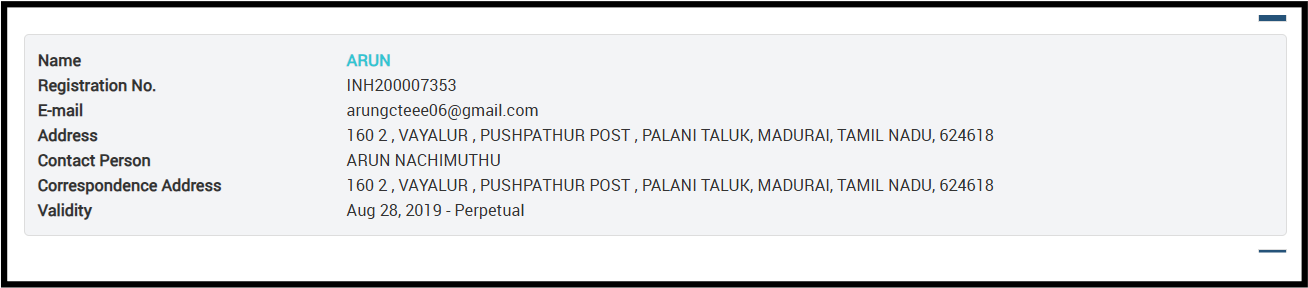
However, this is where most beginners misunderstand something important.
SEBI registration only means the person is allowed to provide research services under a regulated framework.
It does NOT mean:
- Guaranteed profits.
- Accurate calls every time.
- Risk-free trading advice.
Even SEBI-registered analysts must follow strict rules around marketing, client communication, and disclosures. If those rules are violated, SEBI can still take action.
And in this case, SEBI did exactly that.
SEBI Order Against Arun N
In 2024, SEBI took formal regulatory action against Arun N after closely examining his activities as a registered Research Analyst.
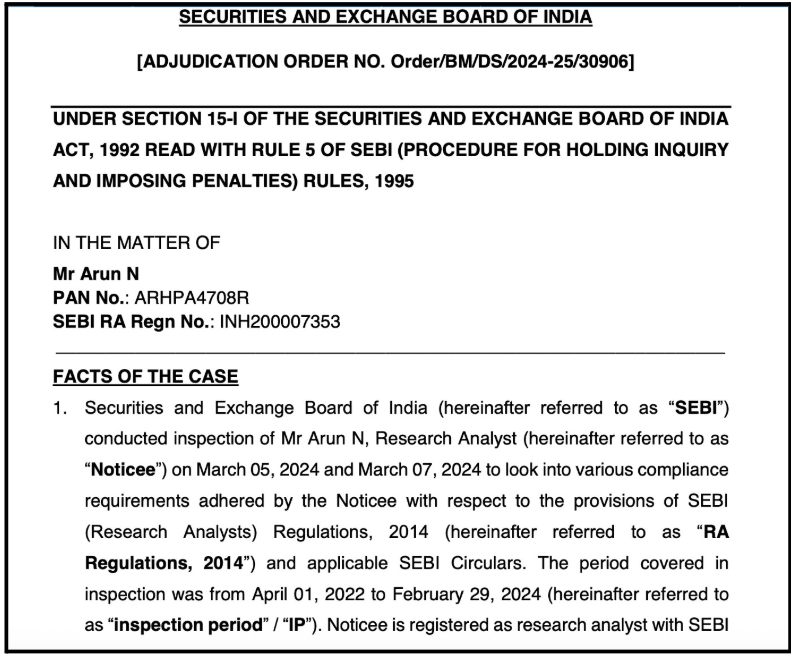
The scrutiny covered client dealings, investor communications, advertisements, and overall compliance practices under the SEBI (Research Analysts) Regulations, 2014.
Following its examination, SEBI issued a Show Cause Notice and gave Arun N a full opportunity to submit his replies and participate in the adjudication process.
After reviewing all evidence and responses, the Adjudicating Officer passed a final order dated October 24, 2024.
SEBI Violations by Arun N
SEBI identified several serious compliance lapses during the proceedings, including:
- Using misleading phrases like Free Money For All to attract traders.
- Making 75% accuracy claims that created unrealistic profit expectations.
- Selectively showcasing only profitable trades while keeping losing ones out of public view.
- Running aggressive profit-based marketing to pull in retail investors.
- Failing to complete proper KYC for the majority of clients.
- Heavily relying on the third-party onboarding platform Gap-up, which created gaps in direct client verification and record maintenance.
Arun N Penalty
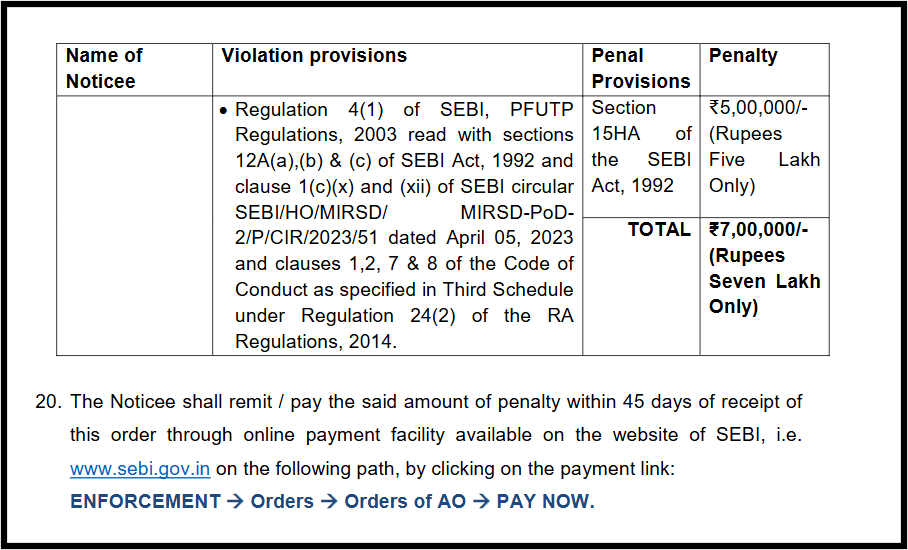
After examining violations under the Research Analyst Regulations and PFUTP provisions, the Adjudicating Officer imposed a total monetary penalty of ₹7,00,000 on Arun N, covering:
- Regulation 4(1) of the PFUTP Regulations 2003, read with Sections 12A(a), (b), and (c) of the SEBI Act 1992.
- SEBI circular dated April 5, 2023.
- Clauses 1, 2, 7, and 8 of the Research Analyst Code of Conduct.
Why These Violations Matter for Retail Traders?
At first glance, this may look like a regulatory or documentation issue. But for retail traders, the impact goes much deeper than compliance technicalities.
When marketing highlights high accuracy claims, selective profit screenshots, and phrases like free money, it directly shapes how beginners perceive trading.
It creates a false belief that consistent profits are normal and easy to achieve, which leads traders to take larger positions and trade more frequently than their understanding of risk actually justifies.
In reality, options trading is highly volatile and even small misjudgments can lead to quick losses.
When expectations are built on misleading claims, financial decisions become emotional rather than logical, and that is when the real damage happens.
How to Report Against Research Analyst?
If you believe you were misled by trading calls, Telegram messages, or guaranteed return style claims, it is important to take a structured approach instead of reacting emotionally.
Step 1: Save Everything
Keep all Telegram chats, screenshots, payment receipts, invoices, and promotional messages safely stored. Do not delete anything, even if it seems minor or irrelevant at the moment.
This evidence helps you clearly show what was promised versus what was actually delivered. It becomes the foundation of your complaint or case.
Step 2: Contact the Analyst Directly
Reach out through official email or grievance channels and explain your issue clearly. Mention what service you purchased, what claims were made, and where you feel misled.
Keep your message factual and calm. A structured complaint is always taken more seriously than an emotional one, especially in regulatory matters.
Step 3: Lodge a Complaint in SCORES
If your issue is not resolved, escalate it through the SEBI SCORES portal. This is the official grievance system for investors in India.
Upload all supporting documents and describe your issue in simple language with proper timelines and details. This ensures your complaint is formally recorded and tracked by SEBI.
Step 4: Register a Complaint with SMART ODR
If you are not satisfied with the outcome on SCORES, you can escalate the dispute through SEBI’s SMART Online Dispute Resolution (ODR) platform.
This platform helps investors and intermediaries resolve disputes through online conciliation and mediation in a structured and legally recognised manner.
Step 5: Arbitration in Stock Market
If the dispute remains unresolved, investors may proceed with formal stock market arbitration through the exchange mechanism.
An independent arbitrator reviews the evidence submitted by both sides and passes a legally binding decision. Proper documentation and organised records become extremely important at this stage.
Need Help?
Many traders don’t struggle because they don’t want to act; they struggle because they don’t know how to start.
We help investors organise evidence, draft structured complaints, and file cases properly on SEBI SCORES.
We also guide them through escalation options like arbitration and SMART ODR when required.
Sometimes, the hardest part is not the loss, it’s figuring out the next step. Proper guidance can make the entire process much clearer and less overwhelming.
So, register with us now.
Conclusion
The Arun N case is a clear reminder that SEBI registration alone does not make a trading service trustworthy or its claims reliable.
So if you are still wondering, is Arun N SEBI Registered? Yes, he is.
But the case above shows that registration is a starting point for accountability, not a guarantee of performance.
Even registered analysts can face serious regulatory action when communication becomes misleading, disclosures are incomplete, and marketing prioritises attraction over honesty.
For retail traders, the takeaway is straightforward. Look beyond profit screenshots, accuracy percentages, and social media popularity.
Understand the risk involved, verify every claim independently, and never develop blind dependence on any single trading service or analyst.
Because in the stock market, protecting your capital will always matter more than chasing attractive promises.





 Add us as a preferred source on Google »

