

Quick Summary
An excessive brokerage charges refund starts with one comparison: how much did you actually lose trading, and how much did you pay in brokerage? In one settled case the answer was stark. Realised trading loss of 8,068. Brokerage of 4,17,699. The client lost fifty times more to charges than to the market. That case recovered 3,40,000. In another, a broker’s screenshot showed a 4,800 loss on a trade while the contract note for the same trade showed 95,000. The mismatch was the evidence. That client recovered the full 76,941 he claimed. When brokerage dwarfs your trading loss, the brokerage is not a side cost. It is the case.
Most people who lose money in a broker account blame the market. They look at the wiped-out balance and assume the trades went wrong.
Sometimes the trades barely moved. The account was drained by charges.
In one settled file, a client’s realised trading loss over ten weeks was 8,068. His brokerage over the same period was 4,17,699. His net loss was 4,25,768, and almost none of it came from the market.
That is not a trading outcome. That is a volume pattern, and it is written into records the broker itself produced.
Here is how to tell whether it happened to you, and what these cases recovered.
Broker Churning My Account: What the Brokerage Number Reveals
Brokerage is charged per trade. So a large brokerage bill means one thing: a very large number of trades.
When the trade count runs far past anything your account size or goals would justify, and the person choosing the trades earns from each one, the trades stop being about your profit.
Look at the first case. A client with roughly 1 to 2 lakh in working capital paid 4,17,699 in brokerage across two and a half months. That is close to 280 percent of his capital in brokerage every month.
No strategy needs that many trades. The volume existed because the volume itself paid someone.
In that file, the firm had three ways to earn from the account. A direct fee of 30,000. A referral commission from the broker, because the client was told to open his account through a specific referral link. And the brokerage itself, which rose with every trade the firm instructed.
The more the client traded, the more the firm made, whatever happened to the client’s balance. That is the engine of churning.
Using this brokerage evidence, we recovered 3,40,000 for the client in this case.
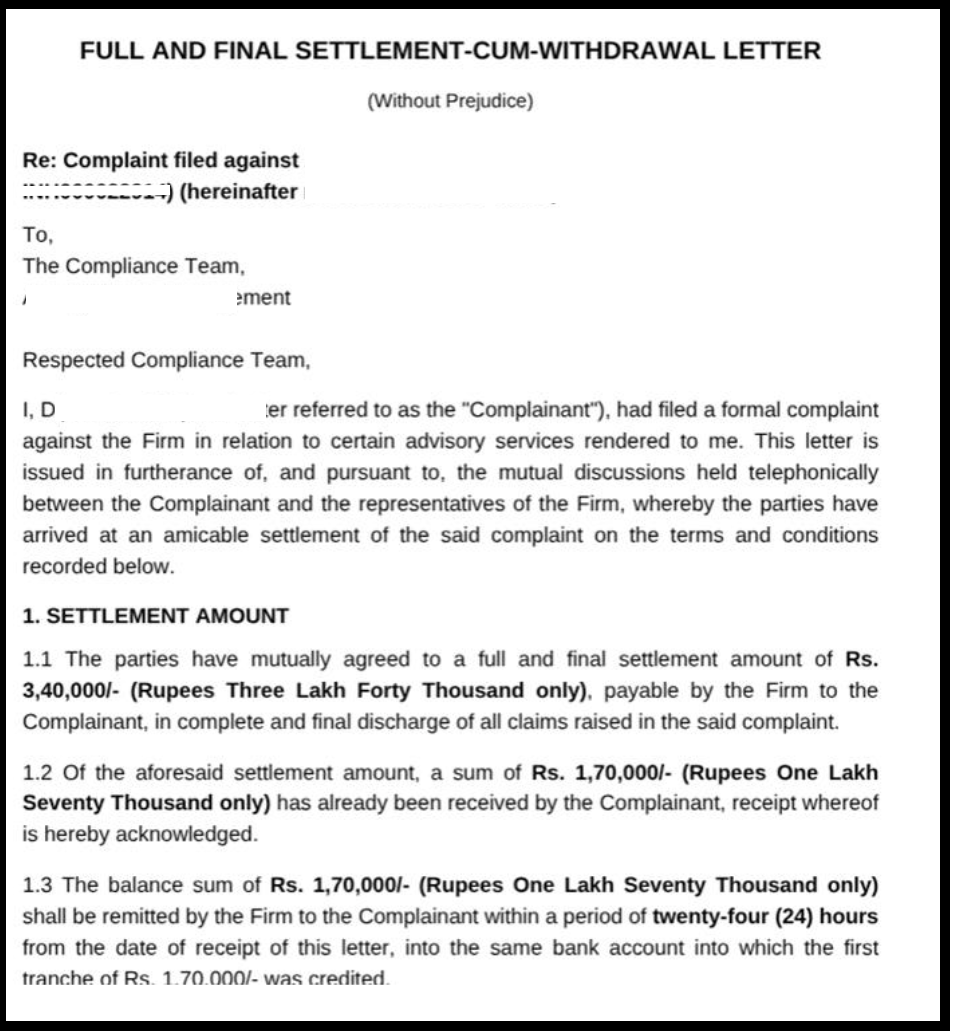
You can check your own account for it. Pull your contract notes. Add up the brokerage. Set it against your account size and your actual trading loss. If the brokerage is a large multiple of the loss, the market did not drain your account. The trade volume did.
This is the strongest evidence a broker complaint can carry, because it does not rest on anyone’s memory of a phone call. It is arithmetic on the broker’s own statements.
Broker Contract Note Mismatch: When the Numbers Do Not Agree
The second case shows a different tell, and a sharper one.
This client opened an account with a broker on the promise of low brokerage and assured monthly returns. He deposited about 90,000 in stages.
On 31 December, he was instructed to take a SENSEX trade. The screenshots the broker had been showing him put the loss at about 4,800. The contract note for the same trade showed a loss of about 95,000. A second contract note showed 94,500.
The same account was charged 95,879 in brokerage and then wiped out.
A screenshot that does not match the contract note is not a small discrepancy. The contract note is the official record. When what the client was shown differs from what the exchange recorded by a factor of twenty, that gap is documented, and it does not depend on anyone’s account of what was said.
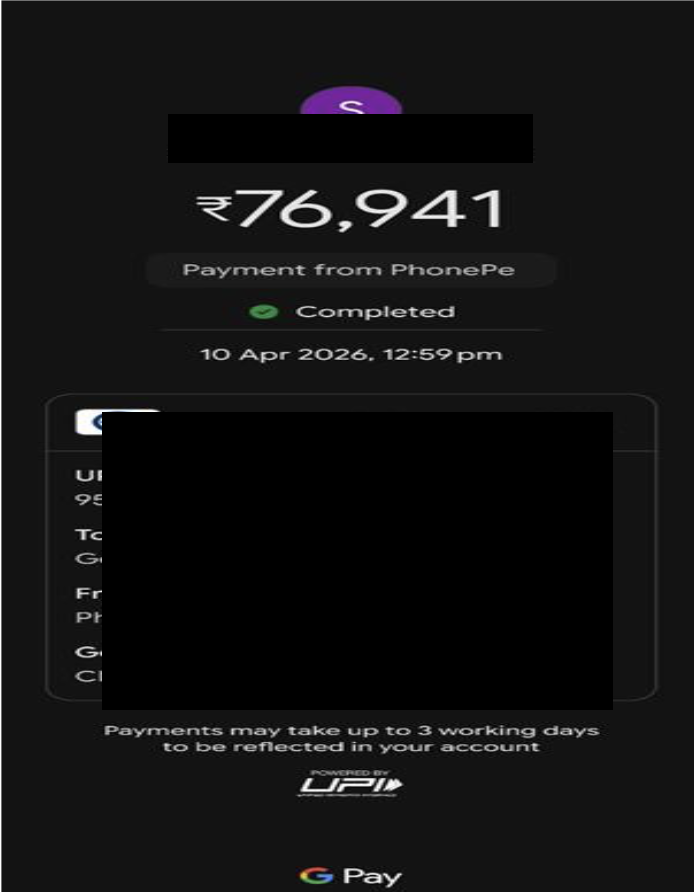
This client recovered the full amount he claimed, 76,941. It is the only full recovery across these files, and the reason is worth understanding. His claim was not a trading loss he had to attribute to bad advice. It was a disputed charge and a documented mismatch. A disputed transaction behaves like a fee, not like a market loss, and it recovers the way a fee does.
That distinction runs through every recovery case, and the refund from stock advisory blog walks you through why fees and disputed charges come back while market losses mostly do not.
Brokerage on your account far bigger than your actual trading loss?
We pull your contract notes, total the brokerage against your trades, and build the churning picture from records the broker cannot dispute.
Register with us for a free consultation.
Excessive Brokerage Charges Refund: What Two Cases Recovered
The two churning cases sit at opposite ends of the recovery range, and the reason is the shape of the claim.
| Trading loss | Brokerage | Claimed | Recovered | Share |
|---|---|---|---|---|
| 8,068 | 4,17,699 | 4,45,000 | 3,40,000 | 76.4% |
| Disputed | 95,879 | 76,941 | 76,941 | 100% |
[PROOF 2: Refund proof for the 3,40,000 recovery on the churning case. SMS, bank credit, or UPI screenshot showing the amount received and the date. Redact sender name, bank or entity name, account number or UPI ID, client name, phone number. Keep the amount and date visible.]
Two cases cannot prove a rule. But both recovered well, and both did so because the core of the claim was a charge, not a market loss.
The first case also carried a fee and a referral conflict on top of the brokerage, which is common. A firm running this model rarely has only one revenue stream. The referral link, the direct fee, and the brokerage tend to appear together, because each one is a separate way to earn from the same account.
If your case is against a broker rather than an advisory, the route and the evidence differ. The broker traded without my permission; the refund breakdown covers what separates a broker complaint from an adviser one and which documents lead each.
The Referral Link Conflict: A Charge You Never See
One part of the first case deserves its own warning, because it is invisible unless you look for it.
The client was told to open his trading account through a specific link the firm provided. The link carried a referral code. That means the firm earned a commission from the broker every time an account opened through it, and stood to earn more as trading volume rose.
He was never told this. He was not told the firm benefited when he opened the account their way, or that his trading generated referral revenue for them.
A referral arrangement that is not disclosed is a conflict of interest. The firm advising your trades was also paid according to how much you traded. That is a documented incentive to churn, sitting underneath advice that was presented as being in your interest.
Check how you opened your account. If an advisory sent you a link to open a broker account, that link probably carried their code. The account opening record shows it.
What to Gather for a Brokerage Claim
The good news about a churning claim is that most of the evidence is official and safe. It sits with a regulated broker who has to keep it.
- Contract notes first: They show every trade, its charges, and the official loss. This is where the brokerage total comes from and where a screenshot mismatch shows up.
- Account statements: They show the brokerage deducted against the capital deposited.
- The account opening record: If a referral link was used, this is where the code appears.
- Any screenshots the firm sent you: These matter specifically when they disagree with the contract notes. Keep both, side by side.
- Your chat history: The instructions to trade, the pressure to add funds, the assurances of recovery. In these files, the instructions ran through WhatsApp, which means the record is on your phone.
Once the numbers are established, a SEBI SCORES complaint opens the registered route, and SMART ODR is where an unresolved grievance goes next.
Conclusion
Before you write off a wiped-out broker account as bad luck, do one calculation.
Total your brokerage. Set it against your actual trading loss. If the brokerage is a large multiple of the loss, the market did not empty your account. The trade volume did, and that volume is documented in the broker’s own records.
The two cases here recovered 76.4% and 100%, and both did so for the same reason. Their claims were built on charges and disputed records, not on losses they had to argue were caused by advice. A charge is a number on a statement. It is the hardest kind of claim to wave away.
Pull your contract notes. The evidence you need is already sitting in them.
Report. Recover. Stay Fraud Free.
Frequently Asked Questions
Compare your total brokerage to your account size and your actual trading loss. In one of these files the brokerage was 4,17,699 against a trading loss of 8,068. A brokerage figure that large points to trade volume that served the firm, not the client.
The contract note is the official exchange record and it is what counts. A large gap between what you were shown and what the contract note states is documented evidence, and it was the core of one full recovery in these files.
It can matter a great deal. A referral link usually carries a code that earns the advisory a commission tied to your trading. If that was never disclosed, it is a conflict of interest, and the account opening record shows the code.
High brokerage relative to your account and loss is strong evidence, but the complaint is stronger when paired with the instructions that drove the trades. Keep your contract notes and your chat history together.
It depends on how the trades came about. If you were instructed on what to trade and how much, and the volume served the firm's revenue, that is different from independent trading. The contract notes and the instructions together tell that story.





 Add us as a preferred source on Google »

