
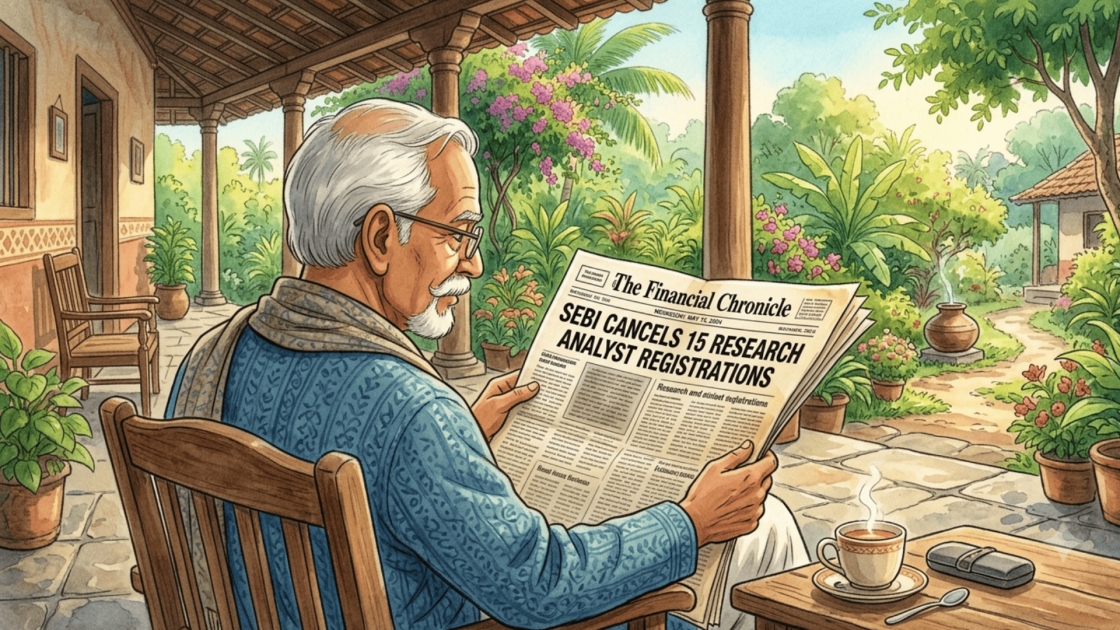
Quick Summary
When SEBI cancels a research analyst’s registration, that analyst loses the legal right to offer research services, but they do not lose their past accountability to you. In one order dated June 30, 2026, SEBI cancelled 15 research analyst registrations, not for fraud, but for unpaid renewal fees dating back years. It is a sharp reminder that a registration number you saw once may not be active today. Cancellation does not erase what an analyst owes you for the period they were registered. This page explains why registrations get cancelled, what it means if yours has, the difference between cancellation and suspension, and how to act if an analyst keeps operating after losing their licence.
Your research analyst held a valid SEBI registration yesterday. Today, that registration may no longer exist.
On June 30, 2026, SEBI cancelled the registrations of 15 research analysts in a single order.
The reason was not fraud, and not market manipulation. It came down to something far more ordinary: unpaid renewal fees.
That sounds like a paperwork issue, until you realise what it means for you.
If you are still following, or still paying, an analyst whose registration has quietly lapsed, you may be relying on someone who no longer has the legal authority to advise you at all.
Here is exactly what happened, and what you should do about it.
What SEBI’s Cancellation Order Actually Did
SEBI passed this order on June 30, 2026, from its Mumbai office.
It was signed by Chief General Manager Soma Majumder under Section 12(3) of the SEBI Act, 1992, read with Regulation 30A of the SEBI (Intermediaries) Regulations, 2008.
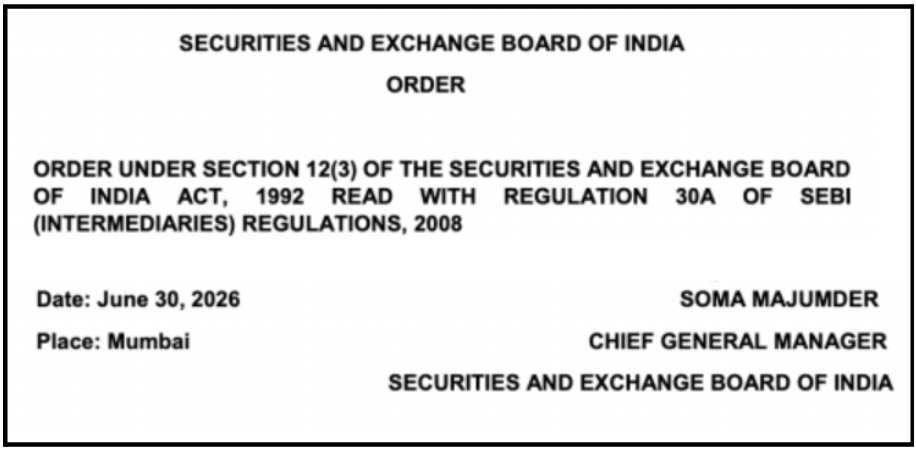
The order cancelled 15 research analyst registrations, and the path to it matters.
Each of these analysts had held a valid registration at some point.
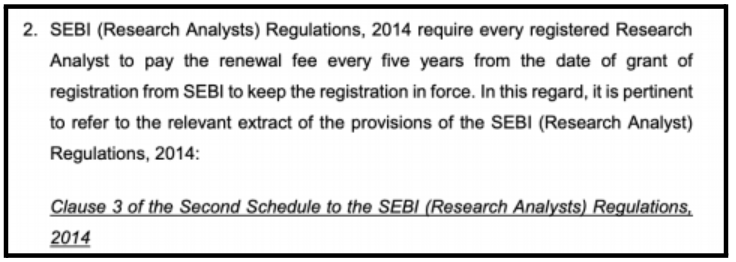
Under the framework that applied to them, a periodic renewal fee kept that registration in force, and each of the 15 had let that fee go unpaid, some as far back as 2020.
Think of the renewal fee as the payment that kept a registration “live” under the rules of the time.
SEBI did not jump straight to cancellation.
It first issued show-cause notices on February 3, February 4, and February 24, 2025, each giving the analyst 21 days to respond with proof.
It even offered an easier exit, advising all 15 to voluntarily surrender their certificates through BSE Limited’s online portal.
None of them did. None submitted evidence disputing the non-payment either.
So SEBI moved ahead with formal cancellation.
The 15 Research Analysts Whose Registrations Were Cancelled
Below is the complete list from the order, with each analyst’s registration number and the date their renewal fee first went unpaid.
Read the dates closely, because they tell you something no registration number alone can: how long a lapse can sit unnoticed before SEBI formalises it.
| Notice No. | Name | Registration No. | Renewal Fee Unpaid Since |
|---|---|---|---|
| 1 | Bipin Manilal Savla | INH000000628 | June 16, 2020 |
| 2 | Comfort Securities Ltd. | INH000001311 | August 12, 2020 |
| 3 | Sudip Bandyopadhyay | INH000002293 | November 24, 2020 |
| 4 | Ms. Shefali Sahita | INH000002566 | January 18, 2021 |
| 5 | Prasenjit Kumar Paul | INH300003157 | June 15, 2021 |
| 6 | Arya Fin-Trade Services (India) Pvt. Ltd. | INH000003366 | August 18, 2021 |
| 7 | Ideal Associates | INH200004408 | October 14, 2021 |
| 8 | Kalpesh Rathi | INH000004972 | July 3, 2022 |
| 9 | Deepa Gupta | INH300006263 | August 30, 2023 |
| 10 | Abhijeet Ramachandran | INH000006235 | August 16, 2023 |
| 11 | Rashi | INH000006590 | November 12, 2023 |
| 12 | Rahul Mukesh Randeria | INH000006527 | October 24, 2023 |
| 13 | Shivansh Kariwala | INH000006703 | January 8, 2024 |
| 14 | Krishnamurthy Sethuraman | INH200006831 | February 7, 2024 |
| 15 | K Karthik Raja | INH200007292 | July 15, 2024 |
Look at those dates.
Some registrations lapsed as early as 2020, yet SEBI only formalised the cancellation in 2026.
That gap is the real lesson: compliance action takes time, and you cannot assume a registration number is active simply because it exists somewhere.
Does Cancellation Mean the Analyst Committed Fraud?
No, and this is where investors most often jump to the wrong conclusion.
Cancellation over unpaid fees is not a fraud finding. SEBI’s order does not allege that these analysts cheated clients or gave manipulative tips.
It confirms only that their registrations lapsed.
But two consequences follow, and both matter to you.
First, these analysts can no longer legally operate as SEBI registered research analysts.
Second, if any of them keeps offering RA services, paid tips, or research subscriptions, without valid registration, that becomes a fresh violation in its own right.
So hold this line clearly: cancellation does not make someone a fraudster, but it does strip their legal right to operate as a research analyst.
And if you paid an analyst and lost money on bad trades while their registration was still valid, the cancellation does not erase their accountability for that period, something we cover on our page on what to do if you paid a research analyst and lost money.
What Happens to Existing Clients?
If you subscribed to one of these analysts, the natural fear is that your money and your service simply vanish with the registration. They do not.
SEBI’s order requires each analyst to maintain proper records even after cancellation.
That includes resolving investor grievances, transferring client funds or securities where needed, and ensuring continuity for services you have already paid for.
Your subscription does not disappear into thin air.
The analyst still owes you whatever they promised while their registration was active.
Here is the part that protects you most: SEBI’s order states clearly that these analysts remain liable for anything they did, or failed to do, while their registration was valid.
Cancellation does not wipe out past liability, which stops an analyst from using “my registration got cancelled” as an excuse to dodge accountability.
Cancellation, Suspension, or Surrender: Knowing the Difference
Not every registration that ends ends the same way, and the difference tells you how seriously to treat it.
There are three ways a registration stops being active, and they are not interchangeable.
- Cancellation permanently ends the registration. The analyst loses the authority to operate as an RA, as happened to the 15 above.
- Suspension is temporary. SEBI bars the analyst for a period, usually over a compliance or conduct issue, and the registration can potentially be restored later.
- Surrender is voluntary. The analyst themselves gives up the registration, often to exit the business, as SEBI offered these 15 the chance to do before cancelling them.
Whichever it is, the practical rule for you is the same: if the status is anything other than active, the analyst cannot legally give you paid research, and you should not pay or act until you have confirmed the position yourself.
Why This Order Matters for Every Investor?
This order is not really about 15 names. It is a warning for anyone who has ever trusted a screenshot, a forwarded message, or a familiar registration number without checking it.
Three specific risks come out of it, and each is worth building a habit around.
Old communication does not mean an active registration today. Investors often trust an analyst because they subscribed a few years ago.
But a registration valid in 2021 can lapse by 2026 with no fresh notice reaching you.
This very order proves it: some registrations lapsed in 2020 and were only cancelled in 2026. However skilled the analyst, operating without an active registration is illegal.
A cancelled registration means walk away. Some analysts keep operating anyway, betting clients rarely check status before paying.
They may call the cancellation “a technical issue” they will fix soon.
Do not accept that; a cancelled registration means SEBI has already withdrawn their authority to sell you research.
Cancelled numbers get reused by scammers. A dead registration number does not vanish. Fraudsters hunt for numbers that once belonged to genuine, approved analysts and paste them into Telegram bios, fake websites, and WhatsApp forwards.
The number itself is real, just no longer valid, which is exactly what makes the trick so convincing if you skip verification.
Worried the analyst you paid is no longer registered?
We will check their exact status against SEBI’s records, work out whether you have a claim for the period they were active, and help you file it.
How to Confirm a Registration Is Still Active?
Since a registration can lapse years before it is formally cancelled, a one-time check is not enough, especially if you are a long-term subscriber.
The good news is that confirming current status takes under two minutes.
Go to SEBI’s official intermediary search and look the analyst up by name, registration number, or company name. The result shows whether the registration is active, suspended, or cancelled, along with its validity.
Never rely on a forwarded screenshot; ask the analyst directly for their registration number and verify it yourself, and treat any hesitation to share it as a red flag.
Our fuller guide on how to check the validity of SEBI registered research analyst walks through reading the status in detail.
How to Report an Analyst After a Cancellation?
What you do next depends on which of two situations you are in, and they are genuinely different.
One involves an analyst still operating after losing their registration; the other involves a registered analyst who broke conduct rules while their registration was valid.
The evidence you gather and the route you take differ between the two, so work out which one fits you before acting.
Reporting an Analyst Operating Despite a Cancelled Registration
If an analyst is still offering paid tips or research subscriptions after losing their registration, that is a serious violation; they are operating with no legal authority at all.
Write an email to SEBI with the following:
- The analyst’s details: their name, registration number, and any firm or platform they operate under.
- Evidence of continued activity: screenshots or payment receipts showing they are still soliciting clients.
- Your communication with them: messages, calls, or promotional content sent after their registration lapsed.
The more documentation you attach, the stronger your case.
Reporting a Registered Analyst for Conduct Violations
If your analyst holds a valid, active registration but you believe they broke conduct rules, misleading recommendations, say, or mishandled your funds, you can still file a formal complaint.
The route runs through three stages:
- Start with SEBI SCORES: file complaint in SEBI SCORES detailing the misconduct, with all your supporting evidence.
- Escalate through SMART ODR: if the analyst does not resolve it, SMART ODR portal registration moves you into structured conciliation.
- Go to arbitration: where conciliation fails, stock market arbitration gives you a binding path to recovery.
This structured escalation means you do not have to depend on the analyst’s goodwill to get your issue fixed.
Our full SEBI research analyst complaint portal guide walks through what each stage can realistically recover.
Conclusion
SEBI’s decision to cancel these 15 registrations sends a plain message: even an administrative lapse like an unpaid fee matters to the regulator, and an inactive registration should never be allowed to keep misleading investors.
For you, the takeaway is not about these 15 names. It is a habit worth keeping for every analyst you deal with.
Check the SEBI registration. Confirm it is active. And never let a familiar-looking number stand in for actual due diligence.
Because a registration that looks valid, and one that actually is, can be two very different things.
Frequently Asked Questions
No. Cancellation permanently ends the registration, so the analyst loses their authority for good. Suspension is temporary, a time-bound bar that can potentially be lifted later. Surrender is different again, where the analyst voluntarily gives the registration up.
No. Once a registration is cancelled, offering paid research or tips is illegal and counts as a fresh violation. If an analyst keeps operating and calls it "a technical issue," treat that as a serious warning and stop engaging.
Follow up for any pending service or refund you were promised while the registration was active, since the analyst remains liable for that period. If they do not cooperate, gather your records and file a complaint with SEBI.
No. SEBI's order makes clear that analysts stay liable for anything they did or failed to do while registered. Cancellation removes their right to operate going forward, but it does not wipe out accountability for the past.
Search the number on SEBI's official intermediary records. A real but lapsed number will show as cancelled or inactive rather than active. Since scammers reuse dead numbers, always confirm the current status, not just that the number exists.





 Add us as a preferred source on Google »

