
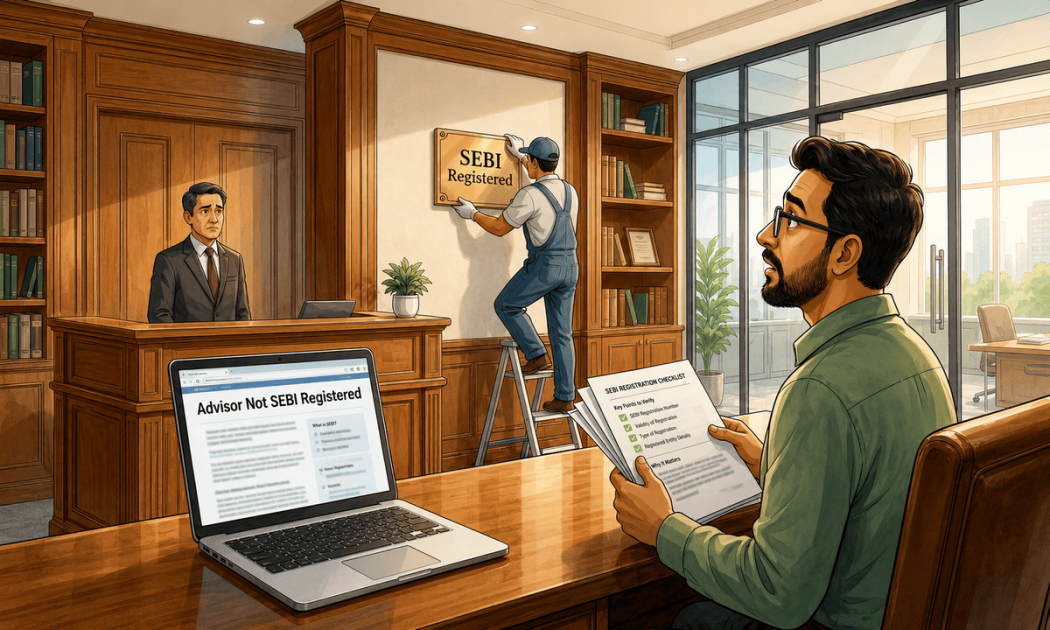
Quick Summary
If your advisor is not SEBI registered, the first instinct is that the money is gone for good. No registration, no regulator, no route. The cases point the other way. One client paid a completely unregistered operation 3,11,000 in fees and recovered 3,15,000. Another paid an unregistered firm 55,000 and recovered 41,600. A third recovered 1,79,000 from a firm that sold a fake algorithmic trading product. Being unregistered does not put a firm beyond reach. It changes the route, and in some ways it strengthens the case, because offering advice without registration is itself the violation. This page shows what the unregistered cases recovered and how the path differs.
You paid a firm for trading advice. Then you checked, and they are not registered with SEBI at all. Not as a research analyst, not as an investment adviser, nothing.
The fear that follows is understandable. If they were never regulated, who do you even complain to?
Three settled files answer that. In one, a client recovered 3,15,000 from an entirely unregistered operation. Registration was never the thing that made recovery possible. Evidence was.
Here is how an unregistered case works and what these three recovered.
Advisor Not SEBI Registered: Why It Can Strengthen Your Case
Start with the point most people get backwards.
A registered firm that breaks the rules has violated its obligations. An unregistered firm giving paid advice has violated the law by existing.
Giving investment advice for a fee requires registration. A firm doing it without registration is not a regulated entity that misbehaved. It is operating outside the system entirely, and that itself is the breach you are reporting.
In one file, the client discovered only later that the firm was not a registered adviser or research analyst. The absence of registration was not a dead end. It was the centre of the complaint.
This matters for how you frame the case. Against a registered firm, you argue they broke specific rules of their registration.
Against an unregistered firm, the starting point is simpler: they were never permitted to charge you for advice in the first place.
Advisor Not SEBI Registered? Start With These Three Checks
Before anything else, establish the facts about registration. This takes about fifteen minutes.
1. Check the registration claim
Search the firm and any registration number on sebi.gov.in. Many of these firms claim to be registered without being so. In one case, the firm called itself SEBI compliant while having no registration at all.
2. Save the claim they made
If they told you they were registered, or displayed a number, screenshot it. A false claim of registration is a separate violation from operating without one, and both help your case.
3. Total what you paid
Every package, every instalment, every upgrade. In these files, the fees came in scattered payments under different scheme names, which is common and does not weaken the total.
Once you have those three, you have the spine of an unregistered complaint: what they claimed, what they were, and what you paid.
Recover Money From Unregistered Advisor: What the Cases Show
The three unregistered files recovered across a wide range, and the shape of each claim explains why.
| What they were | Fees | Claimed | Recovered | Share |
|---|---|---|---|---|
| Unregistered, claimed registered | 3,11,000 | 6,00,000 | 3,15,000 | 52.5% |
| Sold fake algo software | 1,58,000 | 3,58,000 | 1,79,000 | 50.0% |
| Unregistered, package model | 55,000 | 1,00,000 | 41,600 | 41.6% |
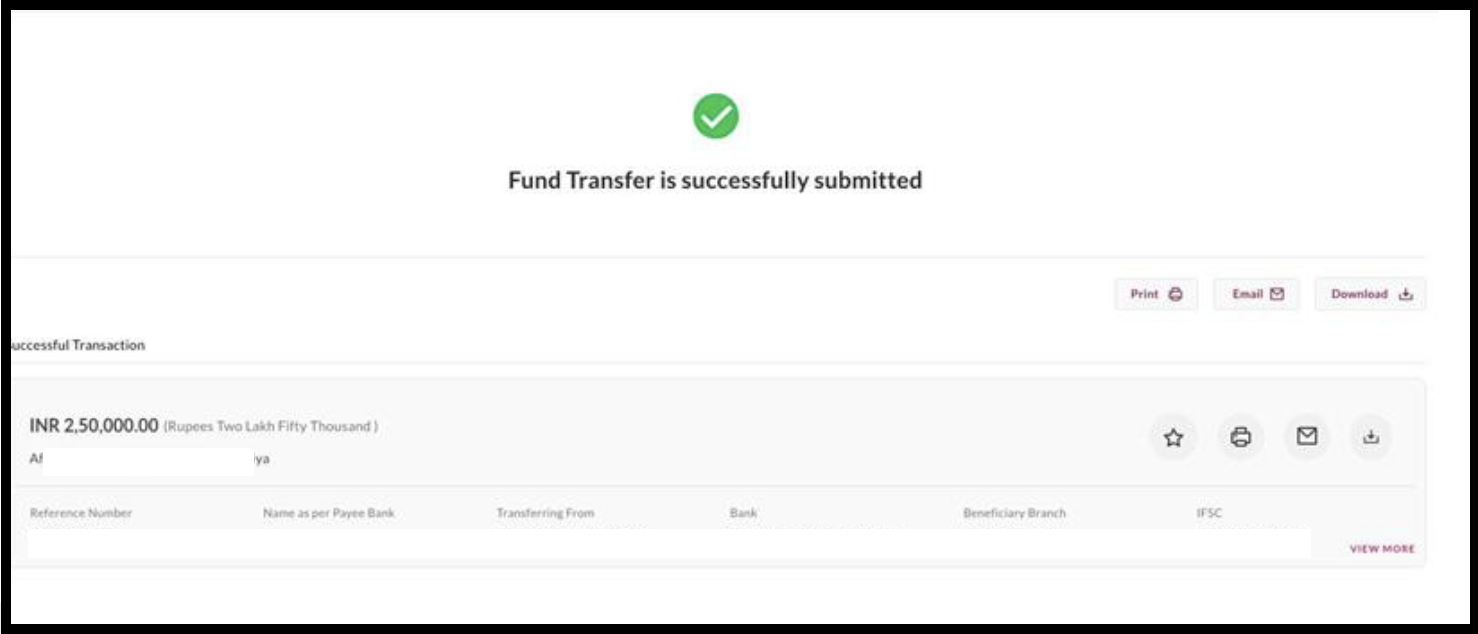
Three cases cannot set an expectation for yours. But all three recovered a meaningful share, and none of them failed because the firm was unregistered.
Look at the recovered amounts against the fees. In the first case, the recovery of 3,15,000 slightly exceeds the 3,11,000 paid in fees. The fees came back and then some.
In the third, the 41,600 recovery sits close to the 55,000 in fees. The pattern that runs through every recovery case holds here too: the fee portion of a claim is the part that reliably returns.
That fee-to-loss split is the single biggest driver of what any recovery case gets back, and the refund from stock advisory breakdown works through it with the figures.
Paid a firm that turned out not to be SEBI registered at all?
We confirm the registration status, document the false claims they made, and build the complaint around the fact that they were never allowed to charge you.
Register with us for a free consultation.
The Fake Algo Variant: When the Product Itself Was a Lie
One unregistered file is worth its own section, because the deception was in the product, not just the registration.
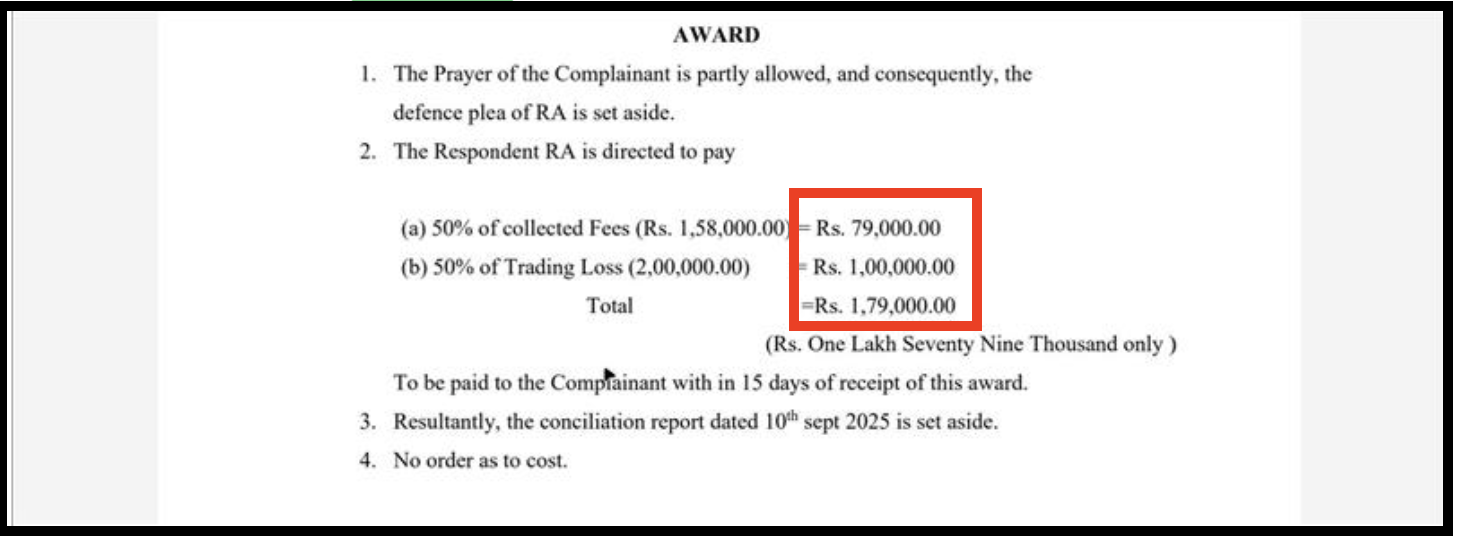
This firm sold what it called SEBI-compliant algorithmic trading software. During the demo, it ran two trades through what it presented as an algo system and showed past performance to build trust. The client paid 1,58,000 in parts.
After the initial trades, the software vanished from the story. The firm began sending manual trading tips over WhatsApp and instructing the client to place trades himself through his own broker account. There was no algo. There never had been.
When losses mounted, he was told to sell his equity holdings to recover, which added a further loss. Then the firm stopped responding.
A manual tip service dressed up as algorithmic software is a misrepresentation of what was sold, on top of the firm being unregistered to sell advice at all. The claim recovered 1,79,000.
If a firm sold you automated trading and then quietly switched to sending you tips by hand, that switch is documented in your chat history, and it is part of the case.
Unregistered but Recovered: Where These Cases Went
An unregistered firm is not inside SEBI’s registered complaint machinery, so the path differs, but it is not a closed door.
- The false registration claim is a filing point: A firm claiming registration it does not hold, or operating without any, is conduct the regulator and the exchanges act on.
- Payment records carry the unregistered case even further than usual: With no registration and often no invoices, your bank and UPI records are the proof that money changed hands for a service that should never have been sold.
- The chat history establishes what was offered: The promise of guaranteed daily profit, the fake algo claim, the assurance of recovery. In these files, the entire relationship lived on WhatsApp.
A SEBI SCORES complaint is still the common starting point, and SMART ODR follows where a grievance does not resolve. The route an unregistered case takes depends on the specifics, which is worth working through with someone before you file.
Whether the firm you dealt with was a broker, a registered adviser, or an unregistered operation changes the evidence you lead with, and the broker traded without my permission refund breakdown covers how those routes differ.
Conclusion
An unregistered firm feels like the worst case. It is often a stronger one.
A registered firm broke the rules of its registration. An unregistered firm was never allowed to charge you for advice at all. That is a simpler thing to establish, and it sits at the centre of the complaint rather than buried in regulatory detail.
The three cases here recovered 52.5%, 50% and 41.6%. None recovered less because the firm was unregistered. Each recovered roughly what it had paid in fees, following the same pattern as every other recovery case.
Check the registration on sebi.gov.in, save whatever they claimed, and total what you paid. The absence of a registration number is not the end of your case. It is the start of it.
Report. Recover. Stay Fraud Free.
Frequently Asked Questions
Yes. Three clients in these files recovered from unregistered firms, one of them 3,15,000. Being unregistered does not place a firm beyond reach. Charging for advice without registration is itself the violation you are reporting.
It helps twice. A false claim of registration is a separate violation from simply operating without one. Save any message or screenshot where they claimed registration or showed a number.
Search the firm name and any registration number on sebi.gov.in. Registered research analysts and investment advisers appear on the register. If the firm is absent or the number does not match, that is a fact worth documenting.
Yes. Selling one product and delivering another is a misrepresentation on top of the registration issue. The switch from software to WhatsApp tips is usually documented in your chat history, which makes it evidence.
Often the payment record is the strongest document you have. Unregistered firms rarely issue invoices, and that absence is itself telling. Your bank or UPI record proves the payment for a service that should never have been charged.





 Add us as a preferred source on Google »

