
Quick Summary
If your broker traded without your permission, the law is on your side, but which evidence wins depends on how it happened. Across real cases handled by our team, victims lost anywhere from ₹90,000 to ₹28 lakh through unauthorised trades, and recovered amounts ranging from full refunds to multi-lakh arbitration awards. The common thread in every case: the broker’s own contract notes, call recordings, and login logs became the proof, not the investor’s word against the broker’s. Below are nine real cases, what went wrong in each, and the exact steps that got the money back.
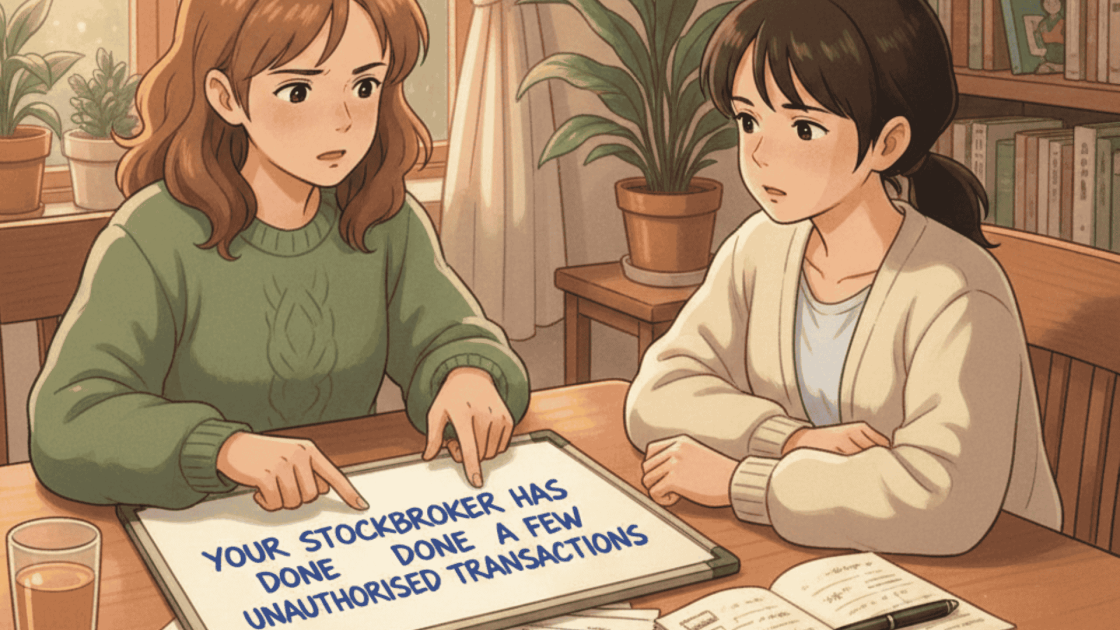
You open your trading app expecting to check your portfolio, and instead you see positions you never placed.
You didn’t make these trades, and the question struck: ‘Did the broker trade without my permission?’
That single moment, more than the loss itself, is where every case on this page begins.
What Counts as Unauthorised Trading?
A broker can execute only the trades you have specifically authorised. That is the entire rule. It does not matter that you handed over account access, and it does not matter that “they said they knew what they were doing.” If you did not approve the trade, the broker had no business placing it.
A vague WhatsApp message saying “we’re taking this quantity today” is not authorisation. Real consent is per-trade and specific.
And the burden of proof sits with the broker, not with you. If they cannot produce a timestamped instruction, a recorded call, or a verified login for that exact trade, they lose.
Case 1: The ₹1 Lakh Account Drained by ₹90,000 in Brokerage
Vijay (name changed) from Gujarat opened a trading account on a broker’s assurance that they would deliver the profit. For the first day or two, small gains kept him relaxed. Then the broker took over completely, running trades all day with only vague WhatsApp “updates” beforehand.
By the third day, his ₹1 lakh account was close to zero. Nearly ₹80,000 to ₹90,000 had gone to brokerage alone. The contract notes showed both the trades he never placed and the fees stacked on each one, which is what turned “I lost money trading” into a claimable case.
Case 2: The Retiree Who Refused Every Time and Still Lost ₹16 Lakh
Rekha (name changed), retired from a government job, does not understand the market and never pretended to. A relative working at the broker opened her account, then a sub-broker began pushing trades. She refused, repeatedly, in words she can still quote: “Maine mana kiya, mere bas ka nahi hai.”
The trading did not stop. They kept asking for her OTP, proof they knew authorisation was required, and worked around her refusal instead of accepting it. When losses piled up, they pivoted to “your relative lost it, now I’ll make you a profit.” By the time she stopped it, ₹16 lakh was gone against roughly ₹10.4 lakh deposited.
Her documented refusals, on calls and in a SCORES complaint she had already filed, became the strongest evidence in the case: consent was never given, and she had it on record.
Case 3: Three Recoveries That Show How the Evidence Wins
Beyond individual stories, three arbitration outcomes show exactly what documentation does in a dispute like this.
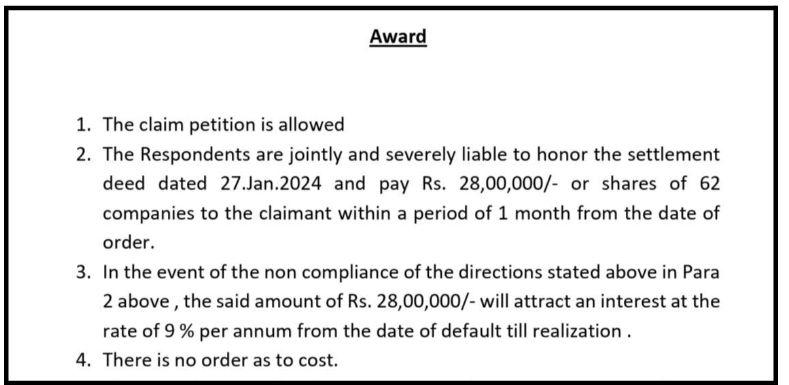
A retired investor was tricked into sharing OTPs, then had his registered email secretly changed to block trade alerts while his app was manipulated to show a fake ₹28 lakh profit. Our team mapped six SEBI violations and escalated through SMART ODR, forcing a full recovery of ₹28,00,000.
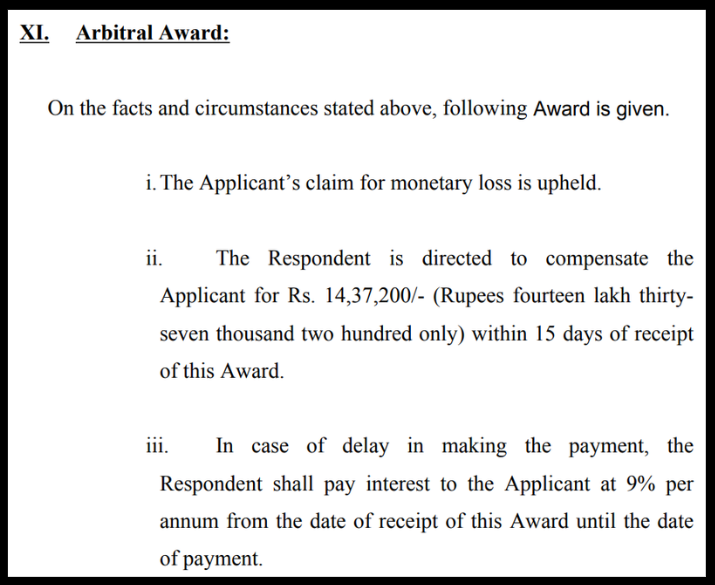
An investor who deposited ₹15.20 lakh on a promise of 25 to 80 percent guaranteed monthly returns never placed a single manual trade himself.
A script ran 795 transactions in 66 seconds on his account, generating ₹9.13 lakh in pure brokerage and wiping out 63 percent of his capital.
The physical impossibility of the timeline became the case, and NSE Arbitration ordered recovery of the full claim.
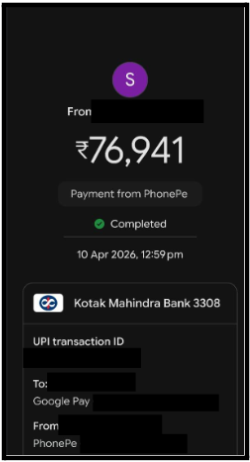
A first-time investor’s Relationship Manager sent a screenshot showing a ₹4,800 loss on a trade. The official Electronic Contract Note for the same trade showed a ₹95,000 loss, a documented mismatch that became the centerpiece of the case. SMART ODR ordered the full claimed amount of ₹76,941 paid back.
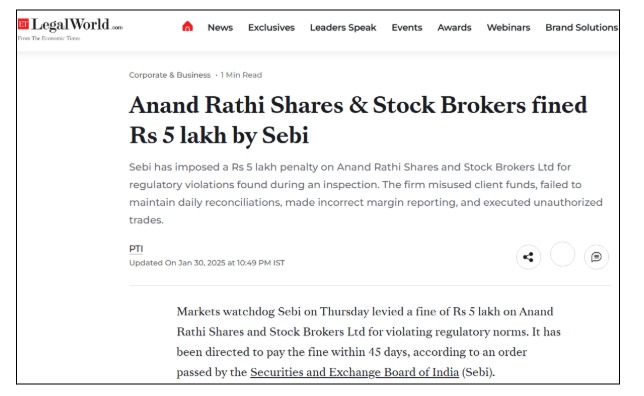
Regulatory penalties back up how seriously SEBI treats this. Anand Rathi was fined ₹5 lakh after inspection findings revealed unauthorised trades attributed to “dealer punching errors,” an excuse SEBI rejected outright. Reliance Securities was fined ₹9 lakh for weak terminal controls and record-keeping that directly increased the risk of unauthorised activity.
Case 4: The Portfolio Sold to Fund Commodity Bets
Prakash (name changed) had a patient, buy-and-hold ₹4.5 lakh portfolio. His old dealer moved to a new firm and convinced him to transfer his entire portfolio over, promising to “pull out a little profit here and there.”
The dealer began selling his long-term holdings to fund short-term commodity bets, then started trading from his own device using Prakash’s OTP, fifteen to twenty trades Prakash never saw.
When crude fell hard, the firm squared off positions without asking. The ₹4.5 lakh portfolio dropped to about ₹1 lakh.
The brokerage on the commodity trades was so heavy that the firm itself negotiated it down when he complained, evidence that the fee was never fair to begin with.
Case 5: Fifteen Lots He Chose to Hold, Two Closed Without a Word
Vikram (name changed) held fifteen Nifty lots deliberately, with full conviction in the position. Around half past ten one morning, two lots vanished with no call, no confirmation, and no request to add margin.
The broker’s excuse afterward was a margin shortfall he was never told about. A genuine shortfall requires the broker to inform you and let you bring in funds before any square-off.
Skipping that step turns “margin shortfall” from an explanation into the very thing the broker has to answer for. The forced exit cost him roughly ₹20,000 on trades he had every intention of holding.
Case 6: He Changed His Password. The Trades Continued Anyway.
Sanjay (name changed) was pressured into escalating “service packages” up to ₹3 lakh, then pushed into an unapproved loan of ₹8 to ₹10 lakh. Staff systematically drew roughly ₹8 lakh out of his account through rapid unauthorised trades.
When he tried to cut off access by changing his password, a ₹40,000 market swing appeared within minutes anyway. The firm’s response was “we have removed that employee,” treating a firing as the end of the matter. It is not.
A firm is accountable for its representative’s access to its own systems, and continued trading after a password change is proof that access should never have existed, let alone continued.
Broker vs Advisory: Which One Do You Actually File Against?
Two claims can look identical on the surface, a wiped-out account, and still need completely different evidence depending on who actually did what.
One settled case involved a client who lost ₹3,18,431, with ₹1,24,804 of that in brokerage alone. Trades were run by the broker’s representatives, withdrawal requests were repeatedly cancelled, and he could not regain control of his login. That case recovered ₹2,00,000 against a ₹3,00,000 claim.
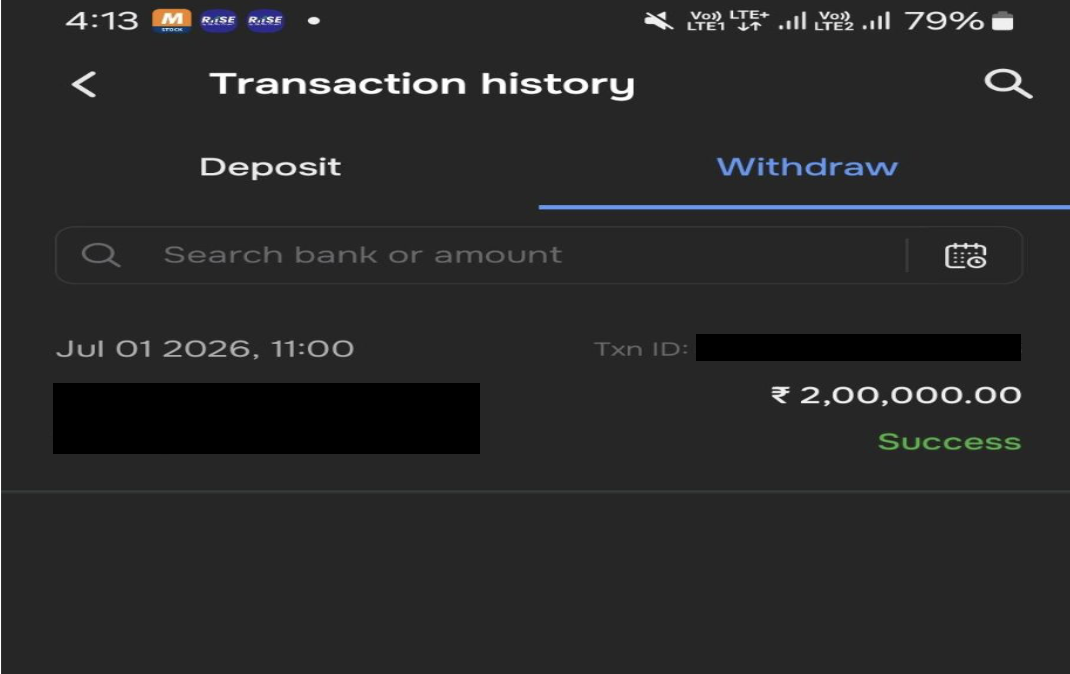
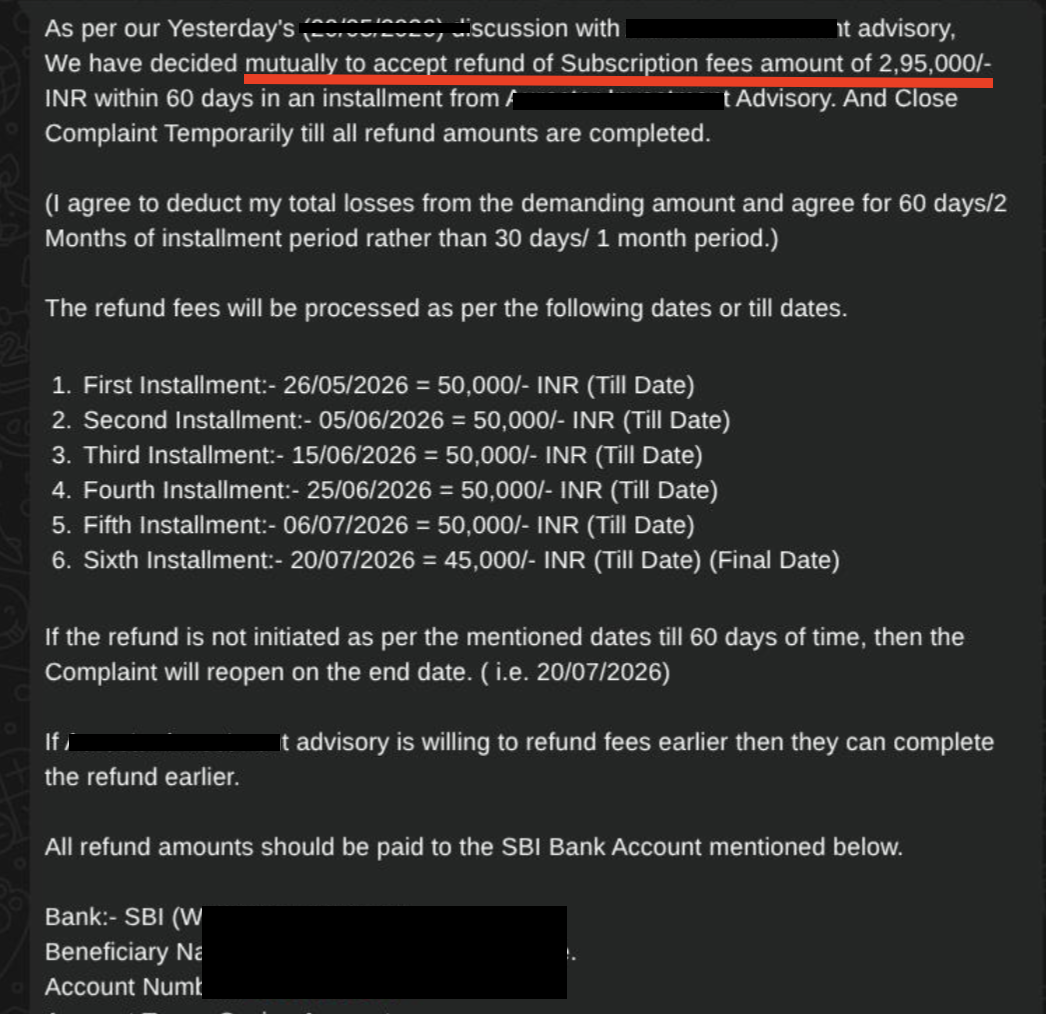
A separate advisory case recovered ₹3,00,000 on a ₹4,22,000 claim, and it turned on something entirely different: fees of ₹2,95,000 charged against a regulatory cap. Same broad industry, two different complaints, two different routes.
A broker case is about your account: unauthorised trades, blocked withdrawals, brokerage that does not match your activity. The proof is arithmetic on the broker’s own contract notes and statements, the hardest kind of evidence to argue with.
A research analyst or adviser case is about what you were told and charged: chat instructions, call recordings of assurances, and payment records. Your evidence here is only as good as what you personally saved, since it does not sit with a regulated intermediary the way broker records do.
Working out which one you actually have, before you write a single word of your complaint, is what decides whether you spend months fighting the right entity or the wrong one.
How to Get Your Money Back?
Every case above followed the same escalation path once the evidence was in place: a written complaint to the broker naming the specific violations, then SEBI SCORES if it goes unresolved, then SMART ODR, then exchange arbitration where the binding awards above came from.
The exact steps, timelines, and what to upload at each stage are covered in full in our guide: file a complaint against your stock broker.
Not sure if your case is a broker problem or an advisory problem, or whether your evidence is strong enough to hold up?
We read your contract notes and communication records, work out exactly which entity is liable, and build the complaint around the evidence that actually wins these cases.
Register with us to get assistance.
Frequently Asked Questions
It matters, but it does not end your case. Sharing an OTP once for a legitimate purpose is different from a firm using it to run trades you never instructed. Document every instance where trades happened that you did not specifically approve, regardless of how access was originally obtained.
Closing your account does not erase the underlying claim or violation. If anything, retaliation right after a complaint is worth documenting as its own point, since it suggests the broker had something to hide rather than a routine business decision.
Exchange arbitration claims generally need to be filed within three years of the disputed transaction. Complaints to SEBI SCORES should be filed as soon as possible regardless, since evidence like call recordings and chat logs tends to disappear the longer you wait.
The registered trading member is accountable for the conduct of its sub-brokers and authorised persons. "That was just our sub-broker" is not a valid defence, since the firm is the one that granted that access in the first place.


 Add us as a preferred source on Google »

