
Quick Summary
AIFs are regulated under the SEBI Alternative Investment Funds Regulations, 2012.
The standard minimum investor commitment is Rs 1 crore, reduced to Rs 25 lakh for employees or directors.
AIFs fall into three categories: Category I, Category II, and Category III.
This checklist covers registration checks, category understanding, and documents to demand before committing capital.
He showed Yuvraj a SEBI notice as proof his money was “safe”, right after Yuvraj had deposited Rs 25,00,000.
The notice was never handed over. The refund never came either.
That’s how a fund style pitch can look regulated right up until the moment it isn’t.
AIFs move real crores on trust, so verify the fund before it moves any of yours.
The Three AIF Categories, Compared
Knowing your category tells you what risk you’re actually signing up for before you commit anything.
| Category | Typical Focus | Risk Profile |
| Category I | Startups, SMEs, social ventures | Generally lower risk, incentivised by regulators |
| Category II | Private equity and debt funds | Moderate, no special leverage allowances |
| Category III | Complex and trading strategies | Highest risk, leverage permitted |
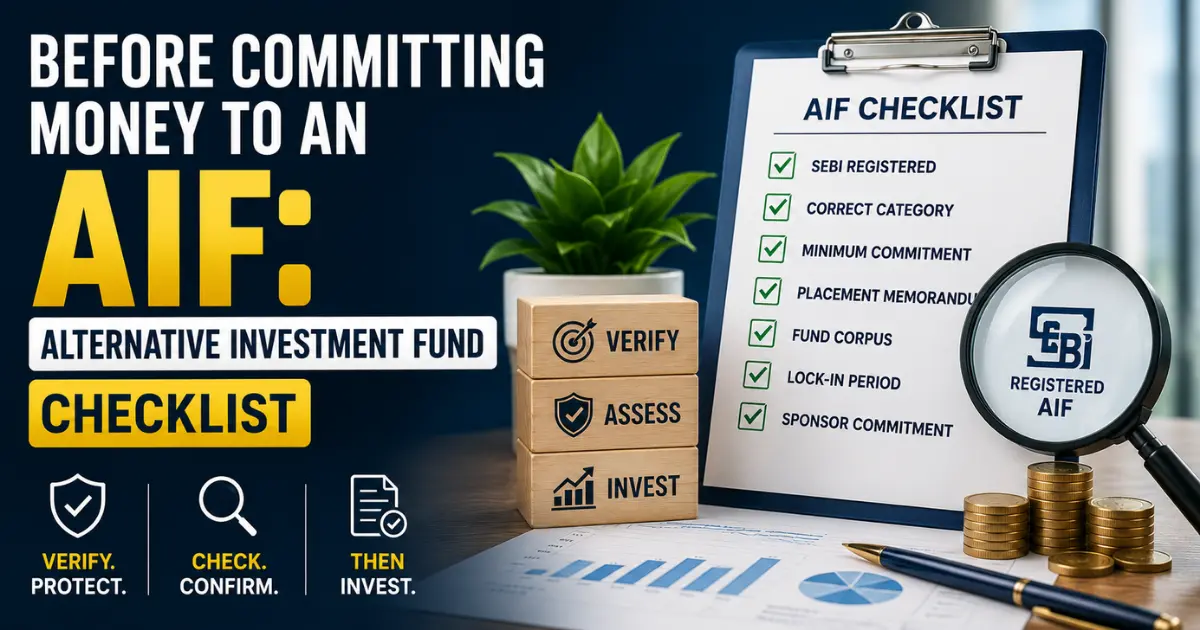
AIF Verification Checklist
Go through every point below before signing a subscription agreement.
- SEBI registration: Confirm the fund is registered under the AIF Regulations, 2012, not just the fund manager.
- Category clarity: Know whether it’s Category I, II, or III, since risk and liquidity differ sharply.
- Minimum commitment: Confirm it meets the Rs 1 crore floor, or Rs 25 lakh if you qualify as an employee investor.
- Placement memorandum: Read this document fully, since it details strategy, fees, and risk factors.
- Fund corpus: Check the fund has met SEBI’s minimum corpus requirement for its category.
- Lock in period: Understand exactly how long your capital stays committed before any exit is possible.
- Sponsor commitment: A genuine sponsor holds a meaningful stake in the fund alongside investors.
Verifying an AIF Before You Sign
1. Check SEBI’s registered AIF list: available in the statistics section of SEBI’s official website.
2. Match the exact fund name: against what’s listed, not just the fund manager or promoter’s name.
3. Confirm the category: and cross reference it against what was pitched to you verbally.
4. Request the placement memorandum: in full, and read the risk factors section before signing anything.
A Related Scam Pattern to Watch For
Some fraudsters pitch fund style products that mimic AIF language without any registration behind them.
One documented case involved a fund style pitch where an unregistered promoter blocked an investor’s Rs 25 lakh under a fake SEBI notice excuse.
Genuine SEBI action never works the way these excuses describe, and it’s always independently verifiable.
Why a Fabricated SEBI Notice Fools People
A document with official looking letterhead carries instant, unearned authority in most people’s minds.
Scammers exploit exactly this instinct, using fake notices to explain away blocked withdrawals or missing funds.
The fix is simple but often skipped under pressure: verify independently on SEBI’s own site, never take a shown document at face value.
Bottom Line
A registered AIF, correct category understanding, and a full placement memorandum are non negotiable.
For verification steps across brokers, advisers, and funds alike, see SEBI registration status on Fraud Free’s checklist hub.
If you suspect an unregistered fund pitch, you can report SEBI fraud through the general intermediaries complaint route.
Report. Recover. Stay Fraud Free.
Frequently Asked Questions
SEBI requires a minimum commitment of Rs 1 crore per investor for Alternative Investment Funds. Employees or directors of the AIF or its manager can invest with a reduced Rs 25 lakh minimum.
There are three categories. Category I covers startups and social ventures, Category II covers private equity and debt funds, and Category III covers funds using leverage and complex trading strategies.
No. Like other SEBI regulated investment vehicles, AIFs cannot promise guaranteed returns. Any fund style pitch promising fixed profits regardless of market conditions should be treated as a serious red flag.
No. A placement memorandum is a formal regulatory document covering strategy, fees, risk factors, and fund terms. A marketing brochure is promotional material and should never replace reading the actual memorandum.
Do not commit any capital. Unregistered fund style pitches often use SEBI sounding language without actual registration. Verify the fund's status directly on SEBI's official records before any conversation about payment.
No. Any genuine SEBI action is independently verifiable on SEBI's own website. A notice shown to you privately, with no way to confirm it elsewhere, should never be accepted as explanation for blocked funds.





 Add us as a preferred source on Google »

