

Quick Summary
Capital Vraddhi Financial Services, run by proprietor Raju Jhariya, is a SEBI registered Investment Adviser under number INA000005291. The firm served over 10,294 clients through subscription based advisory plans. SEBI’s Adjudicating Officer found the firm guilty on 13 violations in October 2024, imposing a Rs 40 lakh penalty, and a second order in November 2025 reconfirmed 7 of those violations and banned new client onboarding for six months. This page covers the firm’s services and sales practices, its SEBI registration status, a summary of both orders, its complaint record, real client cases, and the exact steps to file a complaint if your own experience matches what SEBI has already found.
Capital Vraddhi Financial Services is not an unregistered firm operating outside SEBI’s reach. It is a fully registered Investment Adviser that SEBI has still fined Rs 40 lakh and banned from taking new clients.
That distinction matters more than almost anything else on this page.
A valid registration number gives a firm legitimacy in a prospective client’s eyes. It does not mean the firm followed the rules that registration requires.
This page walks through what Capital Vraddhi Financial Services actually offers, whether its registration is genuine, what SEBI’s two orders found, what its complaint data shows, and what to do if you were affected.
Capital Vraddhi Financial Services Review
Capital Vraddhi Financial Services is a proprietorship firm owned by Raju Jhariya, operating across India through call centres and digital platforms rather than a physical branch network.
The firm positioned itself as a research-based advisory service, offering subscription plans ranging from short-term seven-day packages to longer-term advisory arrangements.
Its core promise was expert guidance for stock market trading decisions.
On paper, this looks like a standard retail advisory business.
SEBI’s own review of the firm’s sales process found a pattern that looked considerably less standard once examined closely, covered in full detail in the violations section below.
The subscription structure itself is worth understanding.
Capital Vraddhi offered plans starting from a seven-day short-term package up through longer-term advisory arrangements, giving the firm multiple entry points to convert a curious prospect into a paying client at a relatively low upfront commitment.
A seven-day plan is easy to say yes to. It is also, per SEBI’s findings, where the demo-style shown profit and upsell pressure documented in several client cases below tended to begin.
That structure is not inherently improper on its own; shorter trial-style plans exist across the advisory industry.
What SEBI’s order establishes is how this particular firm used that structure, pairing a low-commitment entry point with the specific conduct detailed next.
Is Capital Vraddhi Financial Services SEBI Registered?
Yes. Capital Vraddhi Financial Services holds an active SEBI Investment Adviser registration under number INA000005291.

This is a genuine, verifiable registration. You can confirm it yourself on SEBI’s official intermediary database in a couple of minutes.
Here is the detail that matters more than the registration number itself: SEBI registration confirms a firm cleared the regulator’s eligibility requirements. It does not confirm the firm followed the conduct rules that come with that registration.
Capital Vraddhi Financial Services is the clearest possible illustration of that gap.
It holds a genuine registration, and SEBI has still found it guilty of 13 separate violations covering fee limits, staff qualifications, client agreements, and false promises.
Registration status and regulatory compliance are two entirely separate questions, and this firm answers them very differently. Before trusting any registered adviser, check both, not just the registration number.
How Capital Vraddhi Operates?
Under SEBI regulations, Registered Research Analysts (RAs) and Investment Advisers (IAs) are required to follow strict norms relating to marketing, client onboarding, fee structures, suitability assessment, and advisory conduct.
However, the sales process of Capital Vraddhi shows some red flags, raising concerns about the company’s operations:
- Aggressive Marketing: Used cold calls, online ads, social media, fake reviews, and prohibited free trials to attract clients.
- High-Pressure Sales: Made unrealistic profit guarantees like daily assured income, no-loss plans, and rapid money multiplication.
- Upfront Fee Collection: Charged ₹5,500–₹4,72,000 in fees before risk assessment, often exceeding the client’s investment amount.
- Questionable Advisory Services: Gave stock tips via calls/SMS without stop-loss and used unqualified staff for advisory interactions.
Also Read: StockDunia has four advisory plans sold at one identical price, while the refund decision is left entirely to the adviser.
Capital Vraddhi Financial Services SEBI Order
Vraddhi Financial Services came under regulatory scrutiny following multiple complaints and surveillance findings indicating potential violations of the SEBI Act, 1992, and regulations governing SEBI-registered Research Analysts (RA) and Investment Advisers (IA).
The entity’s business practices, particularly in relation to marketing, fee collection, and advisory conduct, raised concerns regarding investor protection, misrepresentation, and non-compliance with SEBI’s code of conduct.
In response, SEBI initiated enforcement proceedings under its adjudicatory and regulatory powers.
These actions were aimed at examining whether Vraddhi Financial Services and its associated persons had engaged in misleading practices, charged fees in contravention of prescribed norms, and provided investment advice without adhering to mandatory suitability and disclosure requirements.
The following section outlines the major regulatory actions taken by SEBI.
Order 1: SEBI Order Against Capital Vraddhi for RA Violations
What makes this case particularly significant is not just the number of violations; seven major regulatory breaches were established, but what they reveal about the systematic failure to protect investor interests.
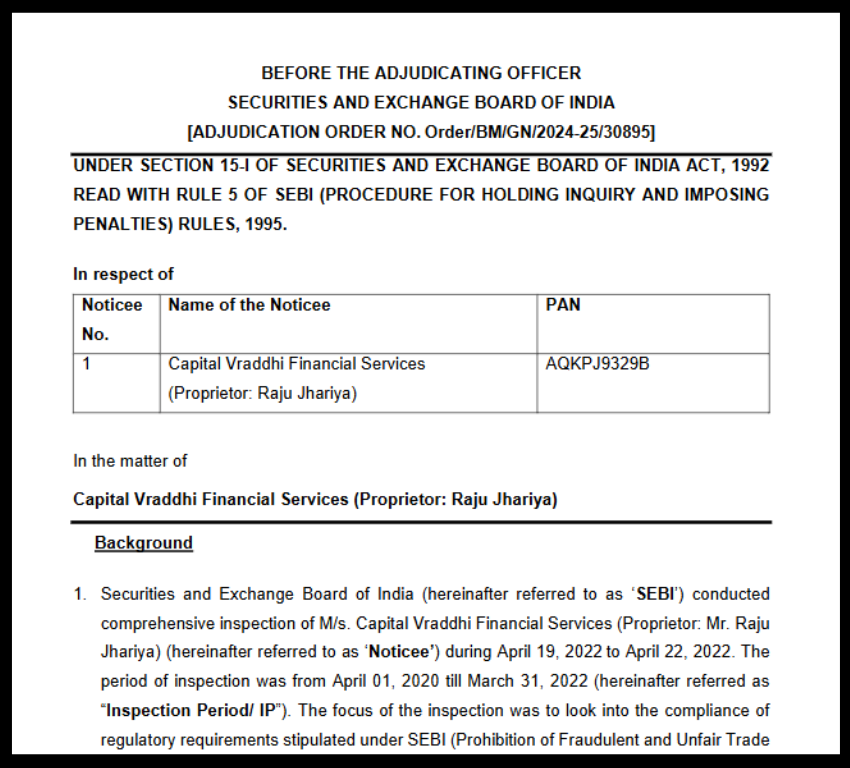
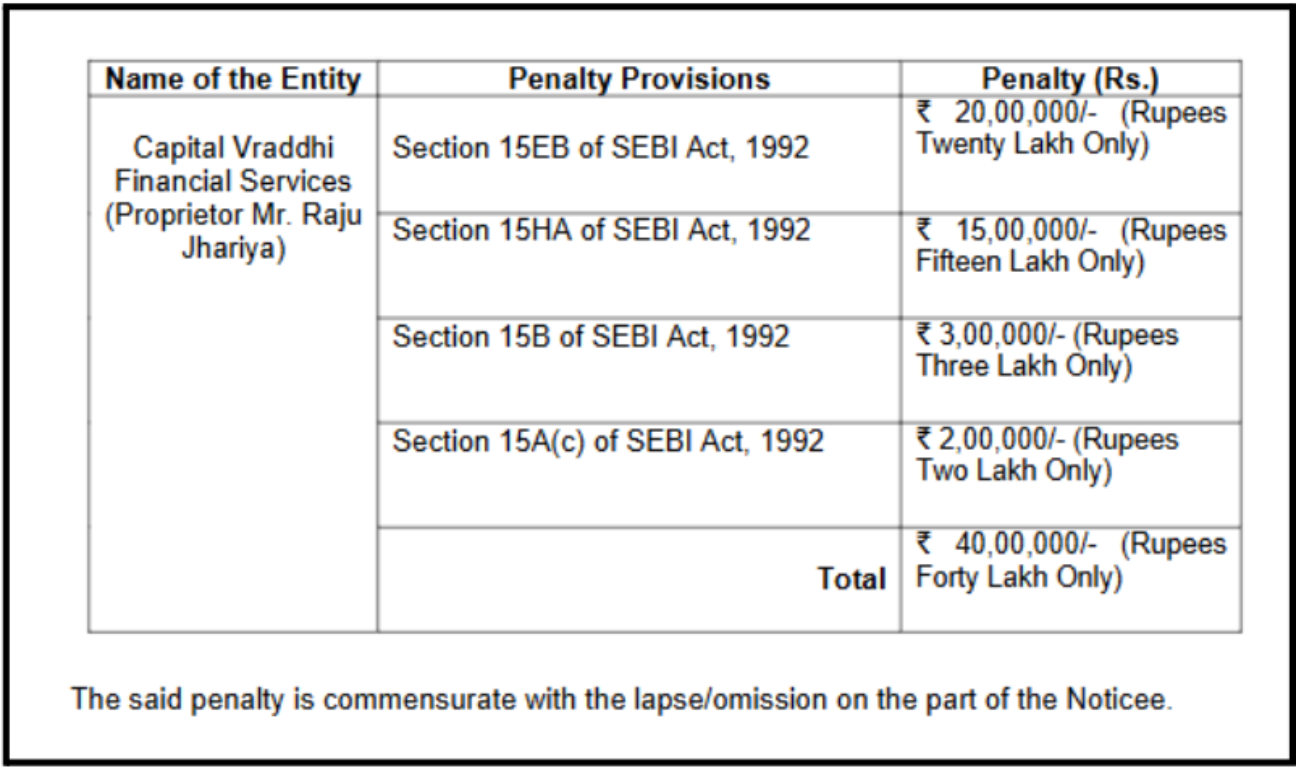
Penalty: ₹40 Lakh
SEBI’s Adjudicating Officer found Capital Vraddhi guilty on all 13 violations:
1. Unqualified Staff (36 employees)
Out of 40 employees, 36 lacked the required NISM certification to provide investment advice.
These unqualified staff were directly interacting with clients, conducting risk profiling, and procuring payments.
19 of these uncertified employees were still working during SEBI’s inspection.
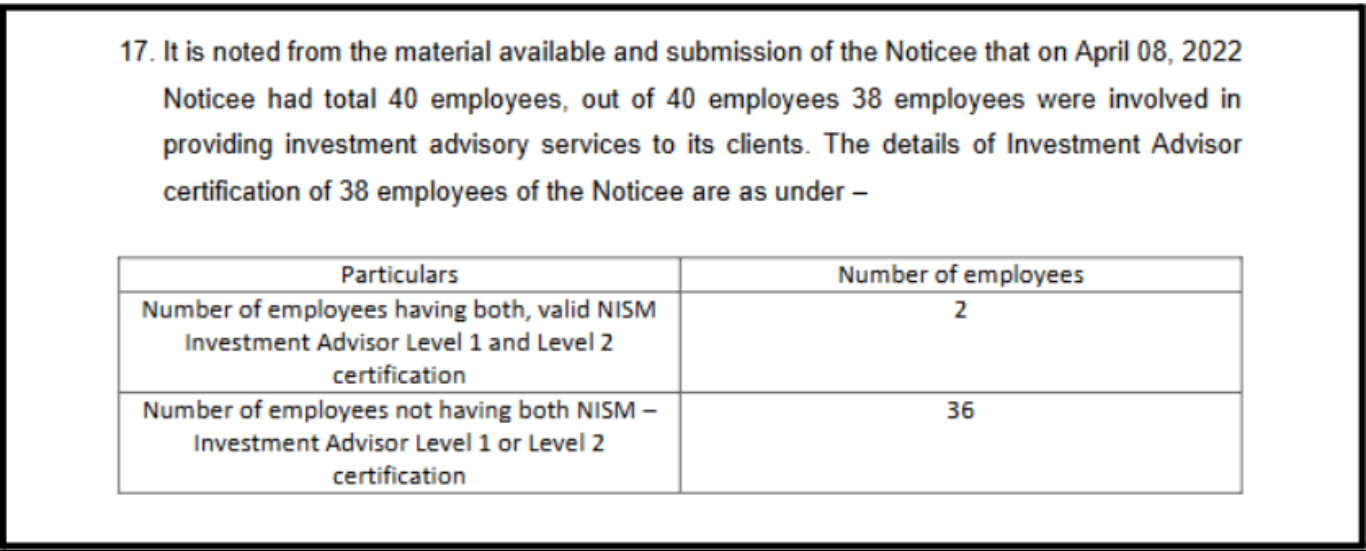
Impact: Clients received advice from people with no formal training or credentials.
2. Excessive Fee Charges (1,355 instances)
- In 1,355 instances, the firm charged more than the ₹1.25 lakh annual limit
- One client was charged an astronomical ₹18.22 lakh
- Five clients were charged between ₹1.30 lakh to ₹1.47 lakh annually
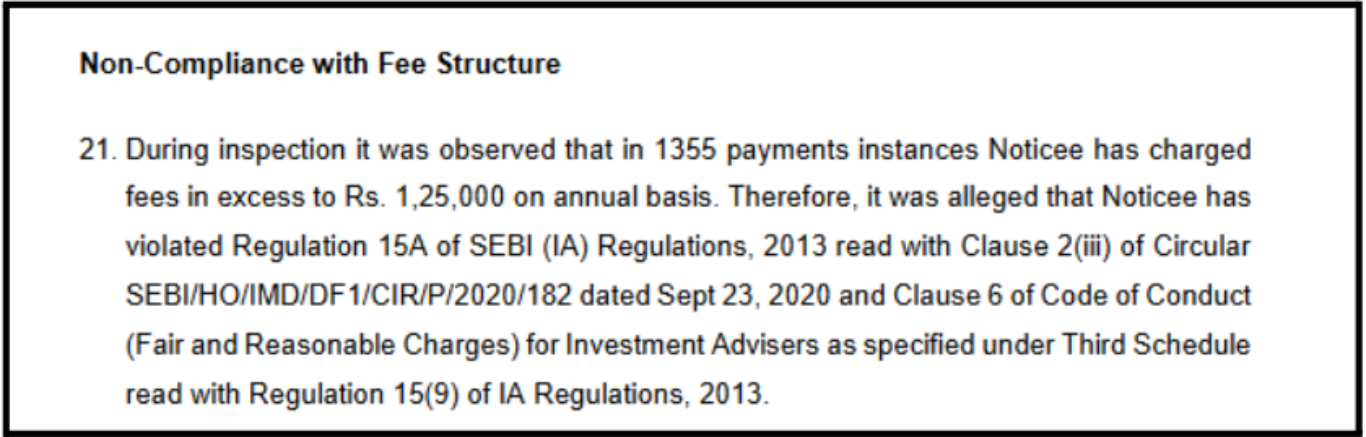
Sample Cases:
- Tilak Raj: ₹1,30,500 (₹5,500 excess)
- Mr. Vicky: ₹1,47,000 (₹22,000 excess)
- Abbu Hasan Ansari: ₹1,47,700 (₹22,700 excess)
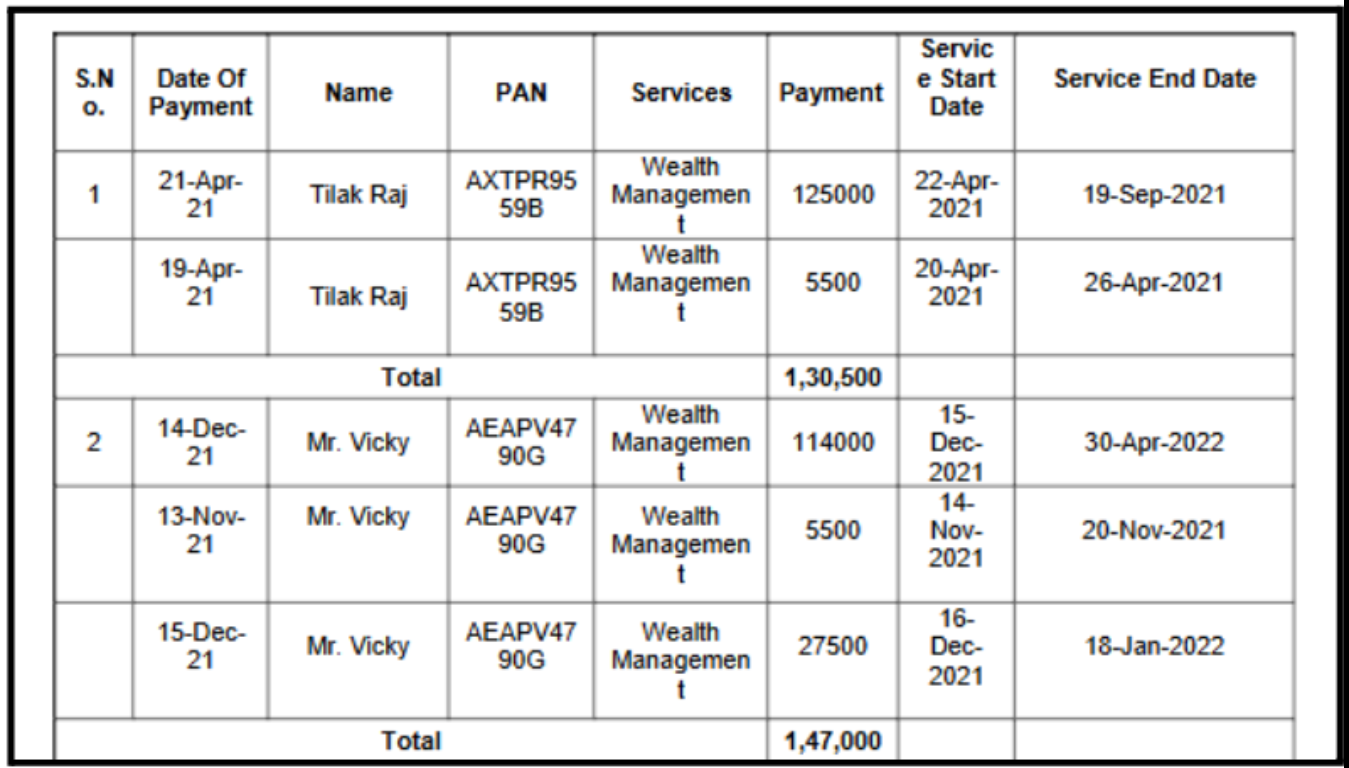
Impact: Clients’ investment capital was drained through illegal fees.
3. No Client Agreements (238 clients total)
29 clients were charged fees without any formal agreement. Services were provided without legal documentation from April to June 2021.
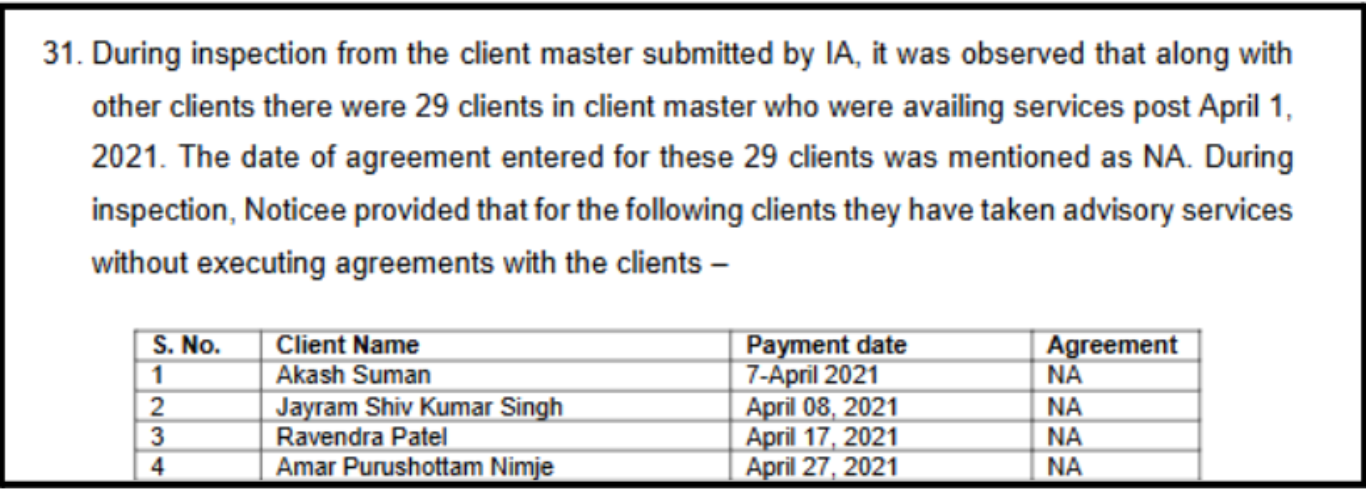
The firm blamed COVID-19 lockdowns, but continued collecting money anyway.
Impact: Clients had no legal protection or clarity on the services they were paying for.
4. No Call Records (April 2020 – March 2022)
No call recordings were maintained from April 2020 to March 2022. Critical documentation required by regulations was simply not kept.
This made it impossible to verify what advice was given or promises made.
Impact: No evidence trail to verify advice given or promises made.
5. No Risk Profiling (4 clients)
Four clients received services without proper KYC, risk profiling, or suitability assessment. No documentation existed to show whether investments matched client needs.
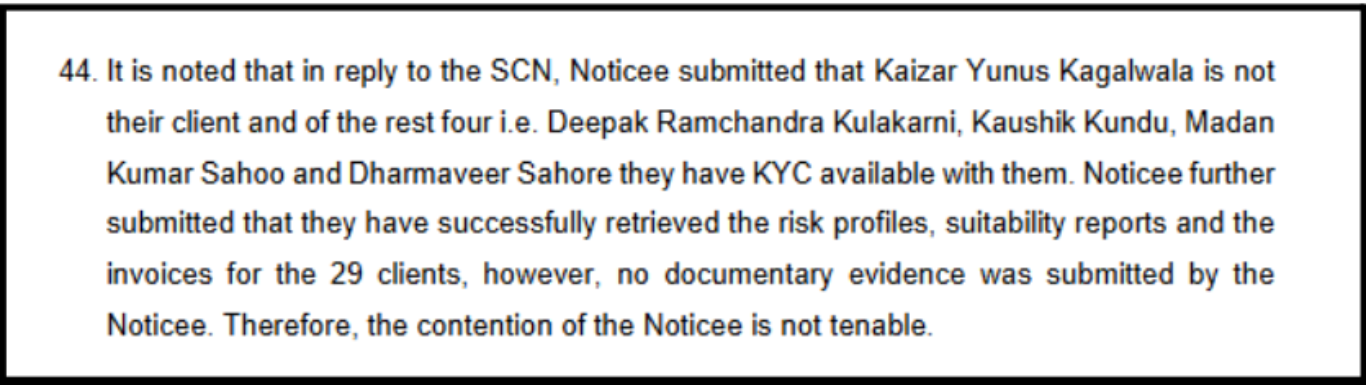
The firm provided financial advice blindly, without understanding the client’s circumstances.
Impact: Advisory services are provided without understanding the client’s risk capacity.
6. Overlapping Services (21 clients)
21 clients were sold the same “wealth management” service multiple times during overlapping periods.
- Mr. Kundan Sagar Loniya sold 10 overlapping services in just two months
- Mr. Sayyad Mohd Shabbir received 8 overlapping services
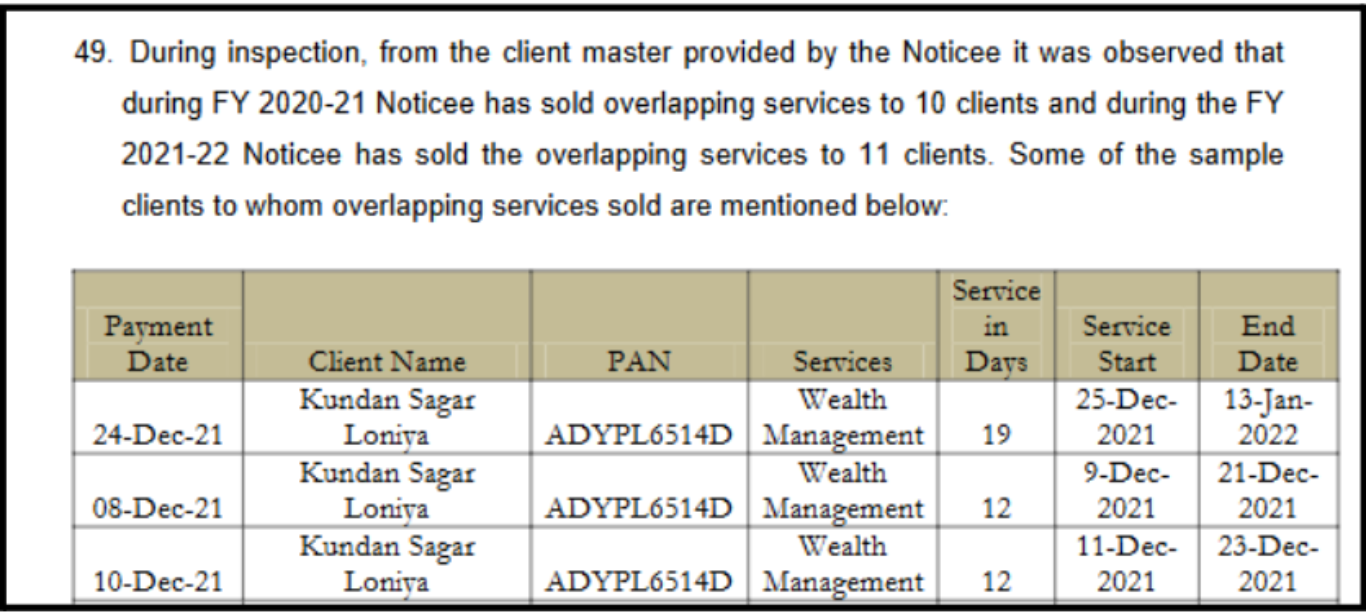
Impact: Double and triple charging for the same advice period.
7. Illegal Free Trials (116 clients)
- Free advice given before risk profiling
- Prohibited to protect consumers
Impact: Exposed prospective clients to unsuitable investments without safeguards.
8. Personal Phone Usage (19 employees)
Employees used 19 personal SIM cards to pitch advisory services. The firm admitted that employees gave personal recommendations outside official channels.
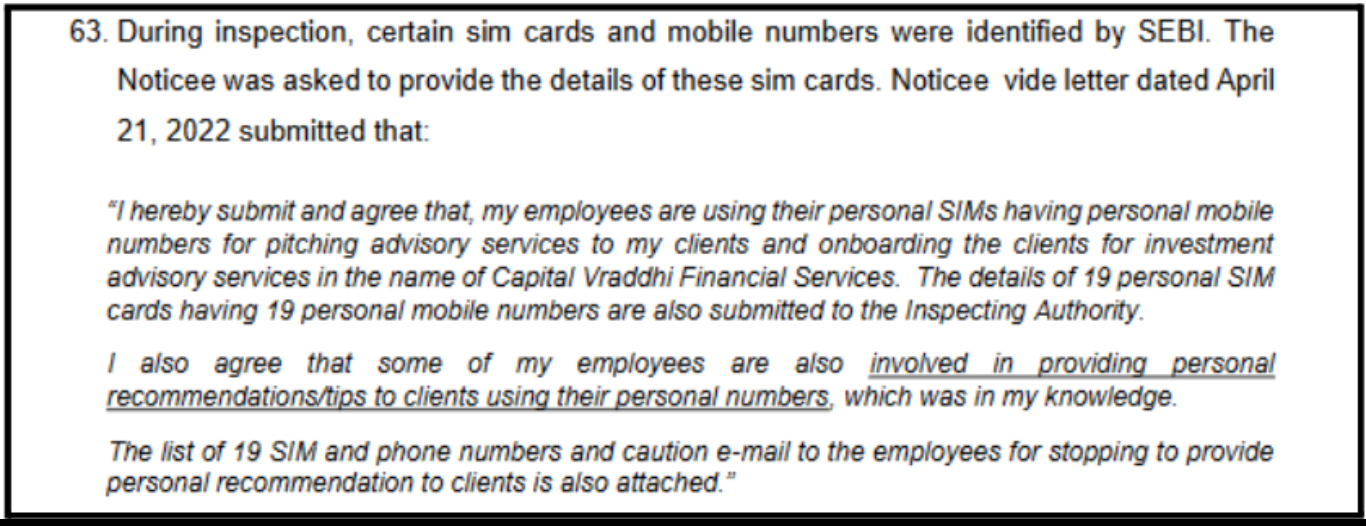
This created an untracked, unregulated parallel advisory operation.
Impact: Zero accountability for advice given through personal numbers.
9. Fake Website Reviews
The firm created a blog with fabricated positive reviews. Fake testimonials were posted to mislead prospective clients.
The firm admitted these reviews were “fake and created”.
Impact: Deceived prospective clients into believing the firm had satisfied customers.
10. Fees Exceeding Investment Capacity
Shocking Cases:
| Client | Annual Income | Fee Charged | Proposed Investment |
| Deepak Kumar Sharma | ₹2-5 lakh | ₹2,91,500 | ₹50,000-2,00,000 |
| Amiya Anand | ₹1-5 lakh | ₹4,72,000 | <₹1,00,000 |
| Muniya Aishpunani | ₹1-5 lakh | ₹2,28,000 | <₹1,00,000 |
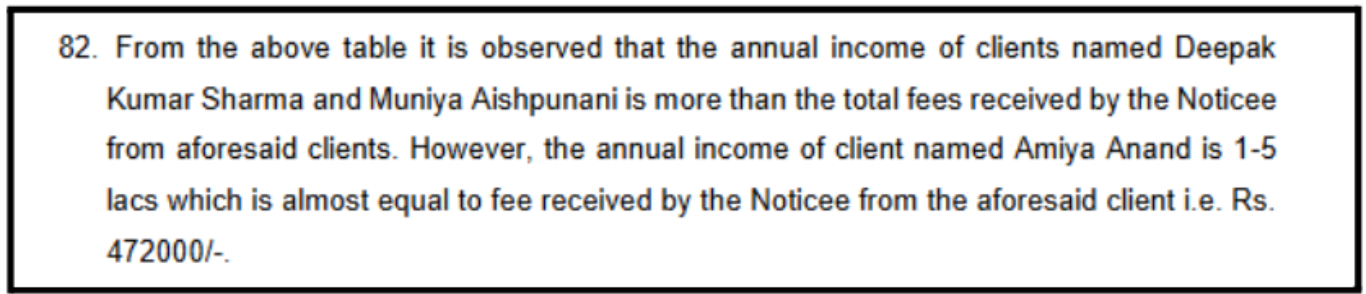
Impact: Clients paid more in fees than they could afford to invest. Some paid fees equal to their entire annual income.
11. Profit Guarantees & No Stop-Loss Advice
Call Recording Evidence:
Call 1: “Daily ₹1,500-₹2,000 return on ₹10,000 investment, guaranteed.”
Call 2: “Single day profit guaranteed. Your profit won’t go anywhere.”
Call 3: Client asks about stop-loss
Executive: “Don’t put stop-loss. Trust me.”
Call 4: “You’ll get ₹12-15 lakh profit in first year itself.”
Call 5: “₹10,000 will become ₹40,000 in one month through our SIP plan. Not even ₹1 loss.”
Impact:
- False promises that can never be fulfilled in securities markets
- Trading without stop-loss can wipe out entire investment capital
- Clients invested based on lies, facing inevitable losses
12. Charging Fees Before Agreements (209 clients)
Sample cases where fees were collected months before agreements:
| Client | Fee Date | Agreement Date | Gap |
| Govinda Kumar | April 13, 2021 | June 26, 2021 | 74 days |
| Renuka Sumit Jain | May 29, 2021 | July 30, 2021 | 62 days |
| Vikas Jangra | July 31, 2021 | Sept 24, 2021 | 55 days |
Impact: Services started without legal documentation, leaving clients vulnerable.
13. False SEBI Approval Claims
- Employee told client: “Your risk profile is approved by SEBI”
- Used SEBI’s name to pressure client into paying
Impact: Exploited regulator’s credibility to deceive investors.
SEBI Verdict
SEBI imposed a total penalty of ₹40 lakh on Capital Vradhi Financial Services (Proprietor: Mr. Raju Jhariya) under multiple provisions of the SEBI Act, 1992, for regulatory lapses and omissions.
Also Read: Blue Ocean Financial Services has almost no complaints, but its reporting still leaves questions.
Order 2: The Pattern Continues (November 14, 2025)
Even after the penalty, the company keeps on operating unethically, violating multiple rules.
Another SEBI Order was then released around 13 Months Later
Even after the ₹40 lakh penalty, SEBI’s Whole Time Member issued a second order reviewing the same violations.
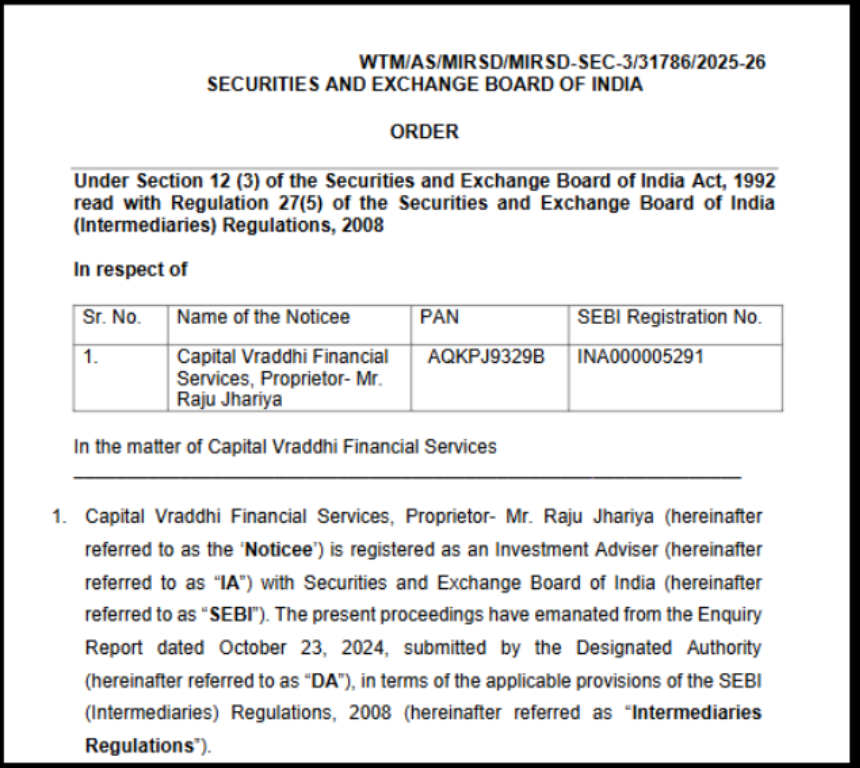
Capital Vraddhi is prohibited from onboarding new clients for 6 months.
This operational restriction came after a separate regulatory review process.
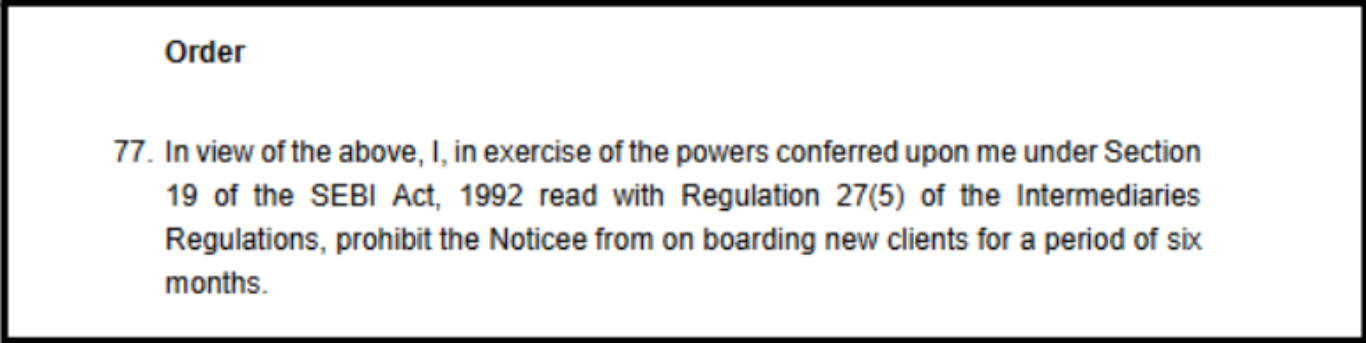
Out of 13 original charges, 7 were upheld again:
Repeated Violations Confirmed:
- Unqualified Staff
- 36 out of 40 employees lacked certification
- Continued using unqualified personnel for client-facing roles
- Excessive Fees
- Still no proper documentation showing GST breakdown
- Pattern of charging above ₹1.25 lakh continued
- Missing Agreements
- 29 clients served without any agreements
- COVID excuse rejected, firm should have stopped services if agreements couldn’t be signed
- No Call Records
- Claimed “data corruption” but provided no technical proof
- Failed basic regulatory requirement for 2 years
- Unreasonable Fee Structure
- Charged ₹4.72 lakh from client earning ₹5 lakh annually
- Violated fiduciary duty to act in client’s best interest
- Profit Guarantees
- Call recordings proved guaranteed return promises
- Advised trading without stop-loss
- Fees Before Agreements
- 209 clients charged before signing contracts
- Clear violation of investor protection norms
Cumulative Penalties
| Order | Date | Penalty Type | Amount/Duration |
| Adjudication Order | October 2024 | Monetary Fine | ₹40,00,000 |
| WTM Order | November 2025 | Operational Ban | 6 months (no new clients) |
Total Impact:
- ₹40 lakh must be paid to SEBI.
- Cannot acquire new clients for 6 months.
- Existing clients can continue (at their own risk).
- Severe reputational damage.
Also Read: Gaurav Agrawal Investment Advisor, suspended six months by SEBI in 2025.
What Do Capital Vraddhi Financial Services Complaints Show?
Only 52 clients formally complained through SEBI SCORES out of the firm’s 10,294 total clients. On its own, that ratio looks reassuring. S
EBI’s own investigation found the actual scale of harm was far wider than the formal complaint count suggests.
| Type of Problem | Number Affected | What Happened |
|---|---|---|
| Excessive fee exploitation | 1,355 clients | Charged more than the Rs 1.25 lakh annual limit, some up to Rs 18.22 lakh |
| No legal protection | 238 clients | Services provided without signed agreements |
| Unqualified advice | All 10,294 clients | 36 of 40 employees lacked required certification |
| False promises | Unknown number | Guaranteed profits that never materialised |
| Fake marketing victims | Unknown number | Deceived by fabricated positive reviews |
| No documentation trail | All clients, 2020-22 | Call recordings not maintained for two years |
| SEBI name misuse | At least one client | Falsely told their risk profile was “SEBI approved” |
[The gap between 52 formal SCORES complaints and 10,294 total clients is worth sitting with.
A formal complaint requires a client to know their rights were violated, know how to file, and follow through. SEBI’s own investigation found problems affecting the entire client base, not just the small fraction who complained through official channels.
Is It Safe to Invest With Capital Vraddhi Financial Services?
Based on SEBI’s own findings, this was not accidental non-compliance.
The pattern documented across both orders shows deliberate choices repeated at scale: fabricated reviews built to manufacture false credibility, promises of guaranteed returns used to close sales, unqualified staff hired to keep costs down, fees charged well above the legal limit, and documentation skipped specifically to avoid accountability.
A handful of lessons apply well beyond this one firm, and are worth keeping in mind for any advisory relationship, registered or not.
- Verify staff credentials, not just the firm’s registration. A valid firm-level registration says nothing about whether the specific person advising you holds a current NISM certification.
- Never pay before signing a detailed agreement. If a firm asks for payment first and promises the paperwork will follow, that sequence itself is a warning sign, regardless of how the request is framed.
- Treat any guarantee as a lie. No lawful adviser can promise assured returns in the securities markets.
- Know the fee limit. Advisory fees under the fixed fee mode should never exceed Rs 1.25 lakh annually per client family.
- Insist on documentation. Request written records of every call and every piece of advice given.
- Verify reviews independently. Testimonials on a firm’s own website or blog can be fabricated, as SEBI’s order confirms happened here.
- Confirm risk profiling happened before any advice was given. Useful advice depends on a proper assessment of your finances and risk tolerance.
- Ask what happens if you want to exit early. Get the cancellation and refund terms in writing before you pay anything, not after.
Also Read: Centrum Investment Advisors puts the fee options on paper, but not the price.
How to File a Complaint Against Capital Vraddhi Financial Services?
If you were a client of Capital Vraddhi Financial Services and experienced any of what SEBI’s orders describe, unqualified staff, fees above the cap, guaranteed return promises, or services without a signed agreement, you have a stronger starting point than most complainants.
SEBI has already confirmed this conduct happened. What remains is connecting your specific experience to it.
Start by gathering your own payment receipts, any agreement you signed and its date, and any messages, calls, or promises you can document.
If you paid before an agreement was signed, note both dates specifically, since SEBI’s order treats that gap as a distinct violation on its own.
Raise your complaint with Capital Vraddhi Financial Services or Raju Jhariya directly first, in writing, describing what happened and what outcome you want.
This step is typically required before SEBI will take up a formal complaint.
If that does not resolve things, file a SEBI SCORES complaint, referencing registration number INA000005291 and attaching your evidence.
If SCORES does not resolve the matter, the SMART ODR portal offers structured online mediation as the next stage, ahead of formal arbitration if it comes to that.
If you want the full process step by step, check our guide on complaint against SEBI registered Investment Adviser for raising a grievance specifically against an RIA.
Recognise your own experience in the violations SEBI has already confirmed against Capital Vraddhi Financial Services?
We help you document your case, match it to the specific SEBI violation it falls under, and prepare your SCORES filing from start to finish.
Conclusion
Capital Vraddhi Financial Services holds a genuine SEBI Investment Adviser registration, and that registration alone tells you almost nothing about whether the firm is safe to work with.
SEBI’s own two orders, a Rs 40 lakh penalty in October 2024 and a six month client ban in November 2025, confirm 13 separate violations, seven of them serious enough to be reconfirmed on a second review.
Unqualified staff, fees above the legal cap, guaranteed return promises, and fabricated reviews all appear across thousands of clients, not a handful of isolated cases.
If your own experience matches any of this, the evidence already exists in a public regulatory order. Verify the registration yourself, read the full order breakdown, and start documenting your case today rather than waiting.
Report. Recover. Stay Fraud Free.
Yes. Capital Vraddhi Financial Services holds an active SEBI Investment Adviser registration under number INA000005291, run by proprietor Raju Jhariya. Registration status is separate from regulatory compliance, and SEBI has still fined the firm despite the valid registration. SEBI's Adjudicating Officer imposed a Rs 40 lakh penalty in October 2024 after finding the firm guilty on all 13 violations examined. A second order in November 2025 added a six month ban on new client onboarding. Only 52 clients filed formal complaints through SEBI SCORES out of 10,294 total clients. SEBI's own investigation found problems affecting a much wider share of the client base than the formal complaint count suggests. No, not currently. SEBI's November 2025 order prohibits the firm from onboarding new clients for six months. Existing clients can continue the relationship, though at their own risk given what both orders document. Gather your payment receipts, agreement dates, and any recorded promises. Raise the issue with the firm directly first, then file through SEBI SCORES using registration number INA000005291, followed by SMART ODR if the matter remains unresolved. No. A valid registration confirms the firm met SEBI's eligibility criteria to operate as an Investment Adviser. It does not confirm the firm follows the conduct rules that come with that registration, and SEBI's own two orders document serious, repeated violations despite the registration remaining active.Frequently Asked Questions





 Add us as a preferred source on Google »

