Trading platforms have made investing in the stock market easier for many people.
One such platform is Espresso, which offers simple and low-cost trading services to investors.
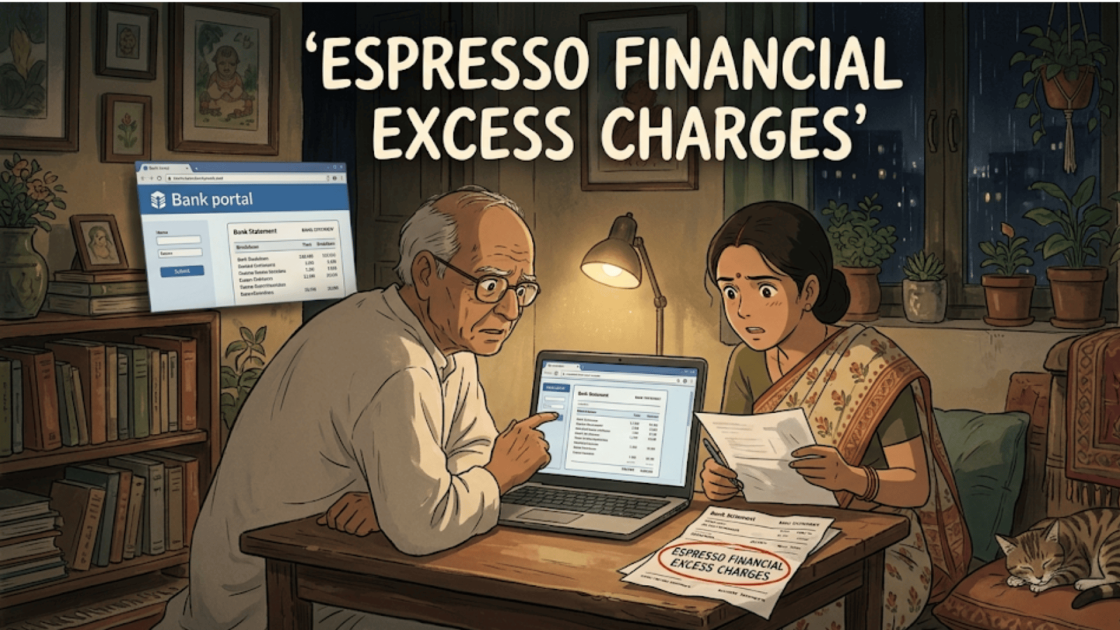
However, traders may sometimes notice deductions from their accounts that appear higher than expected.
These are often referred to as excess charges.
However, if you see a high volume of trades that you didn’t explicitly strategise for, you might be witnessing churning in sharemarket accounts.
Understanding these charges and knowing how to deal with them can help investors manage their trading accounts more effectively.
Espresso Financial Excess Charges Overview
Espresso is a trading platform that enables investors to buy and sell stocks via a mobile app or web portal.
It is known for offering a simplified brokerage structure and quick access to the stock market.
Although the platform offers low-cost trading, fees still apply to every transaction.
These can include brokerage fees, exchange transaction charges, government taxes, and other service-related costs.
Sometimes investors may feel that the total deductions from their account exceed their expectations.
This can occur when traders are not fully aware of the full fee structure or when multiple trades are placed within a short period.
As a result, investors need to review their trading statements and contract notes regularly.
Espresso Financial Excess Charges Complaints
The data reflects complaint records from the reporting platform and may not represent the company’s total customer base.
Summary table: Year, No. of active clients, No. of complaints, Complaints against excess charges
| Year | No. of Active Clients | No. of Complaints | Complaints against Excess Charges |
| 2021-22 |
|
|
|
| 2022-23 | 18769 | 5 | 2 |
| 2023-24 | 18769 | 3 | 1 |
| 2024-25 | 35842 | 77 | 19 |
| 2025-26 | 2420 | 2 | 2 |
In 2021–22, the data for active clients and complaints is not available, as shown by the dashes in the table.
In 2022–23, there were 18,769 active clients and 5 complaints. Out of these, 2 complaints were related to excess charges.
In 2023–24, the number of active clients remained unchanged at 18,769, but the total complaints decreased to 3, including 1 related to excess charges.
In 2024–25, the number of active clients increased significantly to 35,842. This year, 77 complaints were recorded, 19 of which were related to excess charges.
In 2025–26, the number of active clients dropped to 2,420, and only 2 complaints were reported. Both complaints were related to excess charges.
Overall, the table shows that the number of complaints generally increased as the number of active clients rose, particularly in 2024–25.
It also shows that excess charge complaints account for a share of total complaints in most years.
When Can Excess Charges Occur?
There are various situations in which traders may notice higher charges on their accounts. One common reason is frequent trading, which increases brokerage and transaction costs.
Another reason may be a lack of clarity regarding all the charges associated with a trade.
Apart from brokerage, there are several other costs, such as taxes and exchange fees, that are added to each transaction.
In some cases, investors might notice trades in their account that they do not clearly remember placing.
If the number of transactions is unusually high or the charges appear larger than expected, it is important to check the account details carefully.
Regularly reviewing your trading activity can help you identify unexpected charges early.
How to File a Complaint Against a Stock Broker in India?
If you believe that the charges applied to your trading account are incorrect or unnecessary, you should take the proper steps to raise the issue.
1. Keep Important Documents Ready
Before filing a complaint, keep documents such as contract notes, transaction statements, trading records, and communications with the broker.
These documents can help support your case.
2. Try To Contact Espresso Customer Support
The first step is to contact Espresso’s customer support team. Ask them to explain the charges applied to your account and request a review of your trading activity.
3. Raise a Complaint with the Stock Exchange
If the broker does not resolve the issue, you can submit a complaint to the stock exchange where the broker is registered, such as NSE or BSE. The exchange will review your complaint and may investigate the matter.
4. Submit a Complaint in SCORES
Investors can also file complaints at SEBI (SEBI Complaints Redress System).
This online platform allows investors to raise issues related to brokerage services and track the progress of their complaint.
5. Apply for Arbitration
If the matter remains unresolved after filing a complaint, investors can apply for arbitration in the stock exchange.
In this process, an independent panel examines the dispute and gives a final decision.
Need Help?
Without proper knowledge, it can be challenging to determine if the deductions are reasonable or not.
In such an issue, you can reach out to our team, who can review your trading account statements and analyse the charges applied to your trades.
We help investors understand their account activity and identify any unusual deductions.
If necessary, we also guide investors through the complaint process and help them take the right steps to resolve the issue. Our team will also help in monitoring SEBI complaint status online.
Conclusion
If we talk about trading costs, they can reduce your investment returns if they are not noticed in time.
That is why investors should regularly review their trading statements and stay aware of the charges applied to their accounts.
If you notice any unusual deductions in your Espresso trading account, please review the details and raise the issue with the appropriate authority.
Staying informed and monitoring your account activity can help ensure a safer and more transparent trading experience.