Checking your trading account and seeing smaller profits than you expected is frustrating. A big reason many people miss brokerage churning in the stock market.
This is basically when a broker makes unnecessary trades or keeps nudging you to buy and sell just so they can collect more in fees.
Those small charges might not look like much on one contract note, but they act like a leak in a bucket, which slowly drains your actual returns.
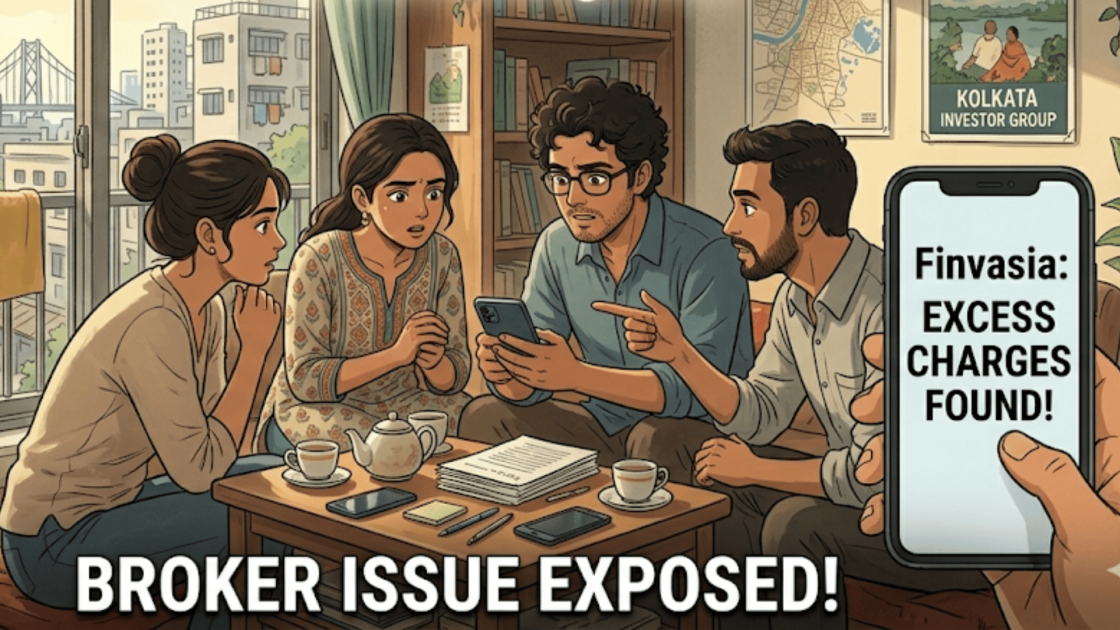
In this blog, we are looking at the complaints people have made about Finvasia’s excess charges.
We will go over how these things happen, what the data actually says, and what you can do if you think you’re being overcharged.
Finvasia Excess Charges Overview
Finvasia is a big name in the Indian market, mostly because of its Shoonya HNI trading platform.
They have built their reputation on a “zero-brokerage” model, which sounds great for anyone trying to save money.
But “zero brokerage” does not mean zero cost.
We have seen many investors report high trading activity they never planned for, or extra fees that do not seem to make sense.
This is why you have to watch out for churning.
If your account is suddenly very active because of “expert” tips from the broker, you could be losing a lot of money to taxes and transaction fees without even realising it.
Finvasia Excess Charges Complaints
The number of Finavsia complaints shows that these are not just one-off issues. Here is a breakdown of the complaints filed over the last few years:
| Year | Total Complaints | Brokerage Churning Complaints |
| 2021-22 | 47 | Around 17 |
| 2022-23 | 67 | Around 32 |
| 2023-24 | 1110 | Around 632 |
| 2024-25 | 359 | Around 239 |
| 2025-26 | 103 | Around 54 |
The complaint data shows a noticeable rise in grievances in 2023–24, when the total number of complaints increased sharply to 1,110, with around 632 related to brokerage churning.
In comparison, the earlier years, such as 2021–22 and 2022–23 recorded significantly fewer complaints.
Although the numbers declined in 2024–25 and 2025–26, the presence of multiple churning-related complaints across years indicates that concerns about excessive trading have been raised by several investors.
Impact of These Complaints on Retail Investors
For most retail investors, brokerage churning works like a hidden cost that slowly reduces their returns.
Every extra trade triggers multiple charges such as brokerage, STT, exchange fees, and GST.
While these costs may seem small individually, they can add up quickly when trades happen frequently.
As a result, even profitable trades may generate very little actual gain after all expenses are deducted.
Over time, these unnecessary costs can delay long-term financial goals and weaken overall investment growth.
When Can It Be Considered Brokerage Churning?
Spotting churning in the stock market is not always easy, especially when frequent trades are presented as professional advice.
However, certain patterns in your account activity can signal that something is not right.
If you notice unusual trading behaviour or recommendations that do not match your strategy, it may be worth investigating further.
- Unauthorised Trading: If buy or sell orders appear in your account that you never placed or approved, it is a strong warning sign. Checking timestamps and trade sizes can help confirm whether the transactions were genuinely authorised.
- Lack of Transparency in Account Handling: When a relationship manager executes trades frequently without clearly explaining the strategy behind them, it may indicate trading activity driven more by brokerage fees than by investment goals.
- Excessive Trading Recommendations: Continuous urgent advice to buy and sell, especially within short time intervals, can sometimes be used to increase trading volume rather than improve your portfolio performance.
These signs do not automatically prove that churning is taking place, but they should encourage investors to review their account activity carefully.
Monitoring your trades, questioning unclear recommendations, and keeping records of communications with brokers can help protect your investments.
If these patterns continue despite your concerns, it may be appropriate to raise the issue with the brokerage firm or escalate the matter through regulatory channels.
How to File a Complaint Against a Stock Broker in India?
If you think you have been hit with unfair charges, you need to act fast. Here is how you can handle it:
1. Gather Evidence
Do not delete anything. You need solid evidence. Save every contract note, bank statement, and even the tips you got over WhatsApp or email.
Having these records organized is the first step toward getting your money back. If you have recorded calls with your relationship manager, keep those safe, too.
2. Raise a Complaint With the Broker
Start by talking to Finvasia directly through their official support portal or email. Be very specific about which trades you are questioning and why.
Having a formal record of this initial complaint is vital because it proves you tried to resolve the issue directly before escalating it.
If the broker does not fix the problem or gives you an answer that does not make sense, go to SEBI’s SCORES portal. This is the official government platform for investor grievances.
When you file a complaint here, SEBI tracks the complaint, and the broker is required by law to respond to it within a specific timeframe.
You can also take your case to the NSE or BSE. Both exchanges have cells that handle disputes between brokers and clients.
They can act as a mediator to help settle the issue, and having an exchange look into your trade data can often put a lot of pressure on the broker to do the right thing.
Need Help?
Navigating these rules can be pretty frustrating, but you do not have to do it alone.
Here is exactly how we help you:
- Review Your Trades: We will go through your statements to find every unauthorised or unnecessary trade.
- Organize Your Evidence: We will help you save all your messages and notes into a clear folder that regulators can easily understand.
- Draft Your Letters: We will help you write formal, professional complaints so your points are clear and hard to ignore.
- Tracking complaint status: We will also help you in monitoring online SEBI complaint status for follow-up.
So, if you are also wondering how to approach the complaint process and do not know where to start, contact us now.
Conclusion
At the end of the day, brokerage churning is just a way for your money to disappear into someone else’s pocket.
The data from Finvasia shows that hundreds of investors have dealt with this, so you are not alone if you are feeling suspicious.
In some situations, investors have also raised concerns about Finvasia Unauthorised Trading, where trades allegedly appear in the account without the investor’s clear consent or prior approval.
While such cases may not represent the experience of every user, complaints shared on various forums suggest that some investors noticed transactions executed after receiving aggressive trading recommendations or portfolio advice.
The best defence is to stay informed and check your statements every single week.
Do not stay quiet if you see a charge you do not recognise. Asking questions and holding your broker accountable is the only way to make sure your money is actually working for you.
Keeping a close watch on your Ledger and STT charges is just as important as watching your stock prices.
So, regular check-ins on your account can save you from a lot of unexpected costs down the road and keep your financial plan on track.