For most people, investing is built on trust. You open a trading account believing that no trade will happen unless you place it or clearly approve it.
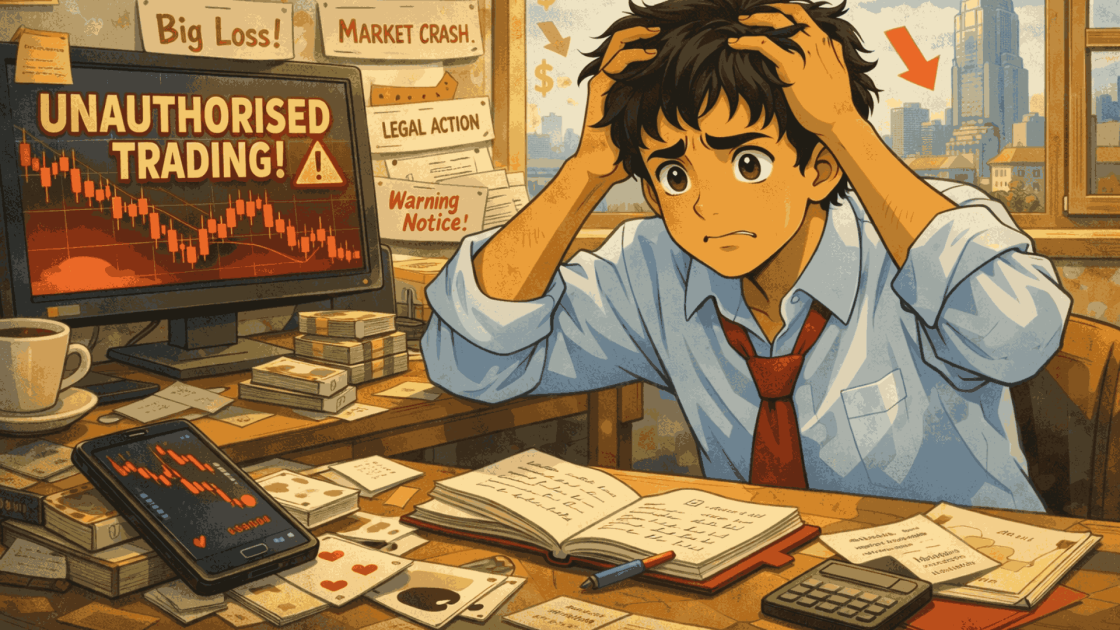
So, when you notice transactions you do not remember making, the feeling is not just confusion; it is anxiety.
Over the years, concerns around HDFC Securities’ unauthorised trading have surfaced through investor complaints.
This does not mean every client faces this issue or that it happens routinely.
But when unauthorised trades do occur, the impact on retail investors can be serious enough to deserve attention and discussion.
This blog is meant to walk you through how unauthorised trading situations affect everyday investors, and most importantly, what you can realistically do if you ever face something similar.
HDFC Securities Overview
HDFC Securities is a well-known name in India’s brokerage space and operates as a subsidiary of HDFC Bank.
Many investors choose it because of the comfort and trust that comes with a bank-backed institution and the perception of stronger systems and controls.
The platform offers access to equity trading, derivatives, mutual funds, IPOs, ETFs, bonds, and other investment products.
Clients can place trades using its web-based trading terminal as well as mobile applications, which makes it suitable for both long-term investors and active traders.
For a large number of users, HDFC Securities is not just a trading account but part of their broader banking relationship.
That is exactly why issues like unauthorised trading tend to feel more unsettling here. Investors expect an extra layer of safety when a bank-linked brand is involved.
How Unauthorised Trading Happens?
Unauthorised trading usually does not feel obvious at first. Most investors realise something is wrong only after checking their trade statements or seeing unexpected losses.
Here are the most common ways it happens:
1. Trades Placed Without Clear Consent
Sometimes trades are executed even though the investor never gave explicit approval.
A casual discussion or market suggestion is later treated as consent, which can lead to confusion and disputes.
2. Account Access Shared Informally
Sharing login credentials for convenience or support can backfire.
Once someone else has access, trades can be placed without proper authorisation, which makes accountability difficult.
3. Verbal Instructions Turning Into Executed Trades
In some cases, investors discuss market views or strategies verbally, but no trade is confirmed. Later, positions appear in the account based on what is claimed to be verbal approval.
4. Delayed Detection Through Statements
Many investors do not monitor contract notes daily. By the time they notice unauthorised trades in their statements, multiple transactions may already be completed.
HDFC Securities Unauthorised Trading Complaints
Complaint data gives us a clearer picture of how often unauthorised trading appears as an issue among all reported grievances.
You can refer to the data below:
|
Year |
No. of complaints | No. of complaints for unauthorised trading | Percentage of unauthorised trading complaints |
|
2025–26 |
355 |
58 |
16.34% |
|
2024–25 |
814 |
61 |
7.49% |
|
2023–24 |
283 |
18 |
6.36% |
|
2022–23 |
251 |
12 |
4.78% |
| 2021–22 | 182 | 11 |
6.04% |
These numbers show that unauthorised trading is not the most common complaint category, but it appears consistently across years. That consistency is what matters.
For investors affected even once, the experience can feel overwhelming, regardless of how small the percentage looks on paper.
Impact on Traders
For retail traders, unauthorised trading often leads to sudden losses they never planned for.
Positions may be created without consent, margins can be blocked unexpectedly, and in some cases, losses pile up before the investor even realises what is happening.
Beyond money, there is a deeper impact. Investors lose confidence in their own accounts.
Many become hesitant to trade again, constantly checking their apps out of fear rather than strategy. That emotional stress is rarely talked about, but it is very real, especially for first-time or conservative investors.
When Can Action Be Taken Against a Broker?
Many investors assume that once a broker is SEBI-registered, whatever happens in the trading account is automatically “by the book.” That is not true.
Registration comes with responsibilities, and when those are ignored, action can absolutely be taken.
SEBI has laid down very clear rules on this, mainly to deal with the growing number of unauthorised trading complaints across brokers.
1. When There Is No Clear Proof You Approved the Trade
This is the most common issue. If a broker cannot show proof that you actually placed or approved a trade, the responsibility falls on them.
As per Securities and Exchange Board of India guidelines, brokers must keep proper records before executing any order.
That proof could be a recorded phone call, an email from your registered ID, an online order log, or even a message from your registered mobile number. If none of this exists, the trade can be questioned.
2. When Trades Go Beyond What You Were Told
Sometimes investors are permitted to trade, but the broker takes it much further than discussed.
Larger quantities, extra lots, or frequent trades that were never explained properly can still fall under unauthorised trading. Consent does not mean “do whatever you want”; it has limits.
3. When the Broker Can’t Produce Records During a Complaint
Once a dispute is raised, the burden is on the broker, not the investor.
If the broker fails to produce call recordings, order details, or system logs for the disputed trades, that is a serious red flag. In such cases, regulators do not give the broker the benefit of the doubt.
4. When Dealer Access Is Misused or Blamed on “Technical Issues”
Another common excuse investors hear is “technical error” or “system issue.” SEBI has made it clear that such explanations do not automatically justify unauthorised trades.
Dealer access must be used carefully and within strict boundaries. Any misuse can invite regulatory action.
Why This Is Important for Retail Investors?
Here is something many people do not realise: It does not matter whether the trade made money or lost money.
If you did not properly understand or approve it, the trade can still be considered unauthorised.
These rules exist to protect retail traders from being pushed into risks they never agreed to take.
How to Report Against Stock Broker?
If you suspect unauthorised trading in your account, acting promptly and methodically can help protect your interests and strengthen your case.
Here are the steps to file a complaint against unauthorised trading:
1. Collect and Preserve Evidence
Do not delete messages or alerts. Save emails, SMS notifications, app screenshots, and bank transaction records.
Even if something feels insignificant now, it could become crucial later if the issue escalates.
2. Raise a Written Complaint With the Broker
Always put your complaint in writing. Explain the issue clearly, mention specific trades, and ask for a written explanation. This creates a formal record and ensures accountability.
3. File a Complaint on SEBI SCORES
If the broker’s response feels vague, delayed, or dismissive, you can escalate the complaint through SEBI SCORES.
You can also check SEBI complaint status online easily.
4. Approach the Stock Exchange Grievance Cell
If the issue still isn’t resolved, you can escalate the matter to the grievance redressal mechanism of the exchange where the trades were executed (NSE or BSE).
5. File Arbitration in stock market
If all else fails, arbitration is the final route available to investors. This is a formal process conducted under stock exchange rules.
Need Help?
Many investors struggle not because their complaint is weak, but because they do not know how to present it properly.
We help investors understand their situation, organise documents, draft clear complaints, and navigate escalation or arbitration processes when required.
Having guidance often reduces stress and improves outcomes. So, reach out to us now.
Conclusion
Unauthorised trading may not affect every HDFC Securities client, but when it does happen, it can shake an investor’s confidence deeply.
The most important lesson here is awareness. If you regularly check statements and know your rights well, it can make a real difference.
Investing should feel empowering, and you should not feel anxious while trading or investing.
And when something does not feel right, trusting your instinct and taking action is always the right first step.