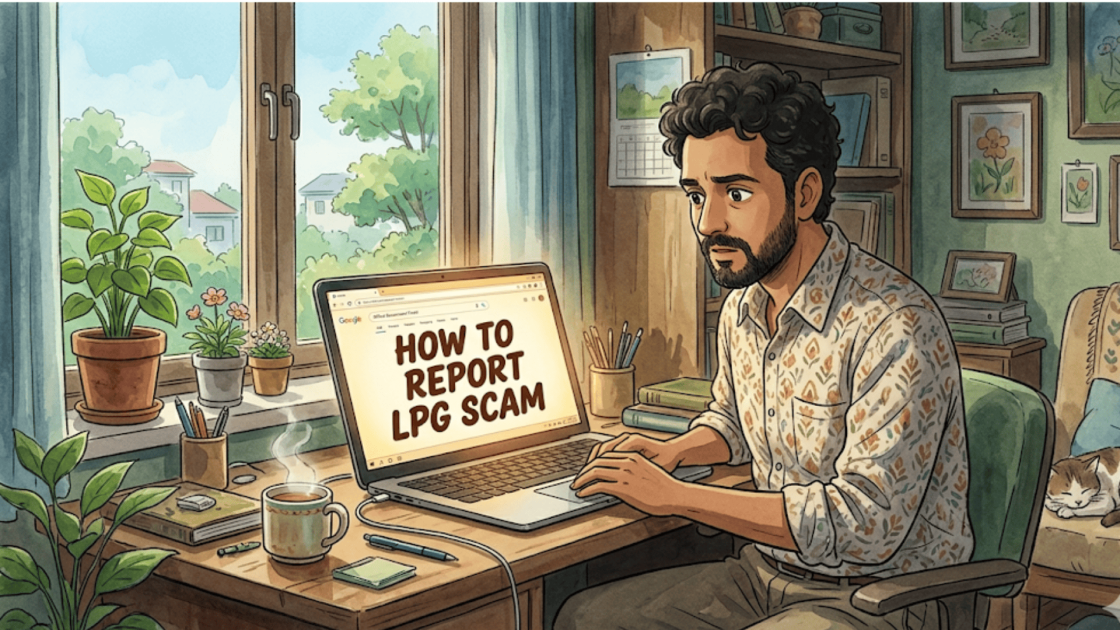
Something as basic as booking a gas cylinder should not feel like a risk. But today, even this household chore has become a target for clever scammers.
The LPG scam is exploding across India because it targets a service we all actually use and trust.
When you get a message about your gas connection, a refill booking, or a mandatory KYC update, it feels regular.
You do not expect it to be a trap. That is exactly why these scams work so well.
They do not start with something strange; they start with a familiar notice that demands your immediate attention.
If you are not careful, a simple click made in a hurry can lead to a lot of regret.
What Is An LPG Scam?
Think of an LPG scam as a form of digital impersonation, where criminals pose as officials from gas providers like Indane, HP Gas, or Bharat Gas.
Their real objective is not to assist you with gas services, but to gain access to your financial information.
These scammers usually contact victims through SMS, WhatsApp, or professional-sounding phone calls.
They create urgency by claiming your gas connection will be blocked immediately if you do not act.
A real-life case from Dombivli highlights how quickly this can escalate.
 A woman lost nearly ₹3 lakh after responding to a fake message about her gas bill. Believing it was genuine, she shared her card details on a fraudulent link.
How Does an LPG Scam Operate?
Scammers follow a structured approach designed to manipulate your decisions under pressure.
Each step is carefully planned to gain your trust and extract sensitive information.
- They send urgent messages about KYC issues or connection disconnection
- They may call posing as customer care executives to appear legitimate
- They share fake links or apps that mimic official LPG platforms
- They request small payments to gain access to your card details
Once you engage, they guide you step by step toward sharing critical financial information.
By the time you realise something is wrong, the money is often already gone.
These scams work because they exploit urgency, trust, and everyday dependency on essential services.
How To Report An LPG Scam?
If you realise you have been targeted or have already lost money, you must act immediately. Speed is the most important factor in recovering your funds.
Step 1: Lock Down Your Money First
Before you even start a report, you have to cut off the scammer’s access. If you shared an OTP, clicked a link, or gave out card details, your accounts are at risk.
Immediately update your net banking passwords and your UPI PIN. You should also dial your bank’s emergency number right now to block your cards.
If you were talked into downloading an app, uninstall it immediately. Plus, stay off your banking apps on that phone until you are sure it is safe.
Step 2: Save Every Evidence
Do not delete anything out of anger or embarrassment. The messages on your phone are the proof you need. Screenshots are important here.
Capture the WhatsApp chats, the SMS alerts, the fake website links, and the transaction receipts.
It also helps to jot down a quick timeline of what happened, what time they called, what they said, and exactly when the money left.
Having this clear in your head makes it much easier to talk to the police later.
Step 3: Dial Helpline As Soon As Possible
This is the most critical step. The national cybercrime helpline is designed for speed. You need to call within the first two hours after the fraud.
Reporting early gives the authorities a chance of freezing the money before the scammer can withdraw it.
When you call, make sure you have your bank name, account number, and the exact transaction amount ready.
Step 4: Report Cybercrime Complaint
Once the emergency call is over, go to the cybercrime portal to create an official paper trail.
While filing, try to be as specific as possible. Explain everything in detail.
Do not forget to upload those screenshots you saved earlier. A well-organised complaint is much more likely to be taken seriously.
Step 5: Visit Your Bank Branch
Even after calling the cybercrime helpline, you should talk to your bank in person.
Go to your local branch and formally report the transaction as a fraud. Ask them to track where the money went.
Sometimes, they can see exactly which wallet or account the scammer used. This helps the police tremendously in their investigation.
Step 6: Alert Your Gas Agency
The scammers are using the reputation of companies like HP or Bharat Gas to scam people.
It is important to tell your actual gas distributor what happened.
By sharing the scammer’s number or the fake link with your distributor, you help them put out a general alert.
This simple step could stop your neighbour or a friend from falling for the same trick tomorrow.
Step 7: File an FIR at the Police Station
For any significant loss, you need a physical First Information Report (FIR).
Take your bank statements, the screenshots, and a copy of your online complaint to the nearest police station.
FIR is a powerful document that you will need for legal follow-ups, insurance claims, or bank reversals.
Step 8: Do Not Just Report, Follow Up
The system can be slow, so you have to be persistent. Check the status of your complaint on the cybercrime portal every few days.
If the bank or the police ask for more information, give it to them quickly.
Staying on top of it shows that you are serious about the case. This also ensures your case does not get pushed to the bottom of the pile.
Need Help?
If you have been hit by an LPG scam, it is normal to feel frustrated or confused.
These scammers are pros at making things look real, and many people fall for their tricks.
We are here to help you look at your situation clearly.
Many people fail to get help simply because their reports are incomplete. With the right guidance, you can ensure your case is handled effectively.
You do not have to handle this on your own.
You can check the details in our cyber fraud response plan for further process.
Conclusion
LPG scams work because they target a basic need we all have. T
hey do not look like crimes at first; instead, they often mimic routine updates like KYC verification, subsidy arrears, or “limited stock” alerts.
Understanding the risks of cybercrime is crucial because these scams are no longer just about losing a few hundred rupees for a fake booking.
By slowing down, avoiding unknown links, and keeping your personal information to yourself, you can protect your savings from these increasingly technical threats.