

Quick Summary
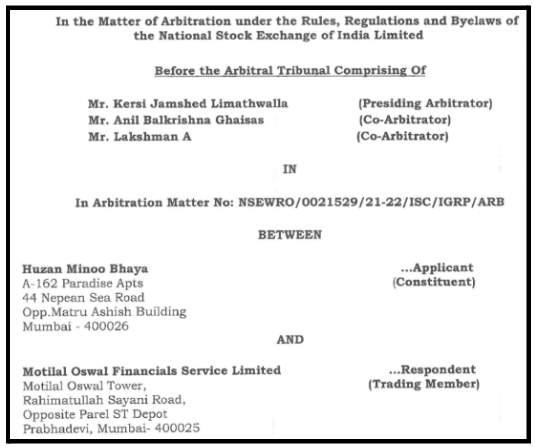
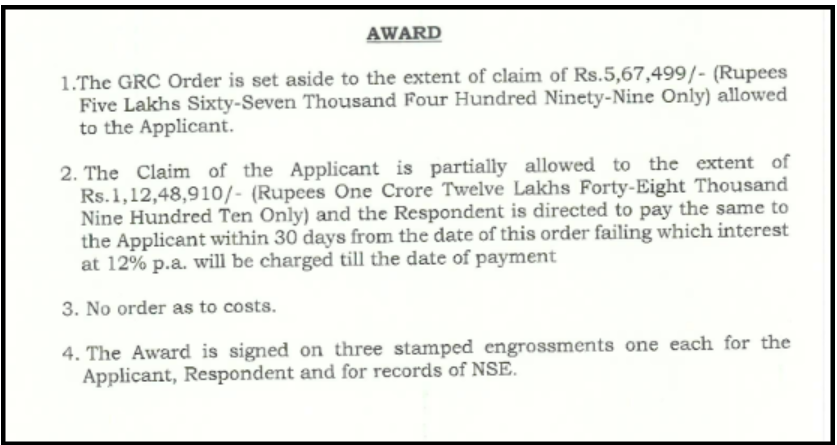
An NSE tribunal directed Motilal Oswal to pay an elderly investor ₹1,12,48,910 plus 12% interest after an authorised person ran what the tribunal called a back-door portfolio scheme in her account, trading F&O with no pre-trade confirmation. She was a conservative investor who wanted mutual funds and bonds. She ended up in one of the market’s riskiest segments without ever authorising a single trade. She won because the broker could not produce evidence that she had placed the trades. This page shows how that works, and what it means for your own case.
Unauthorised trading is simple to describe and brutal to live through. Trades appear in your account that you never placed and never approved.
It’s one of the most common complaints against brokers, and one of the hardest to prove, because the broker holds every record. That’s the trap. How do you prove you didn’t place an order when the other side controls all the paperwork?
You can. And the ceiling on what that proof is worth is far higher than most people imagine. An NSE tribunal ordered Motilal Oswal to pay ₹1.12 crore in exactly this kind of case. Here’s how it happened.
The Case That Set the Ceiling
The client was an elderly woman who had inherited a share portfolio and her own savings. Her instinct, and her mother’s, was caution: mutual funds, government bonds, nothing exotic.
She approached the broker’s authorised person to manage that safely. Instead, the authorised person suggested trading Futures and Options with a one-crore margin to generate about a lakh a month, and assured her it would be personally and safely managed. She was hesitant, said plainly she knew nothing about F&O, and was reassured.
What followed, the tribunal found, was a back-door portfolio management scheme. Every trade was placed by the authorised person. There was no pre-trade confirmation from the client for any of it, in direct breach of SEBI’s circular dated 22 March 2018.
When the pandemic hit the market in March 2020, and the losses exploded, the authorised person avoided her for three weeks, kept rolling positions over against her stated wish to close out, and repeatedly told her not to worry and not to sell.
Why Motilal Oswal Lost the Case
The tribunal’s reasoning in the Motilal Oswal arbitration is worth knowing by heart if this happened to you.
SEBI’s 2018 circular requires a broker to get the client’s confirmation before executing a trade, and it puts the burden on the broker to produce the record of that confirmation when a dispute arises. Not on you to disprove the trade. On them to prove it.
The broker couldn’t. Worse, it had told the exchange that pre-trade confirmation existed, then admitted it didn’t, then claimed the client’s daughter would visit the office to place orders. The tribunal called the conduct unacceptable and found the broker had failed the basic standard of integrity and due care expected of a stockbroker.
There was a second finding that matters for anyone who was sold F&O as a “safe” income plan. The tribunal noted that suggesting a sophisticated, high-risk segment to a conservative investor of modest means, and dressing a portfolio scheme up as an informal arrangement outside the regulated PMS framework, raised serious questions on its own.
The award of ₹1,12,48,910 was the F&O loss over the disputed period, after adjusting for the loss the client had already accepted before the broker’s mishandling took over.
The Same Principle, at Every Size
That crore-scale award is the ceiling, but the same principle won case after case at smaller amounts, and those are the ones most readers will recognise.
One investor never opted for F&O in his KYC at all, yet 176 derivative trades were run through his account on “just say OK” instructions.
The tribunal held there was no way those could be authorised and awarded ₹30,000, the limit of what he’d deposited.
Another had ₹2,00,000 returned in full because the broker, on being asked, could not produce a single pre-trade authorisation for his offline trades.
The wins keep the same shape as the amount climbs. A client recovered ₹2,14,572 where the broker admitted it had not furnished the call records.
Another recovered ₹3,72,814 where the dealer traded past an agreed halt, and the broker couldn’t prove she’d placed the orders.
In a case built on an authorised person’s trades, the tribunal applied the principal-agent rule and made the broker liable for ₹1,13,642, because the agent’s WhatsApp chats were no substitute for actual order recordings.
Every one of them turned on the same weak spot. You win unauthorised trading claims when the broker cannot back its own records. Missing order logs. Absent call recordings.
The moment the paper trail cracks, the trades become unauthorised, opening a clear door for a Motilal Oswal unauthorised trading recovery.
Motilal Oswal Unauthorised Trading: What to Do If It Happened to You?
If trades appeared in your account that you never placed, understand this first: the case lives or dies on records, and records have a shelf life. Move.
Pull these together now:
- Your full trade ledger and contract notes for the disputed period, downloaded from the broker
- Your own record of what you actually placed, if anything
- Every SMS and email the broker sent about the trades, with dates intact
- Any call recording, or your written request asking the broker to produce one
- Any WhatsApp chat with a dealer or authorised person about the trades
- The date you first noticed, and the date you first objected
The single step that matters most: demand the order logs and call recordings in writing, and do it early. In case after winning case, the broker’s failure to produce these is what decided it. But a tribunal only notices a missing record if someone asked for it. If you never ask, the gap never shows.
Watch for the authorised-person defence. In several wins, the broker tried to distance itself from an authorised person’s conduct. The principal-agent rule closes that door: the broker stays liable for what its agent did in your account.
If a broker’s employee moved shares or trades without any authority at all, that crosses from a market dispute into something closer to fraud.
Our account of the Motilal Oswal insider scam shows how far that can go, and why the paper trail is what protects you.
Did trades appear in your Motilal Oswal account that you never placed?
We pull your ledger against the order logs, pin down exactly which trades the broker can’t prove you authorised, and build the claim around the records tribunals actually act on. Register with us to get our assistance.
An Honest View of the Odds
Let’s not oversell it. Unauthorised trading claims are winnable, and the data proves it at every level from ₹30,000 to ₹1.12 crore, but they’re not automatic.
Where trades were placed through your own online login, tribunals will generally hold you responsible, and that’s hard to shift. Where they were placed offline by the broker or its authorised person and the broker can’t produce your authorisation, the burden flips onto them, and that’s where clients win.
Your case likely has both kinds tangled together. The real work is separating them and building the offline claim on the records the broker cannot supply. Done right, that’s what turned a rejected complaint into a crore-scale award.
Conclusion
The ₹1.12 crore award set the ceiling, but the rule underneath it is the same one that won ₹30,000 and ₹2 lakh: when the broker executes trades and can’t prove you authorised them, SEBI’s 2018 circular puts the loss on the broker.
The elderly investor’s case adds a second warning. F&O sold as a safe monthly income, and a portfolio scheme run outside the regulated framework, is exactly the arrangement tribunals look at hardest.
Recovery for unauthorised trading is real. It comes down to whether the broker can back its records, and whether your claim is built to expose the hole when it can’t.
Report. Recover. Stay Fraud Free.
Frequently Asked Questions
Any trade executed in your account without your instruction or consent. Under SEBI's 2018 circular, brokers must obtain confirmation before executing a trade, and the burden sits with the broker to prove you authorised a disputed trade, not with you to disprove it.
Usually not. Tribunals generally hold clients responsible for trades placed online through their own credentials. Claims succeed where trades were executed offline by the broker or its authorised person and the broker cannot produce proof that you authorised them.
In the reviewed awards, amounts ranged from ₹30,000 to ₹1,12,48,910, with several in the one-to-four lakh range. The largest involved a back-door portfolio scheme run in an elderly investor's account. Every amount depends on the loss proven.
Yes. In the reviewed wins, tribunals applied the principal-agent rule to hold the broker liable for trades its authorised person executed without the client's authorisation. The broker cannot distance itself from its own agent's conduct.



 Add us as a preferred source on Google »

