
Quick Summary
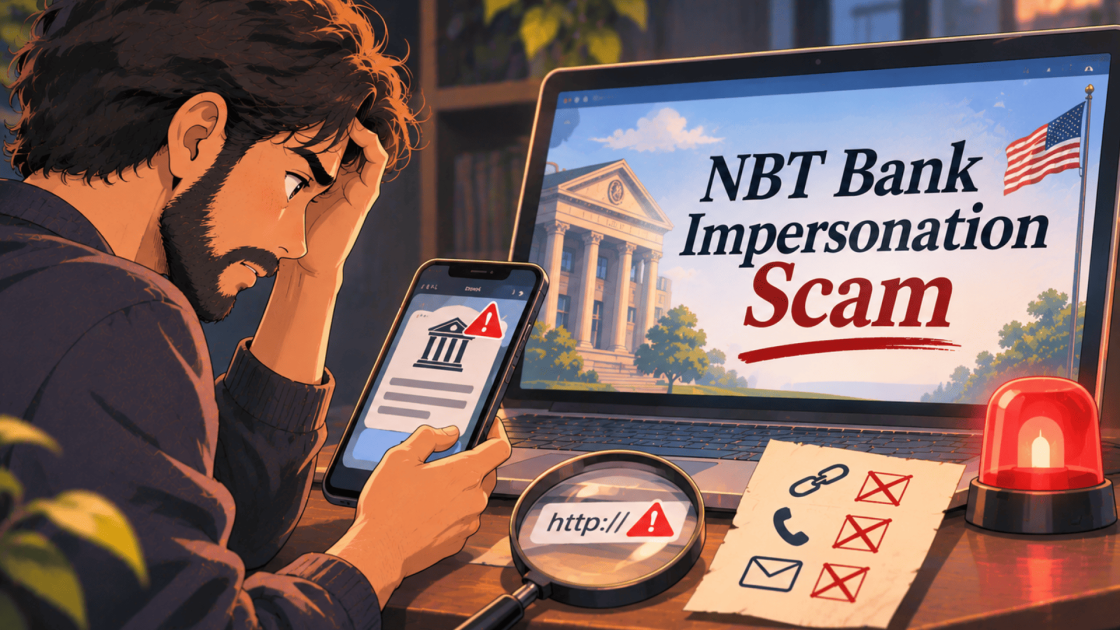
The NBT Bank impersonation scam uses fake texts and calls that look like bank warnings. Fraudsters claim a card is blocked, a contact number changed or an ACH payment needs checking, then push a link or ask for a one time passcode. NBT Bank is a US bank, but people who never banked with it report these messages too, so readers in India should know the pattern. This post shows the common versions and what to do next.
Your phone buzzes with a bank alert you were not expecting.
Your registered contact has changed, it says, and a link will fix it.
You may not even bank there, and that is how the NBT Bank impersonation scam catches people off guard.
NBT is a US bank, so this post also explains what to do when such a message lands on a phone in India.
What Is NBT Bank?
Before the scam, the bank. This section explains who NBT Bank is and where it operates.
NBT Bank, short for National Bank and Trust, is an American community bank headquartered in Norwich, New York.
It was established in 1856 and is a subsidiary of NBT Bancorp Inc.
The bank offers personal banking, business banking, commercial lending, and wealth management.
It runs more than 170 branches across New York, Pennsylvania, Vermont, Massachusetts, New Hampshire, Maine, and Connecticut.
All of those places are in the United States, so many readers in India have never used this bank.
Is NBT Bank Real or Fake?
The bank is real, and the messages are the fake part. This section keeps the two apart.
NBT Bank is a real bank that has operated since 1856.
The bank itself has issued fraud alerts about fake calls, phishing messages, spoofed phone numbers, and fraudulent banking websites.
It also keeps a Personal Fraud Information Center to help customers spot and report fraud.
What Is an NBT Bank Impersonation Scam?
This section gives the idea in simple words. It also shows how the fake message reaches you.
In an NBT Bank impersonation scam, fraudsters pose as bank employees, fraud investigators or customer support staff.
They reach victims through phone calls, text messages and fake social media profiles.
They may say a debit card has been blocked or that your registered contact details were changed, and then ask you to verify your identity, share an OTP or click a link.
Bank versions of the impersonation scam lean on fear, because few people ignore a message about their money.
NBT Bank Impersonation Scam Messages: Three Versions Customers Report
The script changes, but the goal stays the same. This section covers the three versions reported most often.
1. The “Registered Contact Changed” Text
A Reddit user posted a text that claimed the recipient’s registered contact had been changed to a new number.
It said, “If this wasn’t you, secure your account” at a link, which creates instant panic about an unauthorised change.
The link could lead to a fake banking website designed to steal login details or personal information.
The text came from an unsaved number, and knowing how to check if a phone number is scam takes only a minute.
2. The “Temporary Issue With Your Online Access” Text
A Facebook post from May 2025 showed a text with the bank’s logo.
It said there was “a temporary issue with your NBT online access” and asked the reader to follow a short link to restore it.
The poster said they had no account with the bank at all. Another user got the same message despite never using NBT.
A customer confirmed it was a scam, and other commenters thanked the poster for the warning.
3. The Fake Fraud Department Call
The bank has warned about callers pretending to be its Fraud Department.
In an example from its own warning, the caller says a one time pin was sent to you and asks you to share it to confirm your identity.
Scammers may even spoof a real looking phone number so the call appears genuine.
In August 2025 the bank said it was still receiving reports of such calls and texts, and advised verifying by calling a number you already know and trust.
NBT Bank Impersonation Scam Targeting Business Customers
Businesses face a sharper version. This section covers the ACH impostor call the bank has warned about.
Fraudsters pose as bank employees and claim there is a problem with an ACH transaction.
They ask for the customer’s cell phone number and then send a link to a fake login page that looks like the bank’s own.
Once login details are entered, unauthorised ACH transactions may follow, and the caller may also ask for the one time passcode.
The criminals may already know the company name or tax identification number, which makes the call sound convincing.
The bank’s advice to businesses is simple.
- Open online banking only by typing the official website or using the mobile app.
- Remember that the bank never asks for your cell number or texts you a link.
- Never share OTPs or passwords, and never allow remote access to your computer.
- Turn on dual approval for ACH and wire transfers, and check transactions daily.
Phishing, Vishing and Smishing: Red Flags in a Bank Message
The bank groups these tricks by the channel they use. This section lists the three red flags it highlights.
Phishing arrives by email, vishing comes as a voice call and smishing is a text message.
Whatever the channel, look for these signs.
- A familiar name.The message copies an organisation you know, such as a Fraud Department.
- A link or attachment.It urges you to click, download or update your details.
- Urgency and fear.It threatens account deactivation or claims suspicious activity.
Two of these three signs in one message are reason enough to stop and verify.
NBT Bank Impersonation Scam in India: What to Do After a Message or a Loss
NBT is a US bank, so its own fraud lines are meant for US customers. This section gives the steps for someone who receives these messages or loses money in India.
When a message like this lands, it pays to already know what to do if online fraud happens, because the first hour matters most.
- Do not click or reply.Do not call any number that appears in the message either.
- Check the sender.If you really bank with NBT, use only the contact details on the bank’s official website. If you have no account there, the message is fake for you.
- Secure your own accounts.If you typed a password or an OTP anywhere, change your passwords from a safe device and remove any remote access tool.
- Call your bank.If money left an Indian account, tell your bank at once and call the national helpline.
- File online.Use the national portal and submit your evidence to file a cyber crime complaint in India.
- Save the evidence.Keep screenshots of the text, the number it came from and any link, without opening it again.
If you sent money abroad, tell your own bank right away so that it can try to act on the transfer.
Shared your details or sent money after a message like this?
Our team reviews cyber fraud cases of ₹30,000 and above, and a clear record of payments helps a lot. If your loss is in that range, register with us and we will go through your case with you.
Disclaimer: NBT Bank is a real US bank and is not accused of anything here. The fraudsters who copy its name are the subject, and the bank itself has warned customers about these messages.
Conclusion
The bank is real and the messages are fake.
A text about a changed contact, a blocked card or an ACH problem is built to rush you into a click.
Pause, verify through an official channel and never share an OTP.
That one habit stops the NBT Bank impersonation scam before it starts.
Report. Recover. Stay Fraud Free.
Frequently Asked Questions
No. It is a US community bank headquartered in Norwich, New York, with branches in US states.
Scammers send the same message to many numbers hoping a few people react. People with no account report these texts too.
No. The bank itself warns customers never to share credentials, PINs or OTPs with anyone.
Do not enter anything and change your passwords from a safe device. Call your bank if you shared any login details.
Call helpline if money is lost and file on the national cyber crime portal with screenshots of the message.



 Add us as a preferred source on Google »