Digital investment platforms have transformed how individuals participate in the stock market in India.
Services like Paytm Money Ltd. allow investors to trade stocks, invest in mutual funds, and explore market opportunities through a convenient online interface.
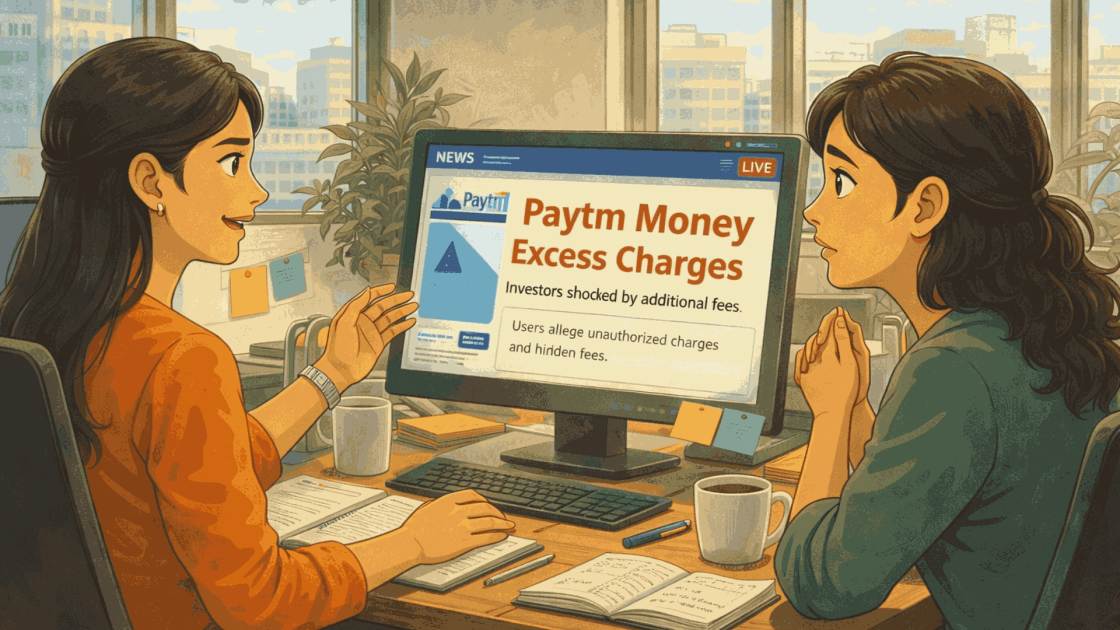
While such platforms emphasize affordability and transparency, some users have reported concerns related to excess charges and brokerage practices.
This article examines complaint data related to Paytm Money and what investors should know to protect their interests.
Paytm Money Excess Charges Overview
Paytm Money Ltd. provides a digital-first investment platform designed for people who prefer managing their finances online.
Investors can trade stocks, invest in mutual funds, apply for IPOs, and explore other market opportunities through an intuitive interface.
Paytm might be a household name in India, but that does not stop issues from arising on the platform. Here’s what the users have experienced over the last couple of years:
Paytm Money Excess Charges Complaints
Churning in Stock Exchange occurs when a broker carries out frequent trades in an investor’s account without a genuine investment strategy. The main intention is often to increase transaction-based commissions.
This activity can lead to unnecessary costs for the investor and may harm the long-term performance of their portfolio.
In the case of Paytm Money, there have been some cases of the same in the past. Let us analyse them a bit more closely.
Exchange Complaint Data
The NSE data presents the following regarding Paytm Money Ltd:
|
Financial year |
Total clients | No. of complaints | % of complaints w.r.t. clients | Resolved complaints | % resolved w.r.t. Total complaints |
Arbitrations |
|
2022-23 |
802146 | 238 | 0.029 | 217 | 91.17 | 0 |
| 2023-24 | 802146 | 188 | 0.023 | 176 | 95.21 |
0 |
|
2024-25 |
664294 | 354 | 0.05 | 354 | 100 | 0 |
| 2025-26 | 860278 | 196 | 0.022 | 172 | 87.75 |
0 |
In the first table, the number of complaints stays quite small compared to the total number of clients, but the pattern across the years is a bit uneven.
Complaints jump noticeably in 2024–25 even though the number of clients actually drops, which may hint at service or process issues during that year.
|
Financial year |
No. of complaints | Excess Charges complaints |
% of excess charges complaints w.r.t. complaints |
|
2022-23 |
238 | Around 42 | 17.64% |
|
2023-24 |
188 | Around 116 | 61.70% |
| 2024-25 | 354 | Around 201 |
56.77% |
| 2025-26 | 196 | Around 121 |
61.73% |
In this table, complaints about excess charges form a surprisingly large share of the total complaints in some years.
In 2023–24, 2024–25, and 2025–26, more than half of all complaints are about excess charges, which suggests customers may feel they are being overcharged.
The earlier high levels might point to billing practices or communication problems that deserve closer attention.
When to Take Action Against A Broker?
When irregular trading activity or unexpected charges appear in your account, it is important to pay close attention and respond quickly.
Ignoring early warning signs can allow the problem to continue and potentially increase your financial losses.
Acting early helps protect your investments and strengthens your position if a dispute needs to be raised.
Certain warning signs should immediately catch your attention.
Unusual activity, such as trades executed without your knowledge or frequent buy–sell orders that do not match your investment strategy, may indicate improper brokerage practices.
- Repeated pressure from a broker to enter trades without clear reasoning or a defined investment strategy.
- Failure to provide proper transaction records, contract notes, or order confirmations when requested.
These situations can suggest excessive trading, unauthorized trading, poor transparency, or even unauthorized account handling. When these issues appear consistently, investors should start reviewing their statements and keeping records of all communications with the broker.
Regulators such as the Securities and Exchange Board of India require brokers to follow strict compliance and documentation rules.
If those obligations are not met, investors have the right to file a formal complaint and seek resolution through the proper regulatory channels.
How to Report a Complaint Against a Stock Broker in India?
When facing suspicious brokerage practices, following the proper reporting procedure can help protect your rights as an investor.
1. Organise your Documents
Start by gathering every piece of information related to the disputed transactions. This may include contract notes, account statements, call recordings, emails, chat messages, and any written communication with the broker.
Keeping these records organised is important because they serve as proof that the incident occurred and help authorities clearly understand the situation.
2. Raise the Issue with the Brokerage Firm
Before escalating the matter, contact the broker’s official grievance or customer support department. Explain your concern clearly and share the supporting documents.
Most brokerage firms have an internal dispute resolution process, and in many cases, the issue may be corrected or clarified at this stage without needing further escalation.
3. Lodge a Complaint in SCORES
If the broker does not respond properly or fails to resolve your issue, you can submit a complaint on SEBI’s SCORES (SEBI Complaints Redress System) platform.
Once the complaint is registered, SEBI notifies the broker and requires them to respond within a specified time.
This step brings the regulator into the process and ensures your grievance receives formal attention.
4. File a Complaint in SMART ODR
If the response you receive is still unsatisfactory, the next step is to seek arbitration in Share Market through SEBI’s Online Dispute Resolution (ODR) platform.
In this stage, an independent arbitrator reviews the complaint, the evidence submitted by both sides, and the relevant regulations.
The arbitrator then provides a decision based on the facts of the case.
Need Help?
Taking on the process of reporting can seem daunting, particularly when legal procedures and documentation are involved. Fortunately, professional assistance can make the process much easier.
Our team can help assess your trading records, file a complaint in SEBI, identify potential issues, and compile the necessary documentation. We also assist in drafting complaints and guiding you through the regulatory process.
Register your complaint with us today and let us help you move forward with confidence.
Conclusion
In conclusion, while the overall number of complaints against Paytm Money Ltd. remains relatively small compared to its large client base, the trends in the data still raise some concerns.
A sudden spike in complaints and a high share of excess charge issues in certain years suggest that some investors may have experienced problems with trading practices or billing transparency.
Users should therefore stay alert, regularly review their account activity, and report any suspicious transactions or charges promptly to protect their financial interests and maintain trust in the platform.