

Quick Summary
A User’s broker app marked his intraday sell order as rejected, yet it executed near the close as a delivery sale of 20,000 shares he never held. His other sell orders were being rejected the same morning. Because he lacked the shares, the sale went to an exchange auction, leaving him with a loss of ₹83,258 including charges. The broker later admitted unintended short positions but denied any unauthorised orders. After a formal legal notice and a SEBI SCORES complaint, he recovered ₹82,698, roughly 99 percent of his claim.
Your app says the order was rejected. Hours later, your contract note says you sold 20,000 shares you never owned.
That is what happened to Aarav Mistry (name changed) from Raipur, Chhattisgarh, and it ended in an exchange auction bill of over ₹83,000.
Here is how a “rejected” order became a real loss, and how we got ₹82,698 of it back.
Broker App Showed the Order as Rejected, but It Was Still Executed
Aarav placed an intraday sell order for 20,000 shares of a small-cap stock at a limit of ₹25.85. The order screen recorded the result in plain terms.
Status rejected.
Executed quantity: zero.
Executed price: zero.
No exchange order number.
He had no reason to think anything was live. His app told him nothing had happened.
Intraday Order Booked as a Delivery Sale Without Consent
The app labelled his order as an intraday product. That label sat on the same screen that separates intraday from delivery, carry forward, and margin.
The contract note told another story. It showed a sale of 20,000 shares at ₹25.85, booked under the delivery product, with a total sale value of ₹5,17,000.
Aarav had never held those shares. His demat account contained none.
Either the broker recorded his order wrongly at the start, or it carried an intraday position into settlement as a delivery obligation.
Neither happened on his instruction.
Anyone whose contract note disagrees with their order screen can make a stock broker unauthorised trading complaint, since the broker must produce proof that you placed the order.
Delivery Sale Executed Near Market Close While the App Showed No Trade
The broker recorded the order time as late morning. The trades themselves executed at 3:05 pm and 3:10 pm, in the closing minutes of the session.
Through all those hours, and afterward, the app kept showing the order as rejected with nothing executed. No position appeared. No executed order appeared.
Nothing told Aarav that a sale of over five lakh rupees had landed on his account.
Sell Orders Rejected on the Trading App During a Technical Glitch
The same morning, other orders were failing. Aarav had bought an index option and tried to sell it twice within minutes.
Both sell orders were rejected. Orders in another stock were rejected too.
He could neither exit nor trade freely, while a delivery sale he never asked for was building up on his account.
Short Delivery Auction Loss: How Selling Unowned Shares Costs You
Because Aarav did not hold the shares, he was short 20,000 for settlement. The shortage went to the exchange auction.
The next day, his contract note showed a purchase of 20,000 shares at ₹29.64, costing ₹5,92,800. It carried an auction charge of ₹5,250 plus taxes, and no order time at all.
The net amount payable by Aarav came to ₹5,99,698.68.
The gap between the sale price of ₹25.85 and the auction price of ₹29.64 cost him ₹75,800 on its own.
Add the auction charge, taxes, and levies, and the total reached ₹83,258.
Broker Admitted Unintended Short Positions but Denied Unauthorised Orders
The broker replied in writing. It admitted a technical issue on that day.
It listed difficulties placing and cancelling orders, incorrect display of position status, and cases where duplicate sell transactions or unintended short positions may have been created, resulting in auction obligations.
The very next sentence said no unauthorised orders had been placed in his account.
An unintended short position that ends in an auction is an unauthorised trade by any plain reading.
The broker had described the harm, then denied it.
How We Built the Case From the Broker’s Own Contract Notes and Screens
The case did not need outside proof.
The broker’s own screens, contract notes, and email supplied every piece.
Step One: We Matched the Order Screen to the Contract Note
The rejected status, the intraday label, and the missing exchange order number sat beside the delivery sale on the contract note.
The conflict was visible in a single view.
Step Two: We Traced the Short Position to the Exchange Auction
Each step was documented, from the delivery obligation in shares Aarav never held, to the compulsory purchase, to the auction charge.
Step Three: We Built the Loss From the Broker’s Own Numbers
The claim used only figures printed on two contract notes.
The price gap, the auction charge, taxes, and levies were itemised line by line.
Step Four: We Demanded Proof That the Client Placed the Order
SEBI rules require a broker to keep evidence that the client placed an order, such as a recording, a log, or a verified message.
Our notice demanded evidence for the disputed trade.
None was produced.
Step Five: We Quoted the Broker’s Contradictory Email Back to It
The broker’s two consecutive statements were placed side by side.
Admitting unintended short positions while denying unauthorised orders left it with no consistent position.
Step Six: We Escalated Through SEBI SCORES
When the notice did not settle the matter, we filed a SEBI SCORES complaint with the contract notes, screen records, and the broker’s email attached.
How Much Did the Broker Refund Through the SEBI SCORES Complaint?
Aarav’s claim stood at ₹83,258.
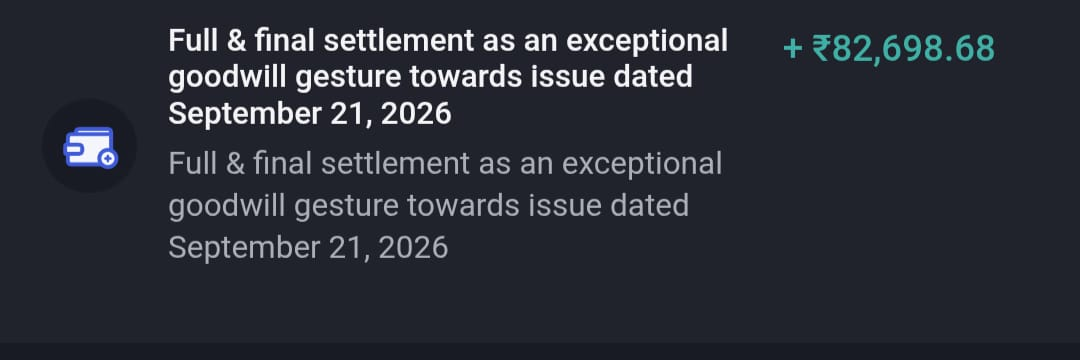
Through the SCORES process, the broker refunded ₹82,698, about 99 percent of the claim.
Contract Note Shows a Trade Your App Never Did? Our Team Can Help
Aarav’s case was won by lining up the order screen against the contract note. Pull both for the same date today, and highlight every mismatch before you do anything else.
Register with us and we will take it from there.
Conclusion
A trading app and a contract note should tell the same story. When they do not, the broker carries the burden of explaining why.
Aarav’s case shows how a loss can arrive through a chain of small mismatches, a rejected label, a changed product, a late execution, and an auction bill.
Any one of them might look like a minor glitch. Taken end to end, they show an investor charged for a position the system created.
Admitting a technical issue does not erase responsibility for its consequences, and a broker that describes unintended short positions in writing has already described the harm.
If a SCORES complaint does not settle a similar dispute, the SMART ODR platform offers a further route using the same documents.
Report. Recover. Stay Fraud Free.
No. The product type must follow your instruction. A change you did not request is a ground for complaint. The shortage goes to the exchange auction. The shares are bought at the auction price, and the cost plus an auction charge is debited to your account. The broker must show evidence that you placed it, such as a call recording, an order log, or a verified message. It should, but a mismatch with your contract note is a red flag. The contract note records what actually settled. Order screens, contract notes for both days, the broker's written reply, and screen recordings taken during the glitch carry the most weight.Frequently Asked Questions





 Add us as a preferred source on Google »

