

Quick Summary
Initial Claim: ₹22,00,000 in total losses, with ₹10,00,000 currently traced and pursued through two court orders Core Violation: An unregistered investment scheme run through Facebook advertisements induced repeated payments under a task based investment model, and a second set of fraudsters posing as recovery agents later demanded further payments in exchange for releasing funds that were never actually theirs to control. Forum Used: Cybercrime complaint, escalated through court orders for release of traced and frozen funds. Recovery So Far: ₹50,000 received against the first court order, with a further ₹1,50,000 pending on that order and ₹8,00,000 under a second order still in process. Jayshree Chauhan (name changed) is from Rajkot, Gujarat. She lost money to one scam. Then a second set of people called, claiming they could get it back for her, for a price.
Jayshree came across an investment advertisement while browsing Facebook. Within a short time of engaging with it, she began receiving phone calls from unknown individuals urging her to invest.
By the third call, she was persuaded to transfer an initial amount through Google Pay.
Further transfers followed over the coming weeks, made in good faith based on assurances given over these calls and continued chat communication.
A Scheme Built to Keep Asking for More
The payments did not stop at a single transfer. Repeated assurances kept the payments coming, each one framed as a necessary step toward eventual returns.
Over time, the total amount transferred climbed to approximately ₹22,00,000, a staggering sum built up gradually through consistent pressure rather than a single large decision.
A Second Scam, Wearing the Face of Recovery
Once it became apparent that something was wrong, Jayshree received calls from an international number, from individuals claiming they could help recover her lost funds through a specific website they directed her to use.
This is where the scheme revealed its second layer.
Rather than returning any money, these self-proclaimed recovery contacts began demanding further payments, insisting that only additional transfers would unlock the return of her funds.
Genuine fund recovery never requires the victim to pay more money first.
A demand structured this way is itself a second, separate fraud, deliberately targeting someone already victimised once.
A Filed Complaint, Then a Long Wait
Jayshree filed a formal complaint with cyber crime authorities, receiving an acknowledgment for her filing.
Beyond that initial step, no meaningful resolution followed on its own, leading her to seek further escalation and assistance.
How We Turned a Filed Complaint Into an Active Court Pursuit?
Of the full ₹22,00,000 lost, only a portion could be traced to specific accounts still holding identifiable funds.
Building genuine recovery meant focusing precisely on what could actually be pursued rather than the full original loss figure.
Step One: We Separated Traceable Funds From the Full Loss Figure
Working through the available transaction and banking trail, we identified which portions of the total loss corresponded to funds that could still be traced and potentially frozen, distinct from amounts that had moved beyond any identifiable account.
Step Two: We Documented the Second, Recovery-Themed Scam Separately
The calls from the individuals posing as recovery agents, along with their demand for further payment, were recorded as their own distinct fraudulent scheme, separate from the original investment loss.
Step Three: We Pursued Formal Freezing of the Traced Funds
Working with the relevant authorities, we pursued freezing action on the accounts holding traceable funds connected to Jayshree’s transfers, laying the groundwork for eventual court ordered release.
Step Four: We Secured a First Court Order for ₹2,00,000
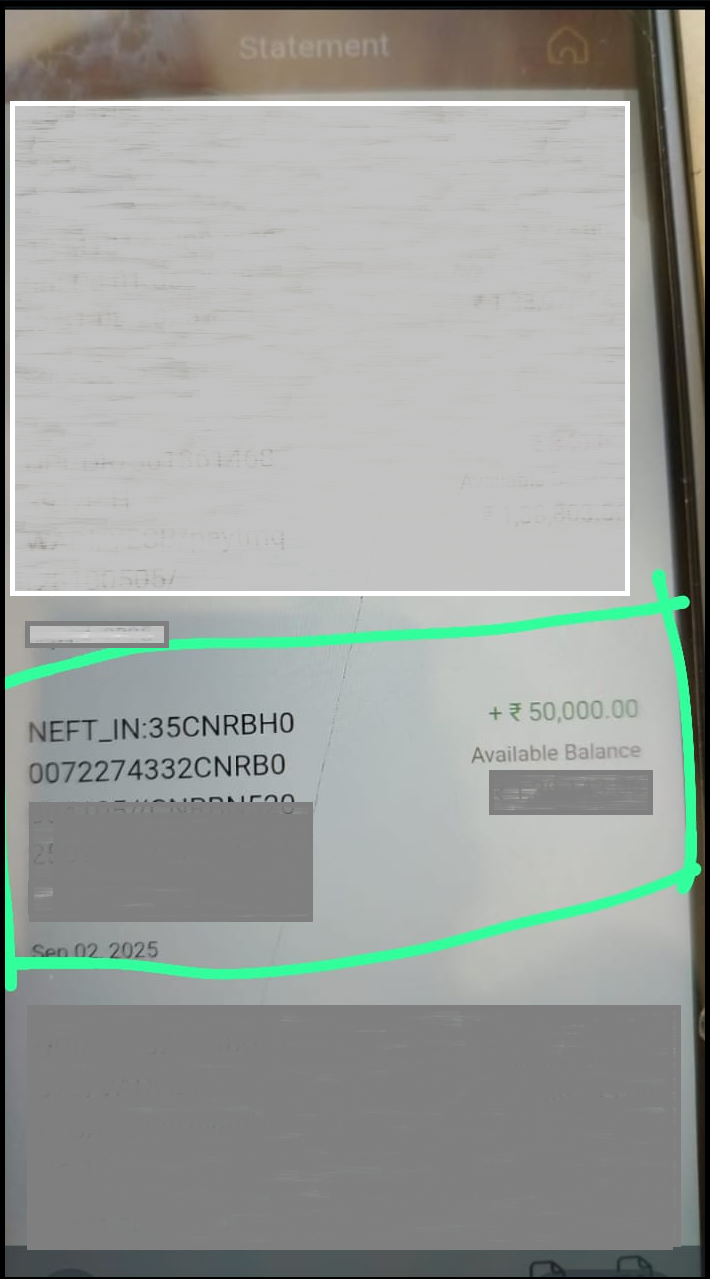
Court intervention produced an order covering ₹2,00,000 of the traced funds. Release of this amount is proceeding in stages, with the initial ₹50,000 already disbursed.
Step Five: We Secured a Second Court Order for ₹8,00,000
A further ₹8,00,000 in traced funds became subject to a second court order, currently in process, representing the largest single portion of the recoverable amount identified.
Step Six: We Continue Tracking Both Orders Through to Full Disbursement
Our team continues to monitor both court orders, following up on the pace of release and pushing for the remaining amounts to be disbursed as the process allows.
So far, ₹50,000 has been received against the first order, with ₹1,50,000 still pending on that same order, and the second order for ₹8,00,000 remaining in process.
Contacted By Someone Promising To Recover Your Scam Losses For A Fee? Our Team Can Help
Jayshree’s case shows exactly why a genuine recovery process never asks the victim to pay first. If you are being asked for money to release funds that are supposedly already yours, stop and verify through an official channel before sending anything further.
Register with us and we will take it from there.
Conclusion
A scam does not always end when the losses stop; sometimes it evolves into a second scheme aimed directly at the same victim, dressed up as the solution rather than the problem.
Jayshree’s case shows why any offer to recover lost funds in exchange for an upfront payment deserves immediate suspicion, since legitimate recovery through frozen accounts and court orders never requires the victim to pay anything to receive what is already owed to them.
Where funds can genuinely be traced, pursuing a formal court order, even when it releases money gradually rather than all at once, remains a real and workable path back to at least part of what was lost.
Report. Recover. Stay Fraud Free.
Frequently Asked Questions
No. This is a strong indicator of a second, separate scam targeting people who have already lost money once. Genuine recovery through official channels does not require an upfront fee to release funds.
Not always. Only funds that can be traced to a specific, identifiable account are realistically recoverable through freezing and court orders. Amounts that have moved further through untraceable channels are much harder to recover.
Court ordered disbursement often proceeds in stages depending on the process and the account structure involved, which is why partial amounts are sometimes released before the full ordered sum.
Stop all further payments immediately, and verify any recovery claim only through an official cybercrime or law enforcement channel rather than a number or website provided by the person contacting you.
Filing establishes the official record needed for further action, but active follow up and pursuit of tracing and freezing efforts are often necessary to move a case toward genuine recovery.





 Add us as a preferred source on Google »

