Imagine logging into your trading account and noticing several trades that you don’t clearly remember placing. Along with those trades, you also see brokerage charges adding up in your statement.
Many investors experience this moment of confusion when they review their account activity and try to understand how these charges accumulated.
In the stock market, every trade carries a brokerage fee. Normally, investors expect these charges because they place the trades themselves.
But sometimes investors begin to wonder whether the trading activity in their account was actually necessary.
When trading happens too frequently, brokerage costs can slowly reduce the investor’s capital.
Understanding how brokerage works and reviewing trading activity regularly can help investors stay informed about what is happening inside their trading account.
In this article, we will look at Samco Securities, examine its complaint data, and explain what investors should know when monitoring brokerage charges.
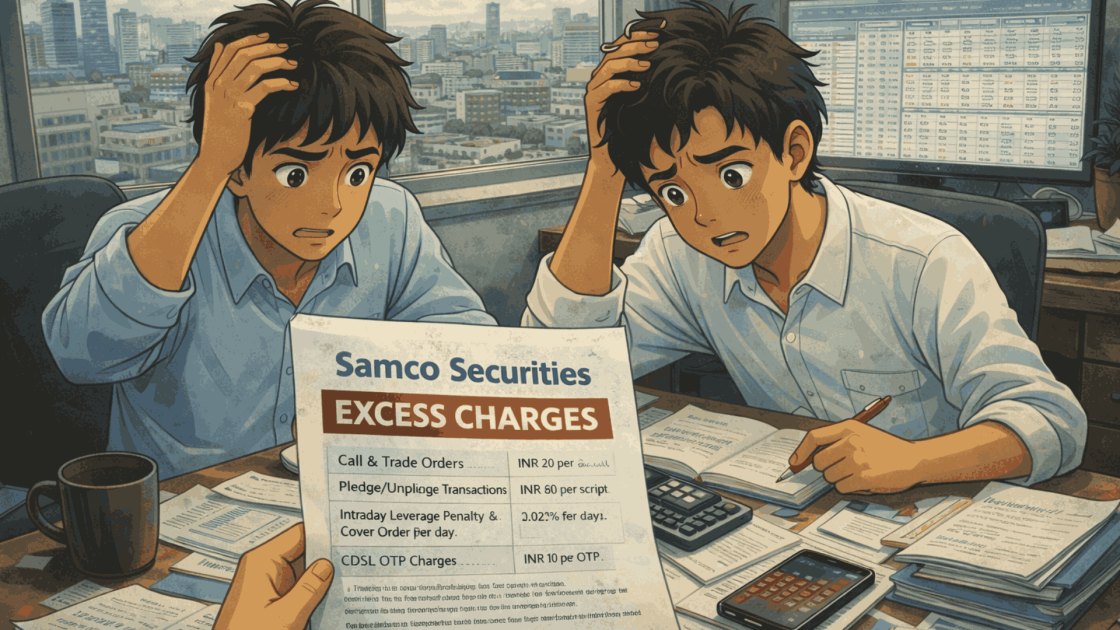
Samco Securities Excess Charges Overview
Samco Securities Limited operates as an online stock brokerage firm in India. The company provides trading services to investors who want to participate in the stock market through digital platforms.
Investors can use the broker’s trading systems to buy and sell securities across different market segments.
However, some investors have also reported that the Samco app not working properly has affected their ability to execute trades on time.
Samco offers trading in segments such as equity and derivatives. Like many modern brokers, the company follows a discount brokerage model, where investors place trades through online platforms instead of traditional offline brokerage services.
Stock brokers in India operate under the regulatory framework set by the Securities and Exchange Board of India.
This regulatory structure aims to ensure that brokers follow market rules and maintain proper systems for investor protection.
While trading platforms make investing more accessible, investors still need to understand how brokerage charges work and how trading activity affects their accounts.
What is Churning in the Stock Exchange?
Churning refers to a situation where too many trades occur in a trading account, mainly to generate brokerage charges.
Every trade executed in a trading account generates brokerage fees. If the trading activity increases significantly, the brokerage charges also increase. Over time, these costs can reduce the investor’s capital.
For example, imagine an investor deposits money in a trading account and plans to trade occasionally. Instead, the account starts showing frequent buy and sell transactions within short periods.
Each transaction generates brokerage charges. When this happens repeatedly, the total brokerage paid by the investor increases.
This is why investors often review their contract notes and account statements. Monitoring trading activity helps investors understand how often trades occur and how brokerage charges accumulate in their accounts.
Samco Securities Complaints
Before opening a trading account with any broker, investors often look at the complaint records published by stock exchanges. These records show how many complaints investors have raised against a broker over time.
The National Stock Exchange of India publishes complaint data for registered brokers. This information helps investors understand the number of grievances reported by clients in different financial years.
Below is the complaint data for Samco Securities.
| Year | Total Complaints Registered | Complaints Related to Excess Charges (Type V) |
|---|---|---|
| 2021–22 | 18 | Around 2 |
| 2022–23 | 21 | Around 2 |
| 2023–24 | 27 | Around 3 |
| 2024–25 | 33 | Around 3 |
| 2025–26 | 36 | — |
Type V complaints generally relate to service-related disputes between investors and brokers, which may include issues such as brokerage charges, trade execution concerns, or account-related services.
These complaints may include concerns related to account services, execution issues, or other operational matters.
Complaint numbers alone do not automatically indicate wrongdoing by a broker. However, they provide useful insight into the number of grievances that investors have reported over time.
Investors often review this information to better understand client experiences with a brokerage firm.
What is the Impact on Retail Traders?
The complaint data for Samco Securities shows a gradual increase in complaints over the years, rising from 18 complaints in 2021–22 to 36 complaints in 2025–26.
While the numbers are not extremely high, this trend may still matter to retail traders who review broker complaint history before choosing a trading platform.
For retail traders, this data highlights several important points:
- Complaint trends help investors evaluate brokers
Many investors check complaint records to understand the experiences of other traders before opening an account. - An increase in complaints can raise investor attention
When complaint numbers grow over time, retail traders may become more cautious and review the broker’s services more carefully. - Monitoring trading activity becomes important
Retail traders often review contract notes and account statements to understand how trades occur and how brokerage charges accumulate. - Keeping track of brokerage charges helps investors stay informed
By tracking brokerage deductions and trade frequency, traders can better understand the costs associated with their trading activity.
For many retail traders, reviewing complaint data and regularly monitoring account activity helps them stay aware of how their trading account operates.
When Can Brokerage Churning Be Suspected?
Imagine an investor deposits ₹3 lakh in a trading account and plans to trade occasionally. After a few weeks, the investor checks the account statement and notices dozens of buy and sell transactions.
Each trade carries a brokerage charge. As the number of trades increases, the total brokerage also increases and gradually reduces the investor’s capital.
Situations like this make investors review their account activity more carefully. Investors usually check the following things to understand how brokerage charges accumulate:
- Review contract notes regularly
Contract notes show the details of every trade executed in the account, including brokerage and other transaction charges. - Monitor brokerage deductions
Investors often check how much brokerage the broker charges for each trade and how the total brokerage adds up over time. - Track how frequently trades occur
If the account shows frequent buying and selling within short periods, investors may review whether those trades were necessary. - Compare trading volume with the investment amount
Investors sometimes compare their total trading turnover with the amount they invested. If the turnover appears unusually high, they may examine the trading activity more closely.
By reviewing these details regularly, investors can better understand how trading activity affects their brokerage costs and overall investment capital.
How to File a Complaint Against a Stockbroker Online?
Sometimes investors may feel that something in their trading account needs clarification. This could relate to brokerage charges, trading activity, or other account-related issues.
In such situations, investors usually follow a structured complaint process to seek clarification or resolution.
Investors can take the following steps:
- Contact the Broker First
Investors generally begin by contacting the broker’s customer support or grievance department. Many issues get resolved at this stage after reviewing the account details. - Raise a Complaint with the Stock Exchange
If the issue remains unresolved, investors can escalate the complaint through the grievance mechanism provided by the stock exchange where the broker is registered. - File a Complaint in SCORES
Investors can also register complaints with the Securities and Exchange Board of India, which oversees market intermediaries and investor protection mechanisms. - File an Arbitration in Share Market
If the complaint still remains unresolved, investors may use the exchange arbitration process. Arbitration allows an independent panel to review the dispute and examine the relevant records.
Following these steps helps investors formally address concerns and seek clarification regarding issues related to their trading accounts.
Need Help?
If you have noticed unexpected trades or excessive brokerage charges in your trading account, it is important to review your account records carefully.
Start by checking your contract notes, ledger statements, and trade history to understand when the trades occurred and what brokerage charges were applied.
If the issue remains unclear or unresolved, investors can escalate the complaint through the grievance system managed by the Securities and Exchange Board of India.
If you need help reviewing your trading records, tracking SEBI complaint status online, or filing a complaint regarding excessive brokerage charges, you can register with us, and our team will guide you through the process.
Conclusion
Understanding how brokerage charges work helps investors stay aware of what happens in their trading accounts.
When investors review their account statements regularly, they can see how often trades occur and how brokerage charges accumulate over time.
Concepts like brokerage churning also highlight why monitoring trading activity matters.
Excessive trading can increase brokerage costs and gradually affect an investor’s capital if the trading frequency becomes too high.
Before choosing any broker, investors often look at available information such as complaint data, brokerage structure, and account services.
Reviewing these details helps investors make informed decisions and understand how their trading account operates.
By checking contract notes, monitoring brokerage deductions, and staying aware of trading activity, investors can better understand the costs associated with their trades and manage their accounts more carefully.