SBICAP Securities Limited is a well-known brokerage house in India and is part of the State Bank of India group.
The company offers services such as equity trading, derivatives, mutual funds, IPO investments, and other capital market products to retail and institutional investors.
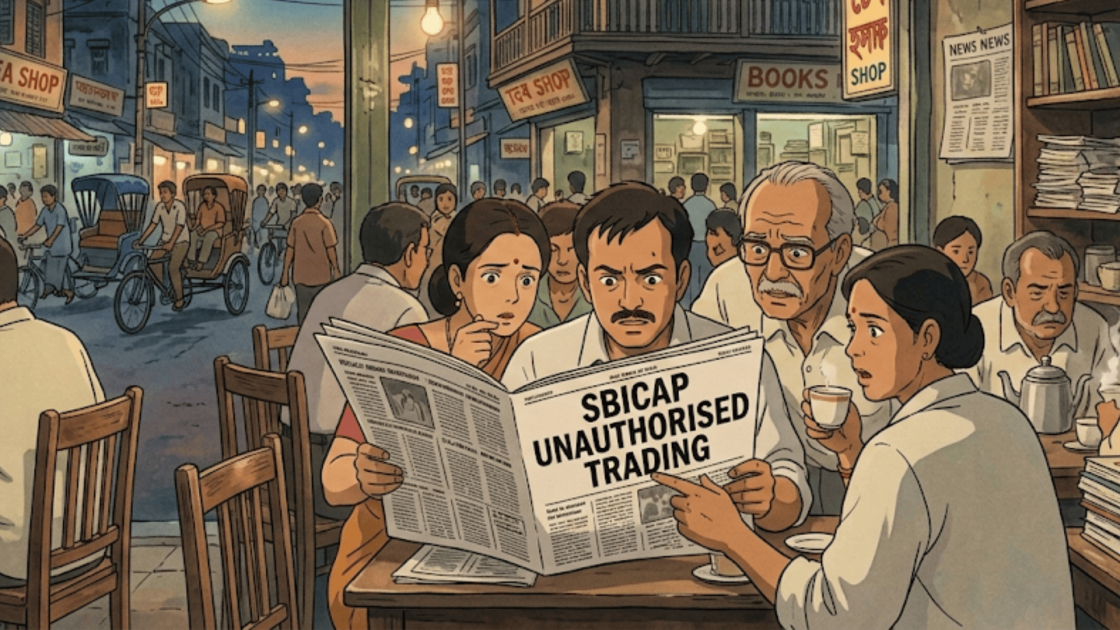
While most brokerage relationships function smoothly, concerns can arise in certain cases. One of the more serious issues investors sometimes raise is unauthorised trading.
Unauthorised trading happens when trades are placed in a client’s account without clear approval or when the exposure taken is higher than what the client agreed to.
In accounts held with brokers such as SBICAP Securities, concerns may arise if investors notice transactions they do not recall approving, sudden increases in lot sizes, or high-risk derivative positions taken without proper explanation.
Sometimes the issue is not a completely unknown trade, but the level of risk involved.
SBICAP Unauthorised Trading Complaints
The following table outlines the total number of complaints recorded over five financial years and highlights those specifically associated with unauthorised trading.
By comparing overall grievances with unauthorised trading cases, the data provides insight into how significant this issue has been relative to total investor complaints during each year.
Summary table includes: Overall SBICAP Complaints, Unauthorized trading complaints, % of unauthorized trading
| Year | No. of complaints | No. of complaints for unauthorised trading | Percentage of unauthorised trading |
| 2021-22 | 250 | 27 | 10.8% |
| 2022-23 | 234 | 35 | 14.95% |
| 2023-24 | 212 | 28 | 13.20% |
| 2024-25 | 291 | 69 | 23.71% |
| 2025-26 | 256 | 59 | 23% |
Although the total number of complaints fluctuated during the period, the proportion of unauthorised trading complaints shows a marked increase in the later years.
Notably, 2024–25 and 2025–26 reflect a substantial rise in the percentage share of unauthorised trading cases compared to earlier years.
This upward movement suggests that concerns relating to unauthorized transactions are becoming more prominent among investor grievances.
It emphasizes the need for greater vigilance, timely review of trading statements, and appropriate remedial action where necessary.
When Can Action Be Taken Against a Broker?
Understanding when a broker’s conduct crosses the line is important for investors who suspect irregularities in their trading accounts.
Not every loss or unexpected trade automatically means misconduct. However, certain situations may justify formal action or escalation.
-
Trades Executed Without Client Authorization
One of the most common grounds for action is when trades are placed in a client’s account without clear consent.
If an investor did not give instructions through a recorded call, written message, or platform order and still finds transactions executed in their account, this may raise concerns about unauthorised trading.
-
Excessive Trading Without Clear Approval
In some cases, brokers may repeatedly execute trades in a client’s account to generate higher brokerage or turnover.
If the frequency of trades or overall exposure is far beyond what the client typically approves, this may be considered excessive trading or “churning,” which can warrant scrutiny.
-
Taking High-Risk Positions Without Disclosure
Another situation arises when a broker places high-risk derivatives or leveraged positions without properly explaining the risks involved.
If the client was not informed about the potential exposure or margin obligations, the broker’s conduct may be questioned.
-
Failure to Follow Regulatory Obligations
Brokers are required to follow regulatory standards such as issuing proper contract notes, maintaining transparent records, and handling client instructions appropriately.
If these obligations are not fulfilled, investors may have valid grounds to raise a complaint.
Recognizing these situations can help investors determine whether the issue is simply market volatility or something that requires further investigation and possible escalation through the appropriate grievance mechanisms.
How To Report A Complaint Against Broker?
If you suspect irregular activity in your trading account, it is important to stay composed and approach the situation methodically.
Immediate panic can lead to rushed decisions, so begin by carefully reviewing your records and gathering relevant information.
Acting early can help prevent further losses and strengthen your position if a dispute arises.
1. Download and Review Contract Notes
Access all contract notes for the period in question from your broker’s portal or registered email.
Carefully verify the trade date, time, quantity, price, and brokerage charged for each transaction.
Compare these details with your own trading decisions to identify any trades you did not authorize. Even small inconsistencies should be noted for further clarification.
2. Examine Ledger and Margin Statements
Review your ledger statement to check for unexplained debits, interest charges, or penalties.
Analyze margin statements to see if there was a sudden increase in exposure or leveraged positions without your approval.
Look for unusually high turnover that does not match your normal trading pattern. Such irregularities can indicate unauthorised activity or excessive trading.
3. Preserve All Communication and Evidence
Maintain copies of all emails, SMS messages, WhatsApp chats, and written instructions exchanged with your broker. Save call recordings or maintain a record of call dates and discussions if available.
Keep copies of bank statements and payment proofs linked to your trading account.
Proper documentation can significantly strengthen your case during complaint or arbitration proceedings.
4. Submit a Written Complaint to the Broker
Address your complaint formally to the broker’s designated grievance officer. Clearly list each disputed trade with complete details such as date, security name, quantity, and transaction value.
State explicitly whether you had authorized the trades and request a written explanation.
Ask for a response within a reasonable timeframe and retain acknowledgement of your complaint.
5. File a Complaint in SCORES
If the broker does not provide a satisfactory response, escalate the complaint to the concerned stock exchange.
You may also file a complaint through SEBI’s SCORES platform for regulatory intervention.
6. Arbitration in the Stock Exchange
In cases where disputes persist, arbitration proceedings may be initiated as per exchange rules.
Timely escalation ensures that your complaint is formally recorded and reviewed.
Need Help?
Many investors find it challenging to determine whether the activity in their account amounts to unauthorised trading or is simply the result of normal market volatility.
Distinguishing between the two requires a careful review of transactions, approvals, and communication records.
Register with us. We can assist you in analysing your transaction history, organising supporting documents, and preparing a clear, structured complaint and tracking SEBI complaint status.
If trades were executed without your informed consent or your exposure exceeded what you had authorised or understood, obtaining timely professional guidance can help you evaluate your position and take the appropriate next steps with confidence.
Conclusion
As we know, the market is fast-moving nowadays.
Trades are executed instantly, but consent should never be assumed. Transparency, proper documentation, and clear communication are basic responsibilities of every brokerage firm.
Allegations of unauthorised trading are serious because they directly impact investor trust.
Whether a specific case amounts to a regulatory violation depends on a detailed examination of contract notes, order logs, communication records, and system data.
For investors dealing with firms such as SBICAP Securities Limited, the principle remains simple: understand every trade, monitor your account regularly, and ensure that each transaction reflects your clear and informed approval.