You apply for an IPO with real hope, wait for the allotment results, and feel sad when you don’t get the shares. But the real problem starts when your money doesn’t return.
The worst part isn’t missing out on the IPO; it’s when your UPI mandate is still active, or your ASBA funds are stuck without any clear explanation.
At that stage, many investors begin to feel like they’ve got scammed in IPO Investment, even though the issue is often technical and fixable.
In situations like this, you’re not just unlucky, you’re dealing with a technical issue that can be fixed if you take the right steps at the right time. When your money is sitting around unused, it stops you from moving forward and adds more stress.
That’s why it’s important to know when to contact SEBI and how to file a complaint for an IPO refund.
How Does The IPO Allotment Work?
The IPO refund process in India is organised and managed by the Securities and Exchange Board of India (SEBI). It is made easy for investors so that your money is protected even if you don’t get the shares.
- Applying for an IPO:
When you apply for an IPO, you use a service called ASBA, which is required in India. ASBA blocks the amount you apply for in your bank account, but it doesn’t take the money out.
This means your money stays in your account but is kept aside for the IPO until the share allocation is decided.
- Share Allotment Process:
After the IPO subscription period ends, the company and its registrar process all the applications. They decide who gets the shares based on SEBI rules, which favour retail investors, non-institutional investors (NIIs), and qualified institutional buyers (QIBs).
If the IPO is oversubscribed, a lottery method is used for retail investors.
- Refund Initiation
If you don’t get shares or get fewer shares than you applied for, the registrar starts the refund process. The blocked money for the unallotted shares is returned to your bank account.
For example, if you applied for shares worth Rs. 15,000 but received shares worth Rs. 3,000, the remaining Rs. 12,000 is refunded.
- Refund Processing
The refund is handled through the ASBA system, which simply unblocks the money in your bank account.
In some rare cases where you applied through a broker or platform that doesn’t use ASBA, refunds might be sent directly to your bank, via cheque, or as a demand draft, though this is not common in India.
- Refund Timeline
SEBI requires that all IPO refunds be made within a specific time. Usually, the refund is processed within 6 to 7 working days after the share allocation is finished.
You’ll see the money returned to your account, and you’ll receive a notification or refund advice from the registrar.
- Checking Refund Status
You can check the status of your refund on the registrar’s website by entering your application number, PAN, or DP ID. Registrars like have websites where you can track this information.
When Do You Face IPO Refund Problems?
The stress starts when days go by, and the refund hasn’t shown up in your bank account. You keep checking your allotment status, bank balance, and UPI history again and again.
But nothing seems to change.
This delay can be confusing because the system says refunds happen automatically, yet your money stays locked for longer than the usual four days after the IPO ends.
You might face IPO refund issues in these situations:
- Non-allotment or low subscription: The IPO doesn’t meet the minimum subscription target, but the bank delays unblocking your funds beyond four days.
- Incorrect bank details: If the account number or IFSC code is wrong, the refund can’t be processed properly.
- Technical glitches: System errors can stop the automatic ASBA or UPI refund process.
- Bank processing lag: Banks might hold your funds until the mandate expires, even after the IPO has closed.
- IPO cancellation: If the IPO is cancelled, your funds should be released within four days, but delays can still happen.
- Listing permission rejection: If the exchange denies the listing, refunds might be delayed even though there are clear timelines.
How To Complaint In SEBI For IPO Refund?
IPO refunds typically finish within 3 to 4 working days after the IPO ends, and the share allotment is confirmed. The ASBA or UPI systems automatically release or add the money back to your account if you weren’t allotted any shares.
Most people get their refunds without needing to ask for anything.
However, problems happen when the money remains blocked even after this expected time. Checking the balance again and not getting a response can be stressful.
This delay usually means there’s an issue with the refund that needs to be looked into, especially if the funds are still stuck past the fourth working day.
This process is in place to help investors, not to make things harder.
If you take your time and follow each step properly, your complaint has the best chance of being resolved quickly.
- First, figure out where the refund is getting stuck. The problem could be with your bank that handles ASBA or UPI, the IPO registrar, or your broker. Knowing who is to blame helps you send the complaint to the right person instead of just guessing.
- Before you start the complaint process, collect your IPO application number, bank or UPI details, allotment status, screenshots of your mandate, and your bank statements. These records show exactly what went wrong and stop delays that happen because of missing information.
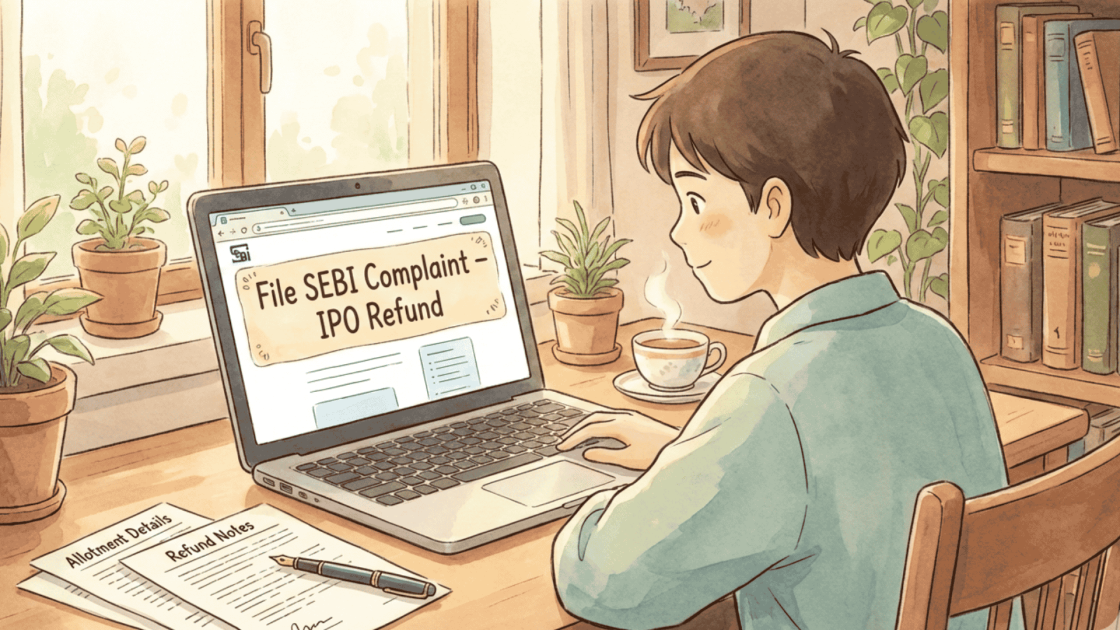
- SEBI SCORES is the official place where investors can complain. It only takes a few minutes to register, and it gives you a safe space to send and follow up on your IPO refund issue.
- Picking the correct category makes sure your complaint goes to the right team. If you choose the wrong one, it might take longer to get a response, even if your problem is real.
- Explain your problem in simple words, mention the dates and amounts involved, and include the proof you have. Clear information helps SEBI understand your problem quickly and send it to the right company for action.
How To File Stock Market Fraud Complaint?
If the IPO refund doesn’t come even after waiting for the expected time, and following up doesn’t get a clear answer, the next step is to report the issue.
This isn’t about acting in a hurry or getting anxious, but about properly raising the concern so the right people can take action.
Knowing the right way to report IPO scams helps your case get handled more quickly and prevents more delays.
- Talk to the bank, broker, or IPO registrar that was part of your application first. Let them know your application number, the details of your mandate, and the status of your allotment. Make sure to clearly state that the refund hasn’t been received on time.
- Give them some time to respond or fix the problem.
- Gather all the necessary documents. This includes your IPO application details, bank statements, UPI mandate status, allotment confirmation, emails, and any screenshots.
- Lodge a complaint on the SEBI SCORES portal by signing up and selecting the appropriate category for your issue, such as an IPO refund or ASBA-related problems. Clearly enter all the facts, mention relevant dates, and upload all supporting documents you have collected.
- If they ask for more information, respond quickly. Keep a record of all your communications until the refund is finally processed.
Need Help?
If you have been a victim of IPO scams in India and you’re not sure what to do next, you don’t have to deal with it by yourself.
We know how frustrating it can be when your money isn’t released even after following the right steps.
Register with us. We’re here from the start to help you look at your IPO application, find out why the refund is delayed, and assist you in collecting all the necessary documents.
We help you file a complaint with SEBI and guide you through each step of the process. You can also track your SEBI complaint status along the way, so you’re always informed about the progress.
We stay with you throughout, making the process easier, faster, and clearer so you can move forward with confidence.
Conclusion
IPO refund delays can be really frustrating, especially when your money is still stuck even though everything seems to be done on time. Usually, refunds happen automatically, but sometimes problems like technical glitches, bank delays, or missing steps can cause issues.
The important thing is to know when a delay is taking too long and how to properly ask for help from SEBI.
By taking the right steps, keeping good records, and using the SCORES platform clearly, investors can stand up for their rights and get things moving.
Being aware, acting quickly, and reporting things properly can turn confusion into control, making sure your money isn’t held up longer than it needs to be.