

Quick Summary
Every trade in India passes through a SEBI-registered broker, and registration is the first checkpoint, confirming the entity operates under the SEBI (Stock Brokers) Regulations, 1992, with net-worth requirements and exchange membership. It does not mean every transaction is automatically safe. Real cases below, including SMIFS Limited ordered to pay ₹18.56 lakh and IIFL Securities ordered to pay ₹11.83 lakh, show violations happening even at established, long-registered firms. Here’s how to verify a broker properly, and what the arbitration process actually looked like when registration alone wasn’t enough.
Every trade in the Indian stock market passes through a broker, which means the broker you choose matters more than most investors realise, and by law, that broker must be SEBI registered.
Registration is the first checkpoint, but as the cases below show, it’s a checkpoint, not a guarantee.
What Does “SEBI Registered” Actually Mean?
A SEBI-registered broker is an entity permitted by the Securities and Exchange Board of India to buy and sell securities on behalf of clients, under the SEBI (Stock Brokers) Regulations, 1992.
Registration isn’t a one-time formality; a broker must meet net-worth requirements, hold membership with a recognised exchange (NSE, BSE, or MCX), and follow SEBI’s code of conduct on an ongoing basis.
When a broker is registered, it operates within this regulatory framework, but that framework doesn’t automatically make every transaction safe, as the real cases further down show.
Brokers in India split broadly by service model.
- Full-service brokers offer research, advisory support, and relationship management at a higher brokerage cost.
- Discount brokers offer lower-cost trading with minimal advisory support on self-directed platforms.
There’s also a structural distinction between trading members, who hold direct exchange membership, and authorised persons or sub-brokers, who operate under a trading member’s registration but interact with clients directly, a distinction that matters because the trading member remains accountable even when an authorised person is involved in a dispute.
How to Verify a Broker Is Actually SEBI Registered?
Verification is simple, but skipping it is how most of these cases start.
Every legitimate broker is required to display its SEBI registration number publicly, usually in the format INZ000XXXXXX, in the broker’s website footer.
Cross-check that number on SEBI’s official intermediary registry, which publishes registered stock brokers by segment, including equity, equity derivatives, commodity derivatives, and debt.
Match the entity name exactly, since a registration number means little if the certificate name doesn’t match who you’re actually dealing with, and confirm the broker also appears in the NSE or BSE member directory for the segment it trades in.
Because SEBI’s live registry can’t always be queried automatically, a manual check directly on SEBI’s website or through SEBI SCORES remains the most reliable method before you commit any funds.
As of 2026, India has more than 4,900 SEBI-registered stock brokers, a number that has grown alongside demat accounts, nearly tripling since 2020, and it changes regularly as entities register or surrender their licence, so SEBI’s own registry stays the authoritative source.
Among discount brokers, Zerodha, Groww, Upstox, and Angel One dominate by client base, while ICICI Direct, HDFC Securities, Motilal Oswal, and IIFL Securities lead among full-service brokers with long-standing client bases.
But a large client base and an established history do not guarantee safety from violations, as the cases below show.
The Eight Categories NSE Uses to Classify Broker Complaints
Registration confirms regulatory oversight, not the absence of misconduct by the broker’s systems, its representatives, or its franchise network.
NSE classifies complaints into eight categories:
- Non-receipt or delay in payment: margin refunds, account settlements
- Non-receipt or delay in securities: delivery, margin deposit refunds
- Non-receipt of documents: contract notes, bills, agreements
- Unauthorised trades or misappropriation: trades without consent, misuse of client funds, assured-profit promises used to gain access
- Service-related issues: excess brokerage, execution errors, system defaults
- Closing out or squaring up: without client consent
- Non-implementation of arbitration awards
- IPO-related disputes
The cases below each centre on a specific violation type from this list.
Can a Broker Place Trades Without Your Authorisation?
No. SEBI requires a broker to act only on a client’s verifiable instruction, whether a written order, email, SMS, or recorded call, and before any trade executes, the broker must hold proof of that instruction.
If a client disputes a trade, the broker is expected to produce this authorisation record, and when that record doesn’t exist, the absence itself becomes significant, shifting the burden onto the broker to explain how the trade happened at all.
Sudhir Garg opened a trading account with SMIFS Limited, a SEBI-registered broker, completing his KYC and trusting the registration as most investors do. Soon after, unauthorised trades began appearing in his account, and when he asked for call recordings and written proof of instruction for the disputed trades, neither could be produced.
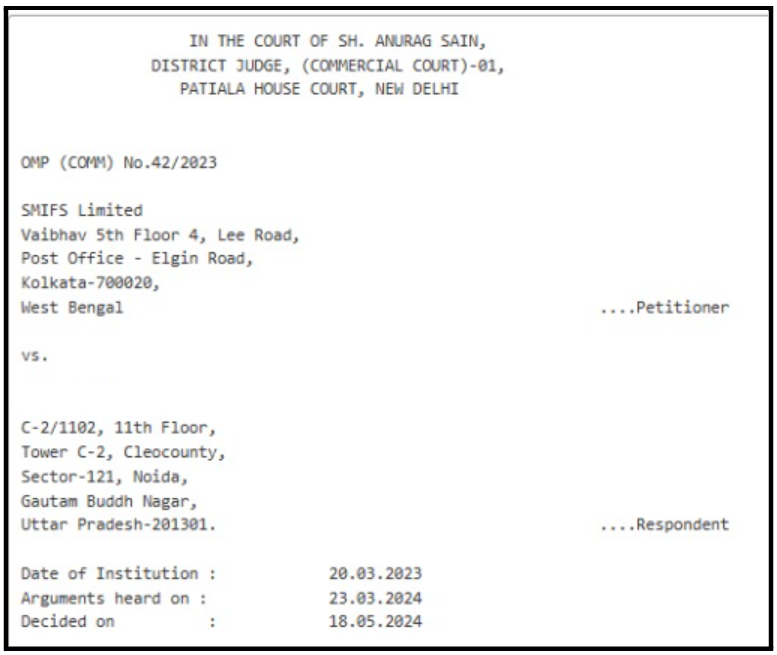
Our team helped him map each gap to the relevant SEBI requirement before the matter moved to the Investor Grievance Redressal Panel and then to arbitration.
The tribunal directed SMIFS to compensate Sudhir Garg ₹18,56,140 for the unauthorised trades in his account.

Brokerage Churning at an Established Full-Service Broker
SEBI’s code of conduct for stock brokers requires trading activity remain suitable for the client’s actual profile and objectives, and trading frequency designed mainly to generate brokerage rather than serve the client’s goals is treated as a breach of that obligation.
IIFL Securities faced multiple arbitration cases involving disputed trading activity.
One investor disputed trades executed under a margin trading facility he argued was never clearly explained to him, a dispute the tribunal found IIFL could not adequately substantiate, resulting in a directed payment of ₹11,83,473.
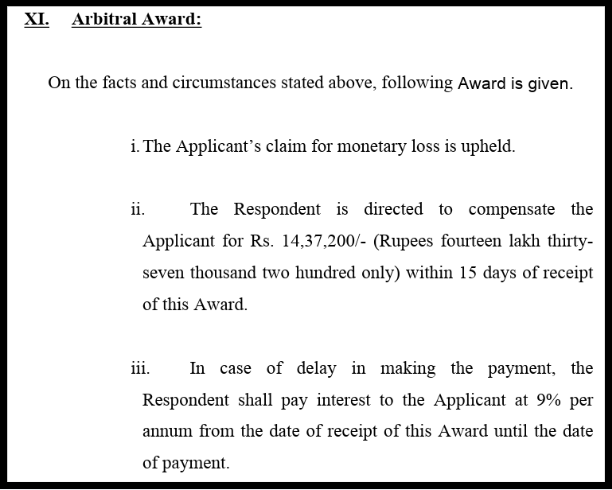
A separate IIFL case, where representatives allegedly promised assured returns and traded an account heavily across F&O positions using an automated script running 795 transactions in 66 seconds.
This is covered in full detail in our guide on broker traded without my permission, which walks through the exact evidence that made the physical impossibility of that timeline the centrepiece of the case.
Can a Broker or Its Representative Ask for Your OTP?
No. SEBI rules don’t permit any broker, representative, or third party to solicit a client’s OTP, login credentials, or trading password.
Trading instructions are meant to come directly from the client or through a documented, authorised arrangement, never through a shared one-time password.
SEBI’s March 2024 inspection of Motilal Oswal found an employee logged into a client’s account using that client’s own credentials, unauthorised users actively trading on terminals, and authorised persons accepting client funds directly into their own bank accounts.
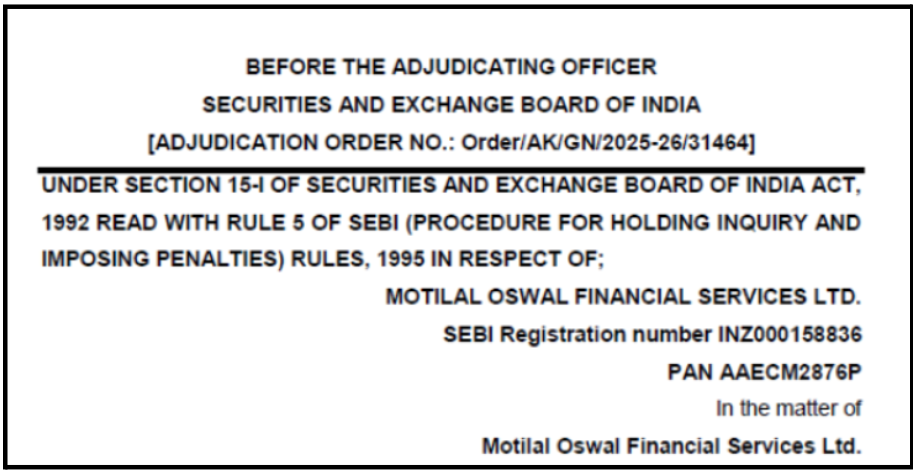
SEBI imposed a ₹3,00,000 penalty on June 9, 2025.
Separately, our team helped a Motilal Oswal client recover ₹28,00,000 after credential misuse, an unannounced email change, and an assured-return promise were mapped to specific SEBI violations, a full account of that case, along with the broader risks of sharing account access, sits in our guide on demat account issue.
What Investors Should Keep in Mind
Protecting yourself starts before a dispute ever arises.
Always verify your broker’s SEBI registration number before opening an account, and never share your OTP, login credentials, or trading password with anyone, including your broker’s own representatives.
Review your contract notes and account statements regularly to catch unauthorised activity early.
Keep written records of every instruction you give your broker, whether by email, SMS, or app, since vigilance during the relationship matters as much as the checks you do before it begins.
How to Lodge a Complaint Against a Stock Broker?
If you suspect a violation, act early, since evidence becomes harder to retrieve as time passes.
Contact the broker’s compliance or customer support team in writing, naming every disputed transaction with dates, order IDs, and amounts, and keep copies of all correspondence with a clear response timeline requested.
If unresolved, file a formal SEBI SCORES complaint with your supporting documents attached, describing the dispute completely so the broker’s mandatory Action Taken Report has enough to actually respond to.
If SCORES doesn’t resolve it, SMART ODR combines conciliation and arbitration in a structured digital process, and if the dispute remains unresolved with financial loss involved, exchange arbitration provides a binding decision through a neutral arbitrator.
The full step-by-step process, with timelines and what to attach at each stage, is covered in our complete guide: file a complaint against your stock broker.
Got trapped by profit promises, or trusted a broker with account access simply because of its SEBI registration?
We map your case to the specific SEBI violation involved, structure your documentation, and guide you through each escalation step correctly.
Register with us to get our assistance.
Conclusion
SEBI registration confirms that a broker operates under regulatory oversight.
It does not guarantee that every trade, every representative, or every franchise will follow the rules.
So, verify registration before you invest. Monitor your account regularly after that. And if something looks wrong, do not wait to act.
Report. Recover. Stay Fraud Free.
Frequently Asked Questions
No. Registration confirms regulatory oversight and requires the broker to meet ongoing net-worth, reporting, and conduct standards, but it does not eliminate the risk of individual misconduct, as the SMIFS and IIFL cases above show even at established, long-registered firms.
Verify it on SEBI's official intermediary registry, or check the registration number in the broker's website footer, then match the entity name exactly and confirm it also appears in the NSE or BSE member directory for the segment it trades in.
Raise the issue in writing with the broker's compliance officer first, naming the specific disputed trades. If unresolved, escalate to SEBI SCORES, then SMART ODR, and finally exchange arbitration, where the broker will be required to produce proof of your authorisation or lose the dispute.
Yes. SEBI holds the registered trading member accountable for the conduct of its authorised persons and sub-brokers, so "that was just our representative" is not a valid defence in a complaint or arbitration proceeding.





 Add us as a preferred source on Google »

