Have you ever tried stock market trading or explored investment options? If so, you’ve likely come across broker apps like Tradebull Securities.
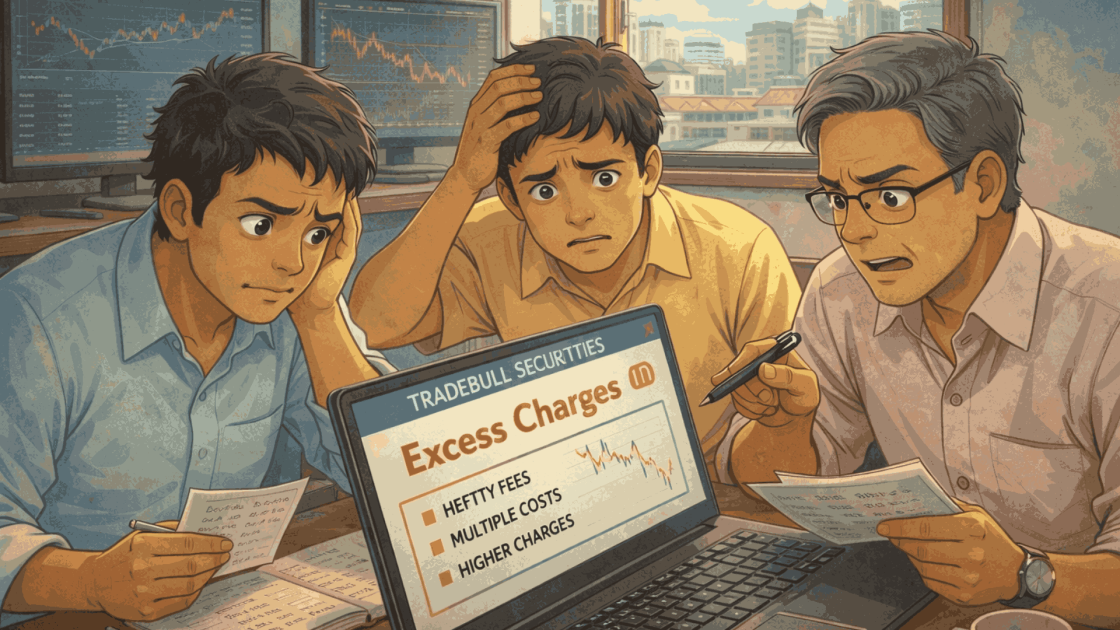
While these platforms promise convenient trading and wealth management services, some users have raised concerns about unexpected or excessive charges appearing in their accounts.
Understanding what you’re being charged, and whether those charges are legitimate, is essential for protecting your investments.
This guide breaks down what Tradebull charges, when excess fees might indicate a problem, and what steps you can take if you suspect something isn’t right.
Tradebull Securities Overview
Tradebull Securities is an Indian full-service brokerage firm founded in 2009 and headquartered in Mumbai.
The company holds SEBI registration (INZ000171838) and is a member of NSE, BSE, MCX, NCDEX, and CDSL. It offers trading across equity, derivatives, currency, and commodities, along with research tools and portfolio management features.
Churning in Share Market occurs when a broker executes excessive buying and selling in a client’s account primarily to generate commissions rather than benefit the investor.
Each trade incurs brokerage, taxes, and fees, so unnecessary transactions can quickly eat into your capital.
This practice violates SEBI regulations and constitutes a breach of the broker’s fiduciary duty to act in your interest.
Tradebull Securities Excess Charges Complaints
The data represents complaint records submitted through the reporting platform and may not reflect the company’s entire customer base.
Summary table: Year, No. of active clients, No. of complaints, Complaints against excess charges
|
Year |
No. of Active Clients | No. of Complaints |
Complaints against Excess Charges |
|
2021-22 |
72975 | 62 | Around 9 |
| 2022-23 | 76435 | 43 |
Around 8 |
|
2023-24 |
76435 | 38 | Around 20 |
| 2024-25 | 83494 | 138 |
Around 67 |
|
2025-26 |
77534 | 64 |
Around 20 |
In 2021–22, Tradebull had 72,975 active clients and recorded 62 total complaints. Among these, 9 complaints were related to excess charges, indicating that only a small number of users raised concerns about additional fees.
In 2022–23, the number of active clients increased slightly to 76,435. During this period, total complaints decreased to 43, and 8 of them were about excess charges, showing a minor improvement in complaint levels.
In 2023–24, the number of active clients remained 76,435, while total complaints reduced further to 38.
However, 20 complaints were related to excess charges, meaning a larger share of complaints were focused on fee-related issues.
In 2024–25, the client base grew to 83,494, the highest in the table. At the same time, total complaints increased to 138, and 67 of these were complaints about excess charges, suggesting that concerns about brokerage or additional fees became more noticeable.
In 2025–26, the number of active clients slightly declined to 77,534, and total complaints dropped to 64.
Out of these, 20 complaints were related to excess charges, indicating that although overall complaints decreased, fee-related concerns still continued.
Overall, the data shows that while the number of clients fluctuated over the years, complaints related to excess charges appeared regularly, highlighting the importance of clear and transparent fee structures for investors.
When Can You Say It’s Brokerage Churning?
Brokerage churning occurs when a broker excessively buys and sells securities in a client’s account primarily to generate commissions rather than to benefit the investor.
While not every high-volume account indicates churning, certain patterns can signal a problem, such as frequent buying and selling of the same stock without any significant market news or price movement, trades that are reversed within minutes or hours, and a turnover ratio that is unusually high relative to the size of the portfolio.
Other warning signs include the absence of a clear investment rationale for the trades, missing trade confirmations or lack of real-time notifications, portfolio underperformance despite heavy trading activity, and brokerage costs that are disproportionately high compared to the actual gains.
When trading activity appears structured mainly to produce fees rather than support portfolio growth, it may indicate brokerage churning.
How to Report a Complaint Against a Stock Broker Online?
If you suspect excess charges or churning in your Tradebull account, take these steps:
1. Review Your Account Statements
Go through contract notes, ledger statements, and trade history. Calculate total brokerage paid versus actual portfolio returns. Document any trades that seem unnecessary or weren’t authorized by you.
2. Contact Tradebull Directly
Raise the issue through their customer support or compliance department. Request written explanations for specific trades and ask for records of your instructions.
If the broker’s response is unsatisfactory, register a complaint through SEBI’s online portal (SCORES). SEBI requires brokers to maintain records of client instructions, and missing documentation can support your case.
4. File Arbitration in the Share Market
Stock exchanges like NSE and BSE have arbitration mechanisms for investor grievances. You can file for arbitration if your complaint isn’t resolved through SEBI or direct negotiation.
Need Help?
Dealing with excess brokerage charges or suspected churning can be overwhelming, especially when you’re unsure whether the trades were legitimate.
As professionals who specialize in investor grievance resolution, we can help you:
- Analyze your trading statements to identify irregularities
- Document your case properly for regulatory submissions
- Guide you through the SEBI SCORES complaint process
- Assist with arbitration filings if necessary
- Negotiate with brokers on your behalf
- Assist with tracking SEBI complaints status
If you’ve noticed unexplained charges or suspect your account has been churned, reach out to us for a consultation. Protecting your hard-earned money starts with understanding your rights.
Conclusion
Tradebull Securities offers legitimate brokerage services, but like any financial platform, issues can arise, whether from hidden fees, miscommunication, or, in some cases, unethical practices like churning.
The key is staying vigilant: review your statements regularly, question trades that don’t make sense, and act promptly if something seems off.
If excess charges are eating into your returns, you have options.
From direct communication with your broker to filing SEBI complaints and pursuing arbitration, the regulatory framework exists to protect investors.
Don’t hesitate to seek professional help when the stakes are high; your investments deserve proper oversight.