
Quick Summary
A “guaranteed returns” pitch, a profitable demo trade, and a service fee are the usual opening moves of an advisory relationship that goes wrong. Yogesh Gupta paid ₹56,000 to Insight Research, a SEBI-registered Research Analyst, and lost ₹2,30,000 following calls that came mostly over WhatsApp with no stop-loss guidance. Rather than years in court, the dispute settled through SEBI’s Online Dispute Resolution platform in about a year, recovering ₹50,000 in two instalments. The case shows what documentation and the right forum can actually achieve.
Ever come across a financial advisory service confidently promising “guaranteed returns” and felt that pull of temptation? You’re not alone.
In India’s fast-moving securities market, such claims often sound too good to ignore.
But what happens once those promises fade and the losses start?
What Happened Between Yogesh Gupta and Insight Research
In early 2024, Yogesh Gupta, an individual investor, locked horns with Saweety Saharan, the proprietor of Insight Research, a SEBI-registered Research Analyst. What began as a routine investor-analyst relationship spiralled into a formal dispute.
The pattern is a familiar one. Representatives initially offered demo trades that generated minor profits, around ₹5,000, to build trust.
After paying a service fee of ₹56,000, Gupta incurred a substantial loss of ₹2,30,000, which he attributed to a lack of proper stop-loss or target guidance.
He also alleged the firm conducted business primarily over WhatsApp, which lacks the transparency required for official investor dealings.
Insight Research pushed back. They pointed to their Research Recommendation Agreement, arguing it clearly states they cannot be held responsible for client losses, and insisted they never promise guaranteed returns or performance assurances.
Their defence was that they provide research, not guarantees, and the final decision always rests with the client.
Why This Went Through Online Conciliation, Not a Courtroom
Rather than a traditional legal battle, the matter was handled via Webnyay, an independent Online Dispute Resolution platform empanelled by the National Securities Depositories Limited, in line with SEBI’s Master Circular on ODR.
Aseem Juneja stepped in as the Authorised Representative and steered the case through every stage.
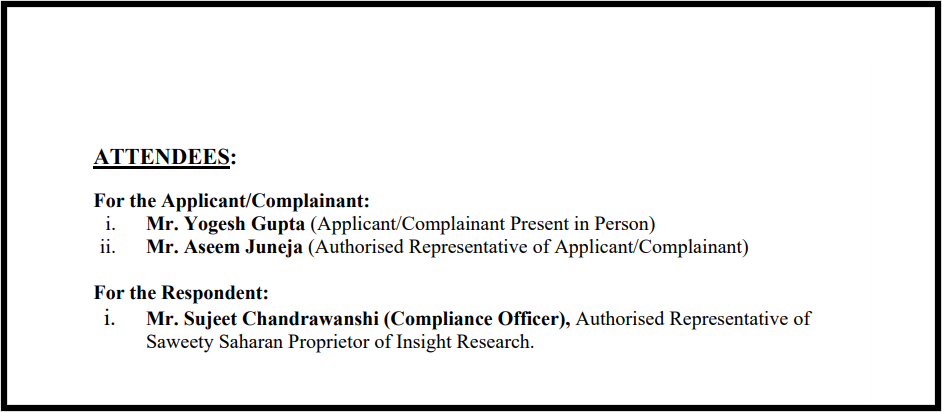
Instead of allowing the issues to be brushed aside as routine “market risk,” the evidence was laid out point by point, from the unauthorised demo trades to the WhatsApp-only communication that violated SEBI’s transparency requirements.
Framing the facts within the regulatory framework compelled Insight Research to confront the seriousness of the allegations rather than hide behind a generic disclaimer.
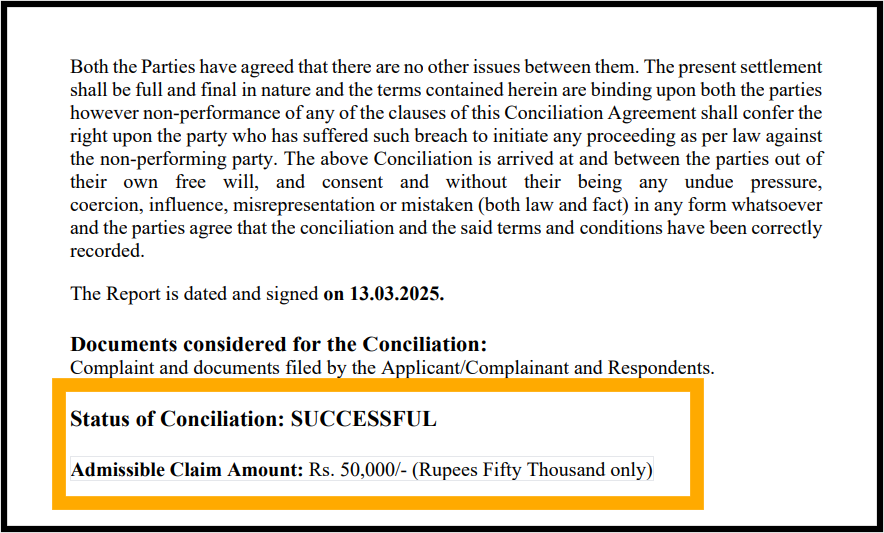
Through the conciliation meetings facilitated by Conciliator Rekha Tiwari, both parties reached an agreement on 13 March 2025.
Insight Research agreed to refund ₹50,000, paid in two instalments via UPI on 3 March and 7 March 2025. Upon receiving the full refund, Gupta agreed not to pursue any further complaints, court cases, or arbitration, making the settlement full and final.
What Made This Case Recover
Three things carried the file.
Verified phone numbers, WhatsApp chat records, and communication trails turned verbal promises into tangible evidence, the kind regulators and mediators rely on heavily.
Documentation and regulatory awareness meant the dispute never got argued down to “the market moved against you,” it stayed anchored to specific SEBI Code of Conduct violations.
And an Authorised Representative applied SEBI regulations correctly during the resolution attempts, which the ODR mechanism is built for but rarely gets used to its full advantage without guidance.
If your advisor’s pitch involved a demo trade, a subscription framed as one thing while a call promised another, or fees that kept climbing, the fee-structure specific version of this pattern is covered separately in our guide on advisor charged more than SEBI limit, which walks through what different fee structures actually recovered.
What to Do If You’re Facing a Similar Issue?
If you find yourself trapped in a similar trading advisory dispute, acting quickly and methodically is key.
Following these steps can help protect your rights and build a strong foundation for recovering your funds:
- Preserve all evidence immediately: chat messages, call records, emails, payment receipts, UPI details, and contracts.
- Stop further payments, even under pressure with recovery or profit promises.
- Verify registration claims by cross-checking the SEBI registration number on the official portal.
- Initiate written communication, clearly requesting a resolution or refund via email or a recorded messaging platform rather than a phone call.
Then file through SEBI SCORES, and use SMART ODR if the matter isn’t resolved through the initial complaint.
If your dispute is really about someone taking over your account rather than just giving bad advice, that’s a distinct violation covered in our guide on registered advisor managed my account.
Paid a demo-trade-then-loss advisory, or stuck in an unresolved dispute with a registered research analyst?
We review your evidence, verify the firm’s registration and compliance gaps, and represent you through ODR conciliation from start to finish.
Register with us for a free consultation.
Conclusion
The ₹50,000 refund recovery is not just a win for one investor; it’s a reminder that informed action works.
Modern investors don’t have to accept losses caused by misleading promises. With proper documentation, regulatory awareness, and expert support, even seemingly difficult disputes can be resolved.
Report. Recover. Stay Fraud Free.
Frequently Asked Questions
Not fully. A written disclaimer addresses the general risk of market loss, but it does not excuse specific violations like WhatsApp-only advice without transparency, or a documented pattern of misleading demo trades used to build trust before a fee was collected.
This case ran close to a year from the initial dispute to the final settlement. Online conciliation is generally faster than traditional litigation, but there's no fixed timeline, and having an Authorised Representative manage the process tends to move it along more efficiently.
Recovery in these disputes depends heavily on what can be proven versus what stays a subjective disagreement over advice quality. A partial, documented settlement reached through conciliation is a meaningful outcome, and it closes the matter faster and with more certainty than pursuing full arbitration.





 Add us as a preferred source on Google »

