

Quick Summary
If your advisor charged more than the SEBI limit allows, the fee itself becomes the case, you don’t have to prove the advice was bad. Four settled files show four different broken fee structures: one client paid ₹2.95L against a published cap, one watched his fee jump from ₹12,500 to ₹62,500 in a day, one was charged for a “subscription” while a call recording described a profit share, and one was billed six separate times totalling ₹1.18L while a 30% profit cut ran alongside it. Recoveries ranged from 55% to 71.1%. In every case, the fee structure carried the argument.
Most complaints against an adviser turn on what someone said on a phone call, whether recovery was assured, whether a stop loss was refused, whether the advice was useful. Those are winnable arguments, and they are also arguments.
A fee is different. A fee is a number, on a date, in a bank record, against a rule that either permits it or does not.
Here are four files where the fee structure itself was the strongest point in the case.
The Fee Cap Case: ₹2.95 Lakh Against a Published Limit
This client was called in March 2024 by a representative of an investment advisory firm in Uttar Pradesh.
The opening fee was ₹2,500. The day after he paid it, his account showed a profit of about ₹59,000. That did the work.
The fees then escalated in stages. He paid ₹1,47,500, against a promise of returns between one lakh and nine lakh within a year, was pushed for another ₹3,00,000 and refused.
He was then persuaded into a second payment of ₹1,47,500 under a new offer, with returns of up to ₹22 lakh described. Total fees: roughly ₹2,95,000.
SEBI publishes a maximum annual fee an investment adviser may charge an individual client across all services under the fee-based mode.
This client paid roughly double that figure. The fees were also collected in parts, under different scheme names, at different times. A single fee at that level is visible. The same amount split across offers is harder to see and easier to explain away.
His net loss was about ₹2,11,000. The claim was ₹4,22,000. The recovery was ₹3,00,000, which is 71.1%, the highest recovery of the four cases here.
Why the Fee Cap Exists
The cap is not administrative housekeeping. It exists because an unlimited fee changes what the adviser is actually selling.
If there is no ceiling, the fee stops being a charge for advice and becomes the business itself. The adviser’s income no longer depends on whether the advice works; it depends on how many upgrades they can sell you.
Two things about the cap matter before you build a claim on it.
It sits under the investment adviser rules; specifically, research analyst fee rules are structured differently, and which set applies to you depends on the firm’s actual registration, not what they called themselves on the call.
And it applies across all services, per client, per year; splitting one relationship into several packages does not create several allowances. Check the registration category before you rely on the cap, searchable directly on the SEBI website.
The Fee That Tracked the Client’s Balance
A different structure, and harder to spot. On 8 January 2026, the client deposited ₹1,00,000 and received an invoice for ₹12,500.
The next day, after increasing his capital, another invoice arrived for ₹62,500, five times higher.
Over the following weeks, more invoices followed: ₹55,000, ₹43,000, ₹32,000. Each deposit was followed by a demand to upgrade his package and pay more.
By the end, the client had received eleven invoices. The service stayed the same. The fee changed only because his capital increased.
That is the conflict the rules are designed to prevent. When a firm’s income rises with your deposits rather than the service it provides, its financial incentive shifts toward asking for more capital.
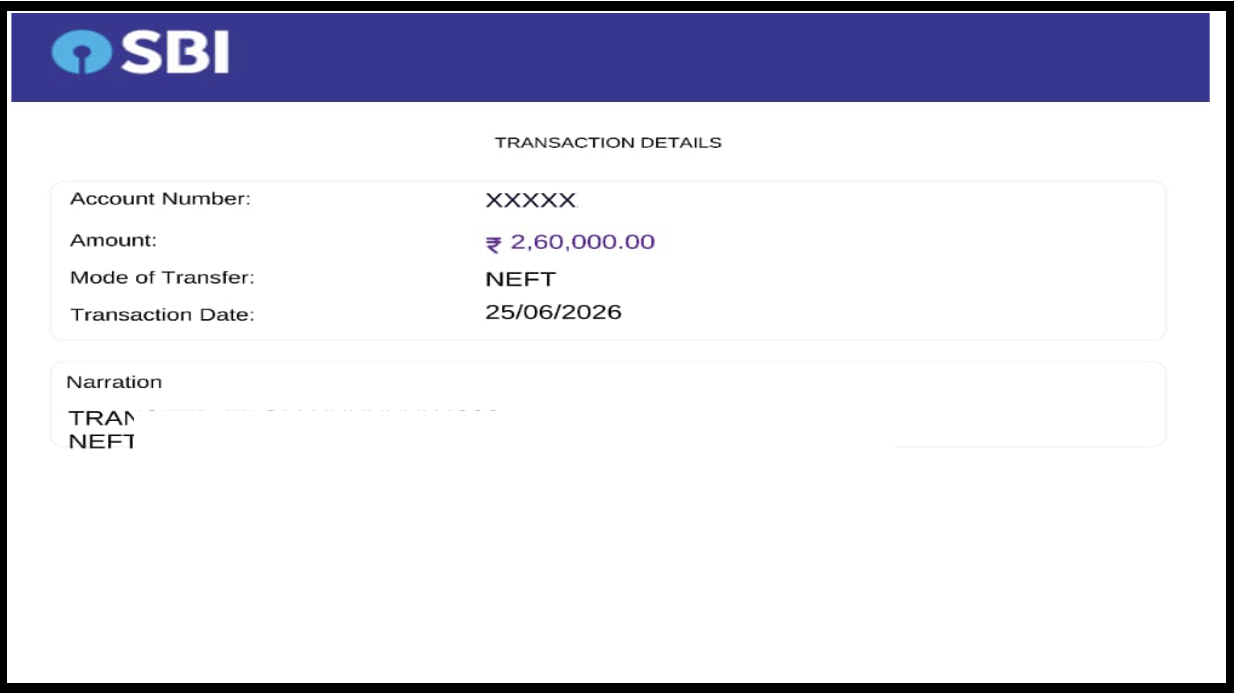
Total advisory fees reached ₹3,33,500 against a claim of ₹4,73,000. He recovered ₹2,60,000 through NEFT, equal to 55.0%.
The Invoice Said Subscription, the Call Said Profit Share
The clearest mismatch of the four.
The invoices described the service in subscription language, “Premium Package,” “Platinum Plan,” stated as a subscription fee for research alerts, not an investment.
The call recordings described something else entirely: a representative referring to a fifty percent profit share arrangement.
A subscription for research alerts is one thing you buy and use as you choose.
A fifty percent profit share is a partnership in your trading outcome, and only one of those was on the invoice. The client was charged ₹46,500 across four invoices in six days for the first, and was told about the second on a call.
The claim was ₹3,50,000. The recovery was ₹2,00,000, which is 57.1%. The mismatch is the point; you don’t have to prove which service was real, only that the paperwork and the recording don’t match.
Six Fees, a 30% Cut, and a Promise Nobody Is Allowed to Make
A SEBI-registered advisory charged Navin (name changed) piece after piece: about ₹16,000, then ₹30,000, then ₹10,000, then ₹35,000, then ₹18,000, then ₹9,000, roughly ₹1,18,000 in total, handed over a little at a time.
On top of those fees, they took a 30% cut of any profit. And to keep him paying each time, they gave him the one thing nobody in the market is allowed to give: a promise that they would make him a profit and never let him lose.
Navin traded the account himself, following their tips over WhatsApp. By the end, roughly ₹5 lakh was gone.
He was not their only one; he had been through four or five such firms, each ending the same way.
The fees did not buy a service that improved. They bought another turn of the same wheel, sold each time on the same impossible promise.
Every layer of this broke a separate rule. No one can guarantee a profit or promise you will not lose; those repeated assurances were not confidence; they were the sales tactic that justified every new payment.
A registered adviser takes a capped fee, not a cut of your profit; once earnings depend on your gains, the incentive shifts toward more trades and higher risk, and a 30% share does not belong in a compliant arrangement.
The fees themselves blew past what an adviser may charge; ₹1.18 lakh across six separate payments looked less like a standard advisory fee and more like repeated collection.
And tips given only on WhatsApp calls leave the advice off the record, though payment receipts, the broker’s P&L showing the ₹5 lakh loss, and WhatsApp logs still built a detailed timeline.
Four Fee Structures, Four Recoveries
| Fee structure | Fees paid | Claimed | Recovered | Share |
|---|---|---|---|---|
| Above the published cap | ₹2,95,000 | ₹4,22,000 | ₹3,00,000 | 71.1% |
| Linked to client capital | ₹3,33,500 | ₹4,73,000 | ₹2,60,000 | 55.0% |
| Profit share off invoice | ₹46,500 | ₹3,50,000 | ₹2,00,000 | 57.1% |
| Six-payment escalation + 30% cut | ₹1,18,000 | — | — | ongoing |
Four cases cannot tell you that one fee structure recovers better than another; the sample is too small, and the claims differ too much in shape.
What they show is that the fee structure gave each file a starting point that did not depend on anyone’s memory of a call.
For how the fee-to-loss split shapes what actually comes back in a claim, the stock advisory refund breakdown works through it with the full figures.
How to Check Whether Your Fee Was Permitted?
This takes about twenty minutes and does not need a lawyer.
- Total everything you paid: Every package, every upgrade, every part payment, since split fees are still one total.
- Find the registration category on the SEBI website: Investment adviser and research analyst are different registrations with different fee rules, and the category decides which rule your number is tested against.
- Check what changed when your fee changed: If a fee rose after you deposited money and nothing about the service changed, write down both dates.
- Compare the invoice to the conversation: If the invoice says subscription and the call says profit share, save both.
- Gather every invoice, or note their absence: Several clients in these files were never issued one at all, which is a failure the firm has to explain.
If any of this happened to you, whether the fee was capped, capital-linked, or hiding a profit share, the escalation path is the same.
Start with a written complaint naming the specific breach, then move to a SEBI SCORES complaint, and to SMART ODR if it stays unresolved.
If your dispute also involves someone actually running your account rather than just overcharging for advice, that’s a distinct violation covered in our guide on registered advisor managed my account.
Paid more in fees than you think was allowed, or watched your fee rise every time you added funds?
We total what you actually paid, check it against the SEBI cap for your advisor’s registration category, and tell you if it creates a claim.
Register with us to get our assistance.
Conclusion
Most advisory complaints are arguments about what was said. A fee complaint is arithmetic.
One client paid roughly 2,95,000 against a published annual cap and recovered 3,00,000. The strength of that claim did not depend on proving the advice was bad. It depended on a number and a rule.
In each case, the paperwork carried the argument. Total what you paid, confirm the registration category, and check the number against the rule that applies to it. If the fee itself was not permitted, you are starting from a much stronger position than most people realise.
Report. Recover. Stay Fraud Free.
Frequently Asked Questions
Yes. The cap in the adviser rules applies per client per year across all services, designed specifically to stop fees being split to look smaller. In one of these files, the fees arrived under different offer names and still formed one total for one client in one year.
The cap sits under the investment adviser rules. Research analyst fee rules are structured differently, so the first thing to establish is the firm's actual registration category on SEBI website rather than what they called themselves.
Yes. Your bank or UPI records establish what you paid and when. The missing invoice is a separate failure the firm has to answer for, and it does not weaken your number.
Yes, for a registered investment adviser, a capped fee is the only permitted structure, a cut of profits is not. Even when it's dressed up as a "subscription" on the invoice, a profit-share arrangement described on a call is a separate, prohibited structure.
Not automatically, but it is worth documenting carefully. Record the deposit dates alongside the invoice dates. If the fee moved with your balance while the service stayed identical, that pairing is what the complaint is built on.





 Add us as a preferred source on Google »

